
Patterson vs Johansson from 1959 to 1961 Brought Seven Knockdowns in the Bronx, the First Heavyweight Title Regain and a Wild Night in Miami Beach
Ingemar Johansson floored Floyd Patterson seven times in one round to take the heavyweight title at Yankee Stadium in 1959; Patterson knocked him cold a year later to become the first man to win it back, then won a chaotic rubber match in 1961.

Between June 1959 and March 1961, Floyd Patterson and Ingemar Johansson met three times for the heavyweight championship of the world. A Swede who was a heavy underdog took the title in the Bronx, and a year later Patterson became the first heavyweight in history to win the championship back. The last fight, in Miami Beach, had four knockdowns in its opening round.
A Champion Under Suspicion and a Swede From Gothenburg
Floyd Patterson won the heavyweight title vacated by Rocky Marciano by knocking out Archie Moore in Chicago on 30 November 1956. He was 21, the youngest man to hold the championship. Over the next two years his manager, Cus D'Amato, picked his challengers with great care. Patterson stopped Tommy "Hurricane" Jackson, Pete Rademacher, Roy Harris and Brian London, and critics complained that the strongest contenders were being kept away from him.
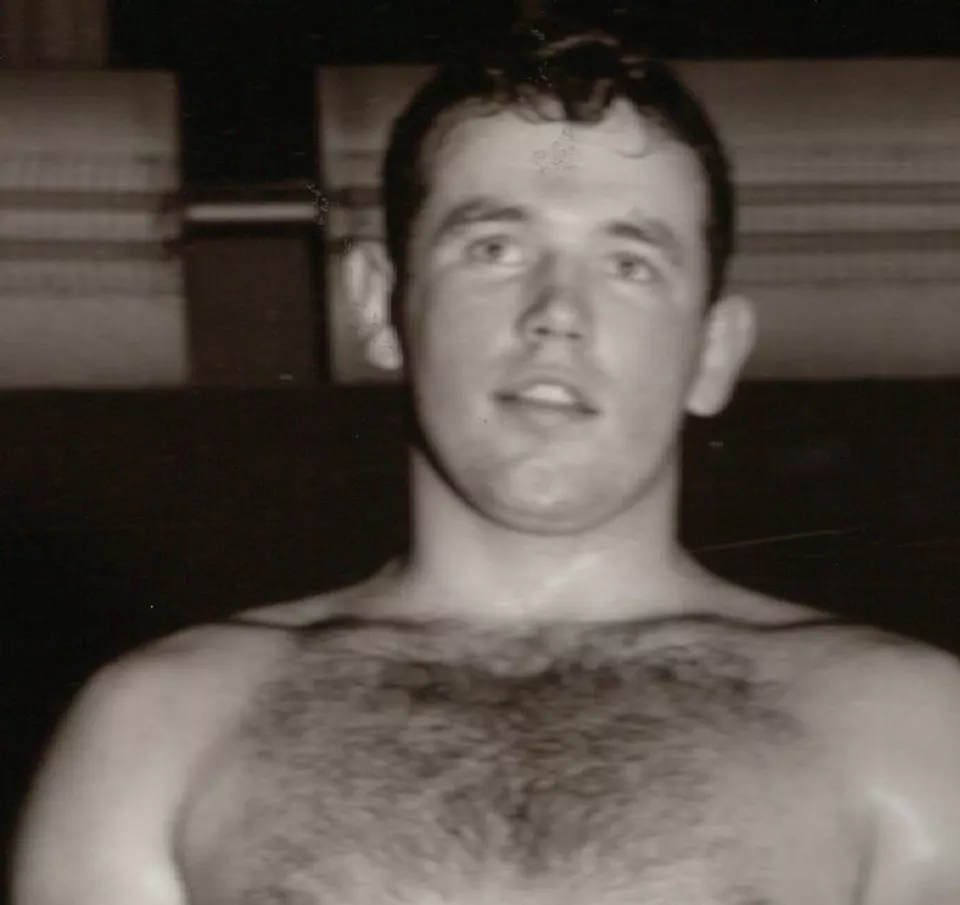
Ingemar Johansson's route to the title had a difficult start. At the 1952 Helsinki Olympics, the same Games where Patterson won middleweight gold, the young Swede reached the heavyweight final against Ed Sanders of the United States and was disqualified for passivity. His silver medal was withheld until 1982. He turned professional months later, won the European title in 1956, and on 14 September 1958 in Gothenburg he knocked out Eddie Machen, then the top-ranked American contender, in the first round. That one result made him the leading challenger.
After months of negotiation the two men signed in February 1959. The fight was set for Yankee Stadium and then moved back three days because of bad weather. The odds went heavily against the challenger. Wikipedia's account of the bout lists him as a 5-1 underdog, while Bert Randolph Sugar, writing for ESPN, puts it at 4-1.
Seven Knockdowns in Round Three at Yankee Stadium
The first fight took place on 26 June 1959. According to Sugar, 18,215 people came into a stadium that held about 60,000. Closed-circuit receipts brought the total take to well over a million dollars. The sources disagree on Patterson's pay: the Wikipedia article on the fight gives $300,000, and Sugar says more than $600,000.
For two rounds Johansson gave ground and kept Patterson away with a light left jab. Early in the third he threw a wide left hook, which Patterson blocked. When the champion's right glove left its usual place in front of his chin, Johansson landed a short right hand and Patterson fell. He got up but was badly dazed. Johansson went after him and put him down again and again. Patterson rose after each fall, and by the end he had been on the canvas seven times. Referee Ruby Goldstein stopped the fight at 2:03 of the third round.
No European had held the heavyweight title since Primo Carnera lost it to Max Baer in 1934. Afterward the new champion pointed to the punch his critics had doubted: "I told them all I knew my right hand (would do it), and now Floyd Patterson knows it," Johansson said, as quoted on Wikipedia. Asked whether he had ever been hit harder, Patterson answered in two words: "Evidently not." His right hand came to be known as the "Hammer of Thor" and "Ingo's Bingo", and one New York paper headlined the upset "Ingo – It's Bingo." Johansson received the Hickok Belt as the top professional athlete of 1959 and was named the Associated Press Male Athlete of the Year.
The Polo Grounds, 1960: Taking the Title Back
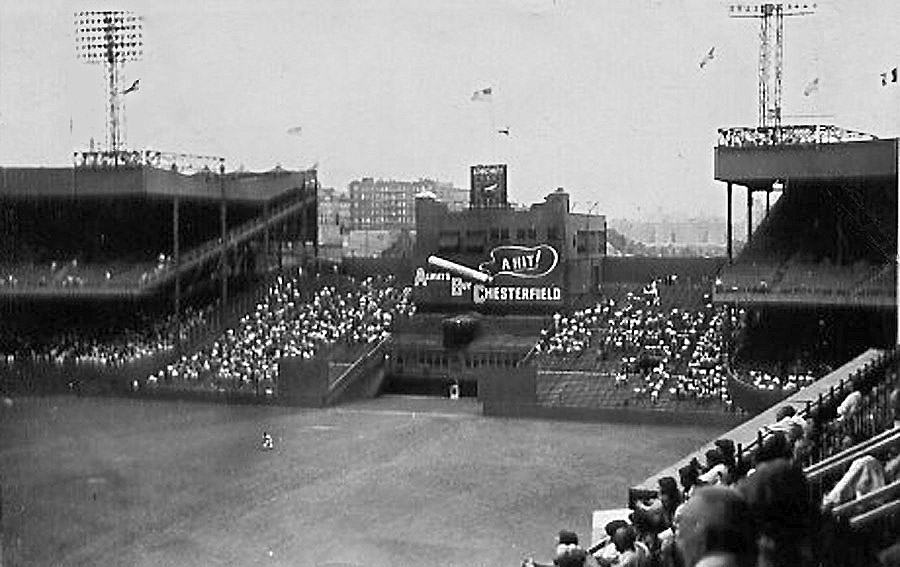
The contract included a rematch clause, but the first promoter, Bill Rosensohn, had his licence suspended by the New York State Athletic Commission and the plans stalled. A new agreement was reached in August 1959, with Jack Dempsey helping to arrange it. The second fight was set for the Polo Grounds in Manhattan on 20 June 1960.
The two camps prepared in very different ways. Sugar writes that Patterson trained in near isolation and kept away from reporters. He also decided he had to press the fight himself and not let Johansson's jab dictate the pace as it had the year before. He came in at 190 pounds, about eight pounds heavier than for the first fight. Johansson weighed in at just under 195 pounds. Wikipedia gives 194¾ and Sugar gives 194½. This time the champion was the betting favourite.
Johansson's right did land early in the second round. Patterson stayed on his feet, backed away and got through the round. In the fifth, Patterson jumped in with a left hook to the jaw, and Johansson went down for the first time in his professional career. He got up bleeding from the mouth. Patterson then landed another leaping left hook, and Johansson fell flat on his back. Referee Arthur Mercante counted him out at 1:51 of the fifth round. Wikipedia's account says Johansson lay unconscious for about five minutes before he was helped to his stool.
Eight earlier heavyweight champions had tried to win back the title and failed, among them James J. Corbett, Jack Dempsey, Joe Louis and Ezzard Charles. Patterson was the first to do it. "For the first time I feel I'm a real champion," he said, according to Wikipedia's account of the rematch. The Ring named it the Fight of the Year, and the fifth round its Round of the Year.
Miami Beach, 1961: Four Knockdowns Before the First Bell
A third meeting was first set for Los Angeles, then postponed, and finally fixed for Miami Beach on 13 March 1961. The contract required the arena to be unsegregated, and the promoters posted a $10,000 bond that would go to the NAACP if the city went back on that promise.
Johansson came in at 206½ pounds, by Sugar's count, and Patterson weighed a career-high 194¾. The champion went off as roughly a 4-1 favourite. Both corners agreed to the mandatory eight-count, which had never been used in a heavyweight title fight before. The sources disagree on the crowd figure: Sugar gives 31,892 for this fight, while Wikipedia gives the same number as the attendance for the 1960 rematch.
The first round was chaotic. A right cross from Johansson put Patterson down, and he was up almost at once. A second knockdown followed later in the round. Referee Billy Regan said afterward that the champion's eyes were glazed. Then Patterson landed a left hook that dropped Johansson. It was the first time since Dempsey and Luis Firpo in 1923 that both men had been knocked down in the opening round of a heavyweight title fight.
After that Patterson began punching to the body, and Johansson, heavier and slower, faded. A cut opened over the challenger's right eye in the third round. By the fifth he was tiring. He still landed a hard right in the sixth, but there was less power behind it. Late in that round Patterson landed a left hook and a series of rights, and Johansson went down. He was trying to get up when Regan finished the count. There were suggestions that the referee had stopped it too quickly. Wikipedia notes that later examination of the film showed the stoppage came 11 to 12 seconds after the knockdown, which would make it a slightly long count. Patterson was unhappy with his own performance and said he had shown no skill, only determination.
Afterward: Liston, Retirement and a Long Friendship
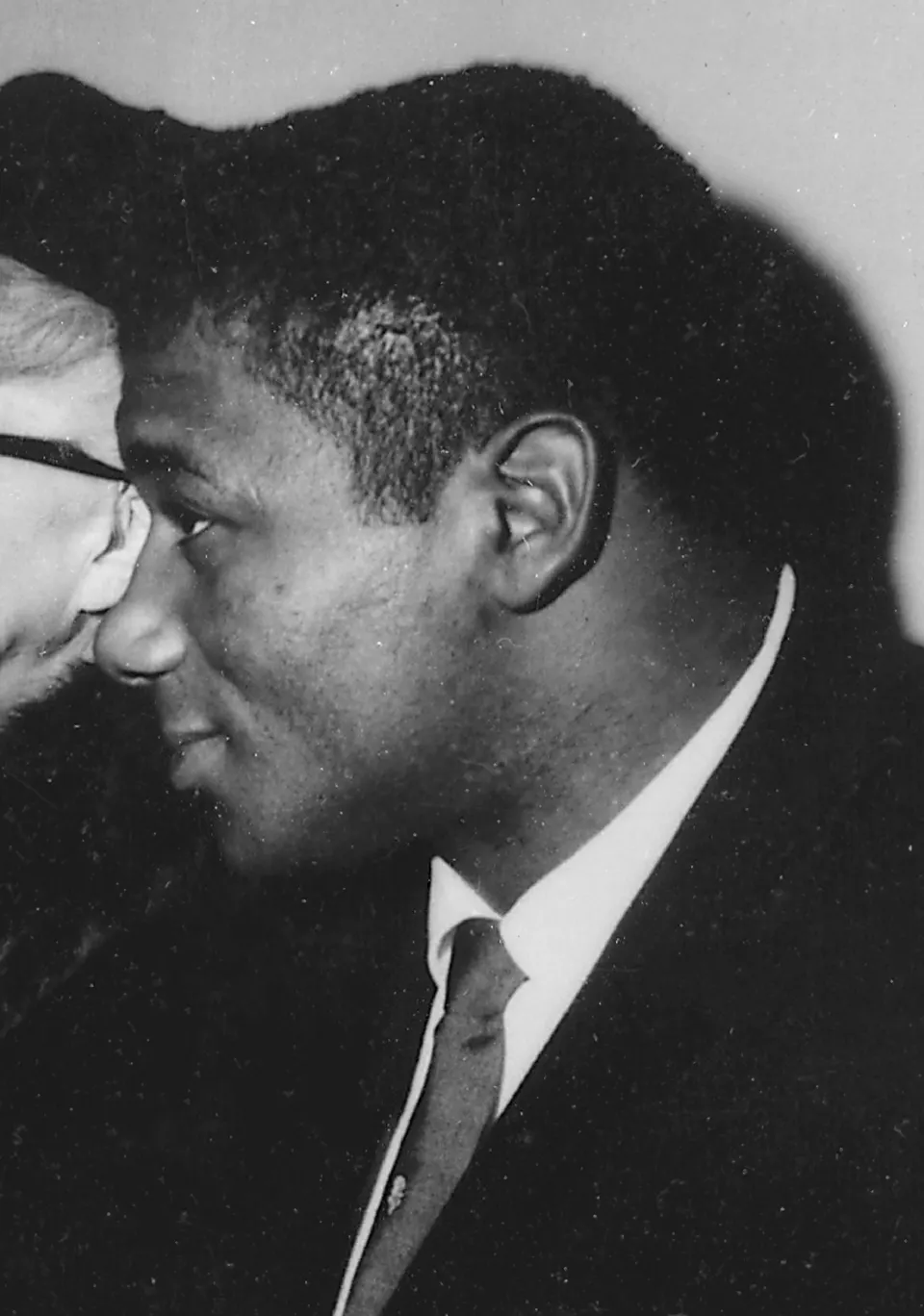
Patterson made one more defence, against Tom McNeeley in Toronto, and then lost the title to Sonny Liston in a single round in Chicago in September 1962. Liston knocked him out in one round again in their 1963 rematch. Johansson retired in 1963 after a close decision over Brian London. He finished with 26 wins and 2 losses, both of them to Patterson.
Wikipedia's biography says the two former rivals became lifelong friends who visited each other regularly. Johansson was inducted into the International Boxing Hall of Fame in 2002. Patterson died on 11 May 2006. Johansson died in a nursing home in Kungsbacka on Sweden's west coast in January 2009, aged 76, after years with Alzheimer's disease. Stig Caldeborn, a longtime friend, told the Associated Press that Johansson's 1959 victory was "the biggest feat ever in Swedish sporting history."
Sources
- Floyd Patterson vs. Ingemar Johansson, Wikipedia, accessed October 2026
- Ingemar Johansson vs. Floyd Patterson II, Wikipedia, accessed October 2026
- Floyd Patterson vs. Ingemar Johansson III, Wikipedia, accessed October 2026
- Floyd Patterson, Wikipedia, accessed October 2026
- Ingemar Johansson, Wikipedia, accessed October 2026
- Greatest Knockouts: Patterson vs. Johansson, Bert Randolph Sugar, ESPN Classic, 28 September 2006
- Former heavyweight champ Ingemar Johansson dies, Associated Press (via The Herald, Everett), 30 January 2009


