
How Floyd Patterson Went From Wiltwyck School to Two-Time Heavyweight Champion
The life of Floyd Patterson, the Brooklyn truant who won Olympic gold in Helsinki, became the youngest heavyweight champion of his era and the first to regain the title, then chaired the New York State Athletic Commission.

He went from a truant who could barely face a classroom in Bedford-Stuyvesant to Olympic champion, the youngest heavyweight king of his era and the first man ever to win the title back. Floyd Patterson's story is one of quiet stubbornness: knocked down more often than almost any champion, he kept climbing off the canvas, and later sat in the chair that governed New York boxing.
A North Carolina Birth and a Brooklyn Boyhood
Floyd Patterson was born on January 4, 1935, in Waco, North Carolina, one of eleven children. While he was still an infant the family moved north to Brooklyn and settled in Bedford-Stuyvesant, a crowded neighborhood where money was always short. The boy who would one day be called the gentleman of the ring was, at first, anything but settled. By around the age of nine he was stealing, skipping school and running away, and he was brought before a court again and again for truancy and petty theft.
The authorities eventually decided that the city was not the place for him. In September 1945, at the age of ten, he was sent upstate to the Wiltwyck School for Boys a reform school in upstate New York.
Wiltwyck and the Turn Toward the Gym
Patterson spent close to two years at Wiltwyck, and he would credit the place with changing the direction of his life. Away from the streets, he found structure and a measure of self-belief that had been missing. He later attended high school in New Paltz, New York, and did well at sport there; decades afterward the town named its high school football field in his honor.
Back in Brooklyn, at fourteen, he began boxing at a gym run by the Bedford-Stuyvesant Boxing Association. He soon came under the eye of Cus D'Amato, the trainer and manager who worked out of the Gramercy Gym in Manhattan. D'Amato taught him a high, tight guard with the gloves held in front of the face, the style that became known as peek-a-boo. Patterson himself was blunt about what the sport had done for him. In a 1998 interview quoted in his Associated Press obituary he said: "If it wasn't for boxing, I would probably be behind bars or dead."
Gold in Helsinki, 1952
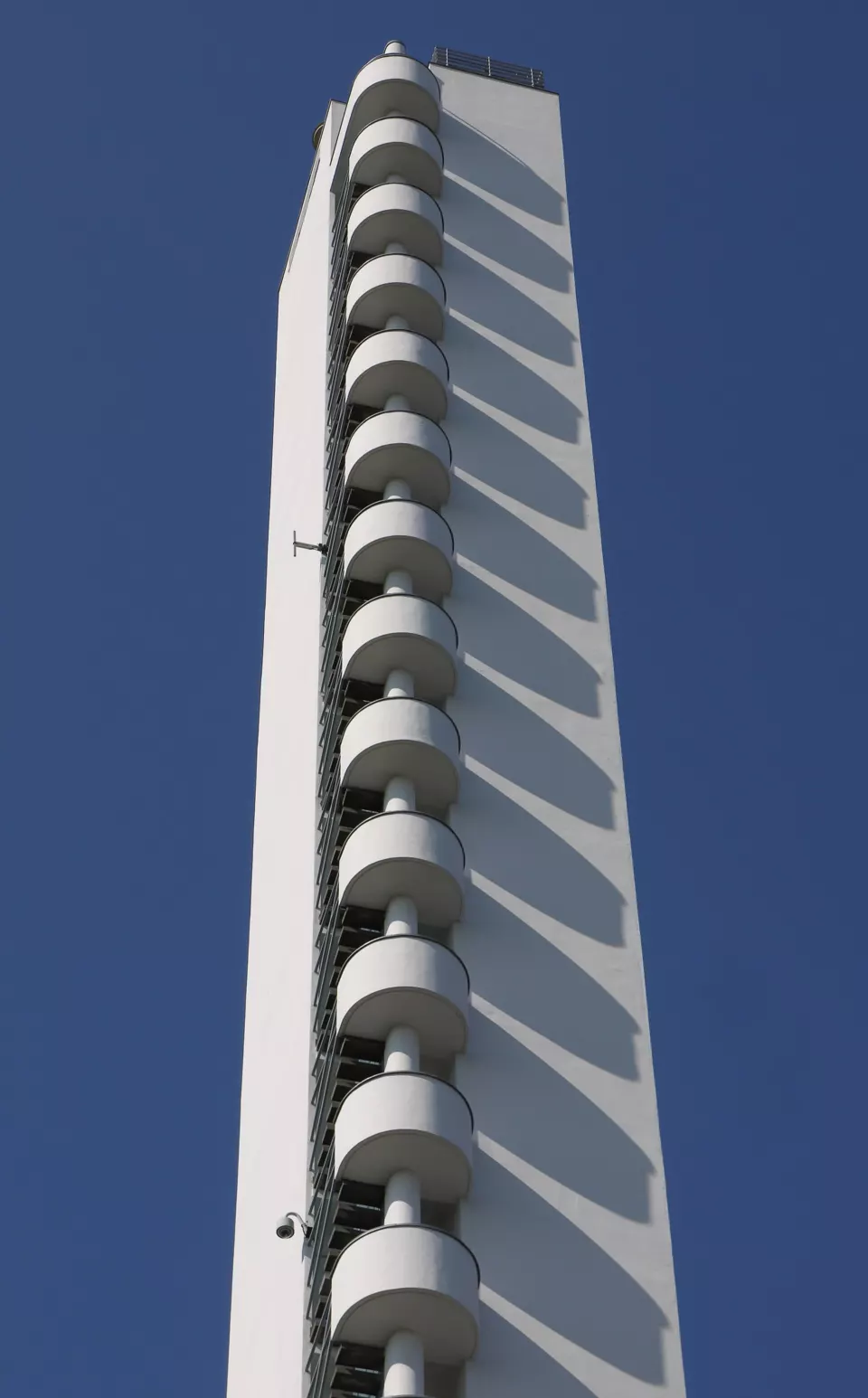
As an amateur Patterson was a middleweight. He won New York Golden Gloves titles in 1951 and 1952 and the national amateur middleweight championship in 1952, which earned him a place on the United States team for the Olympic Games in Helsinki that summer.
In Finland he was close to untouchable. He outpointed Omar Tebakka of France in his opening bout, stopped Leonardus Jansen of the Netherlands in the first round, beat Stig Sjölin of Sweden when the Swede was disqualified in the third, and then knocked out Vasile Tiță of Romania in the opening round of the final. Accounts differ slightly on how to count his Helsinki results: Team USA's Hall of Fame profile credits him with knockouts in all five of his bouts, while the fight-by-fight list on Wikipedia records four wins, one of them on points. Either way, he left Helsinki with the middleweight gold medal, with an amateur record listed at 40 wins and 4 defeats.
Learning the Trade as a Professional
Patterson turned professional on September 12, 1952, knocking out Eddie Godbold in four rounds. D'Amato moved him carefully, and he grew from middleweight into a light heavyweight and then a small heavyweight. His only loss in those early years came on June 7, 1954, at the Eastern Parkway Arena in Brooklyn, where he dropped an eight-round decision to former light heavyweight champion Joey Maxim.
Youngest Champion: Archie Moore, Chicago, 1956
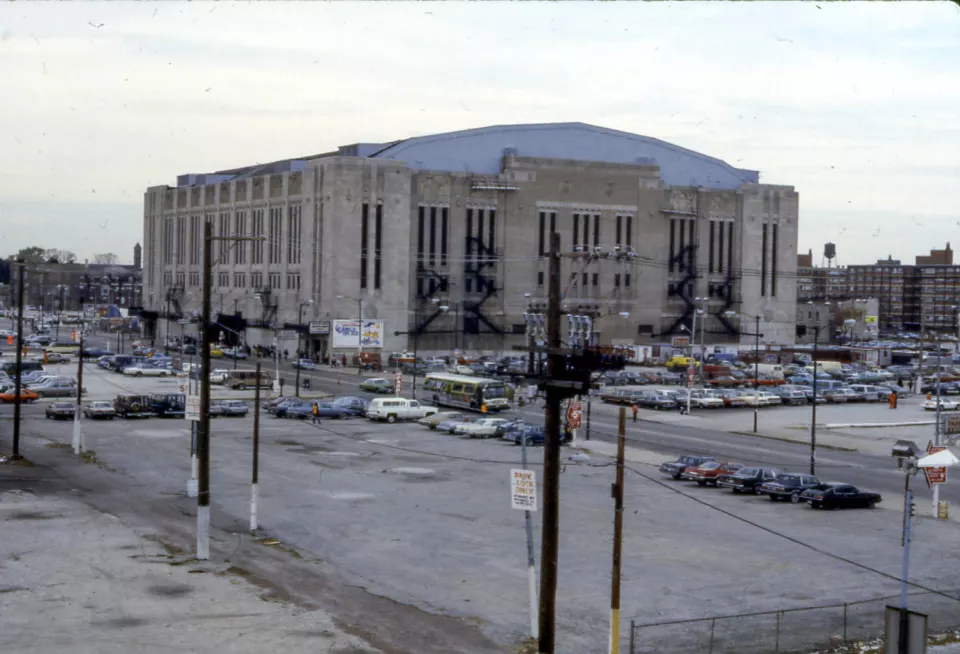
On November 30, 1956, at Chicago Stadium, Patterson knocked out Moore in the fifth round. At 21 years and roughly ten months, he became the youngest man to hold the world heavyweight championship up to that time. He was also the first Olympic gold medalist to win the professional heavyweight title. The Ring magazine named him its Fighter of the Year for 1956.
The Johansson Trilogy
On June 26, 1959, at Yankee Stadium, Ingemar Johansson knocked Patterson down seven times in the third round before referee Ruby Goldstein stopped the fight. The title had left America for Sweden.
The rematch, on June 20, 1960, at the Polo Grounds in New York, reversed everything. Patterson caught Johansson with a leaping left hook in the fifth round and the Swede was counted out, left lying unconscious on the canvas for several minutes. With that win Patterson became the first heavyweight in history to regain the world championship after losing it. The Ring again made him its Fighter of the Year.
The third fight, on March 13, 1961, at the Miami Beach Exhibition Hall, was wilder. Patterson was knocked down twice in the first round and also dropped Johansson in that round before finishing him in the sixth. He then defended once more, knocking out Tom McNeeley in four rounds at Maple Leaf Gardens in Toronto that December. Out of the ring the two rivals became genuine friends; years later they ran the Stockholm Marathon together.
Two Nights Against Sonny Liston
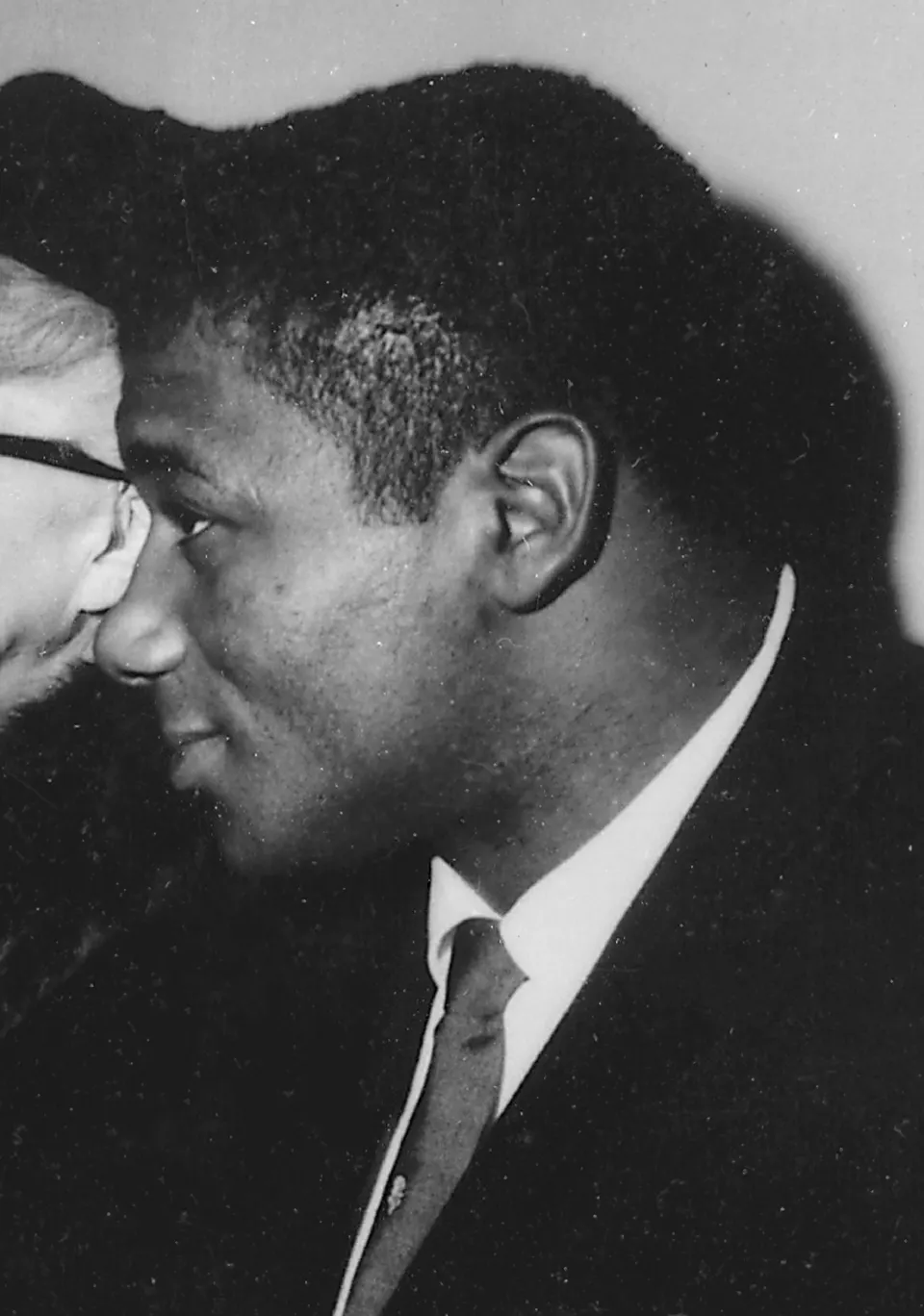
His next challenger was Sonny Liston, and the fight took place on September 25, 1962, at Comiskey Park in Chicago. Liston knocked Patterson out in 2 minutes and 6 seconds of the first round. Patterson reportedly drove back to New York wearing dark glasses and a false beard.
The rematch on July 22, 1963, at the Las Vegas Convention Center, went almost exactly the same way: a first-round knockout, this time at 2:10. Those were the only two occasions in his long career on which Patterson was counted out.
Ali, Ellis and the Long Final Chapter
Patterson did not walk away. He beat Eddie Machen in 1964 and outpointed George Chuvalo in February 1965 in a contest The Ring named its Fight of the Year. That November in Las Vegas he challenged Muhammad Ali, who had taunted him harshly in the build-up over Patterson's refusal to use his new name. Fighting with an injured back, Patterson was stopped in the twelfth round.
He kept going for seven more years. He knocked out Henry Cooper at Wembley in 1966, drew with and then lost to Jerry Quarry in 1967, and in September 1968 in Stockholm dropped a fifteen-round decision to Jimmy Ellis for the WBA title, a verdict the Associated Press later described as disputed. His last fight came on September 20, 1972, at Madison Square Garden, a rematch with Ali that was stopped after the seventh round because of a cut over Patterson's eye. He finished with a professional record of 55 wins, 8 losses and 1 draw, with 40 victories inside the distance.
His AP obituary recorded a line that summed up how he saw his career: "They said I was the fighter who got knocked down the most, but I also got up the most."
Commissioner Patterson
After boxing, Patterson settled in New Paltz, trained fighters including his adopted son Tracy Harris Patterson, who became a world champion in the 1990s, and moved into the sport's administration. He served as a member of the New York State Athletic Commission from 1977 to 1984 and was appointed its chairman in 1995. Team USA's profile also notes that he testified before Congressional subcommittees on the future of boxing.
His tenure as chairman ended in 1998, when he resigned after a legal deposition raised concerns about his memory. Sources differ here: the New World Encyclopedia says he held the job almost until his death, but the Associated Press obituary dates his resignation to 1998. According to the AP, he lived with Alzheimer's disease for about eight years; it, along with prostate cancer, marked his final years. He was inducted into the International Boxing Hall of Fame in 1991. Floyd Patterson died at his home in New Paltz on May 11, 2006, aged 71.
Sources
- Floyd Patterson, Wikipedia, accessed October 2026
- Floyd Patterson, Team USA Hall of Fame, accessed October 2026
- Floyd Patterson dies at 71 (Associated Press obituary), Jamaica Gleaner, May 12, 2006
- Floyd Patterson, New World Encyclopedia, accessed October 2026


