
How Mike Tyson Went From Brownsville to Youngest Heavyweight Champion and Beyond
The life of Mike Tyson, from a violent Brooklyn childhood and Cus D'Amato's home in Catskill to the undisputed heavyweight title, prison, comeback and a final bout at 58.

He grew up in Brownsville, was arrested dozens of times before he was a teenager, and won a world heavyweight title at 20. Over the next four decades Mike Tyson was undisputed champion, lost that crown in one of the biggest upsets the sport has seen, went to prison, came back, and was still getting into a ring at 58. This is his life, from the streets of Brooklyn to a stadium in Texas.
Brooklyn Beginnings: Fort Greene to Brownsville
Michael Gerard Tyson was born on June 30, 1966, at Cumberland Hospital in the Fort Greene section of Brooklyn. When he was about ten, the family moved to Brownsville, one of the toughest neighborhoods in New York City. By the account in his Wikipedia biography, he had been arrested 38 times by the age of 13, and he estimated he had been in around 150 street fights.
The arrests put him in the Tryon School for Boys, a juvenile facility in Johnstown, upstate New York. There he met a counselor named Bobby Stewart, a former Golden Gloves champion. Stewart began teaching the troubled teenager to box. He later introduced him to a trainer in the Catskills.
Cus D'Amato and the House in Catskill
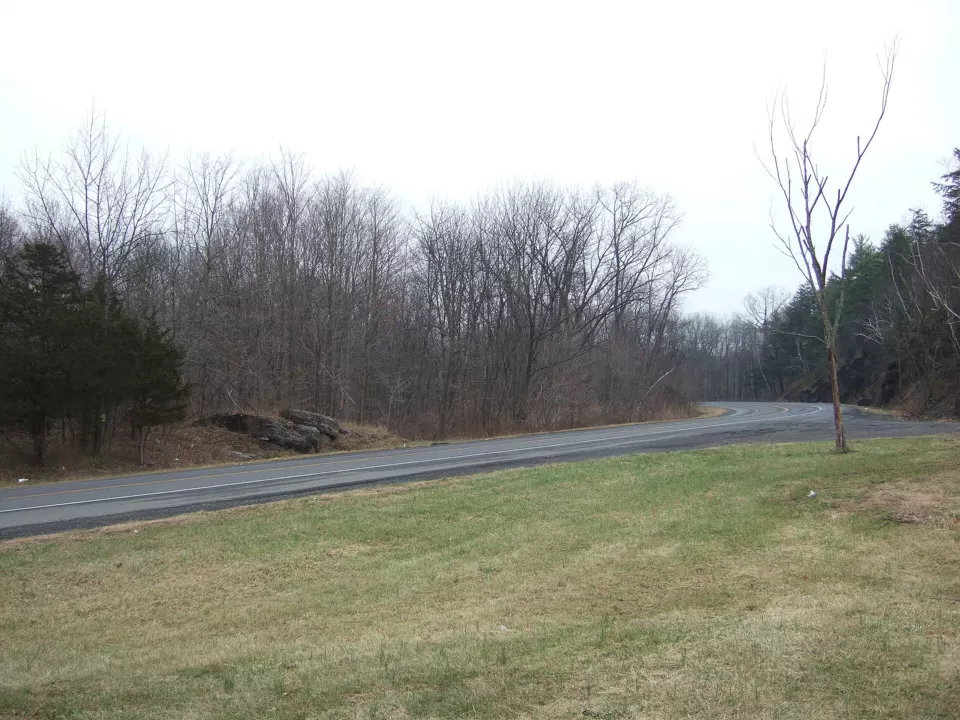
Cus D'Amato was a veteran trainer who had moved to Catskill, New York, and opened a boxing gym there. He took Tyson in when the boy was around 12 or 13. Tyson's mother died when he was 16, and D'Amato, together with his companion Camille Ewald, became his legal guardian. Their aim was to protect him personally and financially.
In Catskill, Tyson was taught the peek-a-boo style, in which both gloves stay up in front of the face for protection. Teddy Atlas worked with him early on, and Kevin Rooney took over as his main trainer. Tyson has said many times that the old man gave him his confidence and was the father figure he had never had.
As an amateur, Tyson won gold at the Junior Olympics in 1981 and 1982 and the New York Golden Gloves heavyweight title in 1984. He went 24-3 in the amateurs. Two of those losses came against Henry Tillman.
Kid Dynamite Turns Professional
Tyson made his professional debut on March 6, 1985, in Albany, New York, stopping Hector Mercedes in the first round. He had 15 fights in his first year as a pro. He won his first 19 fights by knockout, 12 of them inside the first round.
D'Amato did not get to see where this led. He died of pneumonia on November 4, 1985, at the age of 77. Rooney stayed on as head trainer.
November 1986: The Youngest Heavyweight Champion
On November 22, 1986, at the Las Vegas Hilton, Tyson fought Trevor Berbick for the WBC heavyweight title. He came in at 27-0 with 26 knockouts. Berbick was 33 and chose to stand and trade rather than move. A left hook in the second round put him down, and he went down again trying to get up before the referee stopped the fight. According to HISTORY.com, the whole thing took 5 minutes and 35 seconds of fighting.
At 20 years, 4 months and 22 days, Tyson was the youngest heavyweight champion in history. That record still stands. HISTORY.com quotes his post-fight boast: "I'm the youngest heavyweight boxing champion in history, and I'm going to be the oldest."
The Undisputed Reign
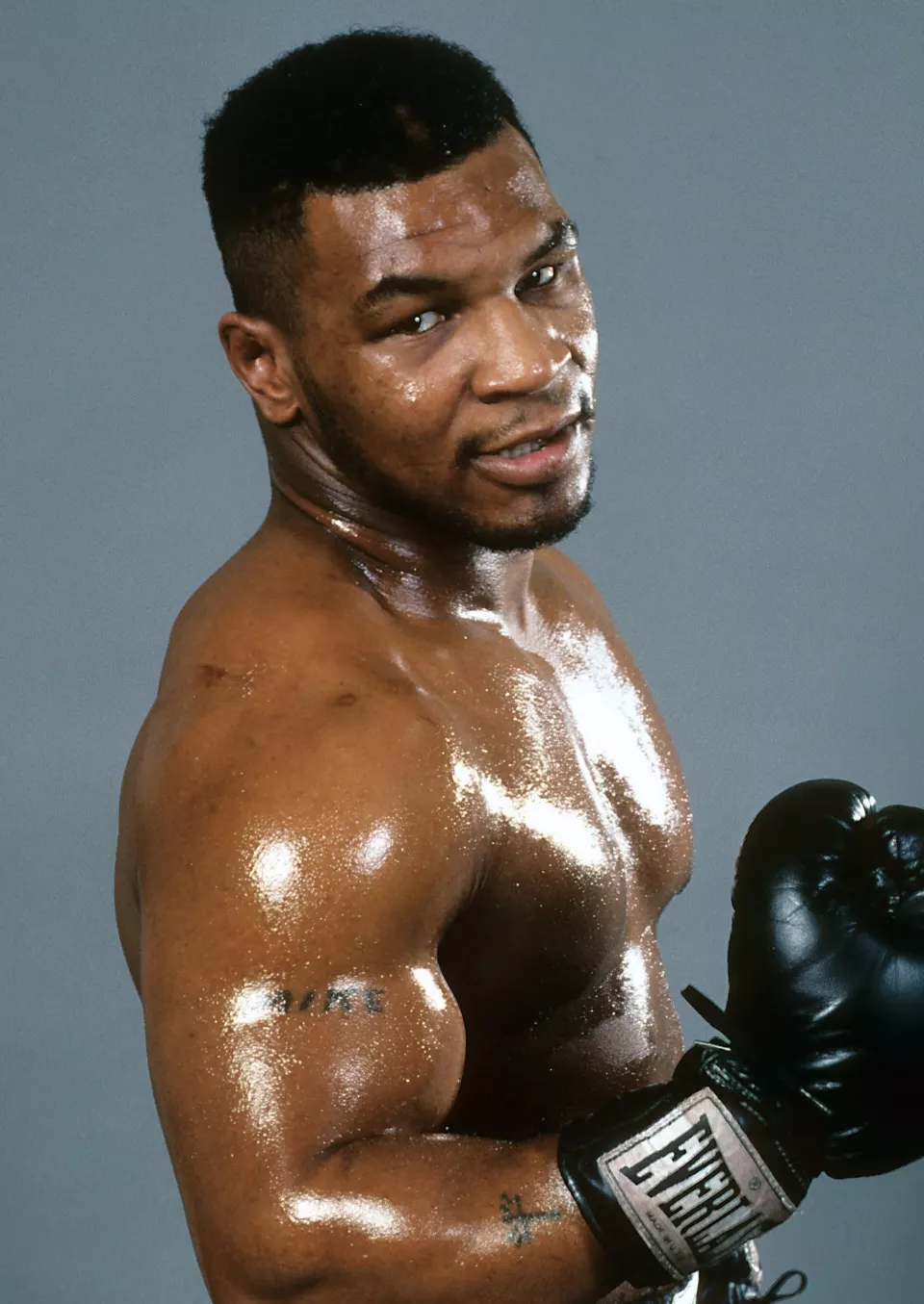
The heavyweight titles at the time were split among three sanctioning bodies. Tyson took the WBA belt from James "Bonecrusher" Smith on a unanimous decision in Las Vegas on March 7, 1987. On August 1, 1987, he outpointed Tony Tucker for the IBF title. He was the first heavyweight to hold the WBA, WBC and IBF belts at the same time. The Ring named him Fighter of the Year in 1986 and again in 1988.
The fight that confirmed him as the lineal champion came on June 27, 1988, against the unbeaten Michael Spinks, and it lasted 91 seconds. Outside the ring, though, his life was coming apart. By late 1988 Tyson had split with Bill Cayton and fired Kevin Rooney, the last direct link to the D'Amato camp. He defended the title twice in 1989, stopping Frank Bruno in five rounds and Carl Williams in one.
Tokyo, 1990: The Fall
On February 11, 1990, Tyson faced James "Buster" Douglas at the Tokyo Dome and was knocked out in the tenth round. Douglas was a huge underdog. Tyson had dropped him in the eighth round, and the length of the count Douglas got became a lasting controversy. It was the first time Tyson had ever been knocked down as a pro, and it ended his undisputed reign.
Tyson won his next four fights, including a disputed seventh-round stoppage of Donovan "Razor" Ruddock in March 1991 and a unanimous decision in their June rematch. A title fight with Evander Holyfield was set for November 1991 but was called off when Tyson injured his ribs.
Conviction and Three Years in Prison
In July 1991, Tyson was accused of raping Desiree Washington, an 18-year-old contestant in the Miss Black America pageant, in an Indianapolis hotel room. He said the encounter was consensual. On February 10, 1992, an Indiana jury convicted him. Sources describe the sentence differently: Wikipedia says six years, while HISTORY.com says ten years with four suspended. He began serving it in March 1992 at the Indiana Youth Center near Plainfield and was released in March 1995 after about three years.
The Comeback and the Holyfield Fights
His 1995 return against Peter McNeeley was a huge financial event, and Wikipedia records it as a pay-per-view record at the time. He then beat Buster Mathis Jr. In March 1996 he stopped Frank Bruno in three rounds to regain the WBC title. That September he knocked out Bruce Seldon in the first round to add the WBA belt.
On November 9, 1996, Tyson finally fought Evander Holyfield and was stopped in the eleventh round. The rematch on June 28, 1997, ended in the third round when Tyson was disqualified for biting Holyfield's ears. He had complained about head butts. The Nevada Athletic Commission revoked his license and fined him $3 million, and the license was restored in October 1998.
Later Career and Retirement
In February 1999 he was sentenced to a year in jail for assault after a traffic incident, and he served nine months. A 2000 win over Andrew Golota was changed to a no contest after he tested positive for marijuana. On June 8, 2002, in Memphis, Lennox Lewis knocked him out in the eighth round. In 2003 he filed for bankruptcy, despite career earnings that Wikipedia puts at around $300 million. His last professional win came that February against Clifford Etienne in 49 seconds. After losing to Danny Williams in 2004, he quit in the seventh round against Kevin McBride on June 11, 2005, and announced his retirement.
Reinvention and a Final Bout at 58
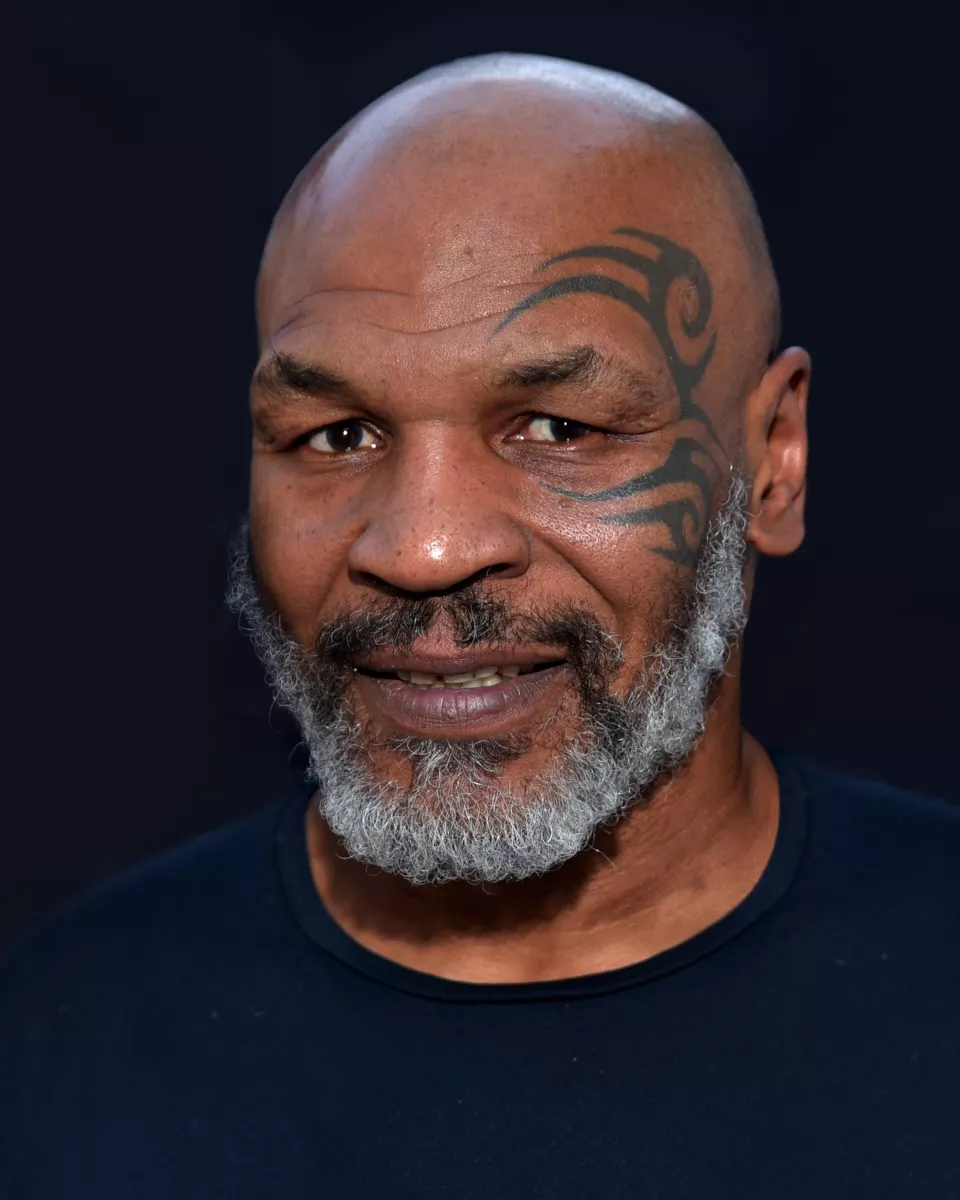
In retirement, Tyson started to change how the public saw him. The 2008 documentary "Tyson" let him tell his own story, and his cameo in the 2009 comedy "The Hangover" introduced him to a new generation. He published the memoir "Undisputed Truth" in 2013, hosted the podcast "Hotboxin' with Mike Tyson" and moved into the cannabis business. He was inducted into the International Boxing Hall of Fame in June 2011.
He kept going back to the ring. In November 2020 he boxed an eight-round exhibition against Roy Jones Jr., which was scored a split draw. Then, on November 15, 2024, at 58, he fought Jake Paul at AT&T Stadium in Arlington, Texas, in a bout Texas regulators sanctioned as professional. The rounds were two minutes long and the fighters wore 14-ounce gloves. Paul won a unanimous decision, 80-72, 79-73 and 79-73. Fox News reported that Tyson said afterward he "wasn't in the ring to please the world," only to show himself what he could do.
Legacy
Tyson's professional record stands at 50 wins, 44 by knockout, 7 losses and 2 no contests. He unified the heavyweight titles at 21 and dominated the division in the late 1980s. His life outside the ring was marked by serious crimes, prison and financial ruin. His mentor never saw him become champion, and he is still the youngest heavyweight champion in the sport's history.
Sources
- Mike Tyson, Wikipedia, accessed October 2026
- Cus D'Amato, Wikipedia, accessed October 2026
- Jake Paul vs. Mike Tyson, Wikipedia, accessed October 2026
- Mike Tyson becomes the youngest heavyweight champ in history, HISTORY.com (This Day in History, November 22)
- Boxing legend convicted of raping beauty queen, HISTORY.com (This Day in History, February 10)
- Jake Paul defeats Mike Tyson by unanimous decision, Fox News, November 2024


