
How Roy Jones Jr. Went From the Seoul Robbery to Middleweight-to-Heavyweight History
Robbed of Olympic gold in Seoul in 1988, Roy Jones Jr. beat Bernard Hopkins and James Toney, ruled light heavyweight and took the WBA heavyweight title from John Ruiz in 2003 before knockout losses to Antonio Tarver and Glen Johnson began a long late career.

Roy Jones Jr. left Seoul in 1988 with a silver medal he had plainly outboxed, then spent the next fifteen years turning that injustice into one of the most dazzling professional careers of his era: titles at middleweight, super middleweight and light heavyweight, and finally a heavyweight belt taken from a man who outweighed him by 33 pounds. What followed was harder to watch, and it lasted much longer than anyone expected.
A Hard Apprenticeship in Pensacola
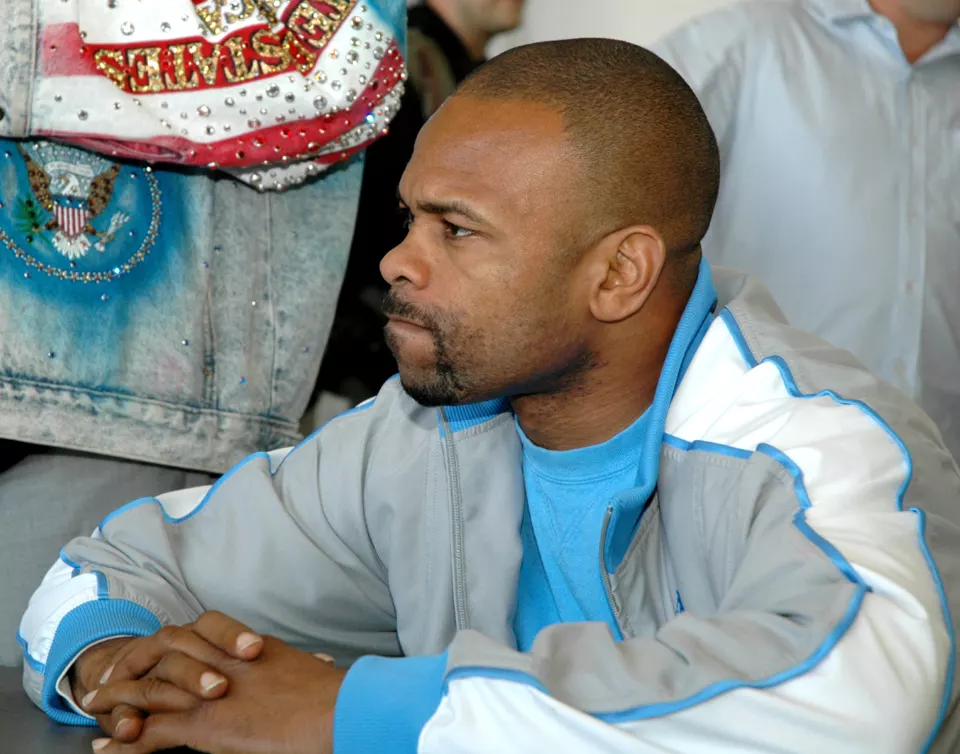
Jones was born in Pensacola, Florida, on January 16, 1969. His father, Roy Jones Sr., was a Vietnam veteran and former boxer who later worked as an aircraft engineer, and he ran his son's early training with a severity that later became part of the fighter's own story. The discipline produced results quickly. The boy won the National Junior Olympics at 119 pounds in 1984, then took National Golden Gloves titles in 1986 at 139 pounds and in 1987 at 156 pounds. By the time he finished as an amateur, his record stood at 121 wins and 13 losses.
In 1988 he went to the Olympic Games in Seoul as a light middleweight.
Seoul, October 2, 1988: The Decision That Changed Olympic Boxing
Jones reached the final and met the home fighter, South Korea's Park Si-hun. For three rounds the American controlled the contest; the punch count credited Jones with 86 landed blows against 32 for Park. The judges still gave the bout to Park by a 3-2 vote.
In an unusual twist, Jones was named winner of the Val Barker Trophy as the outstanding boxer of the tournament, the honor going to the man who had lost his final. The fallout continued for years. Two of the three judges who voted for Park were later banned for life, and the decision, together with another disputed result involving American flyweight Michael Carbajal, pushed Olympic organizers toward a new scoring system for amateur boxing. In 1996, East German Stasi documents surfaced alleging that judges had been paid to favor South Korean boxers, but according to the Associated Press an International Olympic Committee investigation in 1997 found no evidence of bribery.
The story found an epilogue decades later. On May 30, 2023, Park traveled with his family to Jones's gym in Pensacola and handed him the gold medal. The visit became public only in September 2025, when Jones released video of it. Speaking through his son, Park told Jones the medal belonged to him, as quoted by the Associated Press.
Turning Professional and Beating Bernard Hopkins
Jones made his professional debut on May 6, 1989, stopping Ricky Randall in two rounds. He was carefully matched early and won his first fifteen fights before stepping up. The first real test came on May 22, 1993, at RFK Stadium in Washington, D.C., where he faced a young Bernard Hopkins for the vacant IBF middleweight title. It was the first world title fight for both men. Jones won a unanimous decision, all three judges scoring it 116-112, and he later said he had gone into the fight with an injured right hand. The two met again in 2010, when Hopkins won the rematch on points.
November 18, 1994: Dismantling James Toney
The fight that announced Jones as something exceptional took place at the MGM Grand in Las Vegas. James Toney, the IBF super middleweight champion, was unbeaten and widely rated the best fighter at 168 pounds; for the first time as a professional, Jones went in as the underdog. Boxing News reported that Toney had come down from about 207 pounds to make the weight.
Jones was faster in every exchange. In the third round he taunted Toney and then dropped him with a leaping left hook, a flash knockdown that set the tone. The scorecards read 117-110, 119-108 and 118-109. The Ring named Jones its Fighter of the Year for 1994.
Light Heavyweight King
Moving up again, Jones won the interim WBC light heavyweight title in November 1996 with a wide decision over Mike McCallum. His first professional defeat came in 1997 against Montell Griffin, by disqualification: Jones struck Griffin while he was down, at a point when Jones led on two of the three scorecards. On June 5, 1999, a decision over Reggie Johnson unified the WBA, WBC and IBF belts and made Jones the undisputed light heavyweight champion.
March 1, 2003: A Middleweight Wins the Heavyweight Title
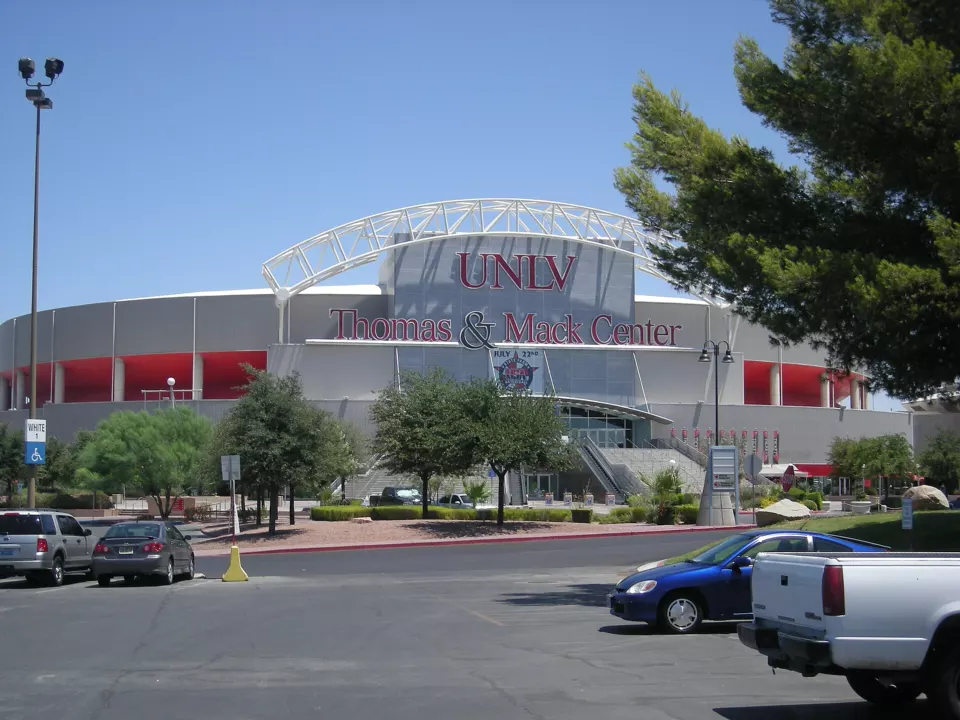
Jones then attempted something that had not been done in over a century. At the Thomas & Mack Center in Las Vegas he challenged John Ruiz for the WBA heavyweight title, weighing 193 pounds to Ruiz's 226. Boxing News put the crowd at 15,300 and noted that Jones still went off as a 9-5 favorite.
Speed decided the fight. Jones took away Ruiz's jab early, and in the fourth round a punch bloodied the champion's nose; ESPN described it as an uppercut, Boxing News as a straight right. Ruiz spent much of the remaining rounds trying to counter. Jones tired around the eighth and ninth but was never in serious danger, and the judges scored it 118-110, 117-111 and 116-112. He became the first former middleweight champion to win a heavyweight title since Bob Fitzsimmons beat James J. Corbett in 1897, 106 years earlier. Afterwards he told reporters, as ESPN recorded, that he would always be Roy Jones and would not change until someone changed him.
Tarver and Johnson: The Knockouts
Back at light heavyweight on November 8, 2003, Jones struggled to a majority decision over Antonio Tarver, scored 117-111, 116-112 and 114-114. In the rematch at Mandalay Bay on May 15, 2004, Jones was a 4-1 favorite. Early in the second round he missed with a right hand and Tarver answered with a left that put him down near the ropes. Jones rose at about seven, but referee Jay Nady waved it off. Sources differ slightly on the official time, given as 1:31 or 1:41 of the round. "I was hit with a good shot, a very good shot," Jones said, according to the AP report carried by the Mail & Guardian.
Four months later, on September 25, 2004, at the FedExForum in Memphis, he challenged IBF champion Glen Johnson. Johnson, a heavy underdog, outworked him and ended it less than a minute into the ninth round with an overhand right. Jones lay on the canvas for several minutes; accounts of how long he was unconscious vary. The Ring named it the upset of the year. A third fight with Tarver, in Tampa on October 1, 2005, went the distance, and Tarver won unanimously, 117-111, 116-112, 116-112.
The Long Road After the Prime
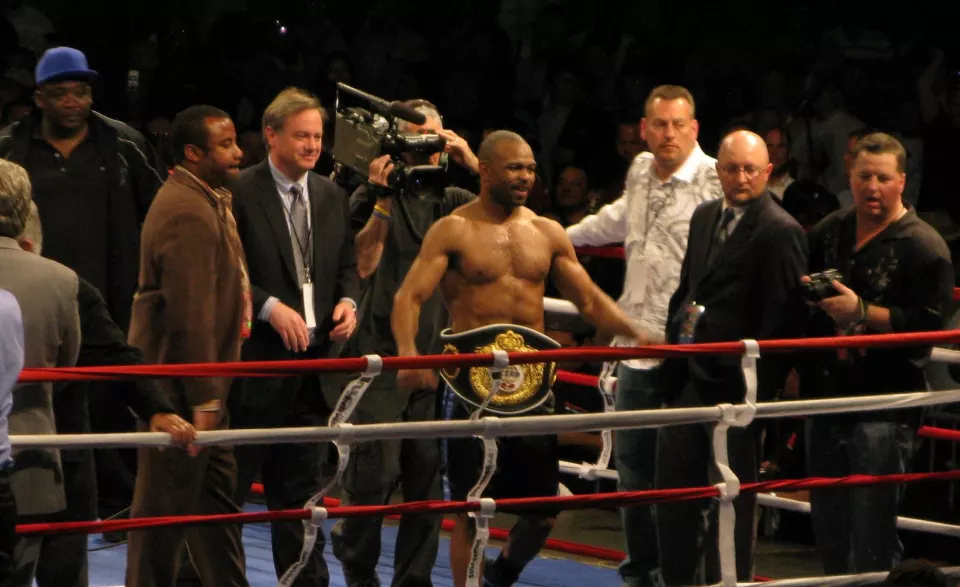
Jones did not retire. He outpointed Felix Trinidad at a 170-pound catchweight in January 2008, then lost a lopsided decision to Joe Calzaghe that November. A first-round stoppage by Danny Green in Sydney followed in December 2009. In May 2011, Denis Lebedev knocked him out with two seconds left in a ten-round fight, and in December 2015 Enzo Maccarinelli stopped him in four rounds at cruiserweight.
His last professional win came in 2018 at the Pensacola Bay Center, a decision over Scott Sigmon in his hometown. He later returned for an eight-round exhibition with Mike Tyson in November 2020, which ended without an official winner, and in April 2023 he lost a majority decision to former UFC fighter Anthony Pettis. Published records differ on how that fight is counted: the Associated Press lists him at 66-9, while other tallies give 66 wins, 47 by knockout, and 10 losses.
Canastota and Legacy
The International Boxing Hall of Fame elected Jones on the first ballot in its class of 2022, alongside his old rival James Toney, and he was inducted in Canastota, New York, in June 2022. The lasting picture is less the knockouts at the end than the young man from Pensacola who was robbed in Seoul and then spent fifteen years proving the judges wrong.
Sources
- Roy Jones Jr., Wikipedia, accessed October 2026
- Park Si-hun, Wikipedia, accessed October 2026
- Bernard Hopkins, Wikipedia, accessed October 2026
- Roy Jones Jr. vs. Glen Johnson, Wikipedia, accessed October 2026
- Roy Jones Jr. given the 1988 Olympic gold medal by the boxer who got the controversial win over him, Associated Press (Brian Mahoney), September 3, 2025
- Roy Jones Jr. Selected for Induction into International Boxing Hall of Fame, Pensacola News Journal (Bill Vilona), December 8, 2021
- Jones makes heavyweight history against Ruiz, ESPN, March 1, 2003
- On this day: Roy Jones Jnr makes history against John Ruiz, Boxing News
- Roy Jones Jnr dominates James Toney in virtuoso drubbing, Boxing News
- Tarver shocks Jones with knockout win, Mail & Guardian (Sapa-AP), May 15, 2004
- Tarver retains IBO title, outpoints Jones, Deseret News, October 2, 2005


