
Jimmy McLarnin Went From a Vancouver Backyard to Two Welterweight Titles
Born in County Down and raised in Vancouver, Jimmy McLarnin was shaped by manager Pop Foster, beat Benny Leonard, twice held the welterweight title and retired wealthy in 1936.

Jimmy McLarnin was born in County Down, grew up in Vancouver and was taught to box in a backyard gym built by a former longshoreman named Pop Foster. He beat a string of champions, won the world welterweight title twice and then quit in 1936 with his money still in the bank, which was rare for a fighter of his era. He lived until 2004.
From County Down to the Canadian Prairie
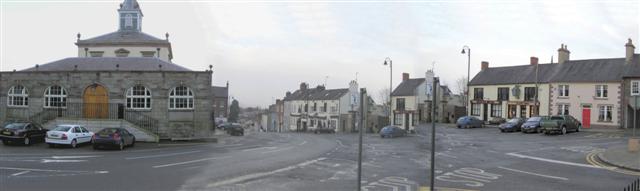
James Archibald McLarnin was born on December 19, 1907. Wikipedia and The Fight City give his birthplace as Hillsborough in County Down, and The Canadian Encyclopedia says "near Belfast." The descriptions are close enough to fit together, and The Fight City lists "The Belfast Spider" among the nicknames that followed him. According to The Canadian Encyclopedia, he was the fifth of twelve children.
His father Sam was a butcher and a Methodist. The family emigrated to Saskatchewan when Jimmy was very young, in 1910 according to The Canadian Encyclopedia, and tried wheat farming. The prairie winter ended that. The sources disagree on how long they stayed. The Canadian Encyclopedia says they moved to Vancouver after one winter, and Wikipedia dates the move to around 1917. In Vancouver the McLarnins ran a second-hand clothing store, and the boy sold newspapers on the street.
Pop Foster and the Backyard Gym
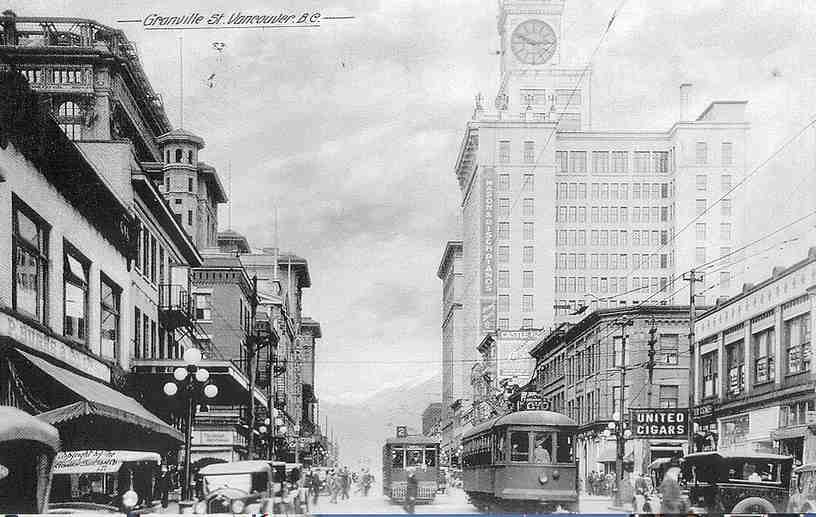
Wikipedia says McLarnin started boxing at about ten, after he had to defend his newspaper corner with his fists. The man who shaped him was Charles "Pop" Foster. Wikipedia describes Foster as a former professional boxer, and The Canadian Encyclopedia says he was a longshoreman who had once fought in carnivals. He was a friend of McLarnin's father. With the father's consent, Foster put together a makeshift gym in the family's backyard and taught the boy the basics of the trade.
By Wikipedia's account Foster spotted the boy's talent at about thirteen and was convinced the boy would one day be a world champion. He managed McLarnin for the whole of his career. They became much more than a fighter and his manager. When Foster died, he left everything he owned to McLarnin, according to Wikipedia. The Fight City notes that McLarnin had won the British Columbia amateur flyweight title before turning sixteen.
Baby Face Heads South
Purses in Vancouver were small, so Foster took his fighter to California. The Fight City says McLarnin was about sixteen when he went and that he lied about his age to get licensed. The youthful face behind those papers produced the nickname that stuck, Baby Face. He fought often in Oakland and Los Angeles and, according to The Fight City, won nineteen times in a little over a year.
The win that made his name came on January 13, 1925, over Fidel LaBarba, who had won the flyweight gold medal at the Paris Olympics. Wikipedia records the bout as being for a Pacific Coast flyweight title. McLarnin also beat the reigning flyweight champion Pancho Villa in a non-title match, and he took his first defeat from Bud Taylor, a future bantamweight champion. He grew with every year. A boy who had started at flyweight was soon fighting lightweights and then welterweights.
A Near Miss Against Sammy Mandell
New York came next. In 1928 he knocked out Sid Terris in the first round at Madison Square Garden. On May 21 of that year he got his first world title shot, against lightweight champion Sammy Mandell at the Polo Grounds, and lost a fifteen-round decision. He got some revenge on November 4, 1929, when he outpointed Mandell over ten rounds at Chicago Stadium in a non-title fight.
His hands gave him trouble. The Fight City reports that he broke his right fist twice in 1930, and that year he also lost to Billy Petrolle. He beat Petrolle twice afterwards. During this stretch promoters advertised his matches with Jewish opponents in openly ethnic terms, as was common in that era, and The Fight City lists labels such as "The Hebrew Scourge" among the names attached to him in print.
Ending Benny Leonard's Comeback
On October 7, 1932, McLarnin met Benny Leonard at Madison Square Garden. Leonard had retired as lightweight champion in 1925. According to Wikipedia, he lost most of his fortune in the 1929 crash and returned to the ring in 1931, winning a run of carefully chosen fights. Nearly 19,000 people came to see the old master. Leonard caught McLarnin with an early right that put him down briefly. The younger man got up, dropped Leonard in the second round and had him dazed in the sixth, when the referee stopped it. Leonard never fought again.
Two Minutes and Thirty-Seven Seconds at Wrigley Field
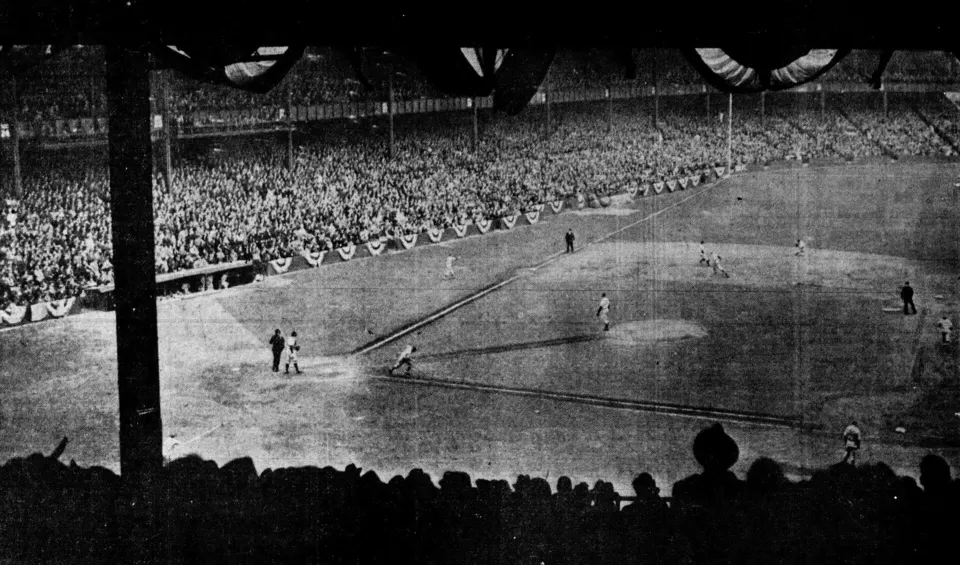
The title fight came on May 29, 1933, at Wrigley Field in Los Angeles. The champion was Young Corbett III, who had won the welterweight belt from Jackie Fields only three months earlier. McLarnin knocked him out at 2:37 of the first round, The Canadian Encyclopedia reports. Wikipedia's Corbett entry records that the loss cost him the New York commission, NBA and Ring Magazine welterweight titles all at once.
Foster had predicted it more than a decade earlier, when the boy was training in a backyard in Vancouver. McLarnin was now the undisputed welterweight champion of the world.
Three Fights With Barney Ross
McLarnin's reign became a rivalry with Barney Ross. All three fights went fifteen rounds in New York, and RingTalk covers them in detail in a separate article. Ross won the title on a split decision at the Madison Square Garden Bowl in Queens on May 28, 1934. McLarnin won it back at the same venue on September 17, also on a split decision. On May 28, 1935, at the Polo Grounds, Ross took it for good in front of a crowd The Canadian Encyclopedia puts at 40,000. Sources disagree on that last verdict. Wikipedia lists it as unanimous, and The Fight City describes the series as a run of split decisions.
Walking Away With His Fortune
McLarnin fought three more times after losing to Ross. In 1936 he split a pair of fights with Tony Canzoneri, beating him on October 5, and on November 20 he outpointed the reigning lightweight champion Lou Ambers over ten rounds. Then he retired. The Fight City says he never came back, despite offers that would have paid him well to do so.
Wikipedia says he had invested his ring earnings carefully. In retirement he ran an electrical goods business, which The Fight City describes as a machine shop. He also played golf, lectured, and appeared in boxing films made between 1937 and 1946, including pictures featuring Joe Louis and Jack Dempsey. He raised a family, and Foster remained his mentor for life.
McLarnin died on October 28, 2004, in Richland, Washington, at the age of 96, and was buried at Forest Lawn Memorial Park in Glendale, California. One of the sources consulted, The Fight City, gives his age at death as 92 and his age at retirement as 31. His recorded birth and death dates support the figures of 96 and 28.
A Record Counted Differently
Even his record depends on the source. Wikipedia gives 55 wins, 11 losses and 3 draws in 69 bouts, with 21 knockouts. The Canadian Encyclopedia counts 63 wins, 20 by knockout, 11 losses and 3 draws. The BC Sports Hall of Fame also lists 63 wins but sets out the losses and draws differently, and it notes that he fought fourteen world champions over a thirteen-year career that began in 1923. Whatever the exact figures, the honours are not in doubt. Canada named him its Boxer of the Half-Century, he is in Canada's Sports Hall of Fame, the BC Sports Hall of Fame (inducted 1966) and the International Boxing Hall of Fame, and in 1996 Ring Magazine ranked him the fifth-greatest welterweight in history.
Sources
- Jimmy McLarnin, Wikipedia, accessed October 2026
- Jimmy McLarnin, The Canadian Encyclopedia, accessed October 2026
- The Irish Lullaby, Michael Carbert, The Fight City, December 18, 2025
- Jimmy McLarnin, BC Sports Hall of Fame, accessed October 2026
- Benny Leonard, Wikipedia, accessed October 2026
- Young Corbett III, Wikipedia, accessed October 2026


