
Pancho Villa the Filipino Flyweight Became Asia's First World Champion
Francisco Guilledo rose from a bootblack in Iloilo to knock out Jimmy Wilde at the Polo Grounds in 1923, becoming the first Asian world boxing champion. He died two years later, at 23, of an infection that followed a tooth extraction.

He stood about five feet one, reportedly never weighed more than 114 pounds, and went from shining shoes in Iloilo to knocking out Jimmy Wilde in front of a New York crowd. Francisco Guilledo, fighting as Pancho Villa, became the first Asian world boxing champion in 1923. Two years later, at 23, he was dead, killed not by a punch but by an infection that began in his mouth.
A Goat Herder on Negros Island
Francisco Villaruel Guilledo was born on August 1, 1901, on the island of Negros in the central Philippines. Wikipedia gives his birthplace as Ilog in Negros Occidental, the Philippine Star names La Carlota in the same province, and GMA News simply says Iloilo, the city across the strait where he spent part of his childhood. What the accounts agree on is the poverty. His father, a cowhand, left the family when the boy was an infant, and his mother raised him on a hacienda where he looked after goats.
Around the age of eleven he crossed to Iloilo City and earned coins as a bootblack. There he made friends with a local boxer, and the two eventually moved north to Manila, settling in the crowded Tondo district. Sparring sessions among friends drew attention from the city's boxing crowd, and the small, fast teenager began to look like a prospect.
How Francisco Guilledo Became Pancho Villa
Where the ring name came from is still argued over. One version credits Frank Churchill, an American promoter working in Manila, with borrowing the name of the Mexican revolutionary. Another holds that Paquito Villa, a Filipino businessman who managed the young fighter, adopted him around 1918 and gave him his own surname. The Philippine Star account follows the adoption story. Whichever is true, the name stuck, and it would end up on fight posters from Manila to Brooklyn.
Guilledo turned professional on January 1, 1919, stopping an opponent named Castro in the third round. Within roughly two years he had won the Philippine flyweight title by beating Terio Pandong. In early 1922 he came close to walking away from the sport after a personal disappointment and went home to Negros, but supporters talked him back into the ring.
Four Months to an American Title
In May 1922 the New York promoter Tex Rickard brought him to the United States, and Churchill and Paquito Villa sailed with him. His first American fight, on June 7, 1922, in Jersey City, was a win over Abe Goldstein. In August he lost to Frankie Genaro, but the setback did not slow him for long.
On September 14, 1922, at Ebbets Field in Brooklyn, Villa knocked out Johnny Buff in the eleventh round to take the American flyweight championship. GMA News dates the fight a day later, September 15. Either way, he had gone from unknown import to national champion in about four months. He gave that title back to Genaro on March 1, 1923, in a decision widely described as controversial, and the loss set up the most important night of his life.
The Polo Grounds, June 18, 1923
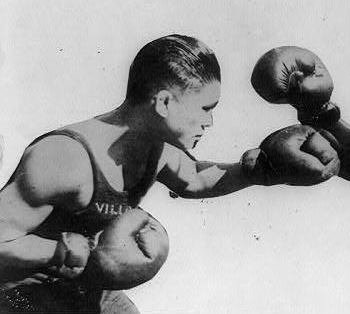
Jimmy Wilde, the Welshman known as the Mighty Atom, had been the world's dominant flyweight for years but had barely fought since losing to Pete Herman in 1921. Rickard coaxed him out of semi-retirement with a large purse; Wilde's Wikipedia entry puts the promise at 15,000 pounds. Sources give Wilde's age at the time as 30 or 31.
The two met at the Polo Grounds in New York on June 18, 1923. Crowd figures vary widely: Wikipedia and GMA News give around 20,000 to 23,000, while the boxing history site Queensberry Rules reports 40,000. The fight itself was one-sided. Villa pressed from the start, Wilde had a brief spell of success in the middle rounds, and the Filipino put him down in the fourth and fifth before a right hand to the jaw finished it in the seventh. Queensberry Rules quotes the Boston Herald describing Wilde as only a shell of the boxer he had once been.
Wilde never fought again and formally confirmed his retirement on January 1, 1924. Villa, still only 21, was flyweight champion of the world, the first Filipino and the first Asian to hold a world boxing title.
A Champion Comes Home
Villa held the title for the rest of his life and was never knocked out. Wikipedia lists defenses against fighters including Frankie Ash and Bud Taylor, along with a long run of no-decision bouts common in that era. He travelled back to the Philippines in 1924 and was welcomed with a parade and a reception at Malacanang Palace hosted by Manuel Quezon, before visiting Negros and Iloilo.
On May 2, 1925, at Wallace Field in Manila, he outpointed Clever Sencio over 15 rounds before a large home crowd, keeping his NBA, New York State Athletic Commission and Ring Magazine titles. It was his last title fight.
The Tooth, the McLarnin Fight and Ludwig's Angina
Back in America, Villa was matched with Jimmy McLarnin, a rising young fighter, in a non-title bout on July 4, 1925, in the San Francisco Bay Area. Sources disagree on the venue: Wikipedia's narrative names Ewing Field in San Francisco, its fight record lists Oaks Ballpark in Emeryville, and GMA News and the Philippine Star say Oakland.
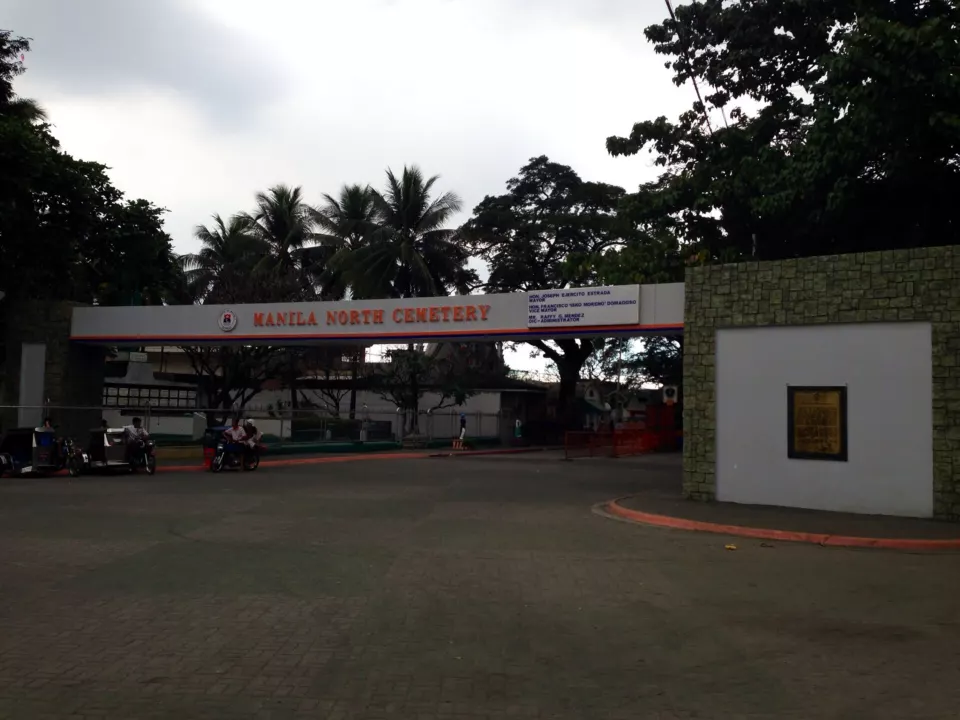
Before the fight his face had swollen from an ulcerated tooth, and he had it pulled by a dentist on the day of the bout. He insisted on going through with the fight anyway, spent long stretches guarding the painful side of his face, and lost a ten-round decision. In the days after, infection was found and more teeth were taken out. He was told to rest but did not. By July 13 he was in hospital in San Francisco, the infection had spread into his throat as Ludwig's angina, and he slipped into a coma during emergency surgery. He died on July 14, 1925, seventeen days before his 24th birthday. His body was returned to Manila and buried at the Manila North Cemetery in August 1925.
Record, Honors and a Fading Grave
Villa's numbers depend on who is counting. Wikipedia gives 77 wins, 4 losses, 4 draws and 2 no contests across 104 bouts, while GMA News cites 73 wins with 25 knockouts, 5 losses, 4 draws and 23 no-decisions. The Ring Magazine added him to its hall of fame in 1961, and the International Boxing Hall of Fame inducted him in 1994, the second Filipino honored there after Flash Elorde. The Philippine Star gives a different year, 1964, for his selection to the IBHOF, which conflicts with the 1994 date given by Wikipedia and GMA News. In 1999 the Associated Press ranked him as the century's best flyweight, tied with Miguel Canto.
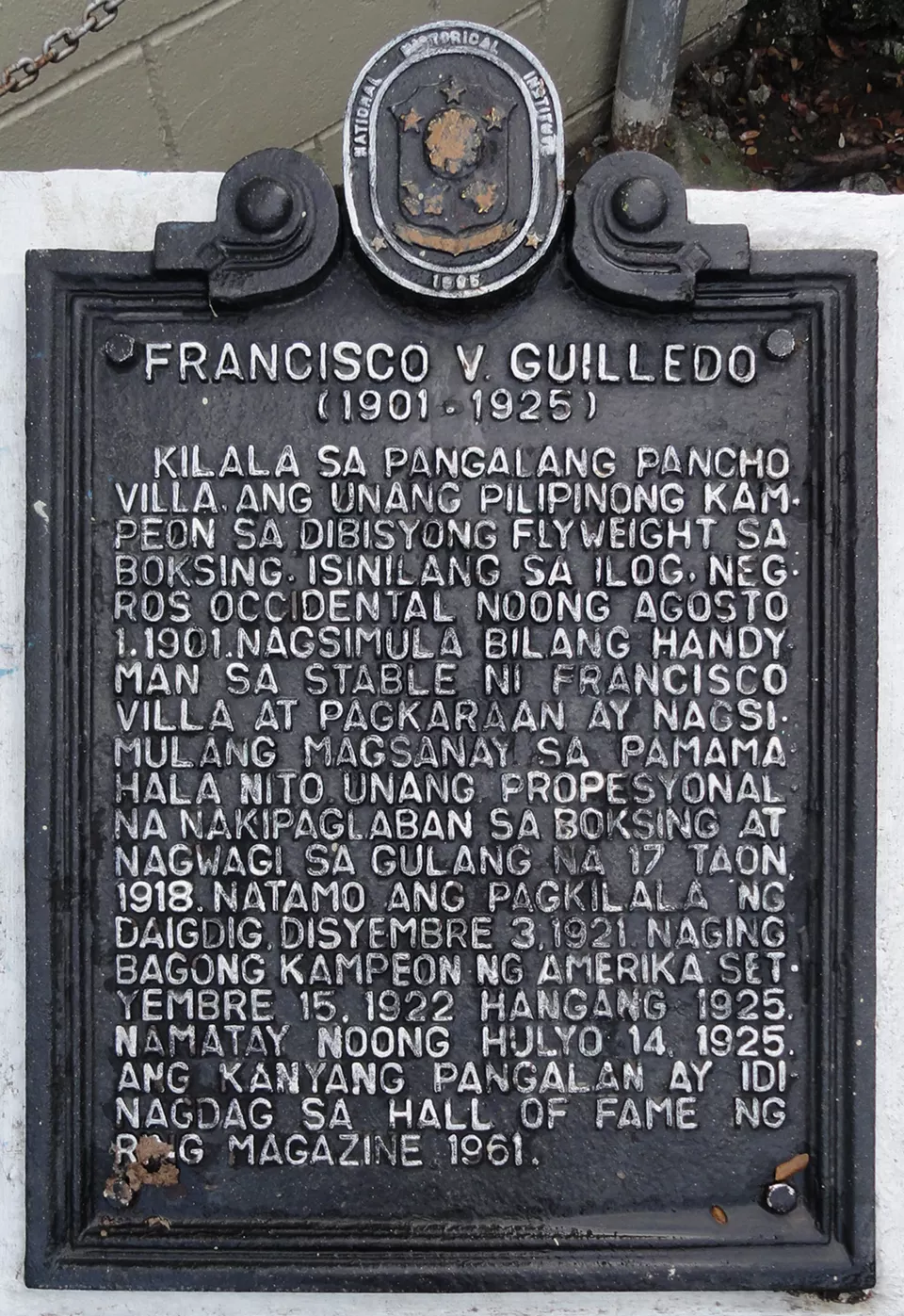
A National Historical Commission marker now tells his story to passers-by, and he is regularly named alongside Elorde and Manny Pacquiao among the greatest fighters the Philippines has produced. Yet Wikipedia notes that as recently as 2024 his tomb in Manila was reported to be deteriorating.
Sources
- Pancho Villa (boxer), Wikipedia, accessed October 2026
- Jimmy Wilde, Wikipedia, accessed October 2026
- Villa: Greatest Asian fighter, GMA News Online
- Throwback Thursday: Pancho Villa Irons Out Jimmy Wilde, Makes History, Queensberry Rules
- Pancho Villa, The Philippine Star (Cebu Sports), February 15, 2022


