
How Barney Ross Went From Maxwell Street to Three World Titles, Guadalcanal and a Battle With Addiction
Barney Ross lost his father to a robbery in Chicago, won world titles at lightweight, junior welterweight and welterweight, and fought a famous trilogy with Jimmy McLarnin. He later earned the Silver Star on Guadalcanal and overcame a morphine addiction.

Barney Ross came out of a Chicago immigrant ghetto, lost his father to a robber's bullet as a boy, and became one of the first fighters to hold world titles in three weight classes. He was never stopped in 81 professional fights, earned the Silver Star on Guadalcanal, and then fought a quieter war against the morphine habit that followed him home.
From the Lower East Side to Maxwell Street
He was born on December 23, 1909, as Dov-Ber Rosofsky, the son of Eastern European Jewish immigrants. Most accounts, including Wikipedia, the Jewish Virtual Library and Boxing News, place his birth in New York City, where the family lived on Manhattan's Lower East Side; the Jewish-American Hall of Fame entry instead gives Chicago as his birthplace. Spellings of the family name also vary between Rosofsky and Rasofsky, and the Jewish Virtual Library calls him Barnet.
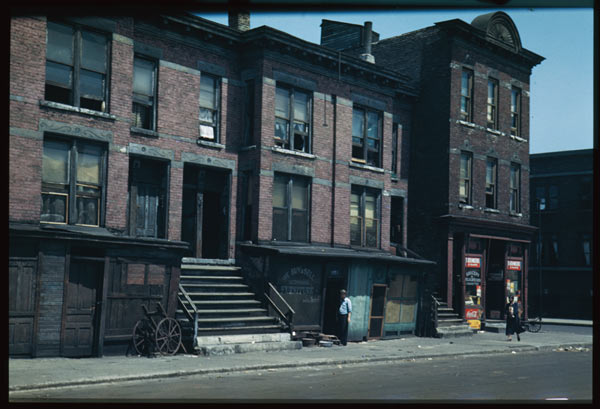
When he was about two, the family moved west to Chicago and settled in the Maxwell Street district, the city's crowded Jewish ghetto. His father, Isidore, was a rabbi who also ran a small grocery to support the household.
A Murder in the Family Store
The family's footing collapsed in 1924. Two robbers came into the grocery, and Isidore Rosofsky was shot dead when he resisted them. Sources put the son's age at 14, though Boxing News gives 13. The shock broke the family apart: his mother suffered a nervous breakdown, and the youngest children were sent to an orphanage or to relatives.
The teenager walked away from his Orthodox faith and drifted onto the streets as a brawler, petty thief and numbers runner. Wikipedia records that he ran errands for Al Capone's organization alongside another Maxwell Street youngster, Jack Ruby. Running through all of it was a single ambition: to earn enough money to bring his brothers and sister home.
Golden Gloves and a New Name
Boxing offered the quickest route to that money. In 1929 he won featherweight titles in both the Chicago Golden Gloves and the Intercity Golden Gloves tournament in New York, and he reportedly pawned the prizes he collected in roughly 250 amateur bouts to help the family. He fought as Barney Ross, a name Wikipedia says was chosen partly in his father's honor and partly as part of the broader push among Jewish immigrants' children to assimilate.
He turned professional at 19, outpointing Ramon Lugo over six rounds on September 1, 1929. His first defeat came the following April, a ten-round decision to Carlos Garcia.
Two Wins Over Tony Canzoneri
The breakthrough came on June 23, 1933, at Chicago Stadium, where Ross met Tony Canzoneri for the lightweight championship and the junior welterweight title over ten rounds. Ross took the decision and left the ring holding two world titles. The Jewish Virtual Library writes that his purse from that night was enough to bring his mother and the three children out of the orphanage and back under one roof.
Canzoneri got a rematch on September 12, 1933, at the Polo Grounds in his home city, scheduled for 15 rounds. Ross won again. The sources do not agree on how the officials scored either fight: Wikipedia lists a majority decision in Chicago and a split decision in New York, while the Jewish Virtual Library describes a split decision followed by a unanimous one. Ross then defended his junior welterweight title six times in nine months, according to Boxing News.
The Jimmy McLarnin Trilogy
Ross went after the welterweight title next, held by Jimmy McLarnin, who had grown up in Canada after his family emigrated there. They met on May 28, 1934, at the Madison Square Garden Bowl in Long Island City. Boxing News puts the official paid crowd near 40,000 and the gate just short of $200,000, with unofficial counts running closer to 60,000. Ross won a split decision over 15 rounds and became a champion in three divisions.
Less than four months later, on September 17, 1934, the two met again at the same outdoor arena, and McLarnin took the title back on another split decision. The Jewish Virtual Library describes it as a vicious fight and says it was the only time Ross was ever knocked down; that knockdown is not mentioned in the other sources consulted.
The deciding fight came on May 28, 1935, at the Polo Grounds, exactly a year after the first. This time there was no split verdict: Ross won a unanimous decision over 15 rounds and was welterweight champion again. The rivalry carried Ross to The Ring's Fighter of the Year award in both 1934, which he shared with Canzoneri, and 1935.
The Last Stand Against Henry Armstrong
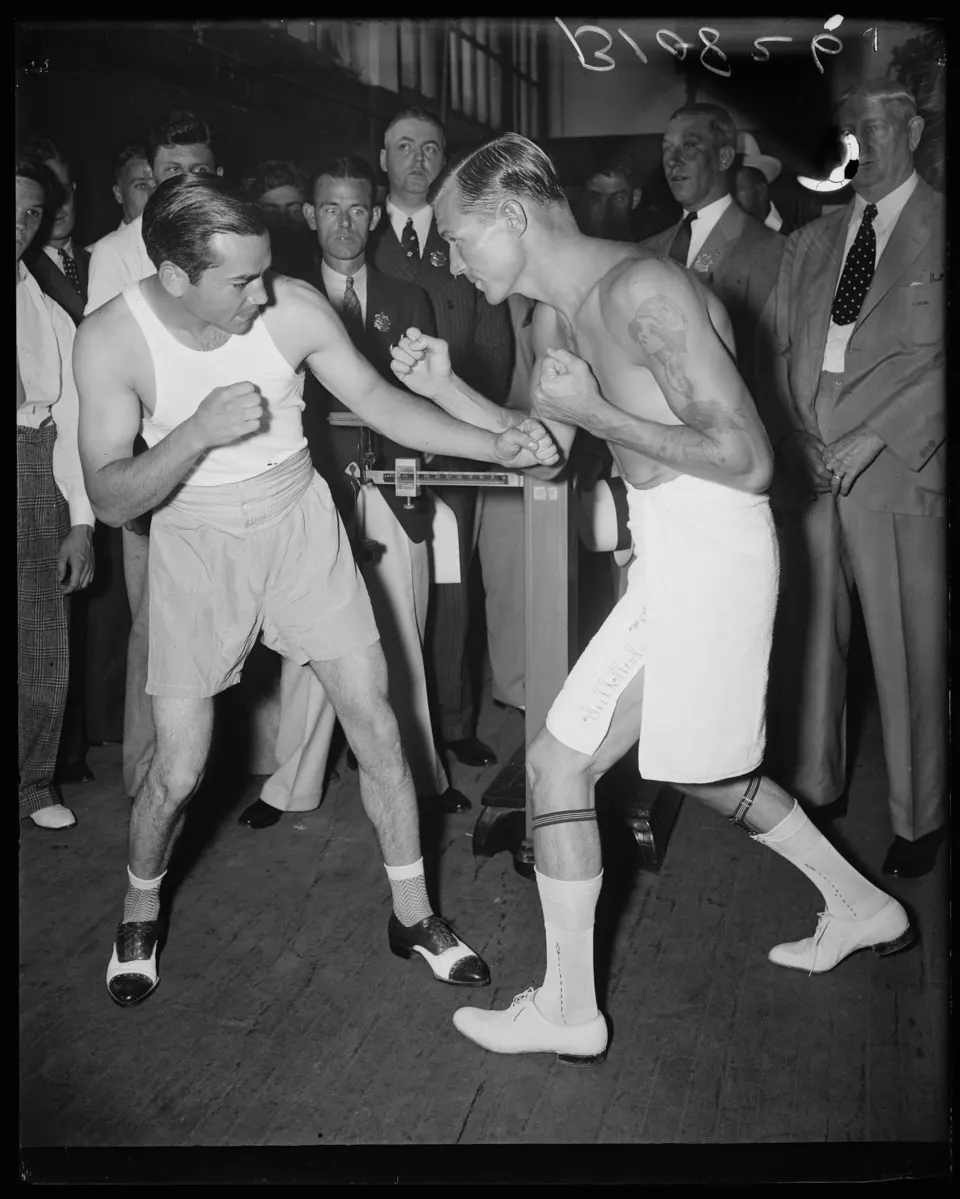
Ross held the welterweight title for three more years. On May 31, 1938, at the Madison Square Garden Bowl, he defended it against Henry Armstrong, the featherweight champion who was moving up in weight. Boxing News reports that Ross came in at 10 stone 2 pounds against Armstrong's 9 stone 7.
The weight advantage did not help. Armstrong's pressure wore him down round after round, but Ross would not let his corner or referee Arthur Donovan stop the fight. Boxing News quotes him telling his seconds, "I'm not quitting. If you stop it, I'll never talk to you again." He was still standing at the end of 15 rounds, lost a unanimous decision, and never boxed again.
Wikipedia gives his final record as 74 wins, 22 of them by knockout, with 4 losses and 3 draws; Boxing News lists 72 wins with the same losses and draws. Every source agrees that he was never knocked out.
Guadalcanal and the Silver Star
The Jewish Virtual Library notes that Ross was 32 and needed a waiver to serve. He enlisted in the Marine Corps on April 21, 1942, as a private and was sent to the Pacific. On Guadalcanal in November 1942, he and three other Marines were pinned down in a shell hole under heavy Japanese fire through the night. Ross was sick with malaria, and his companions were wounded.
Ross kept up the fire through the night, using his own rifle and his comrades' weapons and throwing grenades; Wikipedia counts 21 grenades, the Jewish Virtual Library 22. The Jewish Virtual Library says he fired more than 400 rounds, and both sources say his helmet was dented by around 30 pieces of shrapnel. Estimates of the enemy soldiers he killed range from about 22 to 24. By morning two of the Marines with him were dead, and Ross carried a wounded comrade far heavier than himself to safety. He received the Silver Star, was promoted to sergeant, and was honored by President Franklin D. Roosevelt at the White House.
The fight cost him more than his memory of it. Wikipedia quotes him recalling that the mortar barrage left him without his memory for ten days, something he compared to being knocked out.
Morphine, Withdrawal and Recovery
Ross was given morphine in military hospitals while he was treated for his wounds and malaria, and he came home dependent on it. Wikipedia records that back in the United States he turned to street heroin, and that the habit came to cost him as much as $500 a day.
He eventually checked himself into a federal drug treatment facility, stopped all at once, and walked out 120 days later free of the drug, according to the Jewish Virtual Library. He spent much of the rest of his life speaking to high school students about addiction, and in 1955 he testified before a U.S. Senate subcommittee on narcotics. His story became the 1957 film Monkey on My Back, and he also told it in his autobiography, No Man Stands Alone.
Final Years and Legacy
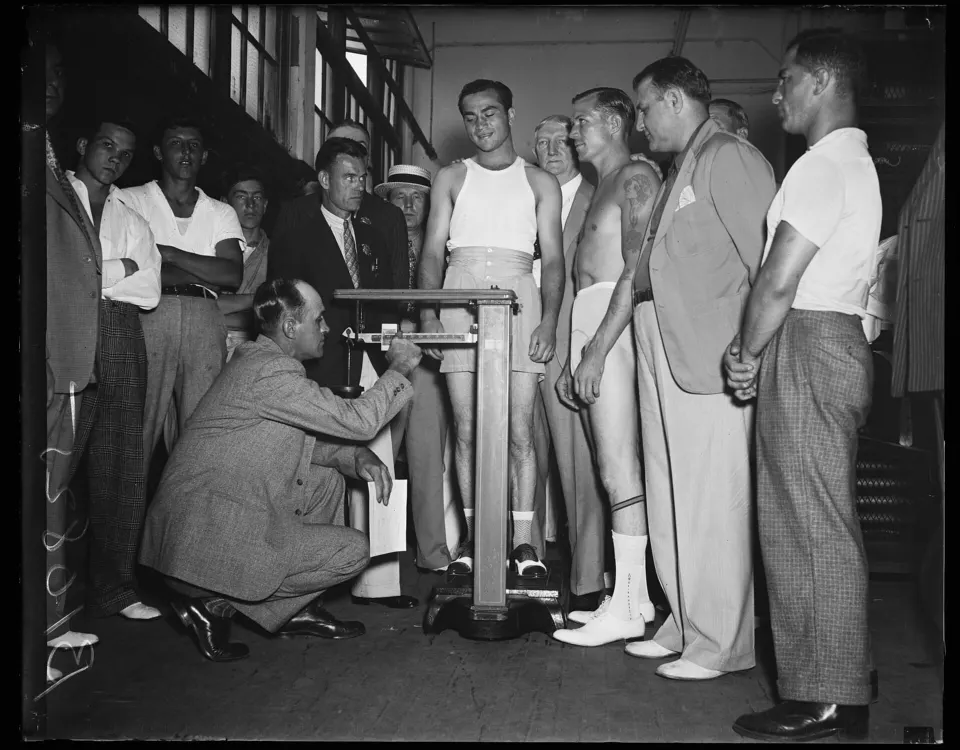
Ross died of throat cancer in Chicago in January 1967 at the age of 57. Wikipedia gives the date as January 18; Boxing News gives January 17. The Ring had already inducted him into its hall of fame in 1956, and in 1990 he was part of the first class enshrined by the International Boxing Hall of Fame in Canastota.
Sources
- Barney Ross, Wikipedia, accessed October 2026
- Barney Ross, Jewish Virtual Library, accessed October 2026
- On this day: one of the toughest fighters ever, Barney Ross, was born in 1909, Boxing News (Nick Bond), December 23, 2017
- Sports Honoree: Barney Ross, The Jewish-American Hall of Fame (American Jewish Historical Society and American Numismatic Society), accessed October 2026
- Jimmy McLarnin, BC Sports Hall of Fame, accessed October 2026


