
Henry Armstrong the Sharecropper's Son Held Three World Titles at Once
From Columbus, Mississippi and the streets of St. Louis to three simultaneous world championships in 1938, a disputed draw at middleweight and a second life as a Baptist minister.

In the late summer of 1938, one man owned three of boxing's eight world championships at the same time. Henry Armstrong, a sharecropper's son who grew up in St. Louis and fought his way west by freight train, held the featherweight, lightweight and welterweight crowns at once, then came within a disputed draw of adding a fourth. His later years, spent in the pulpit and in a boys' club, were as unlikely as his rise.
From Columbus, Mississippi to the Streets of St. Louis
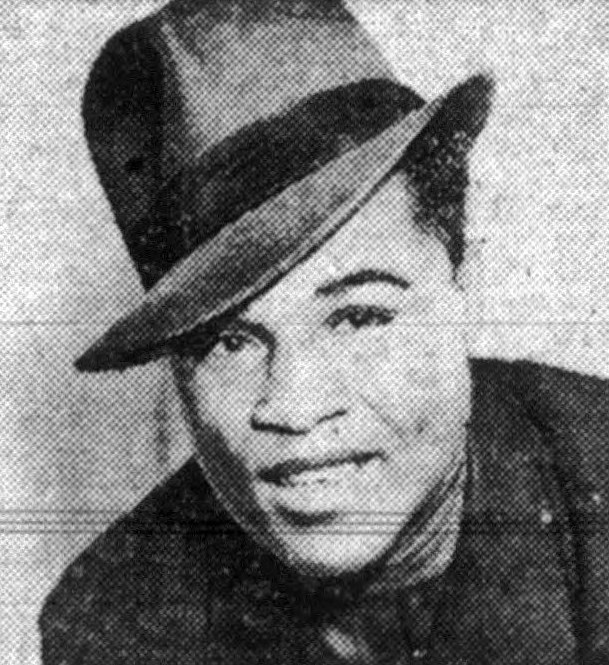
He was born Henry Melody Jackson Jr. on December 12, 1912. Most accounts, including Wikipedia, the EBSCO biography and the obituary carried by United Press International, place his birth in Columbus, Mississippi, where his father worked as a sharecropper; Wikipedia adds that his mother, America Jackson, was half-Cherokee. Boxing News, in an anniversary feature, instead gives St. Louis as his birthplace, so the sources do not fully agree. All of them do agree that St. Louis is where he grew up, after the family moved north during the early years of the Great Migration.
Boxing News reports that he lost his mother when he was five and that by seven he was selling newspapers to help feed a household of thirteen. He was small, and the EBSCO profile describes a boy who answered neighbourhood bullies with his fists. According to Wikipedia he still finished Vashon High School as an honor student.
Riding the Rails and Becoming 'Armstrong'
His first steps into organised boxing are told differently depending on the source. The EBSCO biography says that, without formal training, he beat a local prospect named Eddie Foster at a St. Louis gym, a result that brought him to the attention of Foster's trainer, Harry Armstrong. The young fighter grew so attached to his mentor that he took the man's surname as his own.
His record begins with a defeat. Wikipedia lists a professional debut on July 28, 1931, ending in a third-round knockout loss to Al Iovino, and notes that he boxed for a time as "Melody Jackson." Boxing News treats the Iovino fight, held in North Braddock, Pennsylvania, as an amateur bout and dates the true professional start to August 1932, saying racial restrictions in St. Louis had held him back. With opportunities scarce at home, he rode freight trains as a hobo to California, then a hub for the sport, and Boxing News says he lost his first two fights in Los Angeles while shining shoes downtown to get by.
The Jolson Money and the Road to New York
The turning point was financial. Boxing News reports that the entertainer Al Jolson paid $10,000 for Armstrong's contract, with Eddie Mead as co-manager. That backing took him east. In March 1937 he made his Madison Square Garden debut and stopped Mike Belloise in four rounds. Fans by then had several names for his style of relentless pressure and nonstop punching: "Homicide Hank," "Hurricane Hank" and "Hammerin' Hank." Boxing News lists him at about five feet five and a half inches.
Three Titles in Ten Months, 1937-1938
The first belt came on October 29, 1937, at Madison Square Garden, when he knocked out featherweight champion Petey Sarron in the sixth round. Rather than defend at 126 pounds, he went hunting much bigger men.
On May 31, 1938, at the Madison Square Garden Bowl, he faced welterweight champion Barney Ross and won a unanimous decision over fifteen rounds. Boxing News records the weights as 9st 7½lb for Armstrong and 10st 2lb for Ross, a gap of roughly eight and a half pounds conceded by the smaller man to take the 147-pound title.
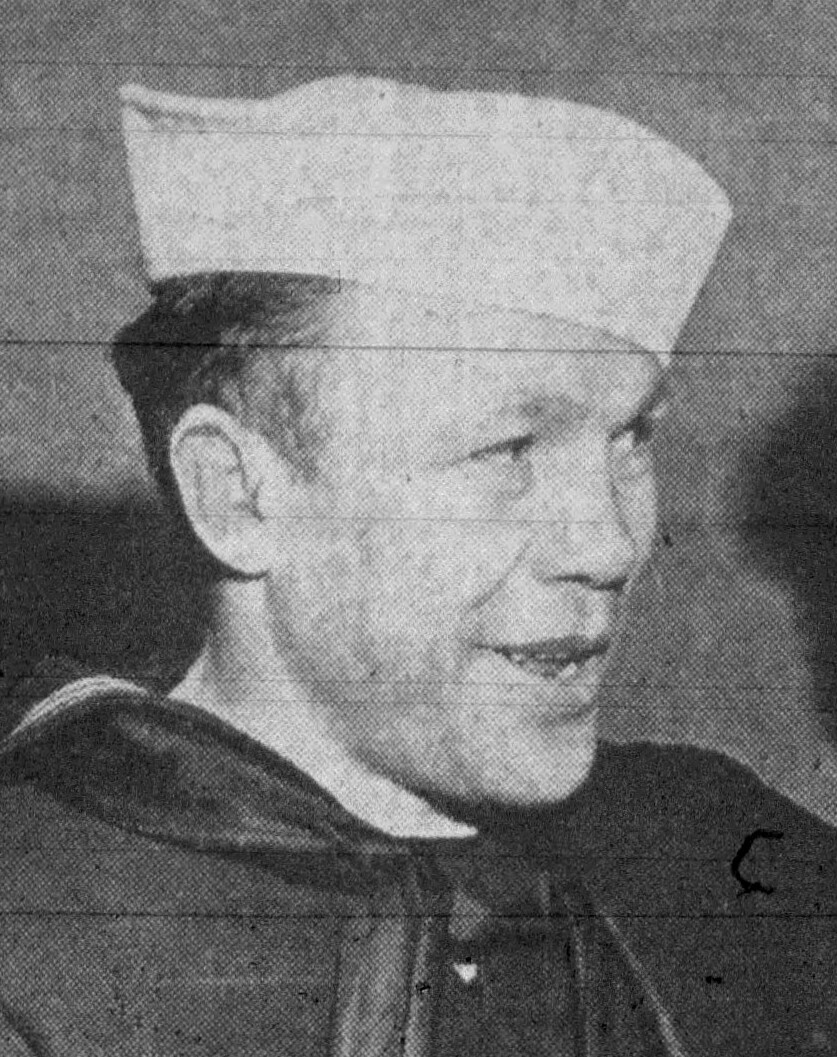
Then he came back down. On August 17, 1938, again at the Garden, he met lightweight champion Lou Ambers. Wikipedia's account of the fight says Ambers was dropped in the fifth and sixth rounds and looked beaten, only to rally late, while Armstrong was penalised three rounds for fouls. The split decision went to Armstrong, and with it he became the first boxer to hold world titles in three weight classes simultaneously. He told Boxing News years later that it had been his hardest title fight because Ambers had cut him up badly. UPI's obituary counted a run of 46 straight victories between 1937 and 1939, 27 of them by knockout.
Defending the Welterweight Crown
Unable to make 126 pounds and hold everything at once, he gave up the featherweight title. At welterweight he became a busy champion; Wikipedia credits him with 19 successful defenses, which it describes as still the record for the division.
The lightweight belt did not last. In the August 22, 1939 rematch with Ambers, staged at Yankee Stadium before a crowd of about 30,000, Armstrong was docked rounds for low blows in the second, fifth, seventh, ninth and eleventh. Ambers took a unanimous decision. Wikipedia notes that The New York Times writer James Dawson criticised the outcome, arguing the title had been settled by the rule book more than by the fighting itself.
The Near-Miss at Middleweight Against Ceferino Garcia
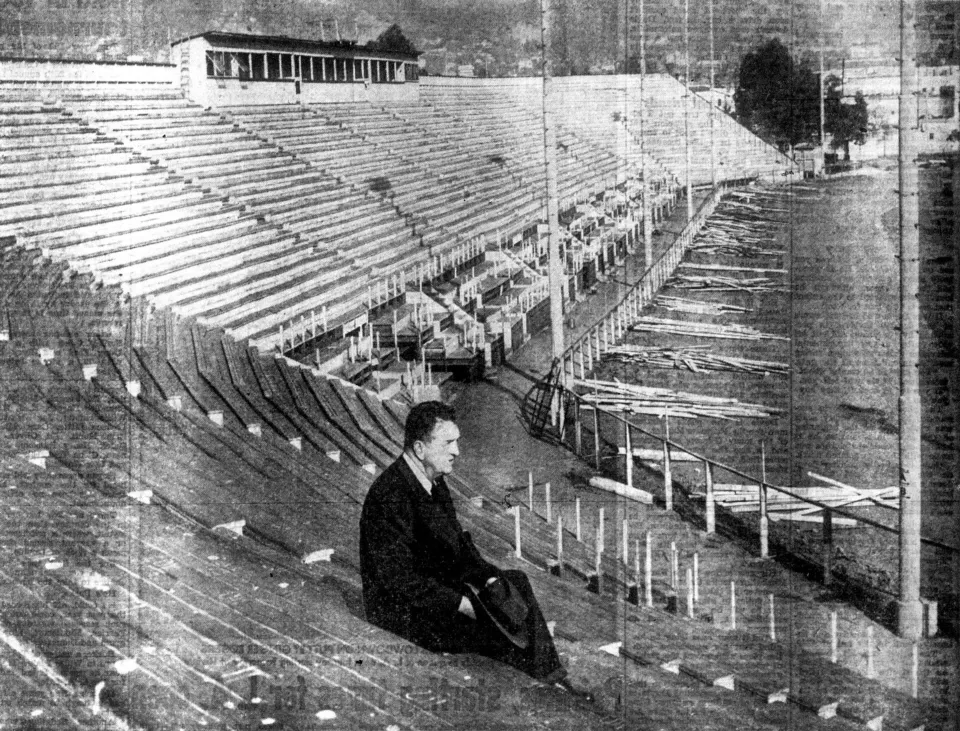
On March 1, 1940, Armstrong climbed again, this time to face Filipino puncher Ceferino Garcia at Gilmore Stadium in Los Angeles. A win would have given him a fourth division. The ten-round bout was scored a draw, and Wikipedia's Armstrong article says many observers of the time thought he had done enough to win.
The exact status of the title is described in different ways. Wikipedia's Armstrong entry calls Garcia the world middleweight champion. Its Garcia entry is more precise: Garcia held the New York State Athletic Commission version of the title, won by knocking out Fred Apostoli in October 1939, but the Armstrong fight was billed as a world title bout recognised only in California. Boxing News simply describes it as a draw for the California title. Either way, Armstrong left without the belt.
Zivic, Robinson and the Long Goodbye
Seven months later the welterweight reign ended. On October 4, 1940, at Madison Square Garden, Fritzie Zivic outpointed him over fifteen rounds, and in a January 1941 rematch Zivic stopped him in the twelfth, according to Boxing News. EBSCO's biography connects his retirement to eye surgery that followed the Zivic defeat.
He nevertheless returned. In August 1943 he lost a ten-round decision to a young Sugar Ray Robinson at the Garden, and Boxing News lists his last fight as a points loss to Chester Slider at the Oakland Coliseum in February 1945. Sources differ on when he formally stopped: EBSCO dates the announcement to 1945, Wikipedia says he retired in 1946. His final record is also counted differently. Wikipedia gives 151 wins (100 by knockout), 22 losses and 10 draws in 183 bouts, while noting a 1945 tally of 152-21-9; UPI's obituary cited 181 bouts with 100 knockouts, 52 decisions and 8 draws.
From the Ring to the Pulpit
Life after boxing was hard at first. UPI and Boxing News both say Armstrong struggled with alcohol. UPI reported that he described the moment he turned his life around this way: "I don't know who slapped me, but it was a friend. I like to think it was the hand of God."
According to UPI he was ordained a Baptist minister in 1951; Boxing News places his ministry in St. Louis. He served as assistant director of the Herbert Hoover Boys Club, worked with underprivileged young people, and, per UPI, set up a foundation for disadvantaged boys. EBSCO records that he published an autobiography, Gloves, Glory, and God, in 1956, and UPI mentions a book of verse whose proceeds he gave to his charitable work.
Death and Legacy
Henry Armstrong died on October 22, 1988, at California Medical Center in Los Angeles, aged 75. UPI said the illness was not disclosed; EBSCO writes that he died in poverty. He was survived by his wife, Gussie, a daughter and a stepson.
His place in history has only grown. He entered the International Boxing Hall of Fame with its inaugural class in 1990. Wikipedia lists The Ring's 2007 ranking of him as the second-greatest fighter of the previous 80 years and ESPN's placement of him at number three among the 50 greatest boxers, and Boxing News also put him third in its list of the 100 greatest fighters.
Sources
- Henry Armstrong, Wikipedia, accessed October 2026
- Ceferino Garcia, Wikipedia, accessed October 2026
- Lou Ambers, Wikipedia, accessed October 2026
- Boxer Henry Armstrong dead at 75, United Press International, October 25, 1988
- On this day: boxing phenomenon Henry Armstrong was born in 1912, Boxing News, accessed October 2026
- Henry Armstrong (Research Starters), EBSCO, accessed October 2026


