
Terrible Terry McGovern Won Two World Titles Before His 20th Birthday
Brooklyn's Terry McGovern knocked out Pedlar Palmer and George Dixon to rule two divisions by 1900, then saw a disputed win over Joe Gans and a loss to Young Corbett II shape a sad decline.

Terry McGovern was still a teenager when he took the world bantamweight title in a single round in 1899, and he was the featherweight champion four months later. For roughly two years he was the most feared small man in boxing. Then came a night in Chicago that the city would not forgive, a loss in Hartford that he never fully recovered from, and a slow, sad slide that ended in a Brooklyn charity ward at 37.
A Pennsylvania Birth and a Brooklyn Apprenticeship
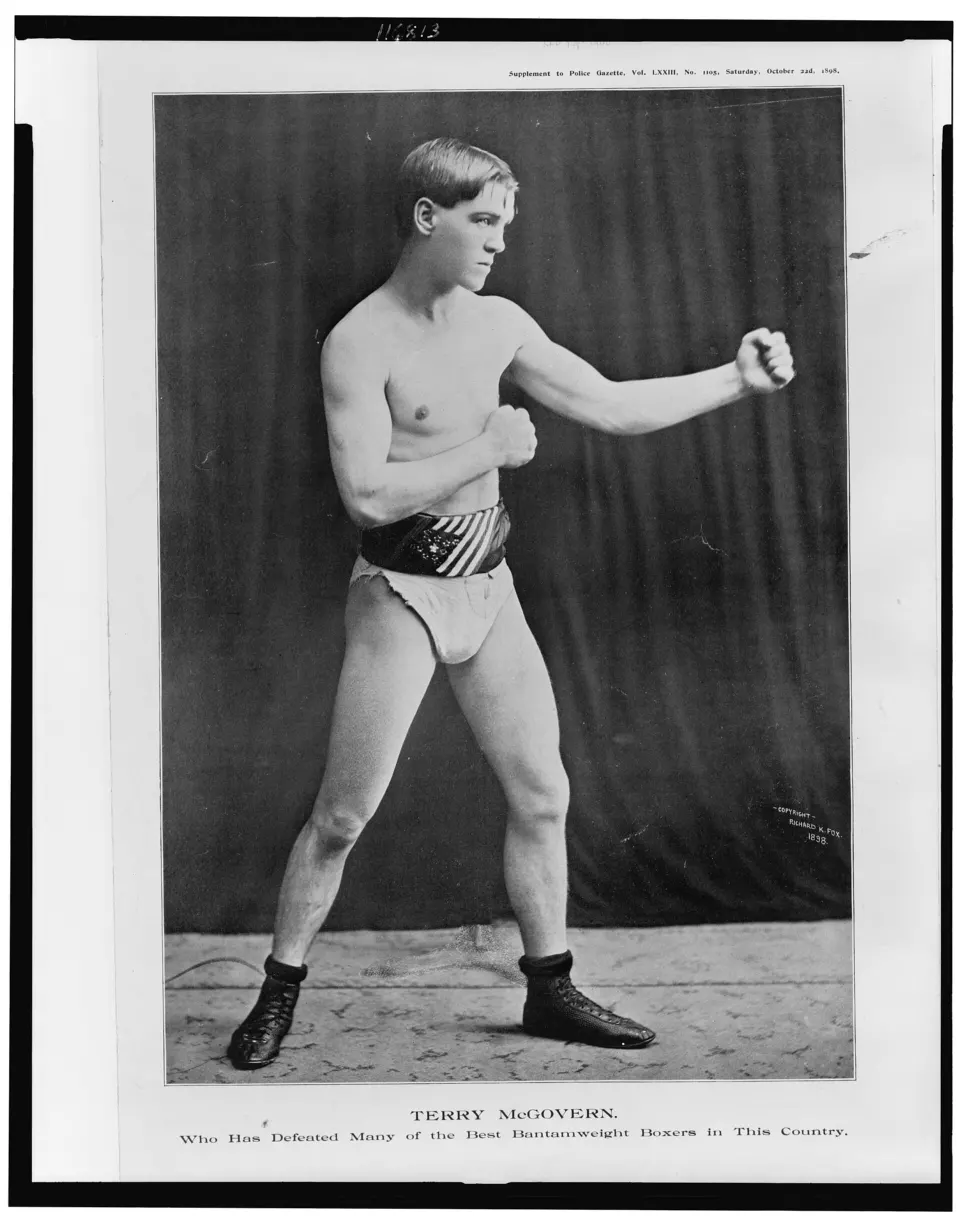
McGovern was born on March 9, 1880, to Irish immigrant parents, Thomas McGovern and Ellen Monroe. Wikipedia gives his birthplace as Johnstown, Pennsylvania, and his given name as Joseph Terrence, while noting that other accounts record it differently. After his father died, his mother took the family to Brooklyn, and it was there, at the Greenwood Athletic Club, that the boy began boxing in preliminary bouts at around 16. He turned professional in 1897.
For nearly all of his career he was handled by Sam H. Harris, who stayed loyal to McGovern long after the money and the wins dried up. Historians have tended to rate him on power rather than craft. He charged, he punched hard with both hands, and most of his victories ended before the final bell.
Pedlar Palmer Lasts One Round in 1899
The breakthrough came on September 12, 1899, at the Westchester Athletic Club in New York, against the English bantamweight Thomas "Pedlar" Palmer. The vacant world title was at stake. McGovern knocked Palmer out in the first round. He was 19 years old and only two years into his professional career.
He never defended the bantamweight championship. Growing heavier and more ambitious, he gave it up to chase a bigger prize in the next division.
Taking the Featherweight Crown From George Dixon
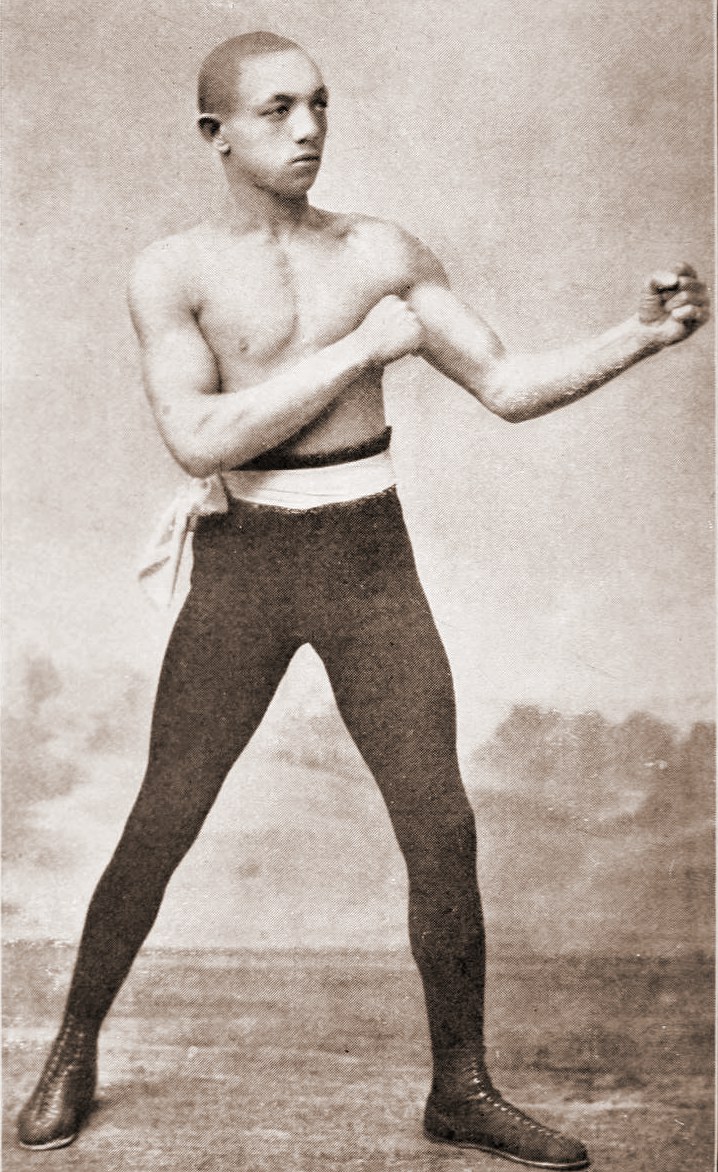
That prize belonged to George Dixon, the Halifax-born "Little Chocolate," who had been recognized as world featherweight champion since 1890 and who had reportedly been put on the floor only once in a career that, by some counts, ran to hundreds of bouts. They met at the Broadway Athletic Club in New York on January 9, 1900, in a fight scheduled for 25 rounds.
According to Arne K. Lang's account for The Sweet Science, Dixon was the faster and more skillful man at range through the first four rounds. McGovern stayed patient and worked the body. By the seventh he had turned his attack upstairs, and one punch appeared to break Dixon's nose. In the eighth he overwhelmed the champion; reports of how many times Dixon went down vary between five and eight. Dixon's manager, Tom O'Rourke, threw in the sponge. Wikipedia notes that some bettors complained when the result was recorded as a knockout, since no ten count was ever completed.
A Lightweight Champion Falls at Madison Square Garden
McGovern's appetite for bigger men peaked on July 16, 1900, when he faced the reigning world lightweight champion, Frank Erne, before about 13,000 people at Madison Square Garden. Erne dropped him in the first round with a blow to the head, but McGovern rose and came forward again. In the third he put Erne down at least twice before the champion's corner threw in the sponge. Some writers of the day credited McGovern with the lightweight title as a result, but Wikipedia notes that very few sources recognize that claim today.
Between his big nights he kept defending the featherweight title. Wikipedia lists at least five defenses, including wins over Tommy White, Joe Bernstein, Oscar Gardiner (twice) and Aurelio Herrera. The Herrera fight, at Mechanic's Pavilion in San Francisco on May 29, 1901, ended in the fifth round after Herrera was floored twice and chose to stay down, as Patrick Connor recounted for The Fight City.
Tattersall's, December 1900, and the Fight Chicago Never Forgot
The fight that shadows McGovern's name took place on December 13, 1900, at Tattersall's, a Chicago horse-show building that, as Connor wrote for The Ring, could hold around 10,000 spectators. His opponent was Joe Gans, the brilliant lightweight who would win the world title in 1902. It was not a title fight. Under the terms, Connor reported, McGovern would be awarded the win if Gans failed to stop him within six rounds.
The bout lasted less than two rounds. McGovern rushed from the opening bell, dropped Gans in the first, and floored him repeatedly in the second until it was over. Gans' own record lists the knockout at 2:05 of round two. Referee George Siler, as quoted in Clay Moyle's review of the Gans biography by Colleen Aycock and Mark Scott, wrote that he did not wish to accuse anyone of faking, "but if Gans was trying to win last night I do not know much about the game."
The Chicago Tribune called it a fake fight. According to Wikipedia, Gans later claimed that he had thrown the bout, and the question was referred to a Chicago district attorney; warrants for disturbing the peace issued against both men were dismissed the day after the fight. The suspicion has never been settled. Some historians remain convinced Gans quit on purpose, while others hold that McGovern won on merit.
The consequences for the sport were not in doubt. Tattersall's stopped staging fights, and prizefighting was banned in Chicago. Sources differ on how long the shutdown lasted: Moyle's review puts it at about 20 years, while Connor writes that politicians ended boxing in the city for 26 years. A silent film of the bout, produced by the Selig Polyscope Company and released in April 1901, survives today.
Young Corbett II Ends the Reign in Hartford
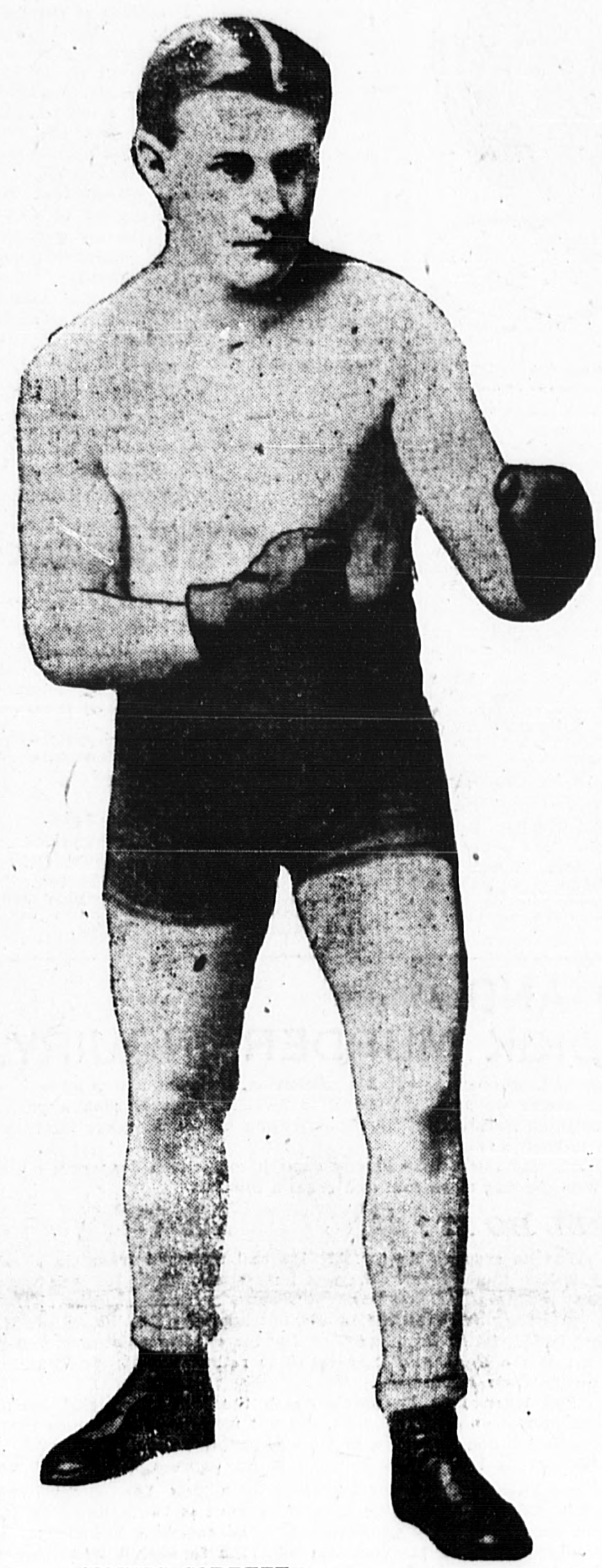
McGovern's run as featherweight champion ended on November 28, 1901, at the Coliseum in Hartford, Connecticut. Young Corbett II knocked him out in the second round of a wild, brief brawl.
They met again at Mechanic's Pavilion in San Francisco on March 31, 1903. McGovern lasted much longer this time, but Corbett controlled the closing rounds and knocked him out in the eleventh. McGovern never fought for a world title again.
Vaudeville, Racetracks and the Long Decline
He kept boxing on and off, mostly in short no-decision bouts, as was common at the time. In 1906 he lost a six-round newspaper decision to Battling Nelson in Philadelphia. According to The Fight City, his last victory came in 1905 and his career ended in 1908.
The money did not last either. Wikipedia estimates his lifetime earnings at about $203,000, a figure that includes his work on the vaudeville stage, but much of it went on horse racing; The Sweet Science points to the Coney Island tracks. His mental health deteriorated, and he spent long stretches of his later years in institutions, working odd jobs in between. Near the end he was taking tickets at the Grand Opera House in Brooklyn and living on a pension from Sam Harris, who had kept part of his money in trust.
About two months before his death, McGovern fell ill after visiting Camp Upton, the First World War army camp on Long Island. He died of pneumonia and Bright's disease in the charity ward of Kings County Hospital in Brooklyn. Wikipedia, citing newspapers of the time, gives the date as February 22, 1918; The Sweet Science gives February 20. He was 37. Harris was able to leave his widow an estate of about $10,000, including their home. McGovern was buried at Holy Cross Cemetery in Brooklyn and was survived by a son, Joe.
How Boxing Remembers Terrible Terry
Record books disagree on his exact totals, partly because so many of his fights ended without an official decision. His standing is less in dispute. Nat Fleischer ranked him the greatest featherweight of all time, The Ring named him among its 100 greatest punchers in 2003, and in 1990 he was part of the first class of old-timers inducted into the International Boxing Hall of Fame, alongside Dixon and Gans, the two men whose names are tied to his forever.
Sources
- Terry McGovern (boxer), Wikipedia, accessed October 2026
- Young Corbett II, Wikipedia, accessed October 2026
- Joe Gans, Wikipedia, accessed October 2026
- Patrick Connor: 125th anniversary of how Gans-McGovern almost ended boxing in Chicago for good, The Ring, December 13, 2025
- May 29, 1901: McGovern vs Herrera, Patrick Connor, The Fight City
- This Day in Boxing History: Terrible Terry TKOs Little Chocolate, Arne K. Lang, The Sweet Science, January 9, 2019
- Book Review: Joe Gans, Clay Moyle, IBRO Research, March 1, 2010
- The Gans-McGovern Fight (1901), Silent Era Progressive Silent Film List
- Boxing Hall of Fame names first inductees, UPI, April 7, 1990


