
How Battling Nelson, the Durable Dane, Went From Hegewisch to Goldfield and Forty Rounds With Ad Wolgast
Copenhagen-born and Chicago-raised, Battling Nelson took Joe Gans 42 rounds in Goldfield, beat him twice in 1908 to become world lightweight champion, then lost the crown to Ad Wolgast in a 40-round bloodbath.

Oscar Nielsen was born in Copenhagen and grew up in the factory district of Hegewisch on Chicago's far South Side. As Battling Nelson he twice claimed the world lightweight championship and became the richest fighter of his weight. He was famous for how much punishment he could take, and two fights show both sides of that reputation: a 42-round loss to Joe Gans in the Nevada desert in 1906, and a 40-round beating from Ad Wolgast in 1910.
From Copenhagen to the Packing House
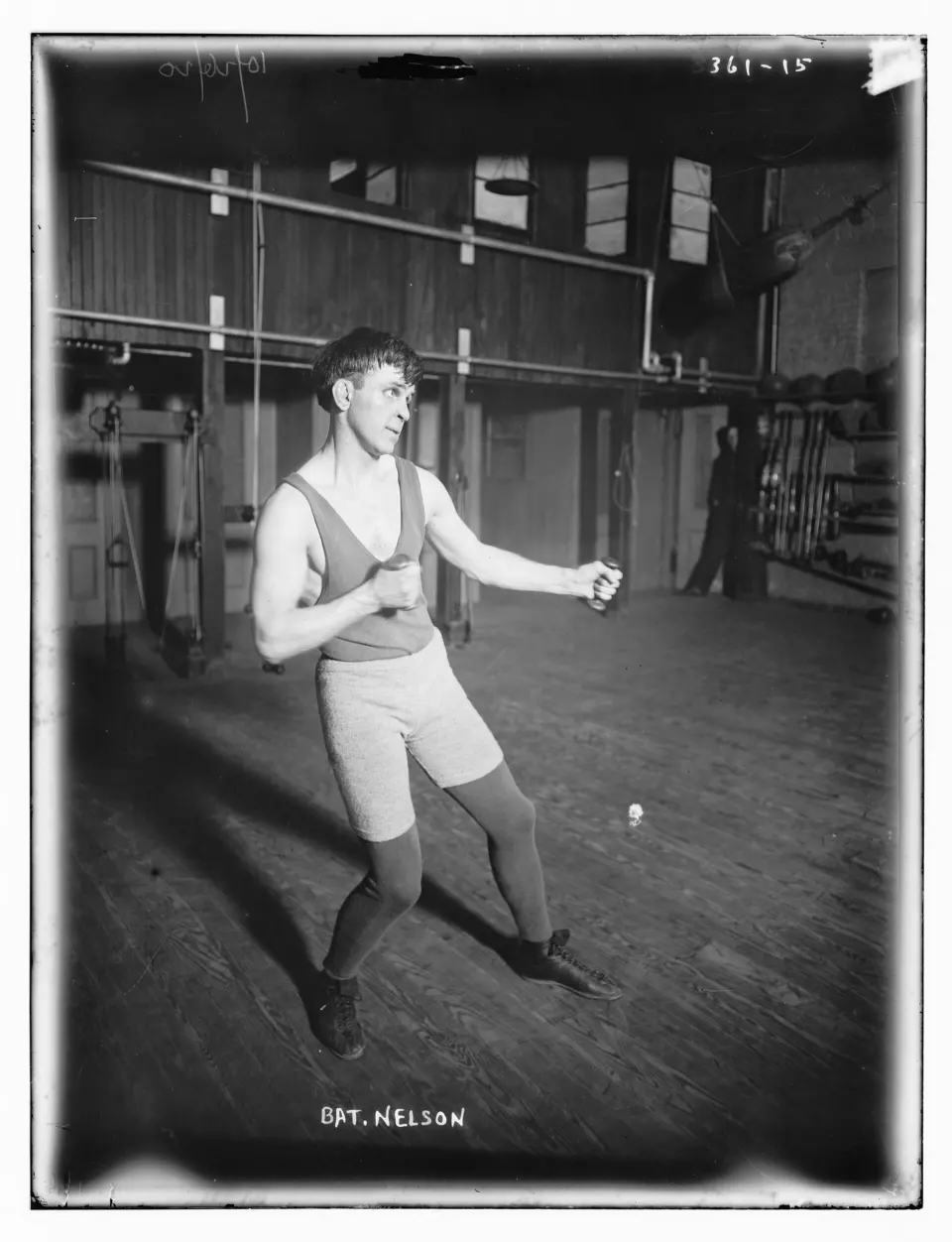
He was born Oscar Mathæus Nielsen in Copenhagen on June 5, 1882. Wikipedia says the family emigrated to the United States in 1883, and other accounts agree that he crossed the Atlantic as an infant. The family settled in Hegewisch, an industrial neighborhood on Chicago's southeastern edge, and he kept it as his hometown for the rest of his life.
The Sweet Science's profile says he did well in school but was already known as a fighter in his early teens. It also says he worked as a meat cutter, which is how he came to be billed as the "Packing House Pride." Records count his first organized bout at age fourteen, in 1896, against a circus performer called the Wallace Kid at a show in Hammond, Indiana. The prize was one dollar. According to the same profile, Nelson knocked the circus man out and was not paid at the time. In the years that followed he fought in Sioux Falls, South Dakota, and then many times around Chicago.
Going West: The Jimmy Britt Fights, 1904–1905
Nelson moved west in 1904, and San Francisco's big promotions made him a contender. On December 20, 1904, he met Jimmy Britt at Mechanics' Pavilion for the vacant lightweight title. Britt won a twenty-round decision. Nelson then beat former featherweight king Young Corbett II twice and, according to The Sweet Science, drew with Abe Attell.
His rematch with Britt took place on September 9, 1905, at the Mission Street Arena in Colma, just outside San Francisco. The bout was scheduled for 45 rounds. Nelson knocked Britt out in the eighteenth. The win made him the "white" lightweight champion, a label from the colour-line era that ignored the lineal titleholder, Joe Gans of Baltimore. The Danish encyclopedia Den Store Danske credits Nelson with the world title from 1905 and says the nickname "The Durable Dane" came from his brutal endurance.
Forty-Two Rounds in Goldfield
Gans and Nelson met in Goldfield, Nevada, a gold-rush town. The promoter was Tex Rickard, a saloon keeper who had never staged a fight before. The Goldfield Historical Society says Nelson's manager, Billy Nolan, doubted that the money was real. To convince him, Rickard had $30,000 in twenty-dollar gold pieces stacked in the window of the John S. Cook Bank. The same account says the purse was split unevenly: Nelson took $22,500 and the champion Gans $11,000. Nolan's terms were also hard on the weight. Wikipedia says Gans had to weigh no more than 132 pounds at ringside, fully dressed.
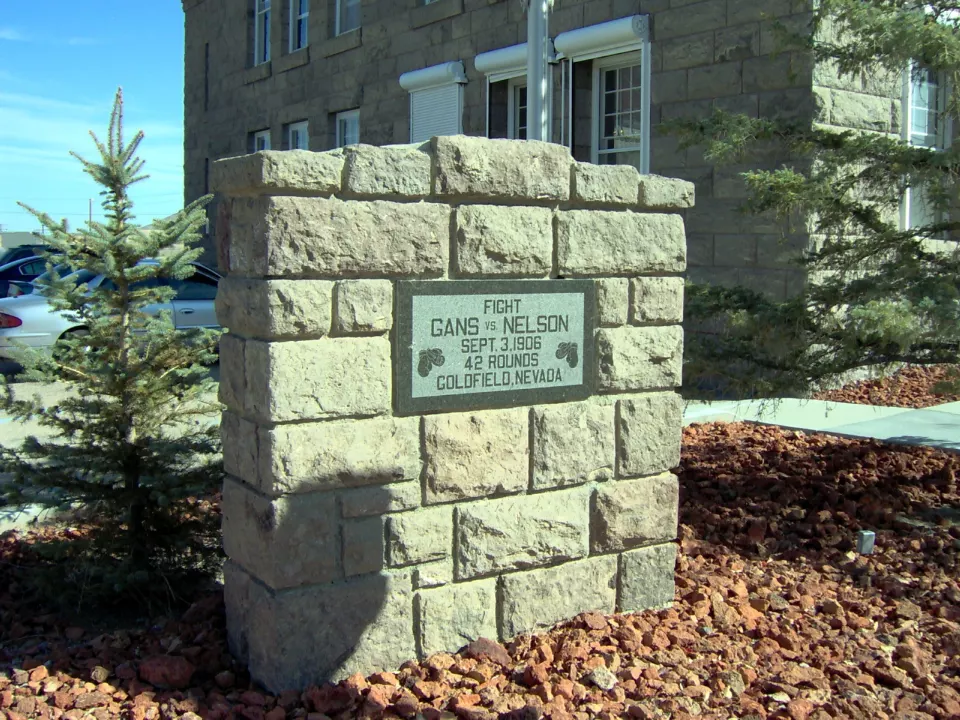
The fight took place on September 3, 1906, Labor Day, at a purpose-built arena. There was no round limit. The Goldfield Historical Society puts the gate at a record $69,715 and the length at about three hours. The Sweet Science says receipts topped $75,000 and that about 8,000 people watched, so the figures vary from source to source. Gans knocked Nelson down repeatedly, but Nelson kept getting up and coming forward. In the 42nd round Nelson landed a low blow and was disqualified. He lost the fight, but the endurance he showed that afternoon became central to his reputation.
Champion at Last: The Colma Rematches of 1908
Nelson got his rematch nearly two years later, again at the Mission Street Arena in Colma. On July 4, 1908, he knocked Gans out in the seventeenth round of a bout scheduled for 45 and took the world lightweight title. They fought a third time on September 9, 1908, and Nelson stopped Gans in the 21st.
Wikipedia's account of Gans points out that the champion was by then dying of tuberculosis, which killed him less than two years later, which is worth remembering when weighing those wins. Nelson made more defenses, including a 23rd-round knockout of Dick Hyland on May 29, 1909. Nelson published an autobiography in 1909, and its introduction called him the richest of all living pugilists. The Sweet Science cites a 1908 newspaper report that he owned a 65-acre vineyard and a hog farm near Livermore, California. It also says he went to the White House in 1909 at President Theodore Roosevelt's invitation.
Forty Rounds with Ad Wolgast
Ad Wolgast, from Michigan, had already taken a ten-round newspaper decision over Nelson at the Naud Junction Pavilion in Los Angeles on July 13, 1909. Their title fight was held on February 22, 1910, at an arena in Point Richmond, California. It was scheduled for 45 rounds. Boxing News reports what Nelson told Wolgast when referee Eddie Smith called them together: "Let everything go. No fouls."
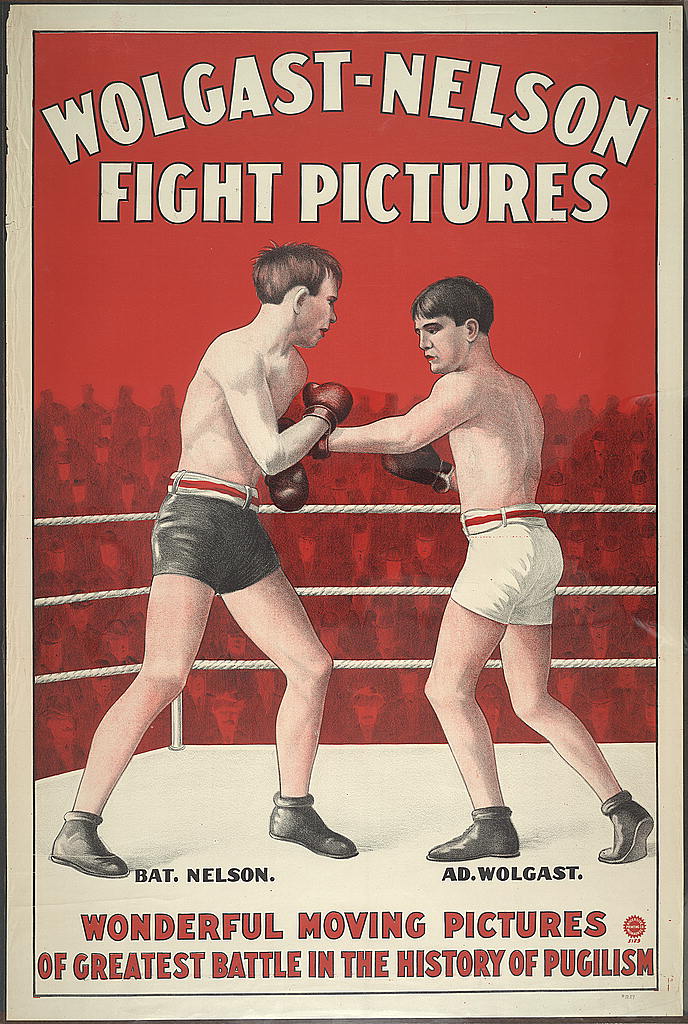
Both men took him at his word. Nelson was bleeding from the nose and mouth early in the fight, and over the long middle rounds his eyes swelled until he could barely see. Smith stopped the fight in the 40th round and Wolgast was the new champion. Wikipedia's article on Nelson says the stoppage came in either the 40th or the 42nd round, but most accounts give the 40th. Wikipedia's Wolgast article adds that afterwards both fighters were arrested and charged under the state's anti-prizefighting law.
The Long Decline
Nelson spent years trying to get the title back. On November 26, 1910, he fought the English contender Owen Moran, and the winner was promised a shot at Wolgast. Moran knocked him out, the first time anyone had done so. In 1911 Nelson published a guide called The Wonders of the Yellowstone National Park, illustrated by the cartoonist Fay King. On January 23, 1913, he married her in Hegewisch, and they divorced in a public split in 1916. In October 1913 he lost another newspaper decision to Wolgast. His last title fight was on April 17, 1917, at the Coliseum in St. Louis, where Freddie Welsh won a twelve-round newspaper decision.
Wikipedia gives 1920 as the year he retired, and Den Store Danske dates his career from 1896 to 1923. The sources also give different records. Wikipedia lists 59 wins, 20 losses and 22 draws in 134 bouts. Den Store Danske and The Sweet Science both count 69 wins, 40 of them by knockout, with newspaper decisions explaining much of the gap.
Last Rounds in Chicago
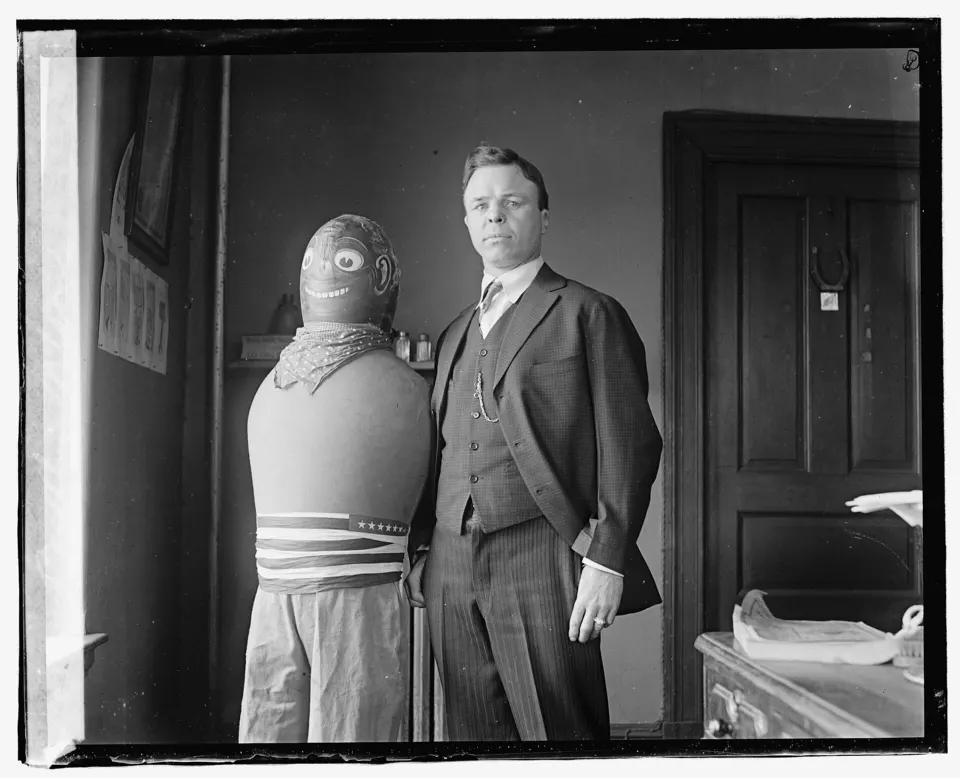
The Sweet Science says Nelson lent his name to car advertising, reported for the Chicago Daily News, and lost what remained of nearly half a million dollars in career earnings in the 1929 crash. A 1940s newspaper retrospective quoted in the same profile found him in his sixties working twelve-hour days at the Chicago Post Office. In his final years his mind failed, and he was committed to a state hospital in Illinois.
He died in Chicago on February 7, 1954, aged 71. The cause of death is disputed. Wikipedia gives lung cancer. A 1954 wire obituary quoted by The Sweet Science says hospital officials blamed senility. The Sweet Science also notes that BoxRec records injuries from a street attack. The Veteran Boxing Association paid part of the funeral costs and his former wife paid the rest. The International Boxing Hall of Fame inducted Battling Nelson in 1992.
Sources
- Battling Nelson, Wikipedia, accessed October 2026
- Joe Gans, Wikipedia, accessed October 2026
- Ad Wolgast, Wikipedia, accessed October 2026
- Battling Nelson, Den Store Danske (lex.dk), accessed October 2026
- TSS Old School Spotlight: Battling Nelson, The Sweet Science, accessed October 2026
- The true story of the boxer and the goat, Boxing News, accessed October 2026
- "Tex" Rickard, Goldfield's Great Promoter, Stewart Luce, Goldfield Historical Society, accessed October 2026


