
Ad Wolgast, the Michigan Wildcat, Fought 40 Rounds With Battling Nelson, a Double Knockdown and a Long Decline
From a farm outside Cadillac, Michigan, Ad Wolgast fought his way to the lightweight title by outlasting Battling Nelson over 40 rounds in 1910. He kept it through the disputed double knockdown with Joe Rivers, lost it on a foul to Willie Ritchie, and spent his last decades in California institutions.

Ad Wolgast came out of a lumber town in northern Michigan, outlasted Battling Nelson over 40 rounds to become lightweight champion of the world, and survived one of the strangest finishes the sport has ever produced. The fighting that made him famous also seems to have cost him his mind: he spent almost three decades of his later life in California institutions before his death in 1955.
A Farm Boy From Cadillac
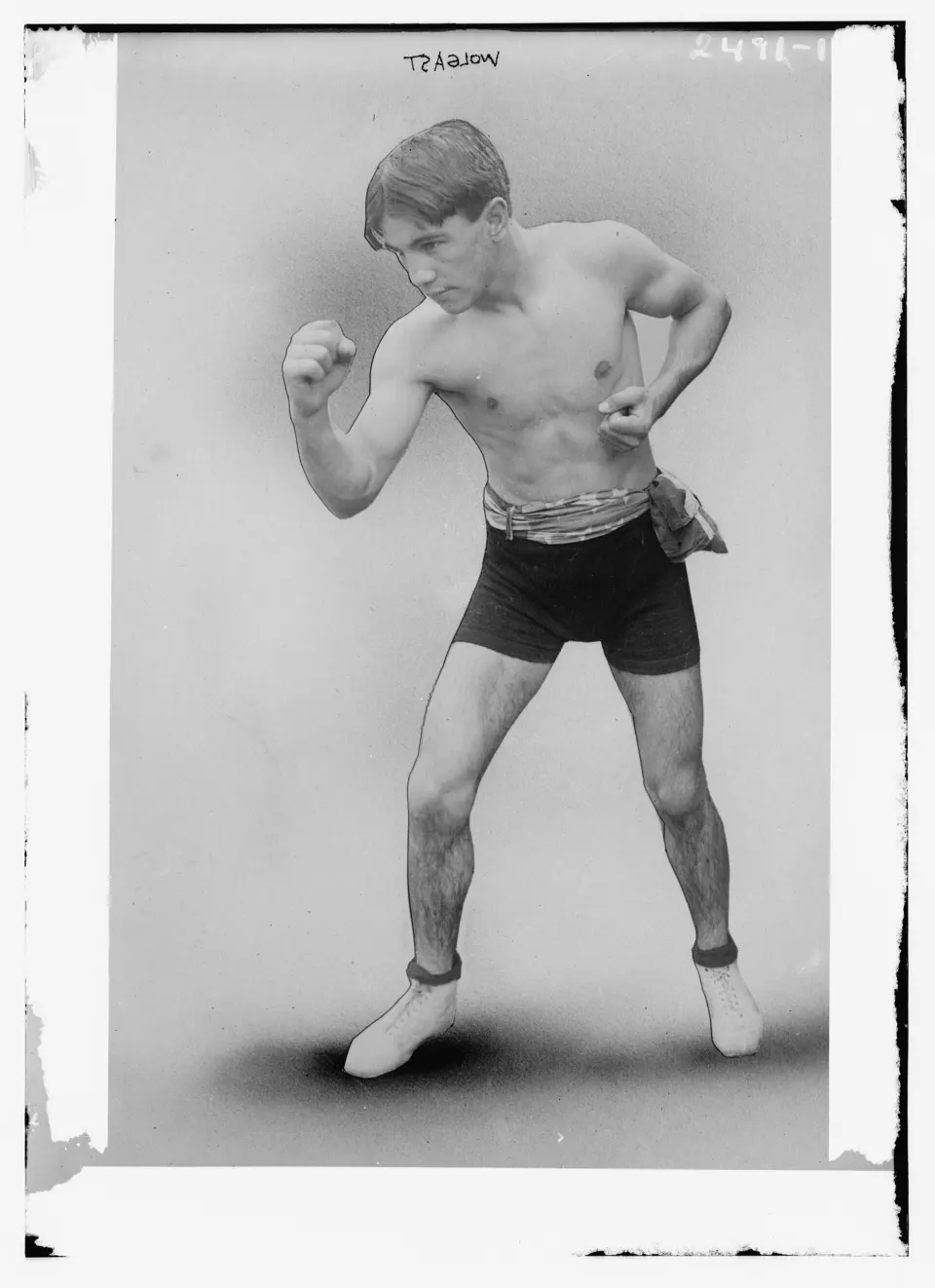
Adolphus Wolgast was born on February 8, 1888, in Cadillac, Michigan. The Northern Express, a regional paper that profiled him in 2016, describes a crowded and hard-pressed household: he was one of twelve children raised on a struggling farm south of town, and the 1900 census listed his father as a cigar maker. Two of his brothers, Johnny and Al, would also box.
According to the Michigan Sports Hall of Fame, Wolgast left home at around 16 and drifted through several jobs before boxing gave him a direction. He turned professional in 1906, at 18. The Northern Express reports that his first paid bout took place in Petoskey, against a man who outweighed him by 27 pounds. He would always be small, about five feet four inches, but he fought as if size were somebody else's problem.
Building a Reputation From Michigan to California
Wolgast learned his trade close to home before moving to Wisconsin, where the competition was stiffer, and then west to California, where the big lightweight purses were. His style earned him the nickname "the Michigan Wildcat": constant pressure, a heavy left hook and a punishing body attack. The Northern Express notes that he himself preferred another name, "the Cadillac Kid."
His first meeting with the lightweight champion, Battling Nelson, came in Los Angeles in 1909. The Fight City describes it as a ten-round bout that Wolgast won clearly, but because the title could only change hands by knockout over that distance, Nelson kept his belt. The Northern Express calls the same contest an exhibition. Either way, Wolgast had shown he could handle the champion, and a title fight to the finish followed.
Forty Rounds at Point Richmond
On February 22, 1910, Wolgast and Nelson met in Point Richmond, in the San Francisco Bay Area, in a bout scheduled for 45 rounds. Accounts of the crowd differ: the Northern Express puts it at 18,000, while The Fight City gives roughly 15,000 and a gate of $37,750. Eddie Smith was the referee.
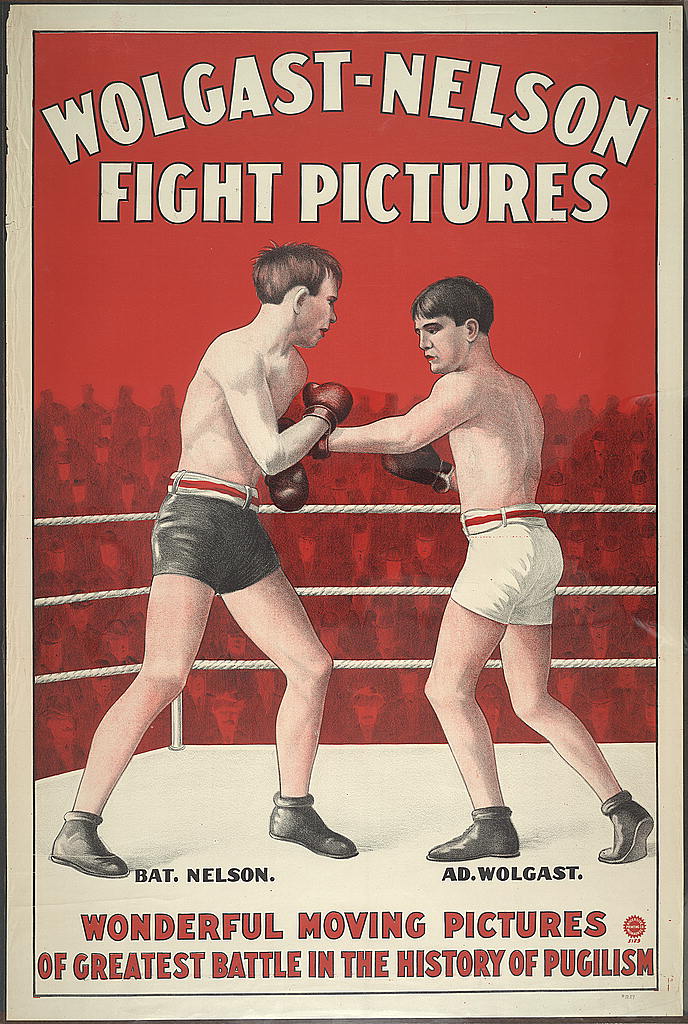
What followed was a war of attrition that the Associated Press, in its Hall of Fame capsule, says some historians rank among the most savage fights ever staged. Sources do not fully agree on the details of the middle rounds, including who went down in the 22nd, but they agree on the ending. By the 40th round Nelson was badly cut, nearly unable to see and no longer defending himself. Smith stopped the fight and Wolgast was champion of the world.
The story did not end at the bell. Wikipedia notes that both men were arrested afterwards for breaking the state's law against prizefighting. Decades later, The Ring magazine ranked the contest the 19th greatest fight of all time.
A Champion Who Lived on the Edge of the Rules
Wolgast defended the title five times, according to Wikipedia. He was a hard, rough champion, and fouls were part of his game. On July 4, 1911, at the Eighth Street Arena in San Francisco, he met the English contender Owen Moran with Jack Welch refereeing. Writer Lou Eisen states that in the 13th round Wolgast landed a deliberate low blow that left Moran unable to continue, and the result stood. The same referee, the same holiday and the same round number would come together again a year later.
The Double Knockdown in Vernon
On July 4, 1912, Wolgast defended against "Mexican" Joe Rivers at the Arena in Vernon, near Los Angeles, before a crowd Eisen puts at 11,000. The fight was set for 20 rounds, and by most accounts Rivers was ahead and in control.
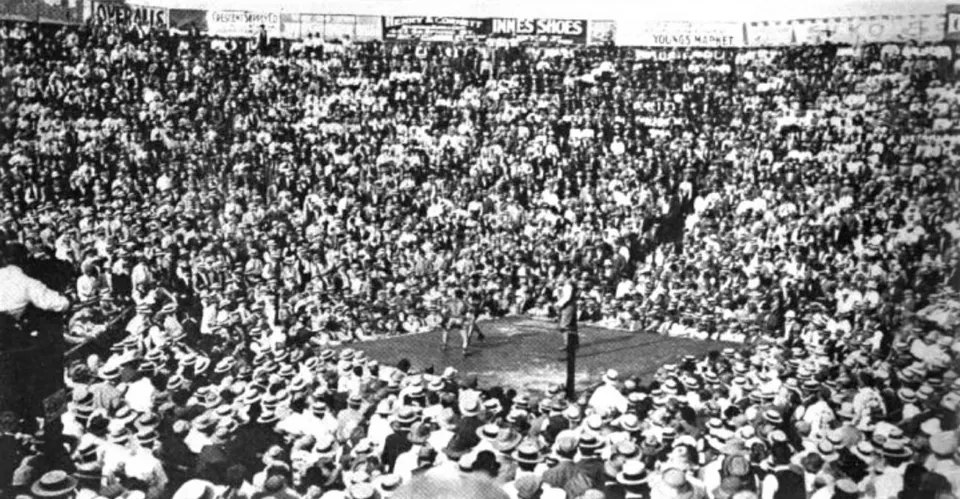
In the 13th round Wolgast trapped Rivers on the ropes and the two men punched at the same instant. Rivers landed a right to the jaw; Wolgast's left hook landed low. Both fell, with Wolgast landing on top of his opponent. Welch helped the champion to his feet and counted over Rivers, then gave the fight to Wolgast. Wikipedia records Welch's explanation that Wolgast had begun to rise before the count reached ten. The AP capsule describes the referee reviving Wolgast before counting Rivers out.
The decision caused an uproar. Rivers' supporters shouted foul over the low punch, while at least one observer insisted Rivers had kneed the champion. There was also a dispute over the clock: the official timekeeper said the round had ended when Welch's count was only at nine. Film shot from a single angle settles little. The Ring later placed the fight 11th on its list of the greatest bouts ever, and it is still remembered as one of the most disputed results in the sport.
Losing the Title to Willie Ritchie
Wolgast's run ended later that year. He had already met Willie Ritchie on May 11, 1912, over four rounds in San Francisco, a no-decision bout that newspapers scored for Ritchie. On November 28, 1912, they met again with the title at stake at Coffroth's Mission Street Arena in Daly City. Ritchie had the better of the fight, and in the 16th round Wolgast landed two punches below the belt. The referee disqualified him, and the lightweight championship changed hands on a foul, a rare way for a world title to be lost in that era.
A Slow and Painful Decline
Wolgast kept fighting, but the ferocity that had carried him was fading. Eisen describes a fast, tragic decline in his mental faculties after 1912. By 1917 he was in a psychiatric hospital in Milwaukee for what was called a nervous breakdown, and that year a court declared him incompetent and placed him under guardianship. Wikipedia reports that in 1918 he was sent to a sanitarium, escaped, and was later found living rough in the California woods. That December a court ruled him competent again and ended the guardianship.
In June 1920 he had a so-called goat gland operation at a Los Angeles clinic, a rejuvenation treatment then in vogue. Boxing News quotes the doctor, P. Livingstone Barnes, as announcing: "Wolgast has been completely restored to health." He had not been. His last recorded fight, according to Boxing News, was a draw with Lee Morrissey in San Bernardino on September 6, 1920.
The promoter and trainer Jack Doyle took him in, letting him live on his property and train at the Vernon gym. In 1927 he was committed for good. Sources differ on where: Wikipedia names Stockton State Hospital, while Boxing News names Patton State Hospital in San Bernardino. Boxing News reports that in 1949 two employees of Stockton State Hospital beat him, and that he was left bedridden. He died on April 14, 1955, in Camarillo, California, at 67. Modern writers, including Boxing News and the Northern Express, believe his condition was the brain damage now known as dementia pugilistica or CTE.
The Record and the Recognition
Even Wolgast's record is unsettled, which is common for fighters of his era, when newspaper decisions and no-decision bouts were part of the sport. Wikipedia lists 144 bouts with 87 wins, 33 losses and 23 draws. The AP capsule gives 80-33-20 with 40 knockouts. Boxing News and the Northern Express give 60-13-17 plus many no-decision contests.
Recognition arrived slowly. Wolgast entered the Michigan Sports Hall of Fame in 1964 and the International Boxing Hall of Fame in 2000. In Cadillac, the Northern Express found, his memory is limited to a small exhibit at the Wexford County Historical Museum, and the town's plans for a statue were never carried out.
Sources
- Ad Wolgast, Wikipedia, accessed October 2026
- Willie Ritchie, Wikipedia, accessed October 2026
- The Cadillac Kid, Northern Express, October 28, 2016
- The true story of the boxer and the goat (Carlos Acevedo), Boxing News, February 8, 2020
- Feb. 22, 1910: Nelson vs Wolgast II (Kenneth Bridgham), The Fight City, February 22, 2026
- Rivers, Wolgast and the double knockout (Lou Eisen), Once Upon a Time in the Prize Ring (Substack), September 3, 2024
- Boxing Hall of Fame capsule: Ad Wolgast, ESPN.com / Associated Press, June 2000
- Ad Wolgast, Michigan Sports Hall of Fame


