
Eusebio Pedroza Ruled the Featherweights for Seven Years and 19 Defenses
Panama's Eusebio Pedroza won the WBA featherweight title in 1978, defended it across four continents and lost it to Barry McGuigan at Loftus Road in 1985.

For seven years Eusebio Pedroza carried the WBA featherweight belt around the world, from Panama City to Tokyo, Seoul and Port Moresby, and turned back every challenger who came for it. Nineteen defenses later he met Barry McGuigan on a June night in west London, and the longest reign in featherweight history came to an end.
A Tall Kid From El Marañón
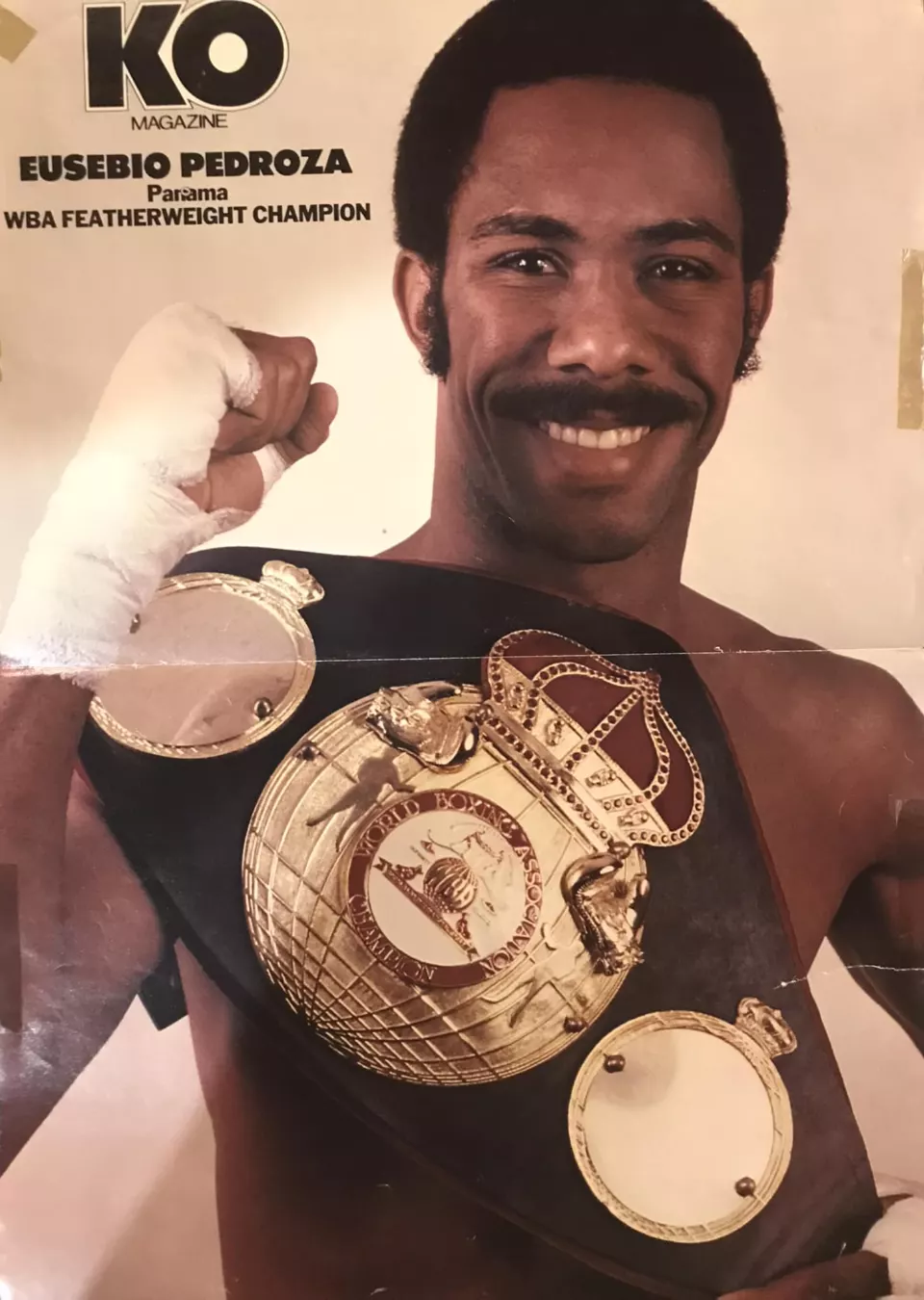
Eusebio Pedroza Silva was born in Panama City on March 2, 1956, and grew up in the El Marañón neighborhood, the brother of three sisters. Panamanian newspaper Panamá América later described a household split over his chosen trade. His mother wanted the boy, who finished only sixth grade, to help support the family instead of fighting, while his father encouraged him to box. In the end she backed him, and when he won the world title he gave her his belt, as he had promised.
He was unusually tall for the lighter divisions, listed at 5 feet 9 inches, and that frame shaped the way he fought. He was 17 when he turned professional on December 1, 1973, stopping Julio Garcia in four rounds. His first fifteen bouts were all at home in Panama, and he went 14-1 in that stretch. The lone defeat was a third-round knockout by Alfonso Pérez. Among the early wins was one over Jacinto Fuentes, who would later hold Wilfredo Gómez to a draw.
Two Knockouts on the Way Up
The first world title shot came too soon. In March 1976 Pedroza traveled to Mexicali, Mexico, to challenge WBA bantamweight champion Alfonso Zamora, one of the hardest punchers of the era, and was knocked out in the second round. Not long after, he went to Venezuela and was stopped in six rounds by Oscar Arnal. Two knockout losses in a short span might have ended a lesser career. Pedroza instead regrouped at featherweight, where his height and reach would become his greatest assets.
The Night He Beat Cecilio Lastra in Panama City
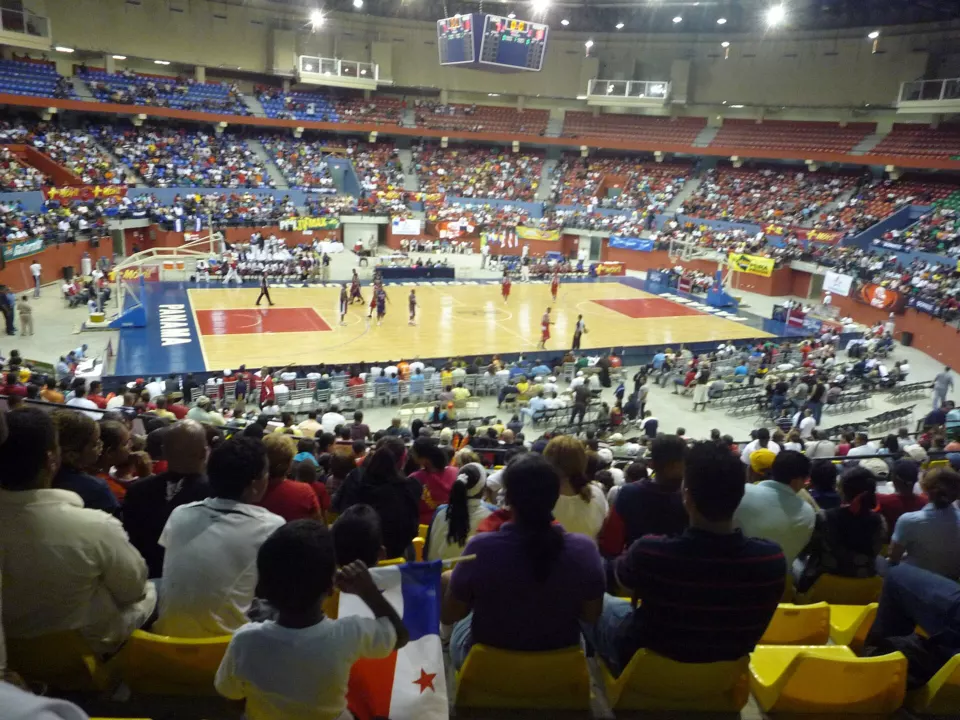
On April 15, 1978, Pedroza fought Spain's Cecilio Lastra, the reigning WBA featherweight champion, at the Gimnasio Nuevo Panamá in his home city, the arena now known as the Roberto Durán Arena. It was his second chance at a world title, and he was 22 years old. He knocked Lastra out in the 13th round. The belt he won that night would stay with him for more than seven years.
Nineteen Defenses on Four Continents
What set Pedroza apart was less any single victory than his willingness to travel. Within months of winning the title he defended it against Enrique Solís in Puerto Rico, winning a 15-round decision. In 1979 he went to Japan and stopped Royal Kobayashi in the 14th round, then faced the Mexican former champion Rubén Olivares in Houston and stopped him in the 12th. That same year he took the title to Port Moresby, Papua New Guinea, where Johnny Aba was beaten in 11 rounds. In 1980 he knocked out Sa Wang Kim in South Korea in the eighth.
The American Rocky Lockridge challenged him twice, first in New Jersey in 1980 and again in Italy in 1983, and lost on points both times. Carlos Piñango was knocked out in seven rounds in Venezuela in 1981. In 1982 Pedroza outpointed Juan Laporte, a win that also gave him recognition as the lineal champion of the division, and the same year he was held to a draw by Bernard Taylor in North Carolina, keeping his title. In 1983 he beat José Caba in Italy by decision, and in early 1985 he turned back Jorge Luján.
Sources count the reign slightly differently. The WBA, Panamanian broadcaster TVN and The42 credit him with 19 successful defenses, a featherweight record. Wikipedia instead says he defended against 18 different contenders, a figure that fits the same total once Lockridge's two challenges are counted as one opponent. The WBA also notes that he had 22 fights during the reign, including two non-title bouts and a no contest.
Elegant Boxer, Rough Customer
Pedroza was nicknamed El Alacrán, the Scorpion. Writing after his death for The Sweet Science, boxing historian Matt McGrain described a fighter who combined skill and elegance with an aggressive, mauling style, and who was not above bending the rules on the inside. His reach let him control distance, but he was equally willing to drag opponents into close-quarters fighting. Wikipedia notes that he was among the champions whose fights inspired a young Mike Tyson. Boxing also ran in the family; his cousin Rafael Pedroza became a world champion at junior bantamweight.
His standing at home went beyond sport. While he was still champion, Pedroza was elected to Panama's Legislative Assembly, an unusual double life for an active titleholder.
McGuigan and the Loftus Road Crowd
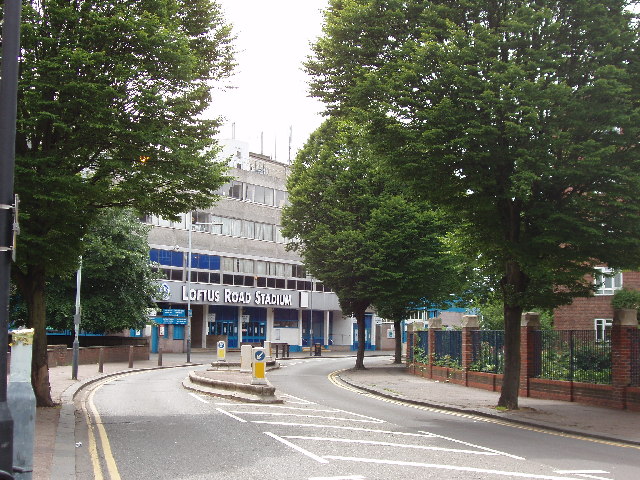
By 1985 the challenger everyone wanted to see was Barry McGuigan, the hard-pressing Irish featherweight. The fight was set for June 8, 1985, at Loftus Road, the home ground of Queens Park Rangers in west London, with the WBA and The Ring featherweight titles at stake. It was McGuigan's first world title opportunity. Reports put the crowd at more than 26,000, while other sources say nearly 27,000, most of them Irish, and the BBC broadcast the fight live. Stanley Christodoulou was the referee.
The fight went the full 15 rounds. Late in the seventh, McGuigan landed a big right hand to the head and Pedroza went down for a count, the decisive moment of the night. The Panamanian survived and kept fighting, but McGuigan won a unanimous decision and Ireland had its first world boxing champion in 35 years. Pedroza later called it one of the most important fights of his career, according to the WBA's account of his life.
Comebacks, Politics and Retirement
Pedroza never fought for a world title again. Between 1986 and 1992 he returned to the ring five times, winning three and losing two, with Edgar Castro in 1986 and Mauro Gutiérrez in 1992 among his opponents. He retired in 1992 with a record of 41 wins, 6 losses and 1 draw, plus one no contest, with 25 wins by knockout. He was knocked out only three times in 48 professional bouts, and all three, against Pérez, Zamora and Arnal, came before he found his home at featherweight.
After boxing he worked at Panama's National Institute of Sports, according to La Prensa. In 1999 he was inducted into the International Boxing Hall of Fame in Canastota, New York.
Death in Panama City
Pedroza died at his home in Panama City on March 1, 2019, one day short of his 63rd birthday, after a battle with pancreatic cancer. The Hall of Fame in Canastota lowered its flags to half-staff, and Panama's president, Juan Carlos Varela, sent condolences. McGuigan wrote on Twitter that "it was a pleasure to share the ring with him," as quoted by the Associated Press. Few champions in any division ever matched his combination of longevity and road miles, and no featherweight has yet matched his count of title defenses.
Sources
- Eusebio Pedroza, Wikipedia, accessed October 2026
- Barry McGuigan, Wikipedia, accessed October 2026
- Roberto Durán Arena, Wikipedia, accessed October 2026
- Panamanian world champion boxer Eusebio Pedroza dead at 62, Associated Press via Fox News, March 1, 2019
- Eusebio Pedroza, the beast with 19 defenses, World Boxing Association, March 2019
- Eusebio Pedroza obituary coverage, The42, March 2019
- R.I.P. Eusebio Pedroza, The Sweet Science, March 2019
- Eusebio Pedroza, El Alacrán de las 19 defensas, TVN Panama, March 2, 2019
- Eusebio Pedroza, el hombre detrás del campeón, Panamá América
- La vida después del boxeo, La Prensa (Panama)


