
Rubén Olivares Was Mexico's Bantamweight Knockout King Who Fought the Castillo Trilogy and Lost a Fortune
Rubén 'El Púas' Olivares came out of Mexico City's poorer streets, won the bantamweight championship from Lionel Rose with a run of knockouts behind him, fought a three-fight series with Chucho Castillo and later won featherweight titles. This is the story of his career, his films and the money that slipped away.

Rubén "El Púas" Olivares grew up poor in Mexico City, began his professional career with one of the longest knockout runs boxing has seen, and took the bantamweight championship before he turned 23. Over the next six years he won, lost and regained titles in two weight classes, fought a three-fight series with Chucho Castillo that Mexican fans still argue about, and enjoyed his fame openly. He spent most of the money just as openly. The record is a story of punching power, a famous rivalry and a fortune that did not last.
From Guerrero to the Bondojito Streets
Olivares was born on January 14, 1947, in the state of Guerrero. The sources do not agree on the town. Both the English and Spanish Wikipedia entries give Iguala, while World Boxing Council profiles name Chilpancingo, the state capital. Mexico News Daily reports that his family moved to the Bondojito area of Mexico City in his first year, at a time when large numbers of rural families were moving into the capital's poorer districts. For that reason he is often described as a Mexico City fighter.
The same outlet describes a hard childhood. Several of his siblings died young, his father went north to the United States, and he was thrown out of school for fighting. He tried carving wooden figures for a living and gave it up. The gym suited him better. As an amateur he won the Mexico City Golden Gloves, and the WBC says he won one Golden Gloves final while fighting with a broken jaw, finishing the bout inside a round.
A Teenage Professional and a Wall of Knockouts
Olivares turned professional at 17 with a first-round knockout in Cuernavaca on January 4, 1965. Accounts differ on the first opponent: English Wikipedia names Freddy García, while the Cleto Reyes biography and Spanish Wikipedia name Isidro Sotelo. The fights that followed are better documented. Wikipedia credits him with winning streaks of 22 and 21 consecutive knockouts, both among the longest on record. Mexico News Daily puts the opening run at 24, a reminder that early records from that era vary.
Most of his biggest nights came at the Forum in Inglewood, California. The Los Angeles Times once wrote that he had a wide grin and thunder in both hands, according to Mexico News Daily. In 2003 The Ring magazine ranked him 12th on its list of the greatest punchers of all time, Wikipedia notes.
The Night He Dethroned Lionel Rose
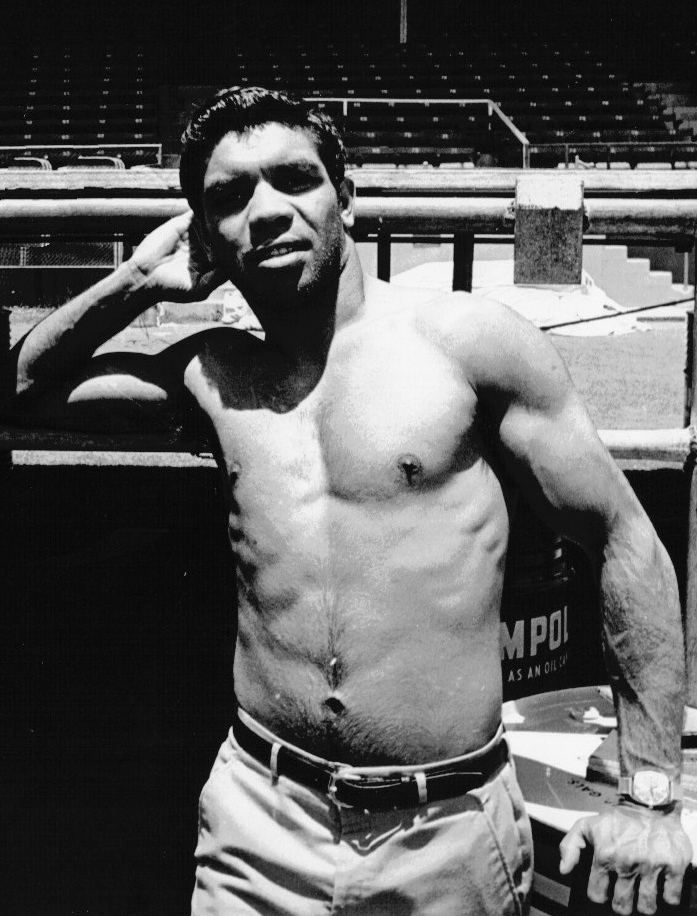
On August 22, 1969, at the Forum in Inglewood, California, Olivares challenged Australia's Lionel Rose for the WBA, WBC and Ring bantamweight titles. According to the WBC's account, Rose went down in the second round and twice more in the fifth, and the fight was stopped at 2:24 of that round. Olivares was 22 and held the undisputed championship. In December 1969 he stopped Britain's Alan Rudkin in two rounds in his first defense.
Three Fights With Chucho Castillo

Jesús "Chucho" Castillo was the next contender. All three of their fights were held at the Forum, and Wikipedia's article on Castillo calls the series one of the most important rivalries in Mexican boxing. On April 18, 1970, Olivares kept his titles with a unanimous 15-round decision. Going the distance ended his knockout streak, but he was still unbeaten.
The rematch on October 16, 1970, went the other way. Castillo opened a cut on Olivares in the first round. The wound got worse as the fight went on, and in the 14th round it was ruled that Olivares could not continue. It was the first loss of his professional career, and it cost him the WBA, WBC and Ring titles. The Cleto Reyes biography lists the fight as October 2, but most sources give October 16.
The third fight took place on April 2, 1971. Olivares was knocked down early, got up, and won a unanimous decision over 15 rounds to regain the championship. Over the three meetings he won twice on points, and Castillo's win came from a cut.
Losing the Bantamweight Crown for Good
His second reign did not last long. On March 19, 1972, at the Toreo de Cuatro Caminos in the Mexico City area, Rafael "Huáscato" Herrera knocked him out at 1:28 of the eighth round, according to the WBC. Herrera also won their rematch later that year, a 10-round majority decision on November 14, 1972. Olivares then moved up to featherweight.
Featherweight Titles, Won and Lost
At 126 pounds he won some fights and lost others. In June 1973 he knocked out a young Bobby Chacón in nine rounds in the first of three fights with him. Mexico News Daily says that win brought him the NABF featherweight title. That September, Canada's Art Hafey stopped him in five rounds. Olivares beat Hafey on points in a 12-round rematch in March 1974.
On July 9, 1974, he knocked out Japan's Zensuke Utagawa in the seventh round to win the vacant WBA featherweight title. He lost it on November 23, 1974, to Nicaragua's Alexis Argüello, who stopped him in the 13th round. Olivares then won another belt. On June 20, 1975, he knocked out Chacón in two rounds to take the WBC featherweight title. He lost it three months later, on September 20, 1975, when Ghana's David "Poison" Kotey won a 15-round decision. Each of those four featherweight title fights was held in Inglewood, according to the Cleto Reyes record.
He had one more world title fight. On July 21, 1979, WBA featherweight champion Eusebio Pedroza knocked him out in the 12th round.
The Long Goodbye
Olivares fought on and off for most of the 1980s. Wikipedia, the WBC and Cleto Reyes all date his final bout to March 12, 1988, a fourth-round knockout loss to Ignacio Madrid in Mexico City. Mexico News Daily gives 1981 as his retirement year. The sources have not settled the difference, though the later bouts are listed fight by fight.
The WBC and the International Boxing Hall of Fame list his final record as 89 wins, 13 losses and 3 draws, with 79 knockouts. Spanish Wikipedia counts 78 knockouts. He faced more than a dozen world champions, according to the WBC. In 1999 the Associated Press named him and Carlos Zárate the best bantamweights of the 20th century.
Tequila, Film Sets and a Fortune Lost
Olivares never hid how he lived away from the ring. Mexico News Daily describes his fondness for tequila and nightlife, and his fight purses went on parties, taxes, failed investments and gifts to relatives. In September 2026, TV Azteca's sports desk said he had lost most of his fortune, partly through fraud by people close to him. It reported that he lost properties that included a home in Lindavista that had never been formally registered.
His fame also took him into film. Wikipedia credits him with appearances in 12 films, including Las Glorias del Gran Púas (1984). Mexico News Daily mentions a starring role in Nosotros los Feos, and Spanish Wikipedia notes that many of his roles were brief parts in popular "fichera" comedies. The same reporting mentions an arrest related to marijuana and later years spent selling autographs and memorabilia at a market in Mexico City.
Canastota and the Verdict of History

The International Boxing Hall of Fame in Canastota, New York, inducted Olivares in 1991. He still returned there years later, and he was photographed among the former champions at the 2010 induction weekend. The WBC has called him perhaps the best bantamweight of all time. WBC president Mauricio Sulaimán has addressed him directly: "You are a Champion of Champions."
Sources
- Rubén Olivares, Wikipedia (English), accessed October 2026
- Rubén Olivares, Wikipedia (Spanish), accessed October 2026
- Chucho Castillo, Wikipedia (English), accessed October 2026
- International Boxing Hall of Fame (inductee table), Wikipedia, accessed October 2026
- Rubén Olivares profile and tribute articles, World Boxing Council (wbcboxing.com), undated
- Rubén "Púas" Olivares, Cleto Reyes (cletoreyes.com), undated
- Who was the greatest Mexican boxer of all time?, Mexico News Daily, undated
- Rubén Olivares and the boxing fortune he lost (Spanish-language report), TV Azteca Deportes, September 6, 2026


