
How Jack Dempsey Went From Colorado Mining Camps to the Million-Dollar Gate, Broadway and Okinawa
Jack Dempsey rode freight trains between Colorado mining camps before taking the heavyweight title from Jess Willard in 1919 and drawing boxing's first million-dollar gates. After his losses to Gene Tunney he ran a famous Broadway restaurant and served as a Coast Guard officer in the Second World War.

Jack Dempsey grew up poor in Colorado's mining country and rode freight trains from one fight to the next. By 1921 he was the biggest draw in sports and had headlined the first million-dollar gate. He lost his title to Gene Tunney, opened a restaurant on Broadway, and at almost fifty went to Okinawa as a Coast Guard officer.
A Mormon Town in the San Luis Valley
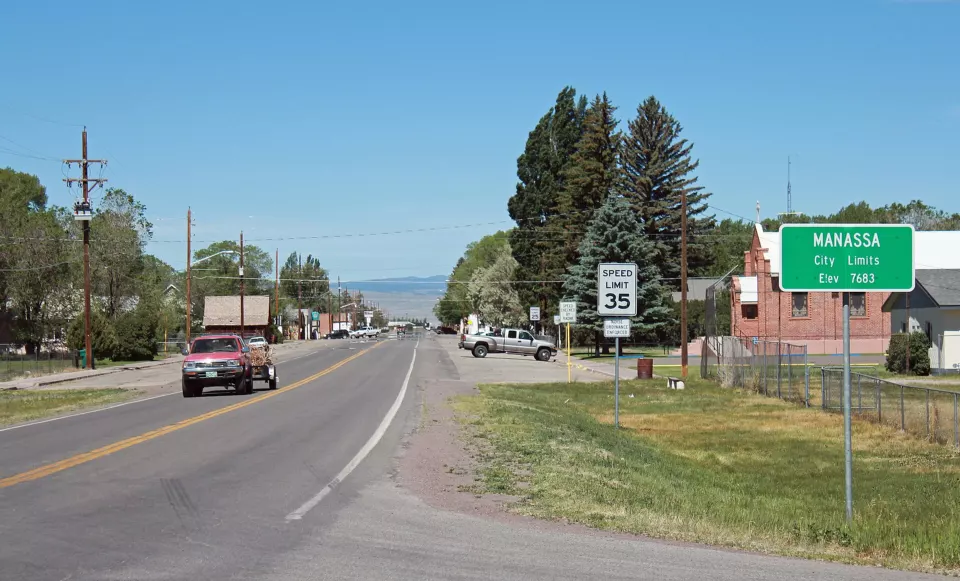
William Harrison Dempsey was born on June 24, 1895, in Manassa, a small farming settlement in southern Colorado. His parents, Hiram and Mary Celia Dempsey, had thirteen children; a regional profile in Cowboy State Daily places him ninth.
The Dempseys had little money. Hiram struggled to keep work, and the family kept moving between Colorado mining towns, including Creede, Leadville, Cripple Creek, Montrose, Ouray and Salida. Jack left grade school to earn wages, and some accounts say he was doing mine work by about thirteen. His older brother Bernie, also a fighter, gave him his first lessons. Bernie had boxed as "Jack Dempsey," taking the name of an earlier Irish middleweight, and the younger brother eventually took it over.
Riding the Rods as Kid Blackie
At sixteen Dempsey left home. With no money for fares, he rode under freight cars and slept in hobo camps across the mountain West. He dug ditches, picked fruit, cut timber and worked as a circus roustabout. When he needed money he walked into saloons in Colorado, Utah and Nevada and offered to fight anyone there, betting on the result. On those nights he called himself "Kid Blackie" or "Young Dempsey."
By his own account, the first fight he had as "Jack Dempsey" was at Cripple Creek in the fall of 1914. Over the next few years he picked up managers, first John J. Reisler and then Jack "Doc" Kearns. Kearns steered him toward the promoter Tex Rickard.
Toledo, July 4, 1919
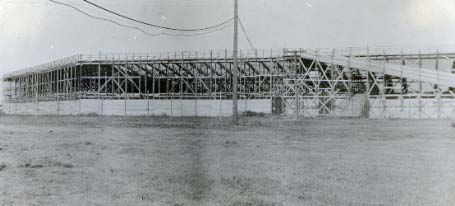
Rickard matched Dempsey with heavyweight champion Jess Willard, the giant from Kansas, for Independence Day 1919 in Toledo, Ohio. An octagonal wooden stadium was built for the fight at what is now Bay View Park, with room for 80,000 people. Local historians at Holy Toledo History write that the temperature passed 100 degrees. Attendance is disputed: the official paid figure was 19,650, but a later analysis cited by the same historians put the crowd at 50,000 or more.
The fight was over quickly. Dempsey knocked Willard down seven times in the first round, and the champion was still badly hurt when he gave up in his corner after the third. The reported gate was about $452,000. The win was questioned years later: in a 1964 Sports Illustrated interview, Kearns said he had loaded Dempsey's hand wraps with plaster of Paris. Other witnesses and later researchers disputed this, and the claim was never proven.
The Slacker Charge and the First Million-Dollar Gate
Dempsey had not served in the First World War, and the "slacker" label stayed with him. In 1918 Kearns staged photographs of him at a Philadelphia-area shipyard, but readers noticed the polished shoes under his work overalls, and the pictures backfired. In 1920 federal prosecutors charged him with falsifying his draft questionnaire, and his former wife Maxine testified against him. He was cleared after evidence showed he had registered and received a hardship exemption.
Rickard used that reputation to sell his next big fight. Dempsey's opponent on July 2, 1921, was Georges Carpentier of France, a war hero decorated with the Croix de Guerre and the Médaille Militaire. Rickard borrowed $250,000 to build a wooden arena called Boyle's Thirty Acres in Jersey City, and a crowd reported at about 91,000 paid $1,789,238. It was the first million-dollar gate in boxing. Carpentier shook Dempsey with a right hand in the second round, but Dempsey knocked him down early in the fourth and finished him at 1:16 of that round. The fight was also broadcast on radio, which was new at the time. Accounts disagree on how: one Wikipedia article credits KDKA, while the article on the fight describes a temporary RCA station, WJY, transmitting from Hoboken to listeners in 61 cities.
Four Minutes With Firpo
On September 14, 1923, Dempsey defended against Luis Ángel Firpo of Argentina, known as "the Wild Bull of the Pampas," at the Polo Grounds in New York. Boxing News says about 80,000 people were inside and about 40,000 more were turned away outside. The British weekly calls it Rickard's second million-dollar gate, and Dempsey's purse was reported at $468,750.
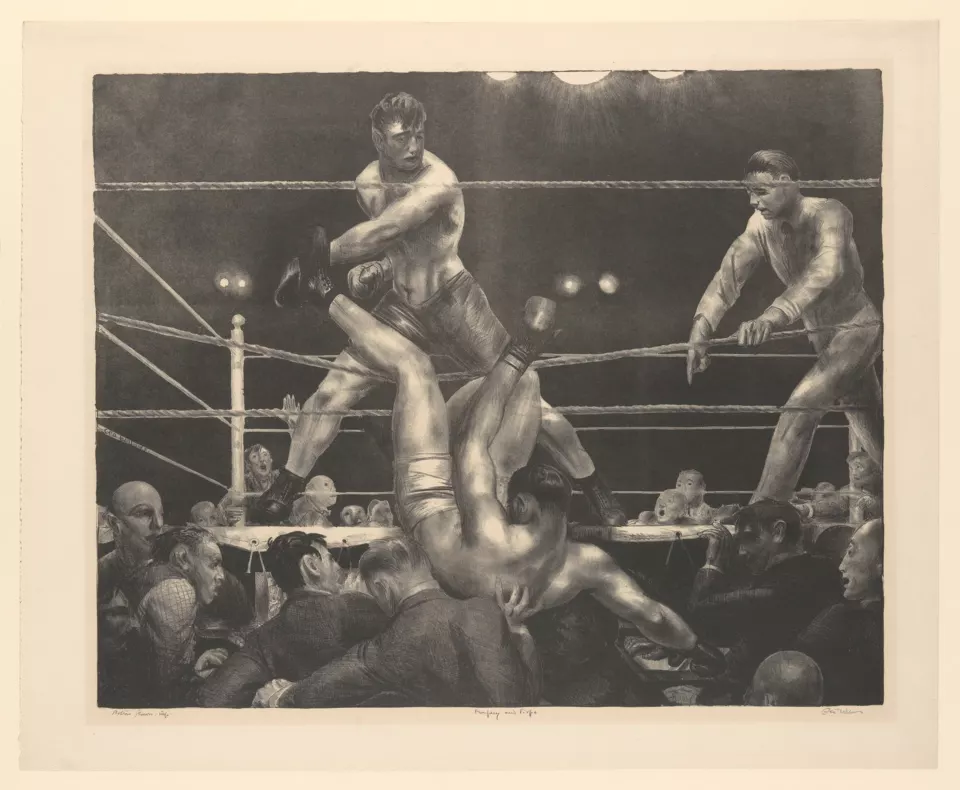
Dempsey went down twice in the first round, and Firpo was dropped again and again. Sources give different totals: one says seven knockdowns of Firpo in the first round alone, while Boxing News counts seven over the whole fight. Then Firpo drove Dempsey through the ropes and into the press row. Reporters pushed him back into the ring before the count reached ten, though accounts differ on how long he was outside. In the second round Dempsey knocked Firpo out, and the fight ended after less than four minutes of boxing. According to Wikipedia, the referee, named by Boxing News as Jack Gallagher, never worked another fight, and the neutral-corner rule came in about two months later. George Bellows later painted the moment Dempsey went through the ropes.
"I Forgot to Duck"
Dempsey did not defend his title for three years. When he finally did, on September 23, 1926, at Sesquicentennial Stadium in Philadelphia, Gene Tunney outboxed him over ten rounds and won a unanimous decision. That night Dempsey reportedly told his wife, the actress Estelle Taylor, "Honey, I forgot to duck."
He knocked out Jack Sharkey in the seventh round at Yankee Stadium on July 21, 1927, and earned a rematch. On September 22, 1927, at Soldier Field in Chicago, he dropped Tunney in the seventh round, but the count was delayed and Tunney recovered to win the decision. That fight, known as the Long Count, has its own article on RingTalk. Dempsey never fought for the title again. His official record is usually given as 63 wins, 6 losses and 9 draws, with 53 wins by knockout.
A Restaurant on Broadway
In 1935 Dempsey opened a restaurant on Eighth Avenue at 50th Street, across from the Madison Square Garden of that era. It later moved to the Brill Building on Broadway, between 49th and 50th Streets, and became Jack Dempsey's Broadway Restaurant. Dempsey was there most nights, signing autographs and posing for pictures with customers. The restaurant appears in films such as Requiem for a Heavyweight, in which Dempsey has a cameo, and The Godfather. It closed in 1974 after a dispute over the lease.
Commander Dempsey
When the United States entered the Second World War, Dempsey was 47. He first took a commission as a first lieutenant in the New York State Guard. He then joined the Coast Guard Reserve as a lieutenant and reported on June 12, 1942, to the training station at Manhattan Beach in Brooklyn, where he was director of physical education. He became a lieutenant commander in December 1942 and a commander in March 1944.
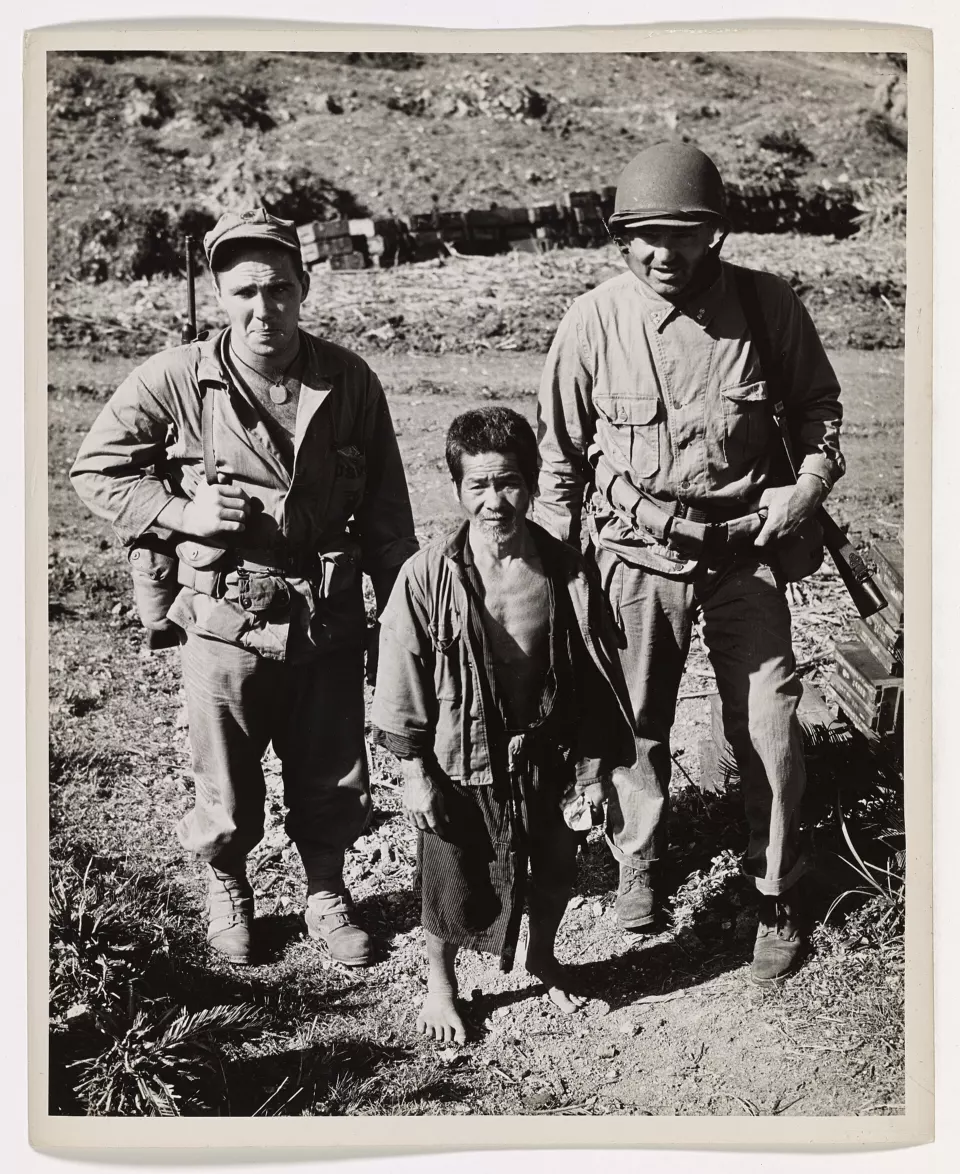
In 1944 he served aboard the transport USS Wakefield. In 1945 he was on the attack transport USS Arthur Middleton for the invasion of Okinawa, and he went ashore in the first days of the operation. A Signal Corps photograph shows him landing soon after the assault waves. He was released from active duty in September 1945 and received an honorable discharge from the Coast Guard Reserve in 1952.
The Last Round
Dempsey married four times. His wives were Maxine Gates, Estelle Taylor, Hannah Williams and finally Deanna Piatelli, who was still married to him when he died. In 1950 an Associated Press poll named him the greatest fighter of the previous fifty years. He was in the first class of The Ring's Hall of Fame in 1954 and was inducted into the International Boxing Hall of Fame in 1990. He died of heart failure in New York on May 31, 1983, at 87, and was buried in Southampton, on Long Island.
Sources
- Jack Dempsey, Wikipedia, accessed October 2026
- Jack Dempsey vs. Georges Carpentier, Wikipedia, accessed October 2026
- Jack Dempsey vs. Luis Ángel Firpo, Wikipedia, accessed October 2026
- Jack Dempsey's Broadway Restaurant, Wikipedia, accessed October 2026
- On this day: Jack Dempsey is knocked out of the ring in a wild brawl, Boxing News, accessed October 2026
- The Truth About Toledo's Day in the Sun, Holy Toledo History, accessed October 2026
- The American West: The Manassa Mauler, Jack Dempsey, Cowboy State Daily, March 11, 2025
- Jack Dempsey's 1918 Publicity Stunt Backfired and Inspired His Service in WWII, Veterans Breakfast Club, accessed October 2026


