
Joe Louis the Brown Bomber and His Long Reign and Hard Road
From an Alabama sharecropping family and a Detroit gym to 25 heavyweight title defenses, wartime service and a tax debt that followed him to the end, the life of Joe Louis.

Joe Louis was born to Alabama sharecroppers, learned to fight in a Detroit recreation hall, and held the world heavyweight championship for nearly twelve years. He defended it 25 times, avenged his only loss of the 1930s in a fight the whole country followed, gave up his best years to the Army, and spent the rest of his life trying to pay a tax bill he could never clear.
From LaFayette, Alabama to Detroit's Black Bottom
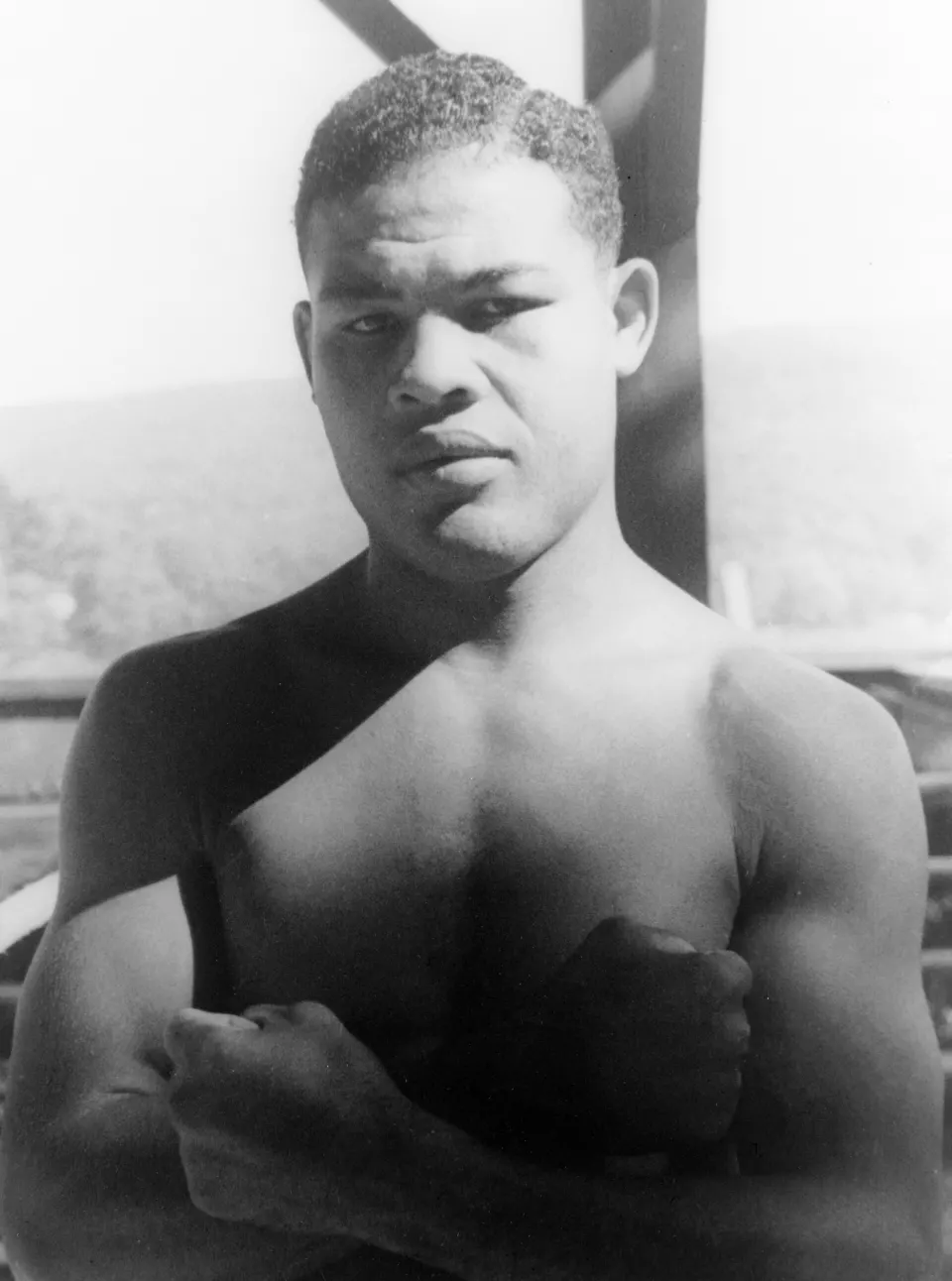
Joseph Louis Barrow was born on May 13, 1914, in LaFayette, in Chambers County, Alabama. He was the seventh of eight children of Munroe and Lillie Barrow, and his father was committed to a mental institution when the boy was about two. The family later joined the great northward migration of Black Southerners, settling in Detroit; Wikipedia's account dates the move to 1926 and links it to intimidation by the Ku Klux Klan, while History.com places it much earlier in his childhood. The Barrows lived on Catherine Street in the Black Bottom neighborhood, and young Joe was steered toward cabinetmaking at Bronson Vocational School.
The story that has survived every retelling is about a violin. His mother paid for lessons, and the teenager spent the money on boxing instruction at the Brewster Recreation Center instead. He dropped "Barrow" when he started fighting, and the shortened name stuck.
An Amateur Record That Opened Doors
Louis lost his first amateur bout, in 1932, but improved quickly. He won a Detroit Golden Gloves title, then the Chicago Golden Gloves open division, and in 1934 the national amateur championship in St. Louis. By most counts he finished with 50 wins in 54 amateur fights, 43 of them by knockout.
He turned professional with manager John Roxborough, a Detroit-area bookmaker, promoter Julian Black of Chicago, and trainer Jack "Chappy" Blackburn. On July 4, 1934, at the Bacon Casino in Chicago, Louis knocked out Jack Kracken in the first round and was paid $59. By the end of 1935 he had beaten two former heavyweight champions, Primo Carnera and Max Baer, and married Marva Trotter.
The 1936 Defeat at Yankee Stadium
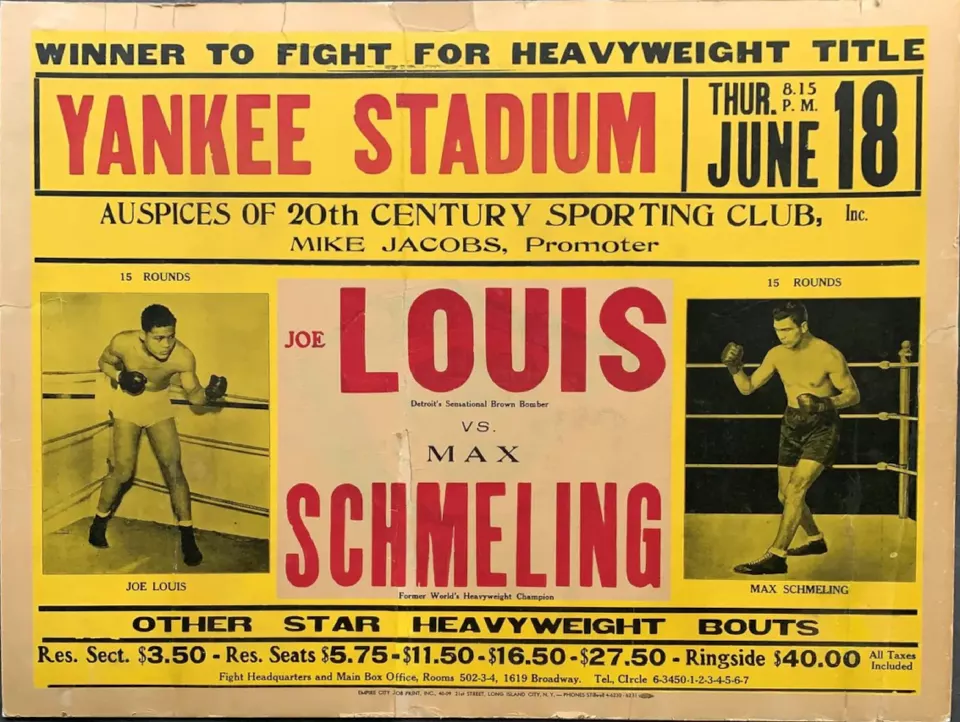
Louis was unbeaten in 27 professional fights when he met the German former champion Max Schmeling at Yankee Stadium on June 19, 1936. The German knocked him out in the 12th round, the first defeat of his professional career.
Champion of the World in Chicago, 1937
Despite the loss, Louis received the title shot. On June 22, 1937, in Chicago, he faced champion James J. Braddock and knocked him out in the eighth round. Black communities across the United States celebrated in the streets; historians still treat the night as a landmark in African American history. Louis himself reportedly said he did not want to be called champion until he had beaten Schmeling.
Two Minutes and Four Seconds: The 1938 Rematch
The rematch came exactly a year later, on June 22, 1938, again at Yankee Stadium, in front of 70,043 spectators. By then the fight carried the weight of a looming war. Schmeling, fairly or not, was cast as a symbol of Nazi Germany, and Louis as the American answer. Wikipedia estimates that the radio broadcast reached well over half of the U.S. households that owned a set.
Louis attacked from the opening bell, put Schmeling down three times, and the German's corner threw in the towel. The fight was over in 2 minutes and 4 seconds of the first round. Many white Americans openly cheered a Black athlete against a white opponent for the first time, and Louis became a national figure in a way no Black American sportsman had been before him.
Twenty-Five Defenses and the "Bum of the Month Club"
What followed was the longest heavyweight reign on record: 11 years and 8 months, with 25 successful defenses. Between January 1939 and May 1941 he defended the title 13 times in 29 months, a pace the press mocked as the "Bum of the Month Club," although the list included solid contenders such as John Henry Lewis, Tony Galento, Arturo Godoy and Buddy Baer.
The defense remembered best is the first fight with Billy Conn on June 18, 1941, at the Polo Grounds before 54,487 fans. Conn lasted until the 13th round, when Louis knocked him out with two seconds left in the round. It is still ranked among the great heavyweight fights. Louis was named The Ring's Fighter of the Year in 1936, 1938, 1939 and 1941.
The Champion in Uniform
After the attack on Pearl Harbor, Louis fought Buddy Baer on January 9, 1942, for the Navy Relief Society, and enlisted as a private in the U.S. Army the next day. On March 27, 1942, he defended the title against Abe Simon for Army Relief. The Arlington National Cemetery biography puts his total donations to the two relief funds at more than $100,000. At a relief dinner that year he told the audience the country would win because it was on God's side.
He served in a segregated Army. He was posted to Fort Riley, Kansas, where he helped Jackie Robinson get into Officer Candidate School, and an Army account describes how he and Sugar Ray Robinson were nearly arrested by military police at an Alabama bus depot after refusing to move seats. His main job was morale. He boxed 96 exhibitions before more than two million soldiers and traveled about 22,000 miles. The Army's own file, quoted in a 2014 Army.mil feature, says he "injured himself, putting his livelihood at risk rather than disappoint soldiers." He received the Legion of Merit in September 1945 and left the Army on October 1, 1945.
Comeback Years and a Debt That Would Not Close
The war had cost Louis what should have been his best earning years. In the 1946 rematch at Yankee Stadium he knocked out Conn in eight rounds. His remark that Conn could run but couldn't hide has been quoted ever since. He then won a disputed split decision over Jersey Joe Walcott in December 1947, stopped Walcott in 11 rounds in June 1948, and announced his retirement on March 1, 1949.
The money was already gone. According to Wikipedia, his fights grossed around $4.6 million but Louis kept only about $800,000. By 1950 the Internal Revenue Service said he owed more than $500,000 including interest and penalties, partly because the purses he had given to the relief funds were still counted as his taxable income. He came back. On September 27, 1950, at 36, he lost a decision to champion Ezzard Charles. On October 26, 1951, a young Rocky Marciano knocked him through the ropes in the eighth round. He never boxed professionally again.
With interest piling up, the debt passed $1 million by the end of the decade. The government took a small inheritance left by his mother. Louis wrestled professionally and refereed wrestling matches, appeared on quiz shows, and in 1952 became the first African American to play in a PGA Tour event. Accounts of how the debt ended differ: UPI's 1981 obituary says the IRS eventually capped it and set him a flat $20,000 annual payment, while History.com says Congress passed a special bill forgiving what remained.
Las Vegas, Arlington and a Lasting Legacy
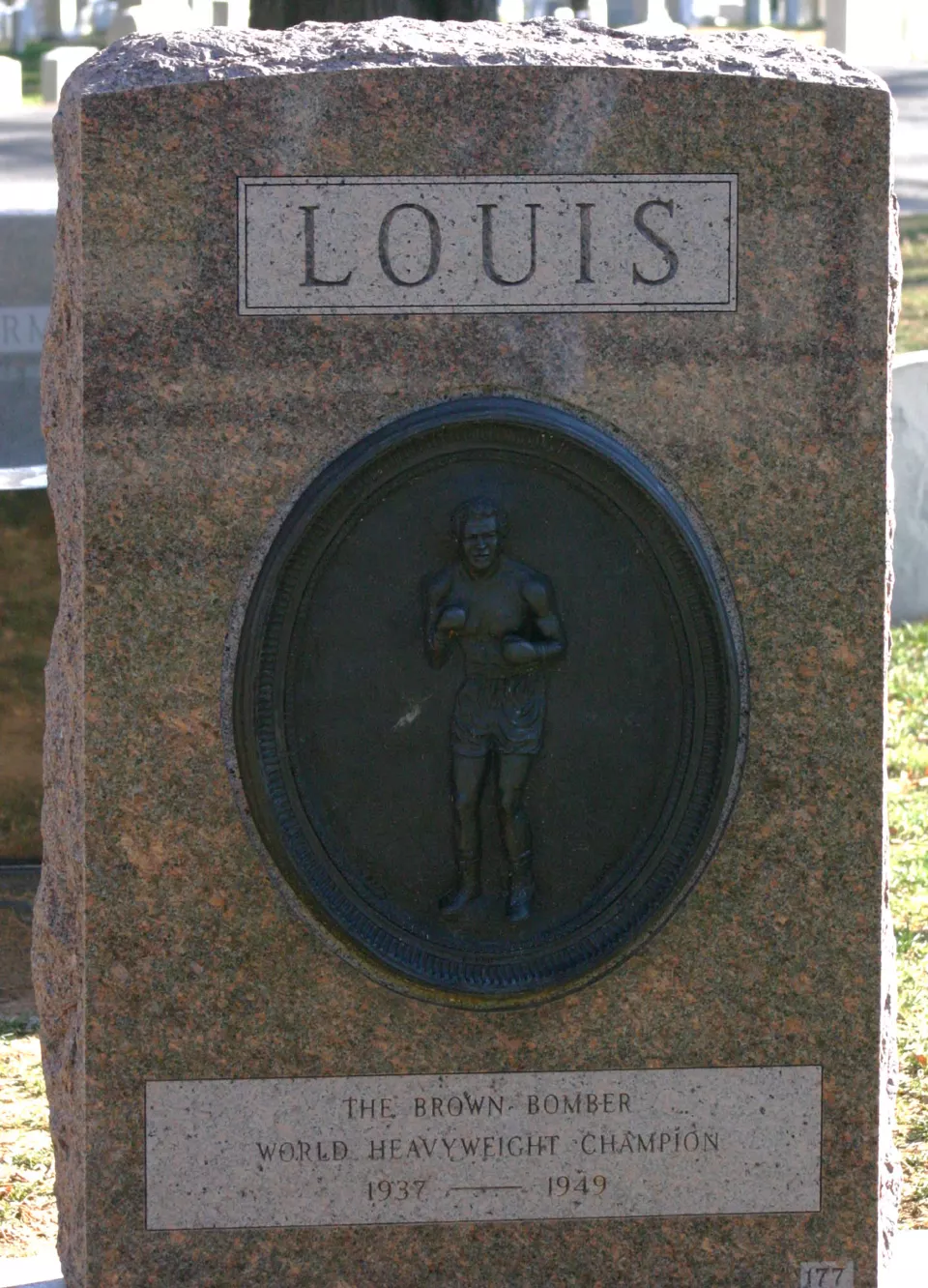
His later years were hard. He was hospitalized in 1970, had heart surgery in 1977, and spent his last years in a wheelchair. He worked as a greeter at Caesars Palace in Las Vegas, where he collapsed and died of cardiac arrest on April 12, 1981, aged 66. According to UPI he had been at ringside for a fight only about 14 hours before his death. Schmeling, who had become a friend, helped pay for the funeral and served as a pallbearer. President Ronald Reagan waived the eligibility rules so that Louis could be buried at Arlington National Cemetery with full military honors. His headstone carries his likeness and the words "The Brown Bomber."
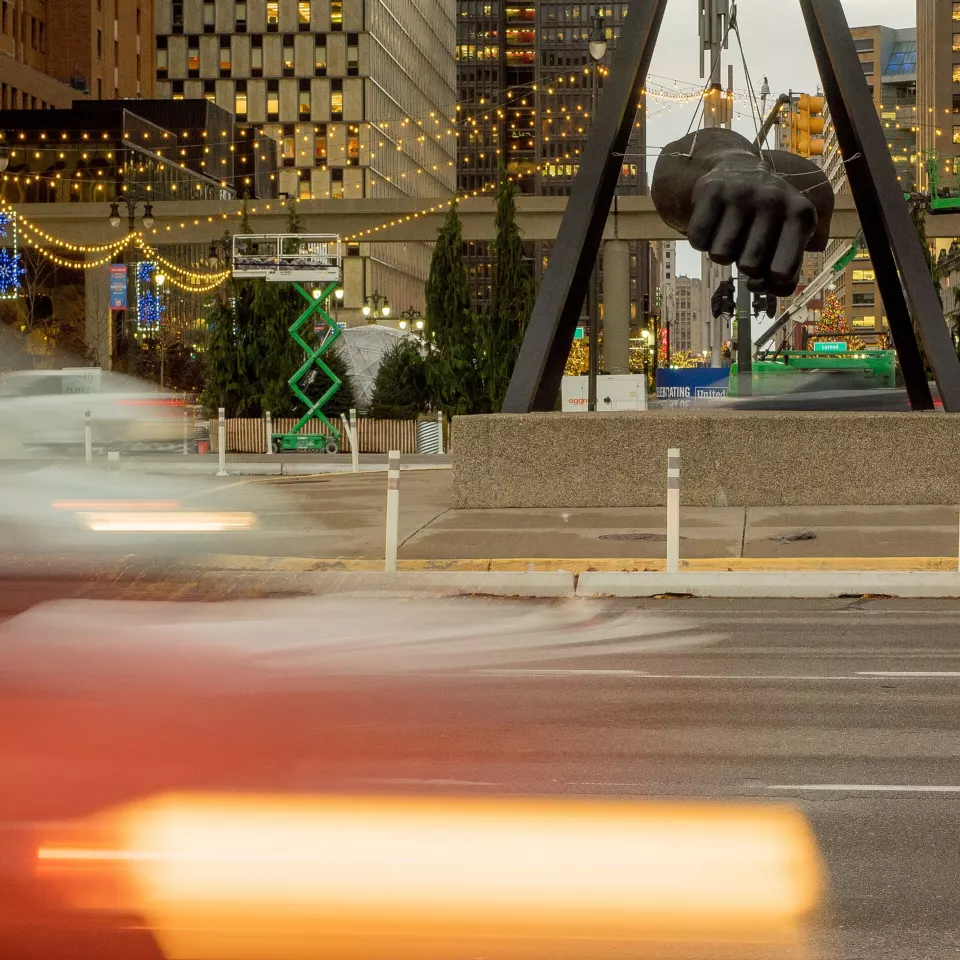
Even his record is counted differently. Wikipedia lists 66 wins in 69 fights with 52 knockouts, while UPI and History.com give 68 wins in 71 fights with 54 knockouts. On the honors there is no disagreement. Congress awarded him the Congressional Gold Medal in 1982, he became the first boxer on a U.S. postage stamp in 1993, and Detroit dedicated Robert Graham's giant fist sculpture to him in 1986. The record of 25 heavyweight title defenses still stands.
Sources
- Joe Louis, Wikipedia, accessed October 2026
- Joe Louis, HISTORY.com Editors, History.com, accessed October 2026
- Joe Louis dead at 66, UPI Archives, April 12, 1981
- Joe Louis, Notable Graves: Sports, Arlington National Cemetery, accessed October 2026
- Soldier-Champ: Joe Louis sacrificed much for his country, T. Anthony Bell, U.S. Army (Army.mil), February 28, 2014


