
How James J. Braddock Went From the Hoboken Docks to Heavyweight Champion of the World
The Cinderella Man went from broken hands, dock labor and public relief to an upset of Max Baer in 1935, then lost the title to Joe Louis, served on Saipan and helped build the Verrazzano-Narrows Bridge.

James J. Braddock went from a fractured right hand and a county relief check to the heavyweight championship of the world in barely a year. Born in Hell's Kitchen and raised across the Hudson in New Jersey, he unloaded ships on the Hoboken waterfront before beating Max Baer in 1935, losing the title to Joe Louis in 1937, serving in the Army during the Second World War and spending his last decades working with his hands again in North Bergen.
From West 48th Street to the Jersey Side
James Walter Braddock was born on June 7, 1905, on West 48th Street in Manhattan, in the tenement district known as Hell's Kitchen. His parents, Joseph Braddock and Elizabeth O'Tool, were Irish immigrants, and he was one of seven children. Braddock grew up in Hudson County, New Jersey, and the towns along the Palisades, North Bergen, West New York and Union City, would define him for the rest of his life.
He earned a reputation as a schoolyard scrapper at St. Joseph's parochial school in West New York. Between roughly 1919 and 1923 he drifted through the kind of work available to a working-class teenager: running messages, sweeping up as a printer's devil, driving a team, running errands. Boxing offered better money than any of it.
A Light Heavyweight on the Rise
As an amateur in March 1925, Braddock won New Jersey's light heavyweight title by knocking out Johnny Emerson inside two minutes, and two days later he beat a much heavier Tom Bodman to add the state heavyweight crown. He turned professional the following spring; his first paid bout, against Al Settle at Amsterdam Hall in Union City on April 13, 1926, ended in a draw.
The next three years went well. Under manager Joe Gould, who would stay at his side through everything that followed, Braddock built a record of 44 wins, two losses and two draws according to Wikipedia's account, with 21 knockouts. A knockout of the well-regarded Tuffy Griffiths in 1928 marked him as a genuine contender, and his purses climbed as high as $17,000 a fight, according to EBSCO's reference profile.
Yankee Stadium, 1929, and the Broken Right Hand
On July 18, 1929, Braddock met Tommy Loughran at Yankee Stadium for the light heavyweight championship. Loughran was a skilled boxer, and he won a close 15-round decision. Braddock left the ring with his right hand fractured in several places, an injury that would follow him for years.
The timing could hardly have been worse. That autumn the stock market collapsed, and Braddock lost his savings when his bank failed. With a damaged hand and a family to support after his 1930 marriage to Mae Fox, he kept fighting, and kept losing. Over his next 33 bouts he went 11-20-2. Purses that had once reached five figures sometimes fell below $200. New Jersey sports historians record that another broken hand, suffered in a 1933 benefit bout for the Mount Vernon police, finally forced him to stop.
The Docks, the Coal Yards and the Relief Office
With three small children, James Jr., Howard and Rosemarie, Braddock went looking for day labor on the Weehawken and Hoboken waterfront. In a 2005 ESPN account, Jeremy Schaap described him walking about three miles each morning in hope of being picked for a gang, then hauling railroad ties out of cargo holds for around four dollars a day, sometimes less after the hiring boss took his cut. When the docks had nothing, he shoveled in coal yards and moved furniture.
By early 1934 the electricity had been cut off and the rent was unpaid. Braddock, who regarded public assistance as a humiliation, applied for relief. Sources differ on the details: ESPN and EBSCO put the payment at $24 a month, while Boxing News recalled it as $17 a week, and accounts of how long he drew it range from ten to thirteen months. Schaap also recounts that the children were sent for a time to stay with their grandparents, and that Braddock crossed the Hudson with a single dime to ask Gould for $35 to cover milk and heat.
One unexpected benefit came out of the hard labor. By the spring of 1934 his right hand had healed, and the months of lifting had left him, by his own reckoning in Schaap's telling, stronger than before.
Corn Griffin and the 1934 Comeback
In June 1934 Braddock was booked as a late substitute against John "Corn" Griffin, a prospect who was meant to use him as a stepping stone. Instead Braddock stopped Griffin in the third round. About five months later he beat John Henry Lewis, a future light heavyweight champion, and on March 22, 1935, he outpointed Art Lasky, breaking Lasky's nose along the way. Three wins had moved a man on public relief into position for a title shot.
When the comeback money began to arrive, Braddock repaid the relief he had received, a sum EBSCO records as $367. Wikipedia notes that he also gave regularly to Catholic Worker houses that sheltered the homeless.
Ten-to-One at the Madison Square Garden Bowl
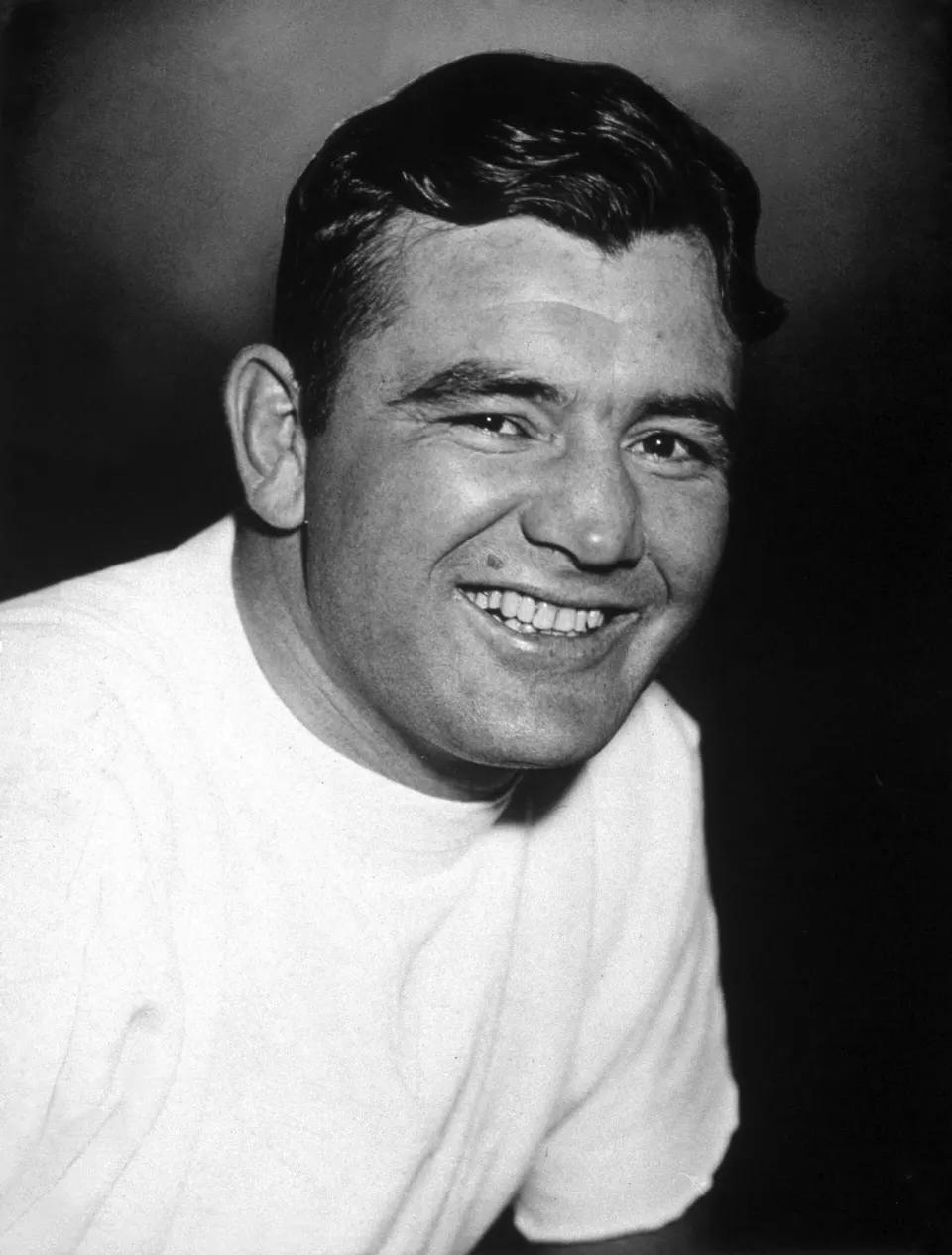
Max Baer's camp chose Braddock as a safe opponent for the champion's first defense. The fight was set for June 13, 1935, at the Madison Square Garden Bowl in Long Island City, and Braddock was quoted at 10-to-1 against. Baer trained lightly and played to the crowd. Braddock, as he later put it to reporters quoted by Boxing News, "was determined not to make a fool of myself."
He didn't. Before a crowd of around 30,000, Braddock stayed on top of the champion for 15 rounds and won a unanimous decision, outscoring Baer by a reported eight rounds to six. Newspapers called it the biggest upset since James J. Corbett beat John L. Sullivan, and the columnist Damon Runyon gave the new champion the name that stuck: the Cinderella Man.
Comiskey Park and the Brown Bomber
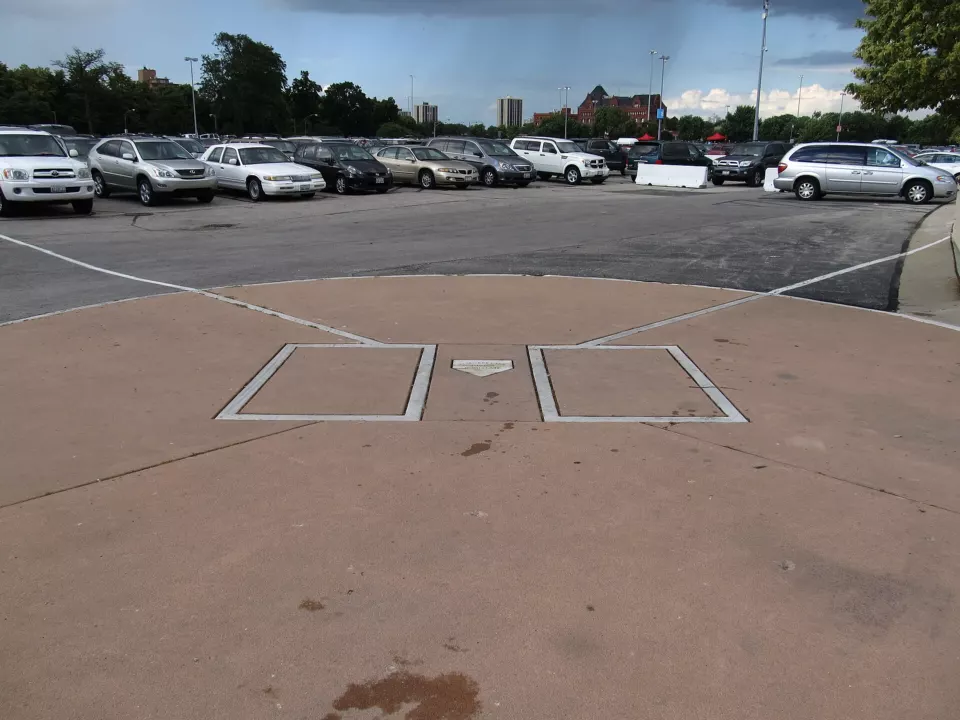
Braddock did not defend the title for two years. When he did, it was against the 23-year-old Joe Louis at Comiskey Park in Chicago on June 22, 1937. Gould had driven a hard bargain: according to Boxing News and New Jersey sports historians, Braddock was to receive ten percent of Louis's purses for the next ten years, an arrangement that eventually paid him more than $150,000.
The champion started well and dropped Louis in the first round, making him only the second man to knock Louis down. But Louis took over, and in the eighth round he knocked Braddock out. It was the only time Braddock was stopped in his career. Schaap later wrote that although Louis went on to fight eight men who held the heavyweight title, Braddock was the only one he ever addressed as "champ."
Braddock had one more fight. On January 21, 1938, at Madison Square Garden, he beat the Welshman Tommy Farr on points, then retired. His official record is usually given as 47 wins, 23 losses and 4 draws, though tallies differ between sources depending on how newspaper decisions and no-decision bouts are counted.
Lieutenant Braddock
After Pearl Harbor, Braddock and Gould joined the Army together in 1942. Braddock was 37 and his hands were arthritic, HistoryNet's account notes, but he was commissioned a first lieutenant and sent to the Pacific, where he was stationed on Saipan and taught soldiers hand-to-hand combat. Gould's war ended differently: he was convicted in 1944 of conspiring to defraud the government over military supply contracts and dishonorably discharged.
Bridges, Surplus and a House in North Bergen
Peacetime business did not suit him as well as the ring. A restaurant on West 49th Street, Braddock's Corner, lost money, and a venture in marine surplus equipment, supplying generators and welding gear, was not a lasting success. In the early 1960s Braddock went back to physical work, as a member of an operating engineers' union crew helping to build the Verrazzano-Narrows Bridge.
Home remained the house in North Bergen that he and Mae had bought with money from the Louis fight. He died there on November 29, 1974, aged 69, and was buried in Mount Carmel Cemetery in Tenafly. The International Boxing Hall of Fame inducted him in 2001. In 2005 Ron Howard's film "Cinderella Man," starring Russell Crowe, carried his story to a new generation, and in 2008 North Bergen unveiled a bronze statue of him in the county park that bears his name.
Sources
- James J. Braddock, Wikipedia, accessed October 2026
- Jeremy Schaap, "Cinderella Man" excerpt on Braddock's Depression years, ESPN, June 10, 2005
- James J. Braddock, EBSCO Research Starters, accessed October 2026
- On This Day: James J Braddock, The Cinderella Man, passes away, Boxing News, November 29, 2018
- Sport: Boxing (James J. Braddock profile), NJ Sports, accessed October 2026
- Claire Barrett, That Time Beloved "Cinderella Man" Boxer and His Manager Enlisted in WWII, Together, HistoryNet, April 4, 2023


