
How John L. Sullivan, the Boston Strong Boy, Went From Roxbury to Richburg and the Temperance Stage
The son of Irish immigrants in Roxbury, John L. Sullivan became America's first boxing superstar, outlasting Jake Kilrain over 75 bare-knuckle rounds in 1889 before losing to Corbett and turning to temperance. His refusal to fight Peter Jackson and other Black challengers remains part of his record.

John L. Sullivan grew up in Roxbury as the son of Irish immigrants and went on to become the first American boxer whose fame reached every corner of the country. He won the bare-knuckle championship in Mississippi, survived 75 rounds against Jake Kilrain in the summer heat of 1889, kept Black challengers out of his ring, lost to James J. Corbett under the new glove rules, and spent his last years warning young men against the drink that had nearly ruined him.
A Roxbury Boyhood and a Short Stay at Boston College
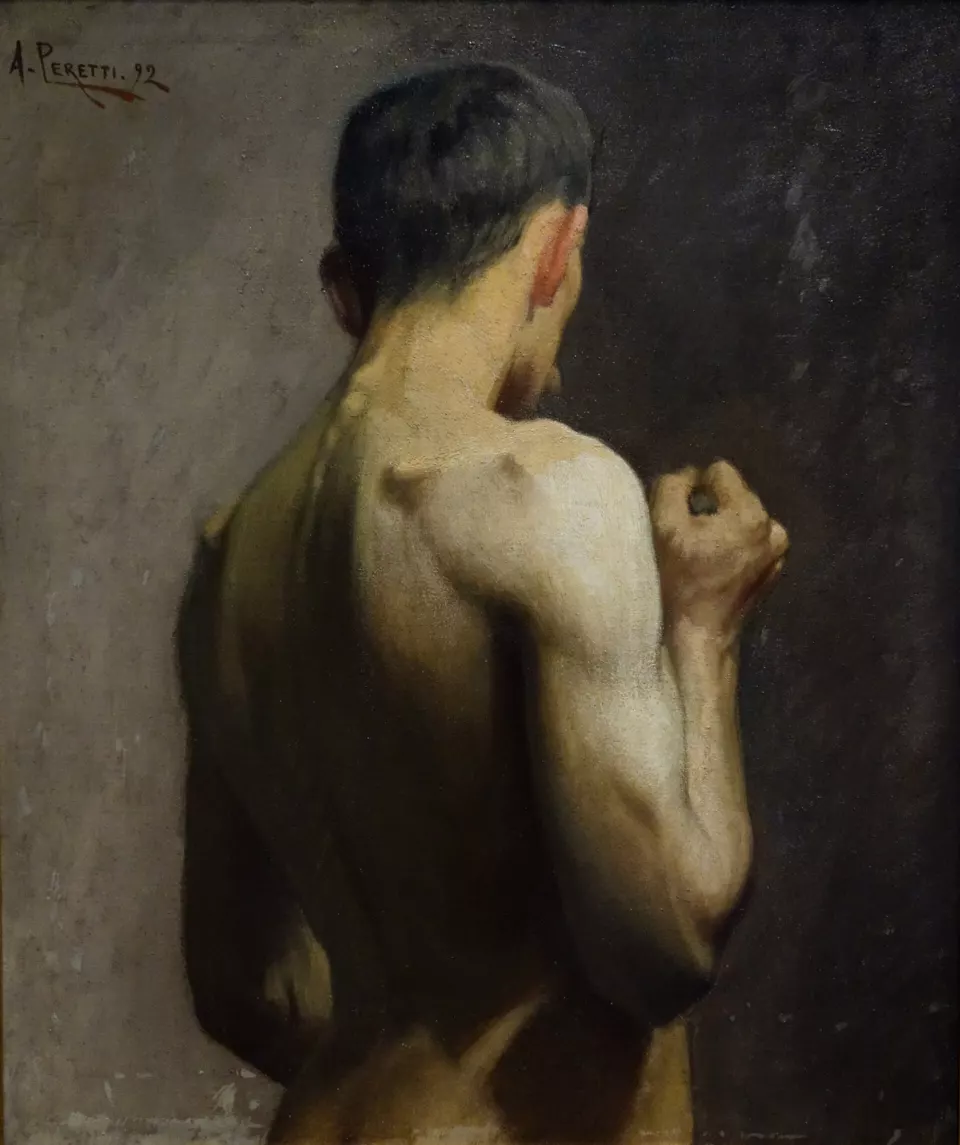
John Lawrence Sullivan was born on October 15, 1858, in Roxbury, then a working district on the edge of Boston. His father, Michael, came from Abbeydorney in County Kerry, and his mother, Catherine Kelly, from County Roscommon. The New England Historical Society writes that his parents hoped he would become a priest. He went through the Dwight Grammar School and enrolled at Boston College around 1875, but he left after a few months.
What came next was manual labor. The Mass Moments project of Mass Humanities lists plumbing, tinsmithing and masonry among his teenage jobs, and American Heritage describes him carrying hods of bricks. Boxing began almost by accident: according to the New England Historical Society, at 19 he answered an open challenge from a theater stage and knocked out a professional. American Heritage places his early bouts in Boston theaters on Saturday nights, fought with gloves under the Marquis of Queensberry rules for extra money.
Mississippi City, 1882: The Title Changes Hands
He soon took his knockouts to Cincinnati, Chicago, Philadelphia and New York. After a bare-knuckle win over John Flood in 1881, Sullivan met the champion, Paddy Ryan, on February 7, 1882, at Mississippi City on the Gulf Coast. The fight was held under the London Prize Ring rules, in which a round ended whenever a man went down. Ryan could not go on after the ninth round; the New England Historical Society notes that some accounts count eight. Either way, Sullivan was the bare-knuckle heavyweight champion of America.
The Man Who Toured the Nation
Sullivan did not wait for challengers to come to him. He took his show on the road and offered cash to any local man who could last a few rounds with him. His great tour of 1883 and 1884 is recorded on Wikipedia as 195 scheduled appearances in 136 cities and towns over 238 days. The New England Historical Society puts the crowds for that trip at more than 100,000 across 28 states and his takings at over $140,000. By its reckoning he had become the most famous person in the United States.
He also earned a reputation for an open-ended boast: he could beat, in coarser words, any man alive, and he said so in barrooms and theaters across the country. In 1887 Boston showed its gratitude. Mass Moments records that on August 18 of that year, thousands came to Nantasket Beach in Hull to see Sullivan and the diamond-studded belt that his supporters had given him, before he sailed for Europe. That trip included a fight with the Englishman Charley Mitchell at Chantilly, France, on March 10, 1888. It ended in a draw after 39 rounds fought in pouring rain, and neither man came out of it well.
Fame did not make him disciplined. American Heritage describes a drinker of enormous capacity who sometimes needed help getting dressed to fight, and the New England Historical Society notes repeated court appearances for drunkenness and assault, along with abuse allegations from his first wife.
Richburg, July 8, 1889: Seventy-Five Rounds in the Heat
The fight that fixed Sullivan in American memory was a bare-knuckle match with Jake Kilrain, a Greenpoint, New York, heavyweight born John Joseph Killion, who had the backing of the publisher Richard K. Fox. Prizefighting was illegal, so the site was kept secret until the last moment. Around 3,000 spectators boarded special trains and were carried to Richburg, a spot just south of Hattiesburg, Mississippi. Wikipedia reports that the governor posted a $1,000 reward for each fighter. The stakes were $20,000 and a diamond belt.
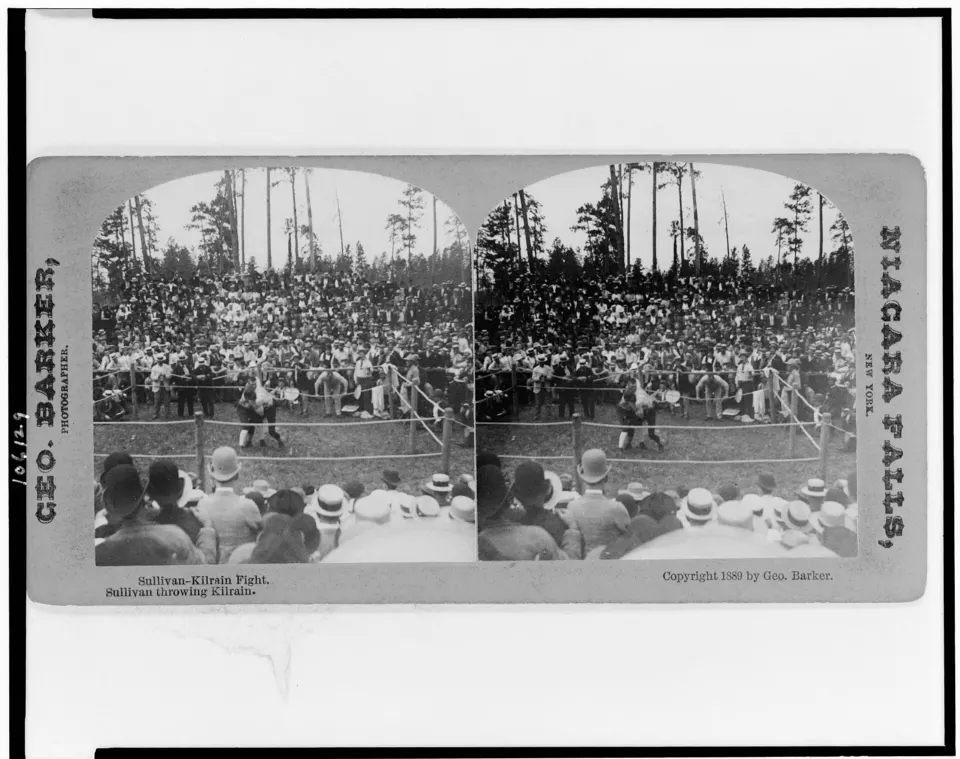
Under London Prize Ring rules the men wrestled as well as punched, and Wikipedia notes that Sullivan threw up during the 44th round before he recovered. The fight went on for 2 hours and 16 minutes. In the end Kilrain's second, the veteran Mike Donovan, threw in the sponge. Accounts describe the ending differently: most sources, including the Hattiesburg station WDAM, give the result as a 75-round win for Sullivan, while Wikipedia's Kilrain entry says the sponge went in at the start of the 76th. American Heritage writes that a physician had warned that Kilrain might die if he went on. It was the last world heavyweight title fight held under bare-knuckle London rules.
The law came next. WDAM reports that both men were brought back to Mississippi and tried for illegal prizefighting. Sullivan paid a fine and spent no time in jail. Kilrain served his sentence working on the farm where the fight had been held, and American Heritage puts that term at two months, served in comfort.
The Color Line
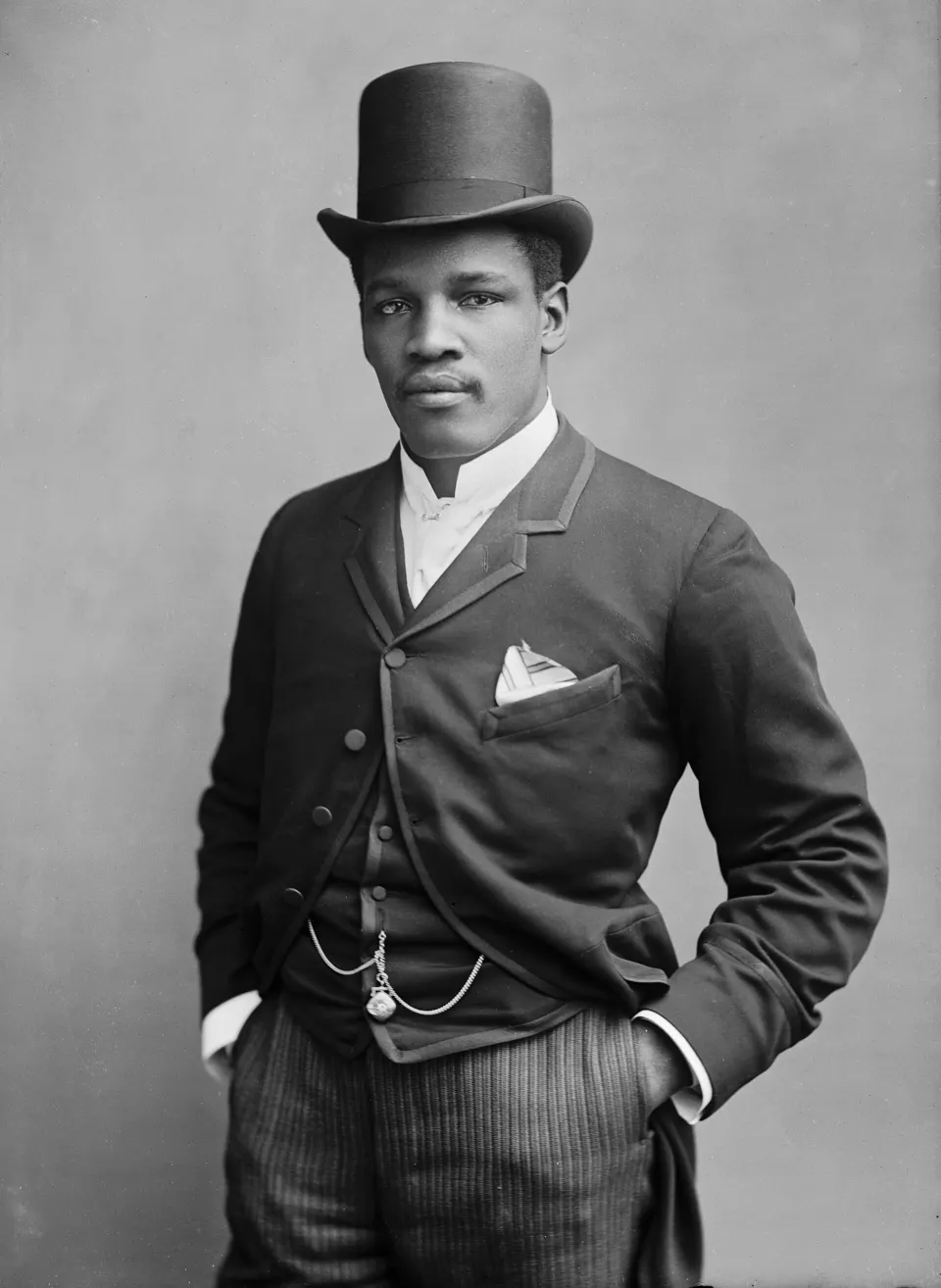
The champion's legacy carries a shadow. The most accomplished challenger of the late 1880s was Peter Jackson, a Black heavyweight who had beaten George Godfrey in 1888 for the "colored" heavyweight title. Jackson tried again and again to get a match with Sullivan. Sullivan refused, saying publicly that he would never fight a Black man.
His own record undercuts that claim. Wikipedia's article on Jackson notes that Sullivan had at times been booked to face Black fighters, among them a man known as "Old Chocolate," George Godfrey himself, and a boxer recorded only as Johnson. The Godfrey match, it says, was stopped by police with both men already stripped to fight. Jackson never got his chance at the championship. His 61-round no-contest with Corbett in San Francisco in May 1891 suggests how serious a test he might have been.
New Orleans, 1892: Gloves and a New Era
Sullivan's final title defense came with gloves on and under Queensberry rules. On September 7, 1892, at the Olympic Club in New Orleans, the quick and scientific James J. Corbett outboxed the older champion and knocked him out in the 21st round. RingTalk has covered that night in detail elsewhere. For Sullivan it was the only defeat of his prime. Wikipedia records his reaction as: "If I had to get licked, I'm glad I was licked by an American."
The Stage, Sobriety and the Temperance Platform
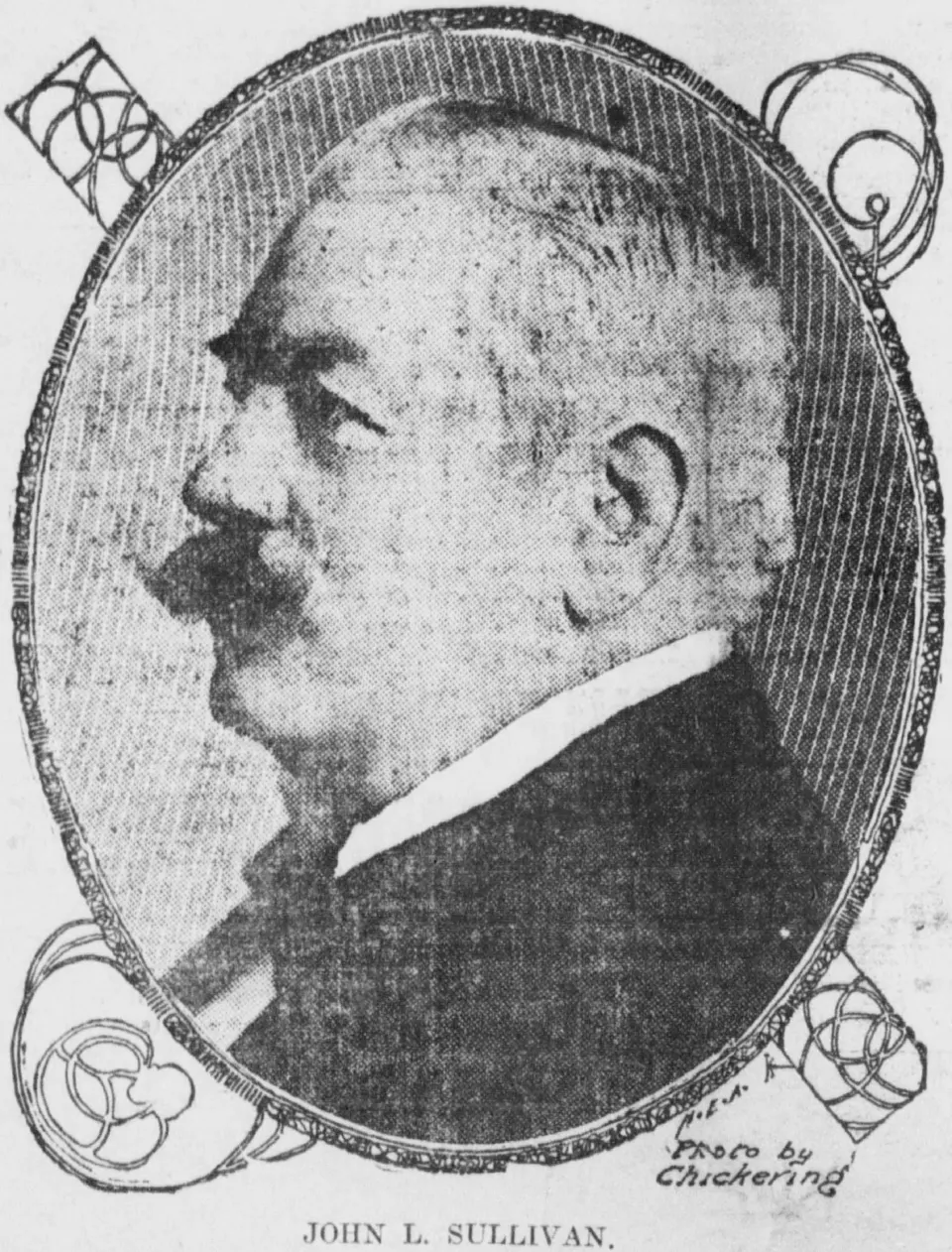
After the loss Sullivan lived on his name. American Heritage reports that he toured in the melodrama Honest Hearts and Willing Hands, and Wikipedia lists his later work as actor, speaker, baseball umpire, sports writer and saloon owner. His last exhibition, according to Wikipedia, was a two-round affair with Jim McCormick in Grand Rapids, Michigan, in 1905.
Then he stopped drinking. American Heritage dates the pledge to March 1905, and Mass Moments also gives 1905. The New England Historical Society says he quit around 1908. After that he became a temperance speaker and talked openly about what alcohol had cost him, both physically and financially. He divorced his first wife and married Kate Harkins, whom he had known since boyhood in Roxbury. The two settled on a farm at Abington, south of Boston.
Death in Abington and a Place in the Hall
Sullivan died of heart disease at Abington on February 2, 1918, aged 59. Wikipedia reports that he left an estate of only a few thousand dollars, and American Heritage notes that Jake Kilrain, his opponent at Richburg, was one of his pallbearers. He is buried in Old Calvary Cemetery in the Roslindale section of Boston.
Sources do not agree on his exact record. Wikipedia gives 47 wins with 38 by knockout, one loss and two draws, while Mass Moments lists three draws, and much depends on which exhibitions are counted. The International Boxing Hall of Fame included him in its first class of inductees in 1990. He was the bridge between the bare-knuckle era and gloved boxing, the first boxer to be a national celebrity, and the champion who kept Peter Jackson and other Black fighters out of title contention.
Sources
- John L. Sullivan, Wikipedia, accessed October 2026
- Jake Kilrain, Wikipedia, accessed October 2026
- Peter Jackson (boxer), Wikipedia, accessed October 2026
- Yours Truly, John L. Sullivan, American Heritage, accessed October 2026
- John L. Sullivan, America's First Superstar Athlete, New England Historical Society, accessed October 2026
- August 18, 1887: Fans Celebrate John L. Sullivan, Mass Moments (Mass Humanities), accessed October 2026
- Monday marks 135th anniversary of Sullivan-Kilrain fight, WDAM, July 7, 2024


