Ezzard Charles the Cincinnati Cobra Beat Joe Louis and Took Marciano the Distance but Never Got a Light Heavyweight Title Shot
Ezzard Charles beat nearly every top light heavyweight of his era without ever fighting for that title, then won the heavyweight championship and outpointed Joe Louis in 1950. His career took him through the death of Sam Baroudi and two wars with Rocky Marciano, and he died of ALS in 1975.

Ezzard Charles beat nearly every top light heavyweight of the 1940s and was never given a shot at that title. He became heavyweight champion instead, outpointed Joe Louis, took Rocky Marciano 15 rounds, and died of ALS in 1975 at the age of 53.
From Georgia to Cincinnati
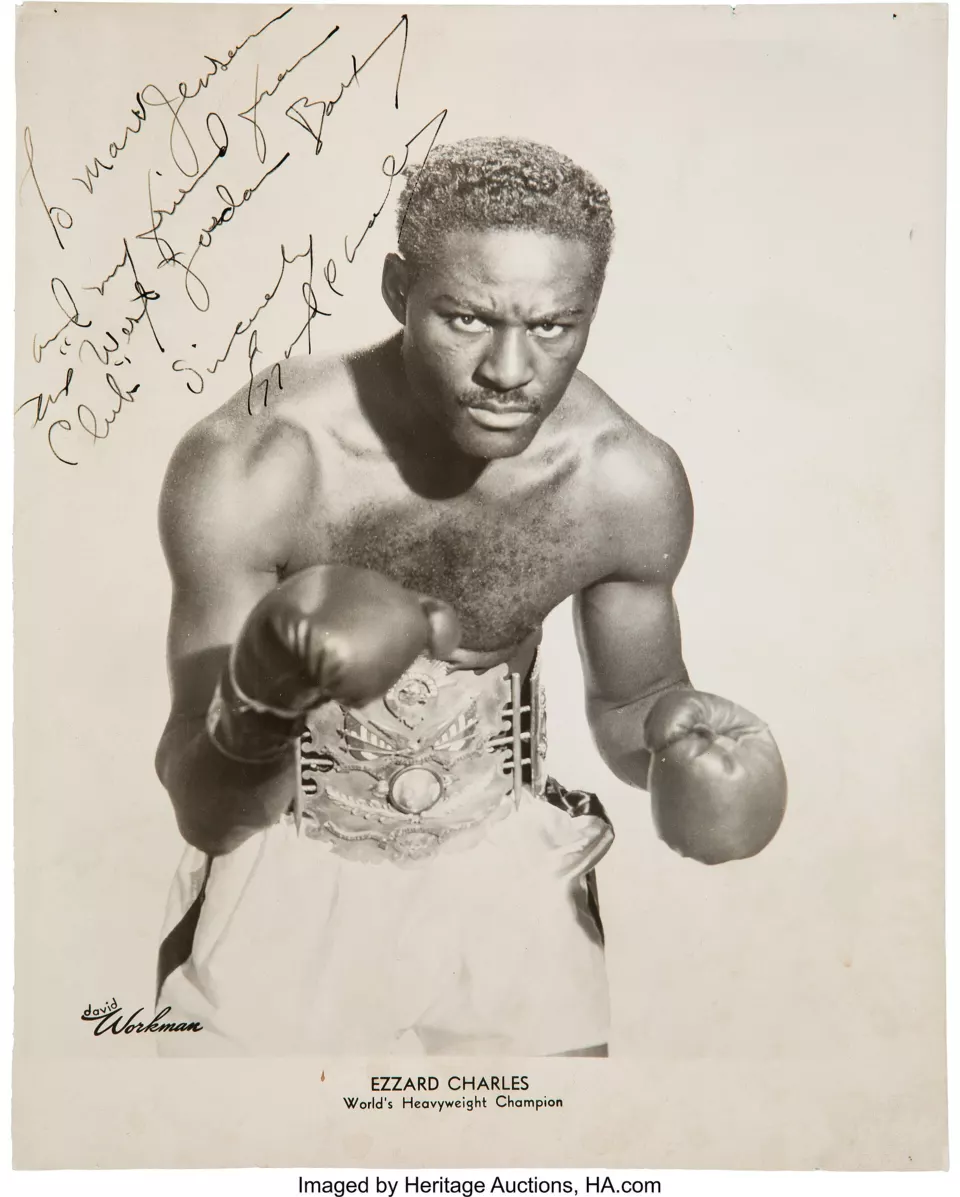
Ezzard Mack Charles was born on July 7, 1921. The standard reference sources, among them Wikipedia, The Ring and EBSCO's research summary, give his birthplace as Lawrenceville, Georgia. Some popular retellings have it as Lawrenceburg, but none of the sources consulted for this article do. His parents divorced, and at about nine years old he was sent north to Cincinnati to live with his grandmother and great-grandmother.
Charles attended Woodward High School in Cincinnati, and the city gave him the name he kept for life: the Cincinnati Cobra. According to EBSCO, the nickname came from the way he coiled his body just before he punched.
An Amateur Champion Turns Professional
Charles won Cincinnati Golden Gloves and Ohio district AAU titles as a welterweight in 1937 and 1938. In 1939 he moved up to middleweight and won the Chicago Golden Gloves and the national AAU championship. In March 1940 he turned professional, stopping Melody Johnson in four rounds in Middletown, Ohio.
He won his first 15 professional fights. The streak ended on June 9, 1941, at Crosley Field in Cincinnati, where the veteran Ken Overlin dropped him in the second round and won a unanimous decision. Charles came back quickly. Over 1941 and 1942 he beat former titleholders Teddy Yarosz and Anton Christoforidis and twice outpointed Joey Maxim, who would later win the light heavyweight crown. In 1943 he lost to Jimmy Bivins, and Lloyd Marshall knocked him down eight times before the referee stopped their fight in the eighth round. While in the Army he won the Inter-Allied light heavyweight championship in Rome in 1944.
The Best Light Heavyweight Who Never Held the Belt
He beat Archie Moore three times, in 1946, 1947 and 1948. He also avenged his losses to Bivins and Marshall and beat Maxim again. EBSCO's summary says he defeated every contender in the division and still never got a title fight at 175 pounds.
The Ring has called him the greatest light heavyweight in history, and Boxing magazine said the same in 2009. In The Ring's 2024 retrospective, Diego M. Morilla wrote that Charles fought at that weight while often giving away around 15 pounds, and called him perhaps the finest pure boxer the division has had.
Chicago Stadium, February 1948: The Death of Sam Baroudi
On February 20, 1948, Charles fought Sam Baroudi, a young middleweight from Akron, Ohio, at Chicago Stadium. Baroudi was born Sammy Crandall in August 1926 and was 21 on fight night. Six months earlier, Newton Smith had died after Baroudi knocked him out.
Charles knocked Baroudi out in the tenth round. Baroudi never regained consciousness and died of a brain hemorrhage in hospital within hours. Wikipedia gives his date of death as February 21. The death affected Charles badly, and he considered quitting boxing. According to Wikipedia and EBSCO, Baroudi's family persuaded him to keep fighting, and he gave them his purses from that fight and from the one after it.
Comiskey Park, 1949: Champion of a Divided Throne
Joe Louis retired on March 1, 1949, and the heavyweight title was vacant. The National Boxing Association matched Charles with Jersey Joe Walcott at Comiskey Park in Chicago on June 22, 1949. Charles weighed 181 pounds and gave up 14 to Walcott, but he won a unanimous decision and the NBA version of the title.
Not every authority recognized him, but he stopped Gus Lesnevich and Pat Valentino before the year was out. The Ring named Charles its Fighter of the Year for 1949, and did so again for 1950.
Yankee Stadium, 1950: Beating Joe Louis
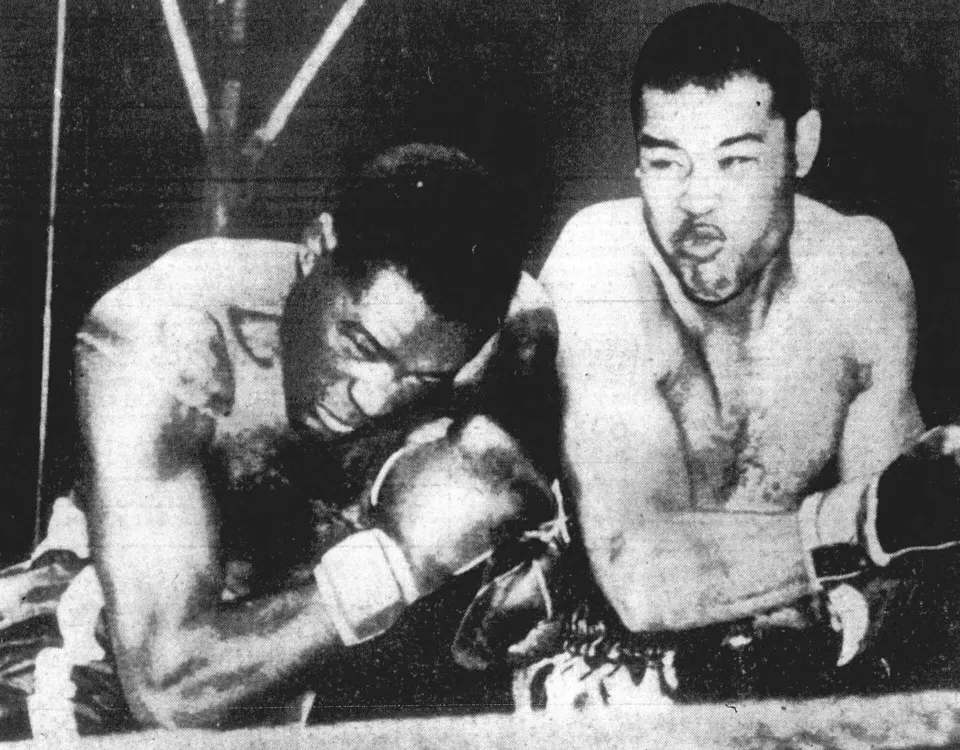
Louis came back for financial reasons. An IRS audit had found that he owed more than $500,000 in back taxes, and a return to the ring was the quickest way to pay it. He met Charles at Yankee Stadium on September 27, 1950, in a fight televised by CBS. The crowd was 22,357, and the WBA's history article gives the gross gate as $205,370.
Louis weighed 218 pounds, the heaviest of his career. Charles weighed about 184; Wikipedia has 184½ and the WBA has 184. Louis was 36. For fifteen rounds Charles outboxed him. Wikipedia says Louis had his best moments in the fourth and twelfth rounds but never seriously hurt the champion. The scorecards read 10–5, 12–3 and 13–2 for Charles, and the Associated Press had it 12–2–1. It was Louis's first loss in more than 14 years and his only defeat in a title fight. After this win Charles was recognized as champion everywhere.
Walcott's Left Hook and the Lost Crown
Within about a year Charles defended the title against Nick Barone, Lee Oma, Joey Maxim and Walcott again, which brought his total to eight successful defenses in less than two years. He met Walcott for a third time on July 18, 1951, as a heavy favorite; Wikipedia reports that Walcott was a 9-to-1 underdog. In the seventh round Walcott landed a left hook to the jaw and Charles was counted out. On June 5, 1952, they fought a fourth time, and Walcott kept the title on a close unanimous decision over 15 rounds.
Two Nights With Rocky Marciano, 1954
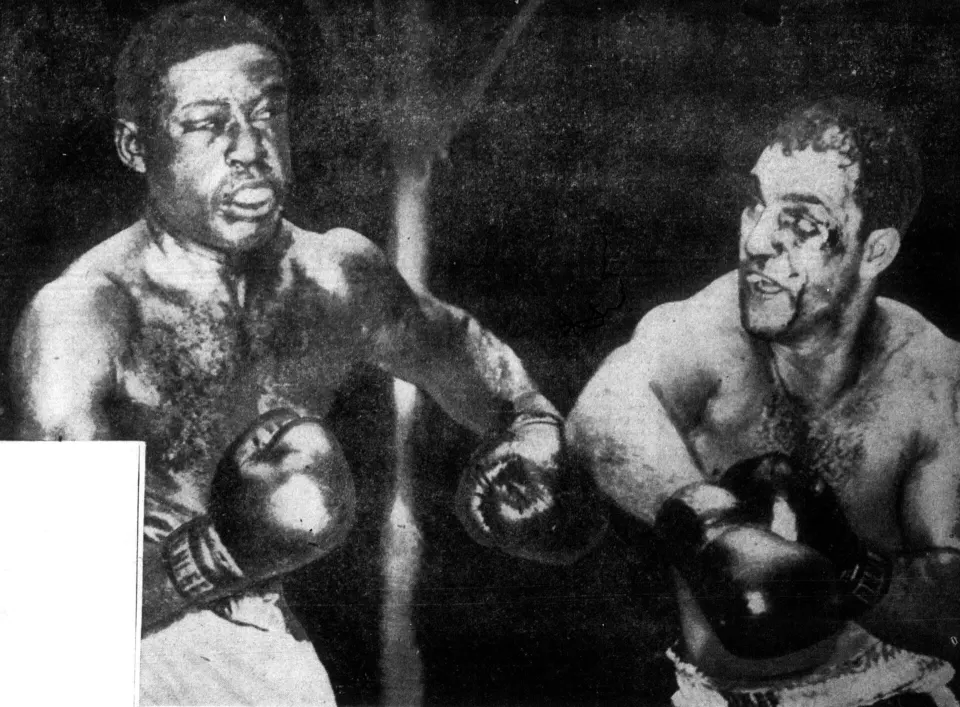
By 1954 the champion was Rocky Marciano, still unbeaten as a professional. He and Charles met at Yankee Stadium on June 17. Early on Charles opened a bad cut over Marciano's left eye, and Wikipedia's account quotes cutman Freddie Brown as saying he had never treated a worse one. Marciano bled for most of the night but kept pressing. In the later rounds Charles's right eye closed and his lip was split. Marciano won a unanimous decision, and Charles became the only man to go the full fifteen rounds with him.
The rematch was held at the same stadium three months later, on September 17. Marciano weighed 187 pounds and Charles 192½. In the sixth round Charles split Marciano's nose, a wound deep enough that it might have ended the fight. Marciano answered by going for Charles's head. According to the WBA, Charles went down in the second round and twice in the eighth, and the fight ended at 2:36 of the eighth. The Ring named it the Fight of the Year for 1954.
The Long Decline
Charles was 33 by the second Marciano fight, and his career went downhill from there. He lost decisions to Tommy "Hurricane" Jackson, Harry Matthews and the Mexican heavyweight champion Alfredo Zuany, and he was disqualified against Dick Richardson. He lost 13 of his last 23 fights. EBSCO says he announced his retirement in December 1956 but came back in 1958 because he needed money. His last fight was in 1959. Wikipedia lists his final record as 95 wins, 25 losses and one draw, with 52 knockouts. After boxing he worked in professional wrestling from 1960 to 1962.
ALS and the Final Years
Sources disagree about when Charles was diagnosed with amyotrophic lateral sclerosis, or Lou Gehrig's disease. BlackPast gives 1966 and Wikipedia gives 1968. The disease attacked his legs first and eventually left him fully disabled. In 1973 he appeared in his wheelchair in a public service message for the Muscular Dystrophy Association.
He died in Chicago in May 1975, about six weeks before his 54th birthday. The date is also disputed: Wikipedia gives May 28 and EBSCO gives May 16. He was buried at Burr Oak Cemetery in Alsip, Illinois.
A Legacy Restored
When the International Boxing Hall of Fame opened its first class in 1990, Charles was in it. He was 13th on The Ring's 2002 list of the best fighters of the previous 80 years and eighth on its 2022 list of the 100 best fighters in the magazine's history. In 2007 ESPN put him 27th among the greatest boxers of all time. In 1976 Lincoln Park Drive was renamed Ezzard Charles Drive, and in 2022 a statue of him was unveiled in Ezzard Charles Park in the city's West End.
Sources
- Ezzard Charles, Wikipedia, accessed October 2026
- Ezzard Charles vs. Joe Louis, Wikipedia, accessed October 2026
- Rocky Marciano vs. Ezzard Charles II, Wikipedia, accessed October 2026
- Sam Baroudi, Wikipedia, accessed October 2026
- Died on this day: Ezzard Charles, Diego M. Morilla, The Ring, December 12, 2024
- Ezzard Charles (Research Starters), Christine Ayorinde, EBSCO, 2025
- Boxing History: Charles Defeats Louis, World Boxing Association, September 26, 2016
- Boxing History: Marciano KOs Charles, World Boxing Association, September 17, 2016
- Ezzard Mack Charles (1921-1975), BlackPast (search summary), accessed October 2026


