
Archie Moore the Old Mongoose Waited 16 Years for a Title and Then Kept Knocking Men Out
Born in Benoit, Mississippi and raised in St. Louis, Archie Moore won the light-heavyweight title near 40, challenged Marciano and Patterson, rose from four knockdowns to beat Yvon Durelle, and later guided George Foreman.

Archie Moore waited about sixteen years for a world title shot. He was close to 40 by the most common reckoning when he finally won the light-heavyweight championship in 1952, and he kept it for roughly a decade. Along the way he went after the heavyweight crown twice, came off the floor four times to beat Yvon Durelle, and finished with more knockouts than almost anyone in the sport's history. When he stopped fighting he went to work in other men's corners, including George Foreman's.
From Benoit, Mississippi to the Streets of St. Louis
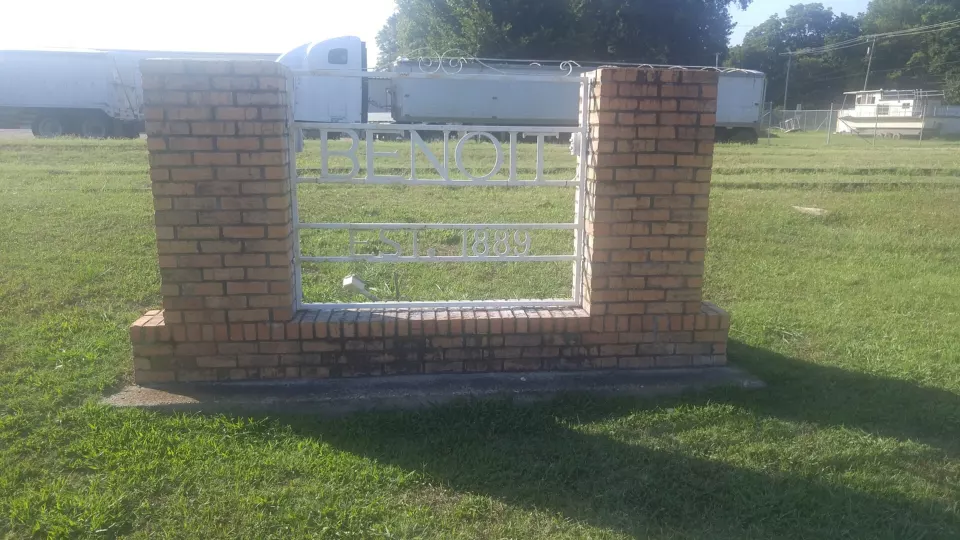
He was born Archibald Lee Wright, the son of farm laborers Lorena and Thomas Wright. Most reference works give his birth date as December 13, 1913, in Benoit, a small town in the Mississippi Delta. Moore himself gave a different account for most of his life, saying he was born in 1916 in Collinsville, Illinois. Encyclopedia.com prints both versions, and the gap of three years follows him through every milestone of his career.
His parents separated, and the boy was raised in St. Louis, Missouri, by his aunt Willie Pearl Moore and his uncle Cleveland Moore. He took their surname. Around 1930 his uncle was paralyzed and died, and his sister Rena died in childbirth soon afterward. The teenager started stealing, and an arrest for theft from streetcars sent him to the reformatory at Booneville, Missouri, for close to two years. After his release he joined the Civilian Conservation Corps, a Depression-era federal work program. Wikipedia's account says he used the forestry work as conditioning for the ring.
The Long Road to a Title Shot
Moore boxed as an amateur in 1935 and turned professional in 1936. Sources differ on the date he started; Wikipedia gives a career span of 1935 to 1963. In the 1940s he fought nearly every good boxer from middleweight to heavyweight, and he did not win them all. He lost a decision to Charley Burley in 1944, was knocked out by Jimmy Bivins in 1945, and lost more than once to Ezzard Charles, including a knockout in January 1948. He also beat Bivins and Harold Johnson several times.
From around 1946 Moore complained in public that champions were avoiding him. Encyclopedia.com puts the delay down to poor management and racial discrimination. In 1951 he fought seven times in Argentina, winning six and drawing one, and also fought in Montevideo, Uruguay. His nickname, "the Mongoose," turned into "the Old Mongoose" as the years went by and the questions about his age grew louder.
Champion at Last: Joey Maxim, St. Louis, 1952
His chance finally came on December 17, 1952, against Joey Maxim at the Arena in St. Louis, the city where Moore grew up. Moore won a unanimous decision over 15 rounds and took the NBA, New York State Athletic Commission and The Ring light-heavyweight titles. If he was born in 1913, he had turned 39 four days earlier. Maxim got two rematches, in Ogden, Utah, in June 1953 and at the Miami Orange Bowl in January 1954. Moore won both on unanimous decisions over 15 rounds.
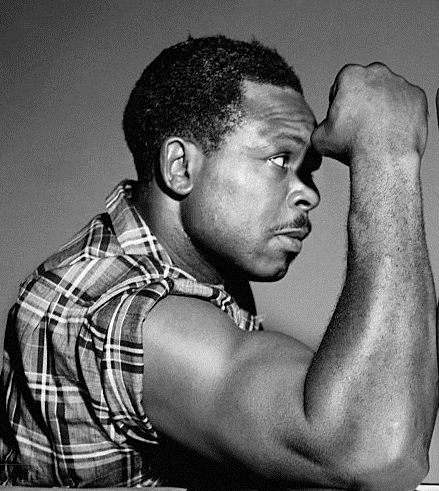
Wikipedia's account says Moore held the light-heavyweight title longer than any other champion in the division's history. In 1960 the National Boxing Association stripped him for failing to defend often enough, but most other authorities still recognized him. That ended in 1962, when Harold Johnson beat Doug Jones and was accepted as champion by New York, California, Massachusetts, the European Boxing Union and The Ring.
Yankee Stadium, 1955: The Night Marciano Went Down
Moore wanted the heavyweight title, and he campaigned loudly for a fight with the unbeaten Rocky Marciano, predicting he would be the man to beat him. The fight was set for Yankee Stadium on September 20, 1955. Hurricane Ione pushed it back a day. Marciano went in as a 4-to-1 favorite even though Moore had more experience and had studied films of the champion closely.
In the second round Moore dropped Marciano with a counter right hand, and Marciano was up at the count of four. He took control from there. Moore went down twice in the sixth and again at the end of the eighth, when the bell saved him. A fourth knockdown in the ninth ended the fight. It was Marciano's 49th and last professional bout. He announced his retirement the next spring.
Chicago, 1956: Patterson and the Vacant Crown
With Marciano gone, the heavyweight title was decided in a match between Moore and Floyd Patterson at Chicago Stadium on November 30, 1956. According to The Fight City, Moore had more than 180 fights behind him and was a 6-to-5 betting favorite, partly because Patterson had broken his right hand in a June eliminator against Tommy Jackson. Moore's listed age at the time ranged from 39 to 42. The same account quotes his joke that he "must have been three when I was born."
The favorite lost. In the fifth round Patterson floored Moore with a left hook, then put him down again with a right hand, and Moore was counted out. At 21, Patterson became the youngest heavyweight champion up to that time and the first Olympic gold medalist to win the professional heavyweight title.
Montreal, 1958: Four Knockdowns and the Fighting Fisherman
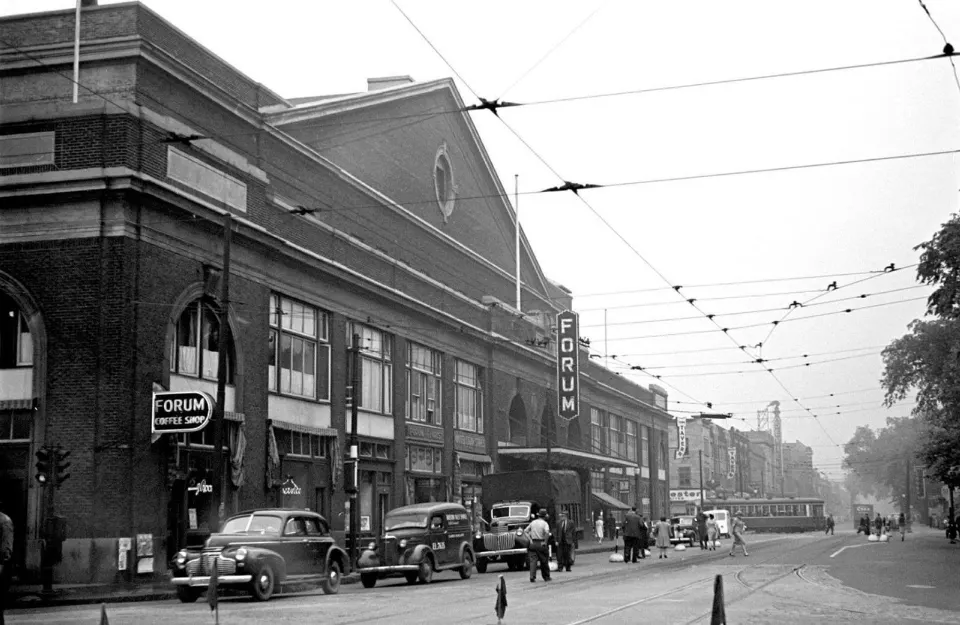
The most famous night of Moore's career came on December 10, 1958, at the Montreal Forum. His opponent was Yvon Durelle of New Brunswick, known as "the Fighting Fisherman." The Fight City describes Durelle as the world's third-ranked contender, with 79 professional wins.
Durelle knocked Moore down three times in the first round and once more in the fifth. The Fight City reports that Moore told his corner he was fine after that opening round and stood between rounds rather than sitting on his stool. Accounts agree that the fight turned around the sixth round. Moore started finding his range, dropped Durelle in the seventh, put him down more than once late in the fight, and knocked him out in the eleventh.
The total number of knockdowns differs from source to source. Some summaries count eight in all, while The Fight City's round-by-round account lists more. Every source agrees on the four times Moore went down. According to The Fight City, the win was Moore's 126th knockout and broke Young Stribling's record. Encyclopedia.com notes that Moore was named Fighter of the Year. When the two met again in Montreal about eight months later, Moore won in three rounds.
The Last Fights and the Knockout Record
Moore's last fight of real importance was against a former pupil. On November 15, 1962, at the Los Angeles Memorial Sports Arena, the 20-year-old Cassius Clay predicted Moore would fall in four, and he stopped Moore in the fourth round after three knockdowns. Four months later Moore fought for the last time, knocking out Mike DiBiase in three rounds.
Nobody agrees on exactly how many knockouts Moore had. Wikipedia lists 186 wins, 23 losses, 10 draws and one no-contest, with 132 knockouts, and its text also refers to 131 official knockouts. It notes that three of those came against professional wrestlers. Encyclopedia.com gives a knockout range of 129 to 144 across sources and reports that Moore himself claimed 140.
Teacher, Actor and Founder of Any Boy Can
Even before he retired, Moore was teaching. After his 1960 Olympic gold medal, Cassius Clay spent a short time at Moore's camp near San Diego, known as the Salt Mine. Wikipedia says the young fighter left because Moore tried to change his style and expected him to wash dishes and clean the gym floor. Clay went on to Angelo Dundee.
Foreman stayed longer. Moore worked in his camp for the 1974 fight with Muhammad Ali in Kinshasa, Zaire, and worked with him again in the early 1990s. Wikipedia credits Moore with teaching Foreman the cross-armed defense he used during his comeback.
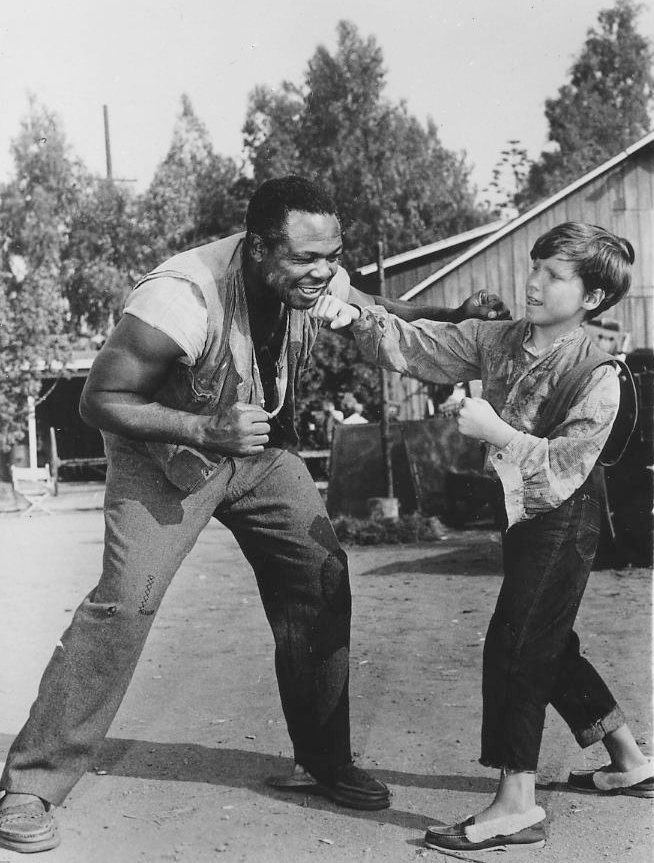
Outside the ring, Moore played the runaway slave Jim in the 1960 film The Adventures of Huckleberry Finn. In San Diego he founded Any Boy Can, a program for disadvantaged young people. The founding date is disputed: Wikipedia says 1957 and Encyclopedia.com says 1967. He was inducted into the International Boxing Hall of Fame in 1990. In 1999 the Associated Press named him the greatest light-heavyweight of all time. Archie Moore died in San Diego on December 9, 1998. Some accounts give the date as December 10.
Sources
- Archie Moore, Wikipedia, accessed October 2026
- Moore, Archie, Encyclopedia.com (Contemporary Black Biography and Encyclopedia of World Biography entries), accessed October 2026
- Dec. 10, 1958: Moore vs Durelle I, The Fight City, accessed October 2026
- Nov. 30, 1956: Patterson vs Moore, The Fight City, accessed October 2026
- Rocky Marciano vs. Archie Moore, Wikipedia, accessed October 2026
- Archie Moore vs. Cassius Clay, Wikipedia, accessed October 2026
- Joey Maxim, Wikipedia, accessed October 2026
- Floyd Patterson, Wikipedia, accessed October 2026


