
How Jersey Joe Walcott Went From the Soup Factory to Heavyweight Champion at 37
Arnold Cream of South Jersey spent two decades in poverty and obscurity before becoming Jersey Joe Walcott, the oldest man of his time to win the heavyweight title. He later refereed Ali-Liston II and served as Camden County sheriff and New Jersey's athletic commissioner.

Arnold Raymond Cream spent the better part of two decades as a fighter nobody needed, punching for small purses and taking whatever work South Jersey offered between bouts. He became Jersey Joe Walcott, gave Joe Louis two of the hardest nights of his reign, and in 1951, at 37, became the oldest man up to that time to win the world heavyweight championship. Then he came home to Camden and spent another thirty years in public life.
A Boyhood Outside Camden
Cream was born on January 31, 1914. Sources place his birth in slightly different spots on the map: Wikipedia gives Pennsauken Township, while the New Jersey Hall of Fame names Merchantville. The Camden County history site camdenhistory.com says he grew up in Matchtown, a historically Black settlement that straddled Pennsauken and Delaware Township, the area now known as Cherry Hill, and openly questions the Merchantville attribution.
The family was large. Accounts agree that he had eleven siblings and that his father died while he was still a boy, though they differ on his age at the time, putting it at 13, 14 or 15. They also differ on his father's origins: Wikipedia describes him as an immigrant from St. Thomas in the Danish West Indies, while the New Jersey Hall of Fame calls Walcott the son of Barbadian immigrants. What is not in dispute is the consequence. The boy left school and went to work at the Campbell Soup factory in Camden to help keep his mother and siblings fed.
Borrowing a Name, Waiting for a Break
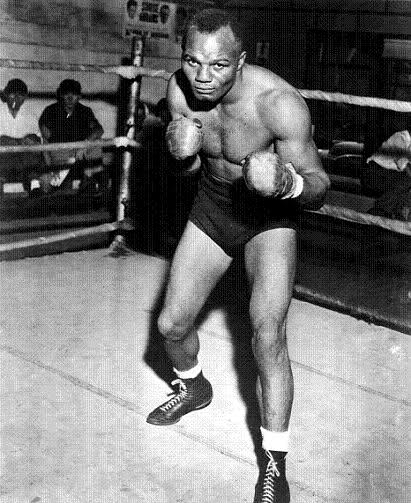
He turned professional on September 9, 1930, aged 16, and knocked out Eddie "Cowboy" Wallace in the first round. For his ring name he borrowed from Joe Walcott, the Barbados-born welterweight champion of an earlier era, adding "Jersey" so nobody would mistake where this one came from.
The name did not bring money. Through the 1930s and into the war years Walcott fought irregularly and lived close to the bone. A career essay by B.R. Bearden reproduced on the Camden history site describes him working in the Camden shipyards and at any other job he could get between fights, and records that between 1941 and 1945 he boxed only three times. By his early thirties he was close to walking away. In that same essay he is quoted as saying all he wanted was a steady job so his wife and children could eat regularly.
The turn came through Felix Bocchicchio, a promoter who took an interest in him around 1944 or 1945. According to the Bearden essay, Bocchicchio bought food for the family, put coal in their bin and got Walcott's boxing license renewed. Better opponents followed, and so did trainers Nick and Dan Florio. The Camden Courier-Post reported in May 1946, after a win over Lee Oma at Madison Square Garden, that Walcott had already bought a house on Mickle Street in Camden.
Two Nights Against Joe Louis
On December 5, 1947, Walcott got his first title shot, against Joe Louis at Madison Square Garden. He was 33, which made him the oldest man to that point to challenge for the heavyweight championship, and he was a heavy underdog. He put Louis on the floor in the first round and again in the fourth. When the fifteen rounds were over, Louis kept the title on a split decision. Referee Ruby Goldstein had scored it for Walcott, and Wikipedia notes that most boxing writers believed the challenger had done enough.
The rematch came on June 25, 1948, at Yankee Stadium, and it is remembered partly for a technical first: it was the world's first closed-circuit television sports broadcast. Walcott dropped Louis again, this time in the third round, but Louis caught up with him in the eleventh and knocked him out. Louis retired as champion afterward.
Three Losses Before the Crown
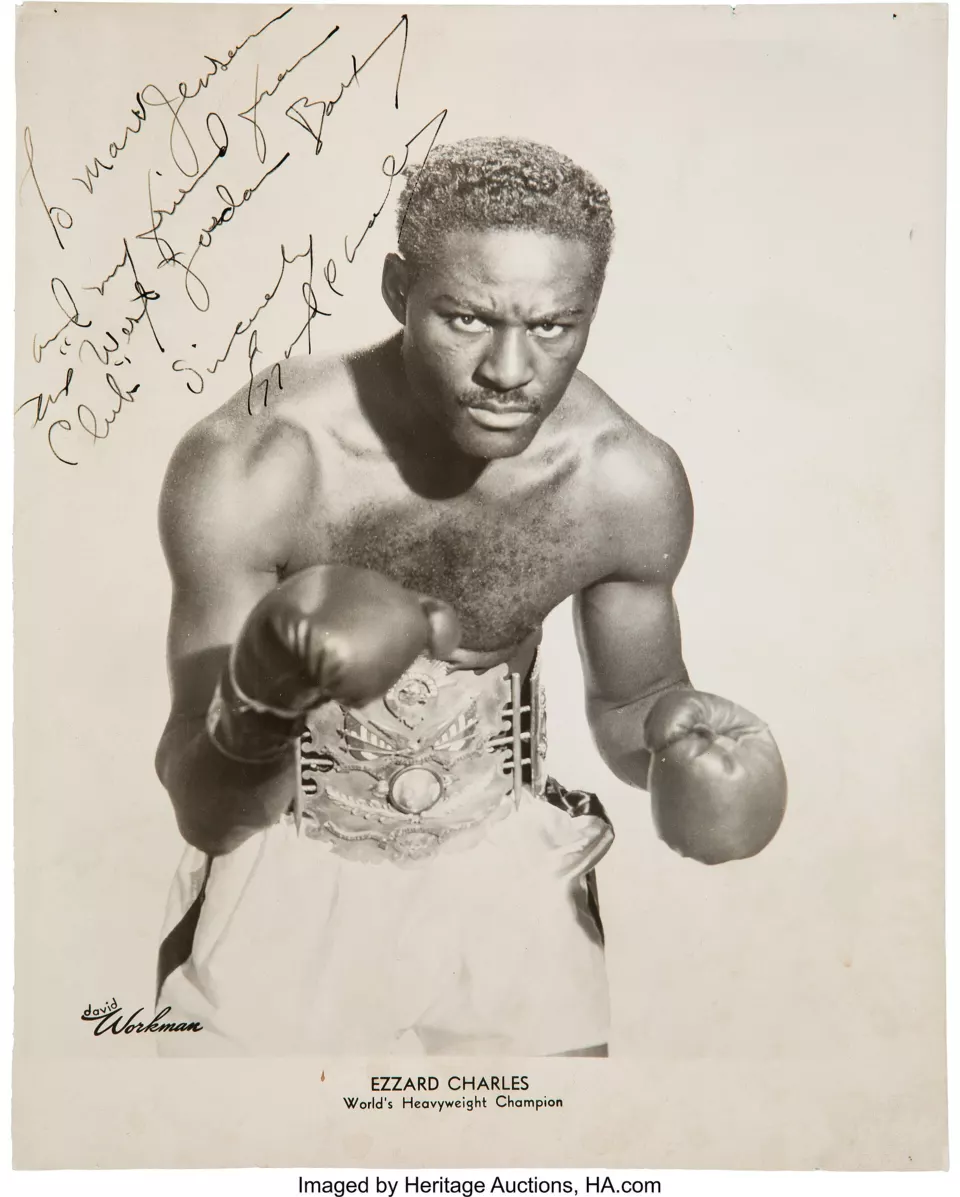
With Louis gone, Walcott met Ezzard Charles at Comiskey Park in Chicago on June 22, 1949, for the vacant NBA heavyweight title and lost a unanimous decision over fifteen rounds. On March 7, 1951, at the Olympia in Detroit, he challenged Charles again and lost again on the cards, after being knocked down by a left hook in the ninth round. Counting the two Louis fights, he had now come up short four times in heavyweight title bouts.
Forbes Field, July 18, 1951
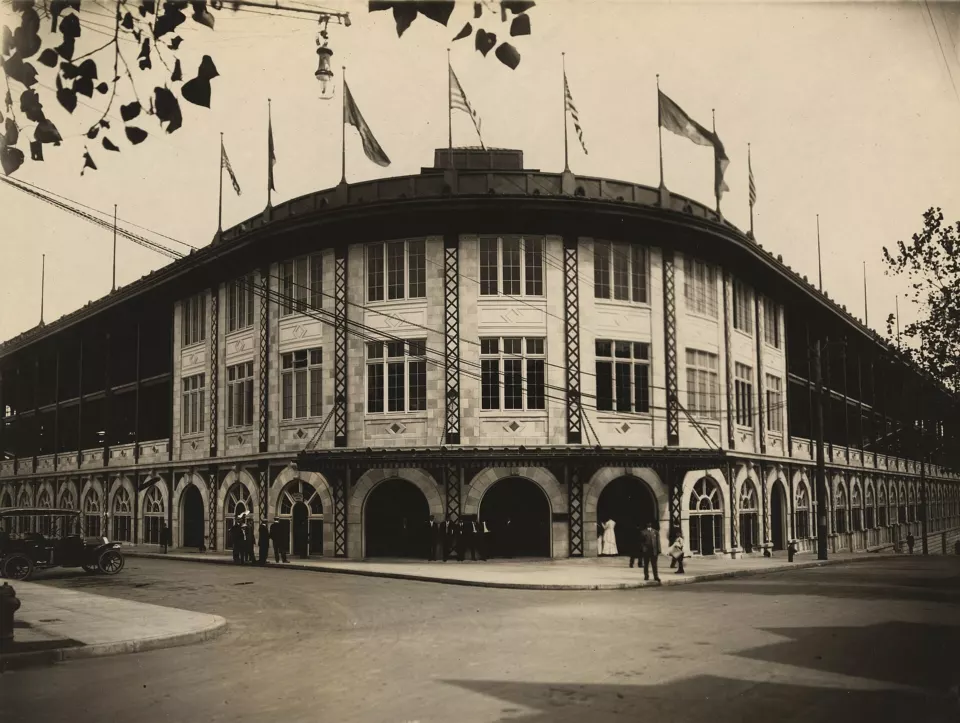
Four months after Detroit, the two men met for a third time at Forbes Field in Pittsburgh. In the seventh round Walcott landed a left hook to the jaw and Charles did not beat the count. On his fifth attempt, at 37, Walcott was heavyweight champion of the world, the oldest man to win the title up to that time. The Marion Star, in a report quoted on the Camden history site, described him the next day as the oldest man ever to take boxing's biggest prize.
He made one successful defense, beating Charles in their fourth fight on June 5, 1952, at Municipal Stadium in Philadelphia, a close fifteen-round decision.
The Marciano Fights and Retirement
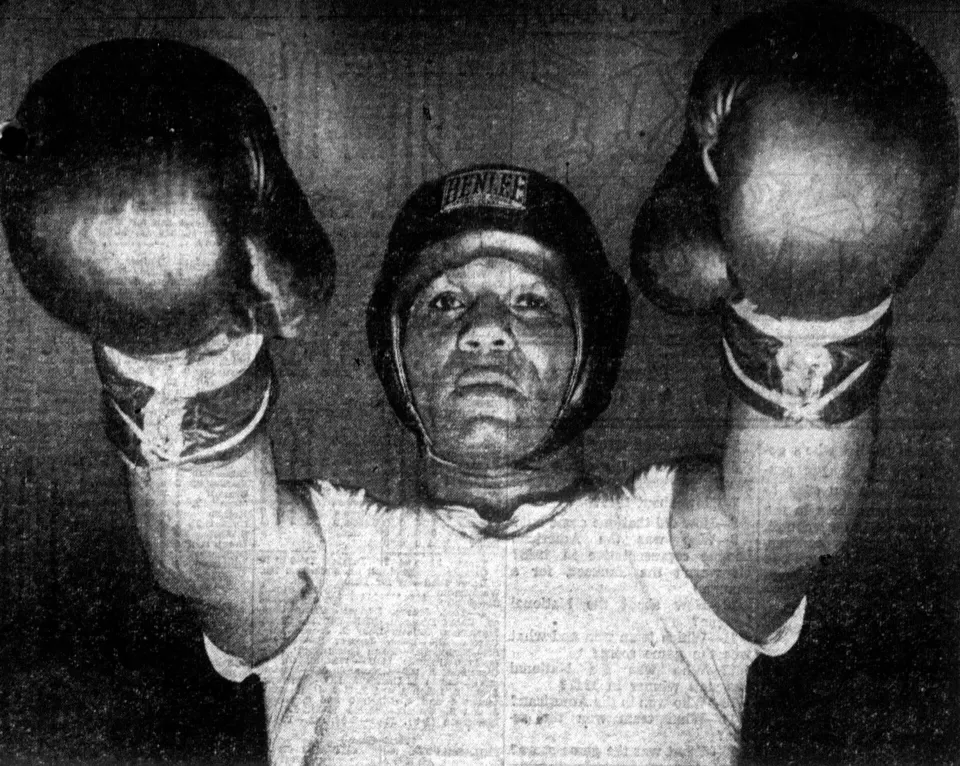
On September 23, 1952, in the same Philadelphia stadium, Walcott defended against the unbeaten Rocky Marciano. He dropped Marciano in the first round and was ahead on two of the three scorecards after twelve, but was knocked out in the thirteenth. A rematch at Chicago Stadium on May 15, 1953, ended in the first round, and Walcott never fought again. That first Marciano fight is told in full in a separate ringtalk.com article.
Wikipedia lists his professional record as 49 wins (31 by knockout), 20 losses and one draw. Record-keeping of the era was inconsistent, and the Camden history site notes other published totals of 50-17-1 and 53-18-1.
Actor, Wrestler and an Unwanted Spotlight in Lewiston
Walcott appeared in the 1956 film The Harder They Fall alongside Humphrey Bogart and Max Baer, and worked as a professional wrestler in the late 1950s and 1960s. He also refereed, and that role produced the most awkward moment of his post-fighting life.
On May 25, 1965, he was the third man in the ring for the rematch between Muhammad Ali and Sonny Liston at the Central Maine Youth Center in Lewiston, Maine. Liston went down from a right hand in the first round. Ali stood over him instead of retreating to a neutral corner, and Walcott never picked up the count from timekeeper Francis McDonough, who had no microphone. Liston got up and Walcott wiped his gloves, then went over to McDonough, who told him the fight was over. Walcott returned and waved it off. The announced time of 1:00 was wrong; Wikipedia's account of the fight puts the knockdown at 1:44 and the stoppage at 2:12. The episode effectively ended his career as a referee, although he worked two more bouts in the late 1970s.
Sheriff and Commissioner
Back home, Walcott moved into public service. A Courier-Post item from 1967 quoted on the Camden history site identifies him as head of the Camden Police Department's Juvenile Aid Division. In 1968 he lost a Democratic primary for Camden County sheriff and was named Camden's director of community relations. In 1971 he won the sheriff's office, defeating Republican William Strang, and became the first African American to serve as sheriff of Camden County. Wikipedia dates his tenure to 1971 through 1974; the Camden history site gives 1971 to 1973.
From 1975 he chaired the New Jersey State Athletic Commission, stepping down in 1984 when he reached the mandatory retirement age of 70.
Death and Legacy
Walcott died in Camden on February 25, 1994, at 80, from complications of diabetes, and was buried at Sunset Memorial Park in Pennsauken. He and his wife Lydia had six children. He was inducted into the International Boxing Hall of Fame, in 1990 according to the New Jersey Hall of Fame, and into the New Jersey Hall of Fame itself in 2013. In the ring he is remembered for a shoulder-roll defense and a stance-switching footwork known as the Walcott Shuffle, which Wikipedia credits as an inspiration for the later Ali Shuffle. Outside it, he is remembered as the soup-factory boy from the edge of Camden who waited twenty-one years for a title and then went home to serve the county that raised him.
Sources
- Jersey Joe Walcott, Wikipedia, accessed October 2026
- Muhammad Ali vs. Sonny Liston, Wikipedia, accessed October 2026
- Arnold R. Cream aka Jersey Joe Walcott, camdenhistory.com, accessed October 2026
- Jersey Joe Walcott (career essay by B.R. Bearden, with Camden Courier-Post and Marion Star clippings), DVRBS / camdenhistory.com, accessed October 2026
- Jersey Joe Walcott, New Jersey Hall of Fame, accessed October 2026


