
How Sonny Liston Went From an Arkansas Plantation and a Prison Ring to the Heavyweight Title and an Unsolved Death
Sonny Liston learned to box in the Missouri State Penitentiary, fought under mob-linked management, and twice knocked out Floyd Patterson in one round. His death in Las Vegas, discovered in January 1971, has never been fully explained.

Sonny Liston came out of an Arkansas cotton plantation with no schooling and no reliable birth certificate, learned to box behind the walls of the Missouri State Penitentiary, and twice flattened Floyd Patterson inside a round to rule the heavyweight division. He lost the title to Cassius Clay, drifted to Las Vegas, and was found dead in his bedroom in January 1971, in circumstances that have never been fully explained.
A Sharecropper's Son in St. Francis County
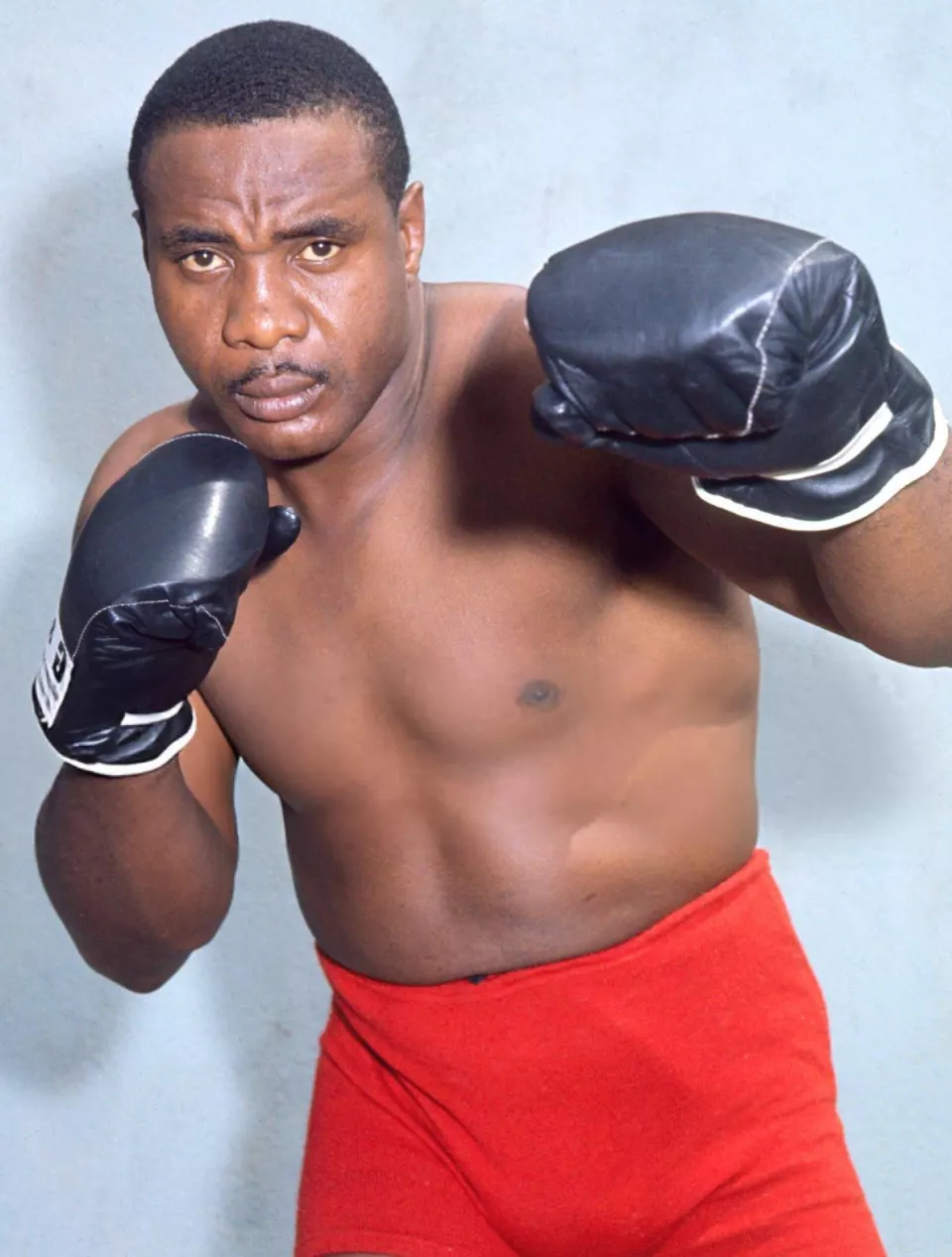
Charles "Sonny" Liston was born in rural St. Francis County in eastern Arkansas, the son of Tobe Liston and Helen Baskin, Black sharecroppers working cotton land. The Scribner Encyclopedia of American Lives places the birth on the Morledge Plantation; Wikipedia names the settlement as Sand Slough. Nobody, then or now, has been able to fix the date with confidence. The official version is May 8, 1932, and the Encyclopedia of Arkansas accepts the day while calling the year only probable. Other references put the year at 1927 or 1928, and Wikipedia records one researcher's view that July 22, 1930 is the likeliest candidate. When he died, writer Shaun Assael noted in Andscape, his paperwork made him about 38, though he was probably in his mid-40s.
The size of the family is just as hazy. Tobe Liston was far older than his second wife and had children by both marriages; Wikipedia counts 13 from the first and 12 from the second, with Sonny near the bottom of the line, while the Scribner entry calls him the ninth of ten children and the Encyclopedia of Arkansas cites one account of 22 siblings and half-siblings. All the sources agree on the texture of the childhood: hard field labor, frequent beatings, and almost no time in a classroom.
From the Streets of St. Louis to Jefferson City
Helen Baskin left for St. Louis in the mid-1940s, and the boy followed her north, running away at about 13 by the Arkansas encyclopedia's reckoning. With almost no education, he fell in with street gangs and drifted into muggings and holdups; Wikipedia records that local police tagged the gang's leader the "Yellow Shirt Bandit." Arrested in January 1950, he was convicted of first-degree robbery and larceny and sentenced to five years.
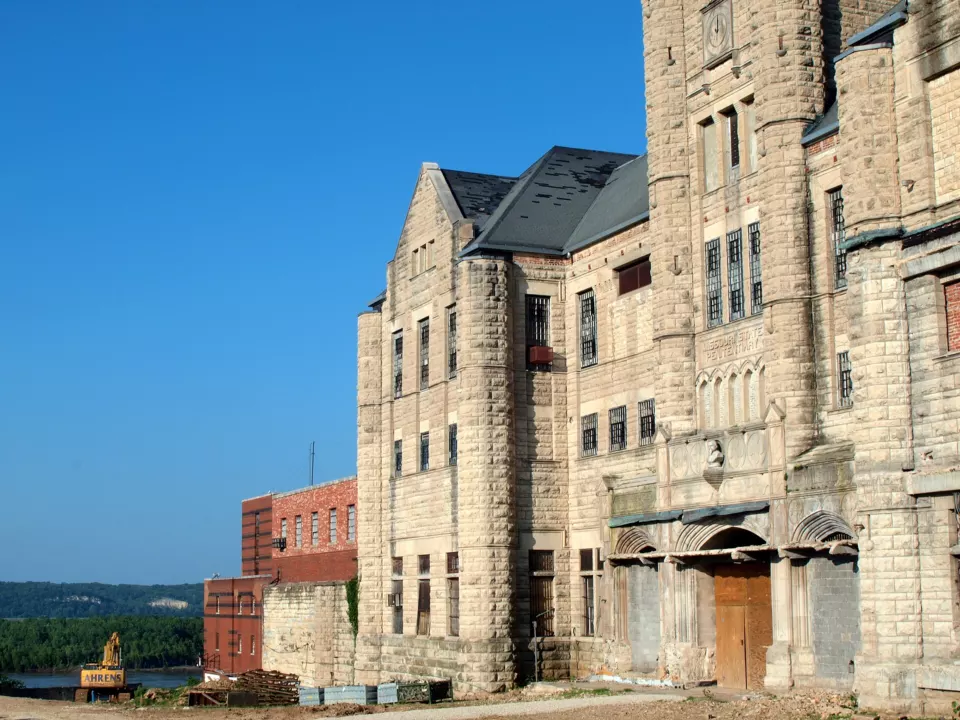
He entered the Missouri State Penitentiary in Jefferson City on June 1, 1950. It was there that the Reverend Alois Stevens, a Catholic priest who ran the prison's athletic program, steered him toward boxing. The raw strength showed immediately, and Stevens's backing helped win him early release. Sources differ by a day on the parole: the Scribner entry gives October 30, 1952, while Wikipedia lists October 31.
Golden Gloves, a Pro Debut and a Long Police File
Liston's amateur career lasted less than a year but was productive. In 1953 he won the Chicago Golden Gloves heavyweight title and the Intercity Golden Gloves at light heavyweight. He turned professional on September 2, 1953 in St. Louis, knocking out Don Smith in the first round. The first defeat came on September 7, 1954, when Marty Marshall took an eight-round split decision.
The ring did not end his trouble with the law. The Encyclopedia of Arkansas counts 14 arrests between 1953 and 1958, including a 1956 conviction for assaulting a police officer. That record would follow him through every negotiation for a title fight.
The Men Who Owned the Contract
From early on, Liston's business was handled by people tied to organized crime. The Scribner entry traces the line from his first manager, Frank W. Mitchell, to John Vitale, a St. Louis labor racketeer with underworld connections, and finally to Frankie Carbo and Frank "Blinky" Palermo, the two figures who dominated the back rooms of American boxing in the 1950s. Wikipedia describes the man on paper, Joseph "Pep" Barone, as a front for Carbo.
In 1960, with Liston rated the leading contender, he was called before a U.S. Senate subcommittee investigating the mob's grip on professional boxing, and Encyclopedia.com notes that California and Pennsylvania suspended his license. His reputation made promoters and commissions wary of matching him with the champion, and it took more than two years before he got the chance.
Two First-Round Knockouts of Floyd Patterson
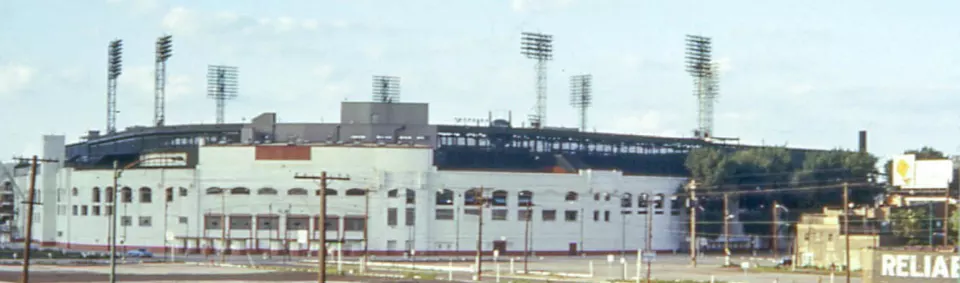
The title fight finally happened on September 25, 1962, at Comiskey Park in Chicago. Patterson, the reigning champion, lasted 2 minutes and 6 seconds of the first round. Liston left the ballpark holding the WBA, New York commission and The Ring heavyweight titles.
The rematch on July 22, 1963, at the Las Vegas Convention Center, went almost exactly the same way: Patterson was knocked out in the opening round again. Wikipedia records the finishing time as 2:10, while the Encyclopedia of Arkansas gives 2:23. With that win Liston also became the first holder of the newly created WBC heavyweight title.
Two Nights Against Ali
Liston defended against Cassius Clay at the Miami Beach Convention Center on February 25, 1964. He did not answer the bell for the seventh round and cited a shoulder injury, and the title changed hands. The rematch, on May 25, 1965 in Lewiston, Maine, ended in the first round on the knockdown that came to be known as the "phantom punch." RingTalk covers that night in its own feature, Ali vs Liston II: The Phantom Punch in Lewiston, 1965.
Comeback Years and a Silent House in Las Vegas
Liston kept fighting through the late 1960s. His last bout came on June 29, 1970, when he stopped Chuck Wepner in the ninth round. He retired with a record of 50 wins, 39 by knockout, and 4 losses.
By then he lived in Las Vegas with his wife Geraldine, whom he had married in 1957. Assael's Andscape report describes a life of small movie parts and, according to an undercover federal agent's account, cocaine dealing around the International Hotel. Wikipedia notes that he had been hospitalized in early December 1970 complaining of chest pains.
Geraldine Liston returned from a holiday trip on January 5, 1971 and found her husband dead in their bedroom, slumped against the bed, the body badly decomposed. The coroner put the date of death at about December 30, 1970.
A Cause of Death Still in Question
What happened in that house remains disputed. According to Wikipedia's account of the investigation, police found a quarter ounce of heroin in the kitchen and marijuana in his clothes, but no syringe. The autopsy found traces of heroin byproducts and what may have been needle scarring inside the left elbow, yet the body was too decomposed for decisive toxicology, and the drug levels were not judged enough to have killed him. The official cause was lung congestion and heart failure, with heart and lung disease noted as contributing factors.
Police leaned toward an overdose. Friends rejected that version, and theories that he was killed, whether by drug dealers, by mob figures, or over a loansharking dispute, began circulating almost at once. Assael wrote in Andscape that Las Vegas never opened a homicide investigation. No source consulted here settles the question; the Encyclopedia of Arkansas sums it up as rumors without answers.
Liston is buried at Paradise Memorial Gardens in Las Vegas under a two-word epitaph, "A Man." The International Boxing Hall of Fame inducted him in 1991, and in 2024 he was added to the Arkansas Walk of Fame in Hot Springs.
Sources
- Sonny Liston, Wikipedia, accessed October 2026
- Sonny Liston (1932?–1970), Robert B. Cochran, Encyclopedia of Arkansas, updated April 3, 2026
- Liston, Charles ("Sonny"), Scribner Encyclopedia of American Lives: Sports Figures, via Encyclopedia.com
- Liston, Sonny, Sports Biographies, Encyclopedia.com
- After Sonny Liston died, Shaun Assael, Andscape, October 13, 2016


