
How Sugar Ray Robinson Went From Harlem Fighter to the Original Pound-for-Pound King
From a borrowed amateur card in Harlem to five middleweight titles and a six-fight rivalry with Jake LaMotta, the life and career of Sugar Ray Robinson, the man for whom 'pound for pound' became boxing's measure of greatness.

He was born Walker Smith Jr., fought under a borrowed name, and spent a quarter of a century in the ring. Along the way Sugar Ray Robinson ruled the welterweights, won the middleweight championship five separate times, beat Jake LaMotta in five of their six meetings, and left behind the yardstick boxing still uses to argue about greatness: pound for pound.
From Walker Smith Jr. to "Sugar" Ray Robinson
Robinson was born on May 3, 1921. Wikipedia places his birth in Ailey, Georgia, with a childhood in Detroit before his separated mother took him to Harlem at about 12. ESPN's biography gives Detroit as his birthplace. Both place his boxing education in Harlem.
The name came by accident. Too young to box as an amateur under the rules of the day, the teenager entered a bout using the Amateur Athletic Union card of another youngster called Ray Robinson, and the identity stuck. The "Sugar" followed later. ESPN credits his trainer and manager George Gainford with remarking that his young fighter was as sweet as sugar; Wikipedia ties the nickname to an early fight in Watertown, New York.
His amateur résumé is usually given as 85 wins without a loss, 69 of them by knockout, although Wikipedia notes reports that he dropped decisions to Billy Graham and Patsy Pesca. What is not in doubt is that he won the New York Golden Gloves at featherweight in 1939 and at lightweight in 1940.
Ninety-one fights without a defeat
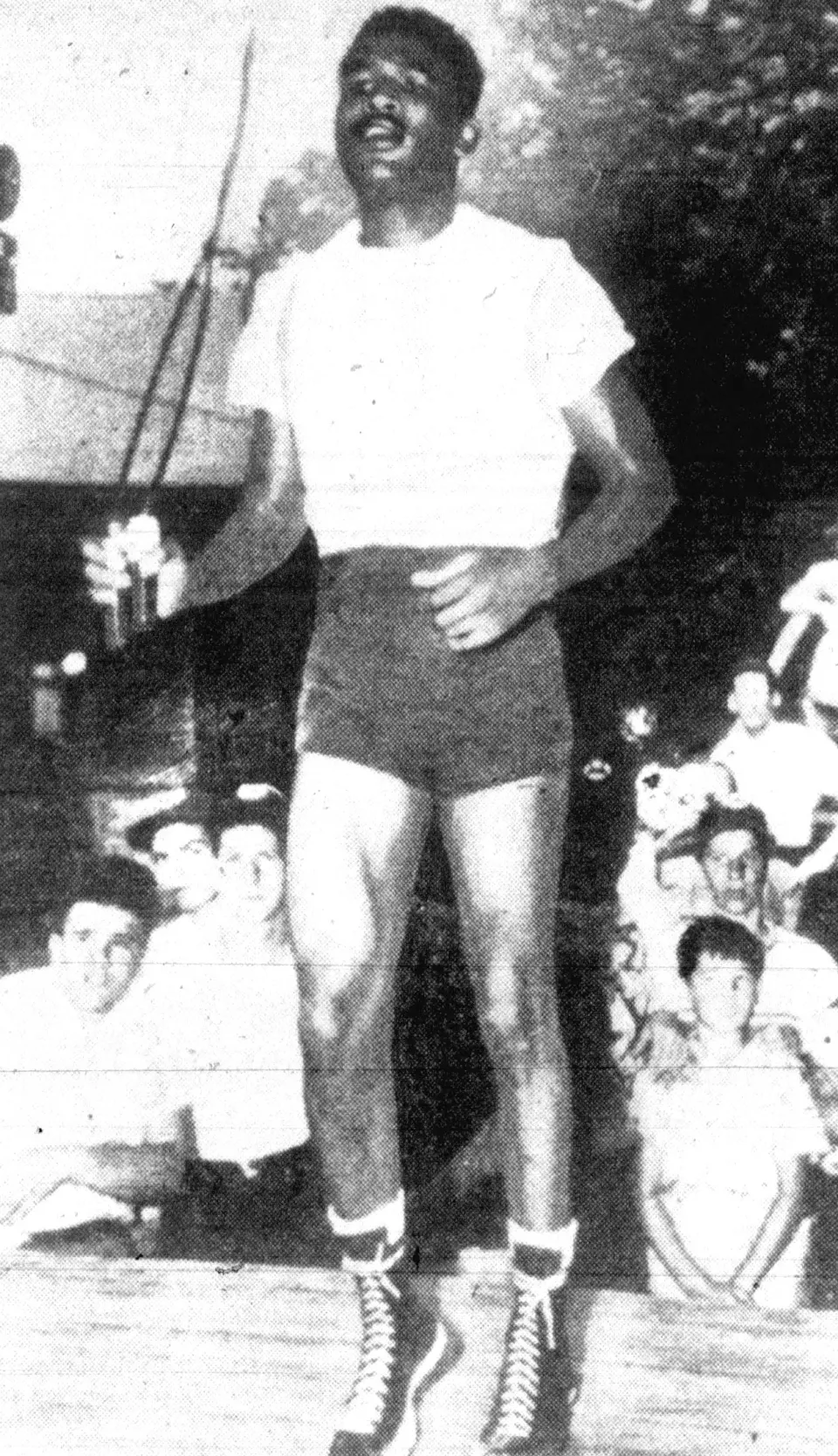
Robinson turned professional on October 4, 1940, beating Joe Echevarria,. He did not taste defeat until February 5, 1943, in Detroit, when a rugged Bronx middleweight named Jake LaMotta outpointed him over ten rounds.
That loss became the reference point for an astonishing run. From 1943 until 1951 Robinson went 91 fights without a defeat. By ESPN's count, his ledger at his peak read 128 wins, one loss and two draws, with 84 knockouts. NPR, in a 2005 profile, made the same point: one loss in his first 128 professional fights.
Welterweight king, and the death of Jimmy Doyle
Despite his record, Robinson waited years for a title shot. It finally came on December 20, 1946, when he took a unanimous 15-round decision over Tommy Bell for the vacant world welterweight championship.
On June 24, 1947, Robinson defended against Jimmy Doyle and knocked him out in the eighth round. Doyle died hours later. According to Wikipedia, Robinson had initially pulled out of the fight after dreaming that he would kill his opponent, and was talked back into it by a priest and a minister. ESPN recounts that at the subsequent inquiry, asked whether he had meant to get Doyle "in trouble," Robinson answered: "Mister, it's my business to get him in trouble."
Six fights with Jake LaMotta
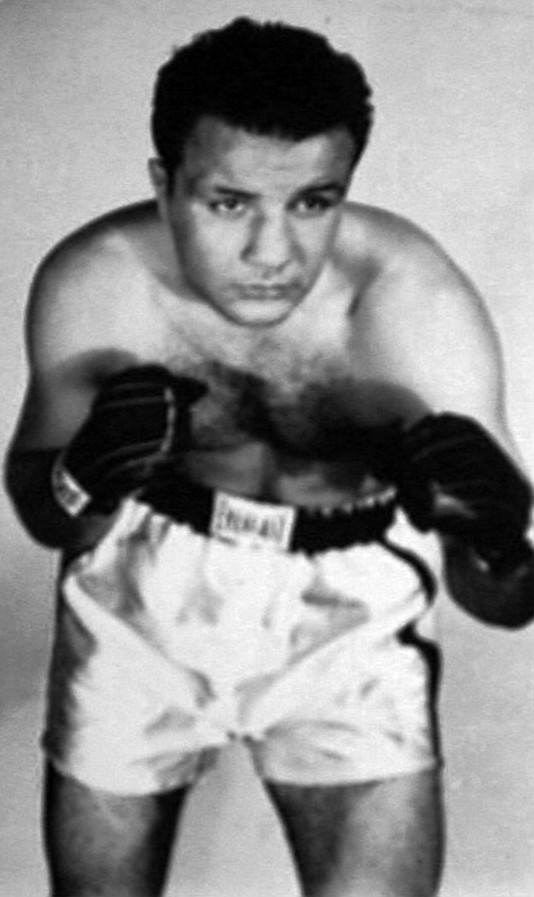
No opponent is more bound up with Robinson's name than LaMotta. Their series began on October 2, 1942, at Madison Square Garden, where Robinson won a unanimous decision. LaMotta handed him his first professional loss in the Detroit rematch on February 5, 1943, but Robinson won the third fight at the Garden just three weeks later, on February 26.
They met twice more in 1945, once at Madison Square Garden and once at Comiskey Park in Chicago, and Robinson won both, the Chicago bout by split decision.
The sixth and final chapter came on February 14, 1951, at Chicago Stadium, with LaMotta's world middleweight title on the line. Robinson took over as the rounds wore on and the referee stopped the fight in the 13th. The night has been known ever since as the St. Valentine's Day Massacre. The scorecard on the rivalry ended five wins to one in Robinson's favour, and he was now champion at a second weight.
Five middleweight titles
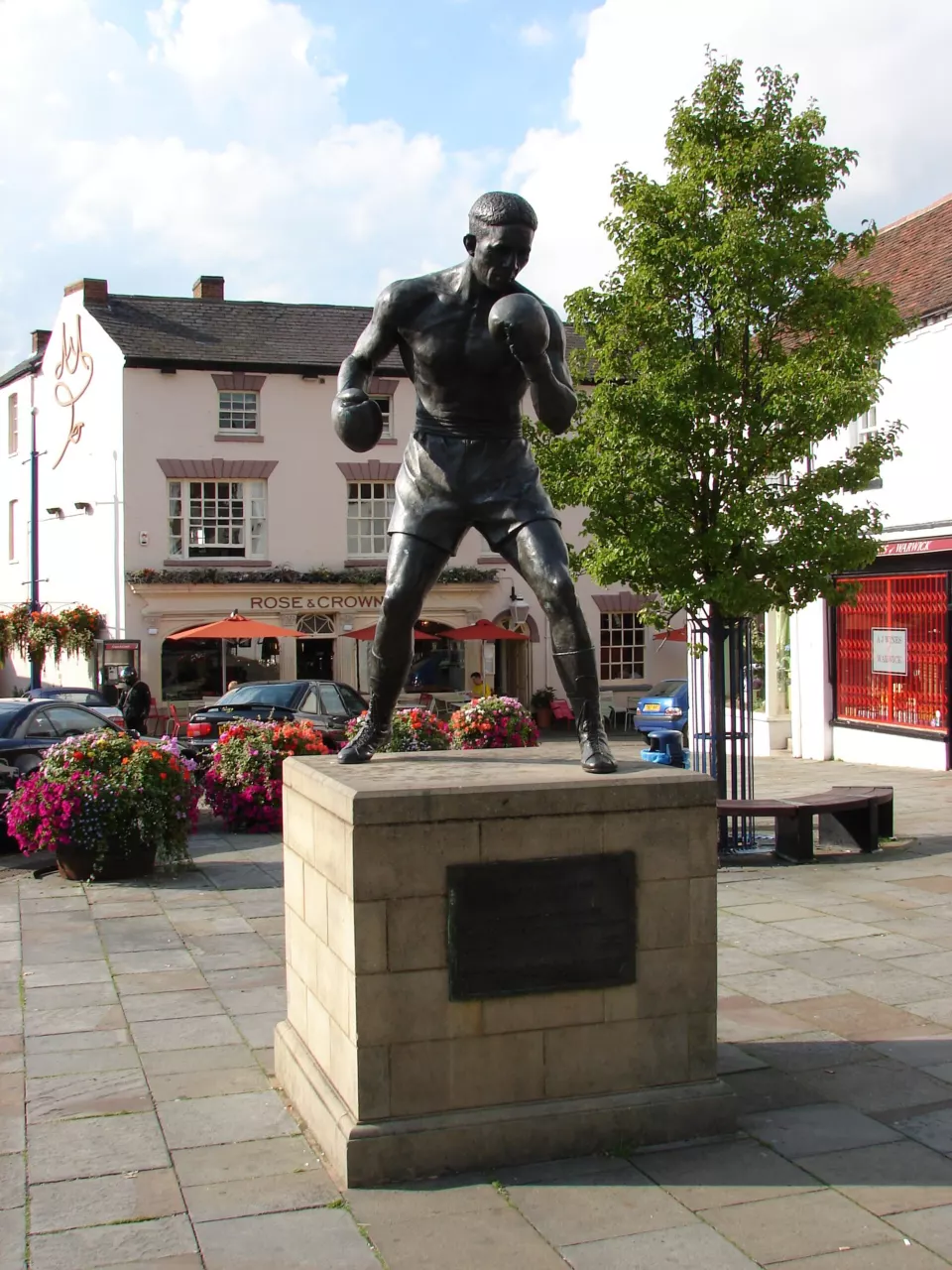
The first middleweight reign was short. On a European tour that summer, Robinson lost the championship to Britain's Randolph Turpin in London on July 10, 1951. He won it back from Turpin just over two months later, on September 12, at the Polo Grounds in New York.
In 1952 he reached for a third division. On June 25, at Yankee Stadium, he challenged Joey Maxim for the light heavyweight championship on a night of extreme heat, cited at 103 degrees Fahrenheit. The referee, Ruby Goldstein, was overcome and had to be replaced by Ray Miller. Robinson could not come out for the 14th round. It was the only time he was ever stopped, and ESPN notes that he never took a ten-count in 200 bouts. He retired soon afterwards and spent the next stretch on business interests and a career as a tap dancer.
The comeback began in 1955 and included an early setback against Ralph "Tiger" Jones. Yet on December 9, 1955, Robinson knocked out Carl "Bobo" Olson in the second round to become middleweight champion for a third time. He lost the belt to Gene Fullmer on a unanimous decision on January 2, 1957, then took it back in their rematch on May 1, 1957, with a single left hook in the fifth round. Fullmer later told reporters, as quoted by ESPN, that it was a punch "I never seen, heard or felt."
Carmen Basilio took the title from him by split decision at Yankee Stadium on September 23, 1957. On March 25, 1958, Robinson beat Basilio in the rematch and became middleweight champion for a fifth time, a record for the division. The final loss of the crown came against Paul Pender, who won a split decision on January 22, 1960, and repeated the result in a rematch on June 10 of that year.
The long goodbye
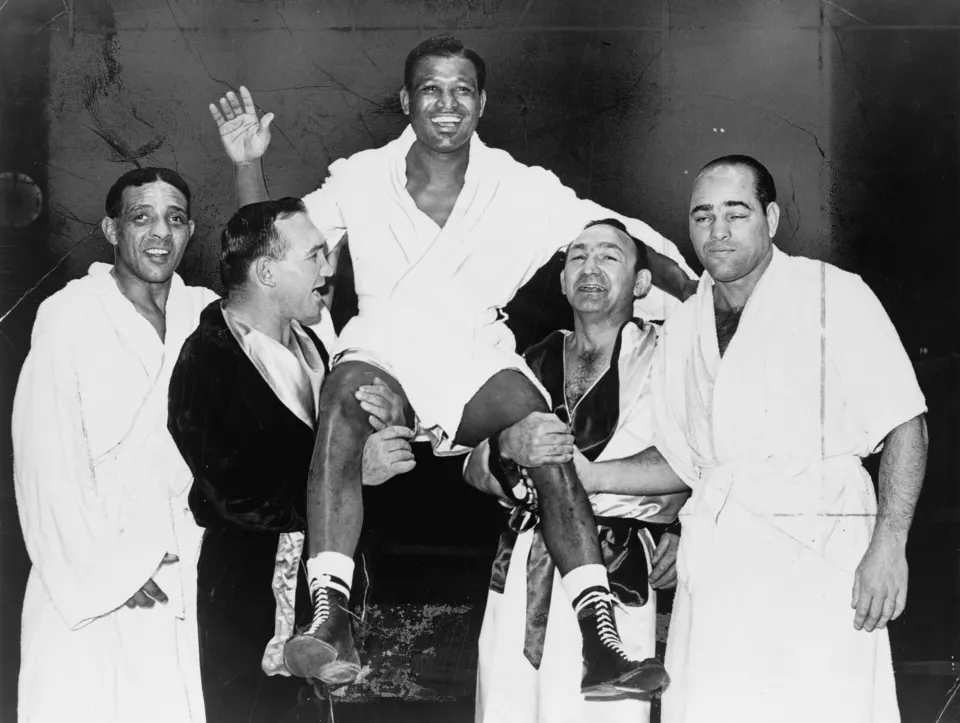
Robinson kept fighting for more than five years after the Pender rematches, largely because he needed the money. Wikipedia reports that he left boxing broke despite career earnings of around $4 million, and NPR's profile describes how his Harlem fortune was lost to taxes and bad business partners. In his prime he had owned a celebrated restaurant, Sugar Ray's, and drove a flamingo-pink Cadillac through Harlem.
The decline was steep. ESPN records that by 1965 he was taking five fights in 36 days for about $1,100 a night. His last fight was a ten-round unanimous decision loss to Joey Archer on November 10, 1965, when Robinson was 44. His final record is given as 174 wins, 19 losses and 6 draws with 2 no contests by Wikipedia, which lists 109 knockouts, while ESPN gives 175 wins; the gap reflects how differently record-keepers have treated a handful of his bouts.
Harlem's champion in retirement
Out of the ring, Robinson tried his hand at singing, dancing and acting, and in 1969 he founded the Sugar Ray Robinson Youth Foundation. He moved to Southern California with his third wife, Millie. In his final years he suffered from Alzheimer's disease and diabetes. He died on April 12, 1989, aged 67. Wikipedia gives Los Angeles as the place of death and heart disease as the cause; ESPN gives Culver City. He is buried at Inglewood Park Cemetery.
Where "pound for pound" comes from
Because he looked superior to everyone around him regardless of size, sportswriters began rating him as the best fighter in the world "pound for pound", a way of comparing boxers as if weight did not matter. NPR's 2005 profile and Wikipedia both describe the term as having been coined for him. Some later accounts argue the expression was already in circulation decades earlier and that Robinson made it famous rather than inspired it.
The honours followed. The Ring named him the best fighter of its first 75 years in 1997 and placed him first among the 80 best fighters of the previous 80 years in 2002. He entered the International Boxing Hall of Fame in 1990. Muhammad Ali, Joe Louis, Roberto Durán and Sugar Ray Leonard all named him the greatest. Boxing historian Bert Sugar summed him up for NPR: "He was flawless, he was seamless."
Sources
- Sugar Ray Robinson, Wikipedia, accessed October 2026
- Sugar Ray Robinson biography, ESPN Classic (SportsCentury), accessed October 2026
- Pound for Pound: Sugar Ray Robinson's Legacy, Ed Gordon, NPR (via WGCU), May 13, 2005


