
Benny Leonard the Ghetto Wizard Went From the Lower East Side to a Death in the Ring
Benny Leonard fought under a borrowed name, held the lightweight title from 1917 to 1925 and retired as champion. He lost his fortune in the 1929 crash, made a comeback that ended against Jimmy McLarnin, and died in 1947 while refereeing at St. Nicholas Arena.

Benny Leonard came out of the tenements of Manhattan's Lower East Side, fought under a borrowed name so his parents would not find out, and became the lightweight champion of the world in 1917. He held the title for nearly eight years, retired as champion, lost his money in the 1929 crash, came back for one last run, and died three decades after his greatest night in the place where he had spent his life: inside a boxing ring.
Benjamin Leiner of the Lower East Side
He was born Benjamin Leiner on April 7, 1896, one of eight children of Gershon and Minny Leiner, Jewish immigrants from the Russian Empire. The family lived on the Lower East Side, and his father worked in the garment trade; Wikipedia's account puts his wages at about twenty dollars a week. The streets around the family home were mixed and often hostile, and the encyclopedia entries on Leonard agree that a boy there learned to use his fists early.
His formal introduction to boxing came through family. According to the EBSCO biography, Benny and two of his brothers spent time at a neighborhood gym called the Silver Heel Club, where an uncle who belonged to the club showed them the basics. His parents were religious and did not regard prizefighting as a respectable trade. So when he turned professional in 1911, at fifteen, he did it as "Benny Leonard," a name meant to keep the news from reaching home. Encyclopedia.com dates his first paid bout to September 1911 against Mickey Finnegan, and records that the teenager was knocked out in the third round. It was an unpromising start, and one he quickly reversed.
Nine Rounds Against Freddie Welsh
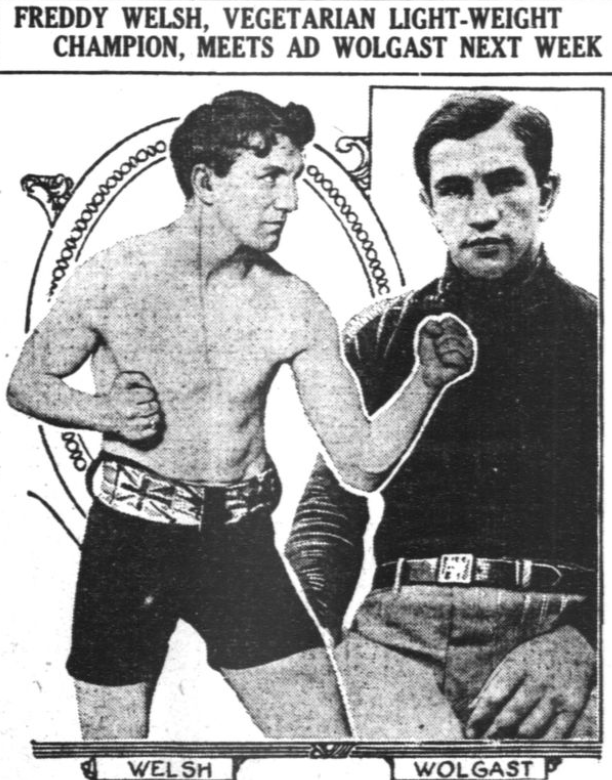
Over the next six years Leonard fought constantly, much of it in the no-decision era, when many bouts ended without an official verdict and newspapers supplied the result. By 1917 he had earned a shot at Freddie Welsh, the reigning lightweight champion. They met on May 28, 1917, at the Manhattan Casino in New York. In the ninth round Leonard put Welsh down three times, and referee Billy McPartland stopped the contest with the champion draped helplessly over the ropes.
Leonard was twenty-one and champion of the world. Wikipedia records that he gave the credit to his mother, saying she had always made him live right. He did not rest on it. The International Jewish Sports Hall of Fame notes that he defended the title fourteen times in his first year as champion, starting within a week of beating Welsh. That July, at Shibe Park in Philadelphia, he stopped Johnny Kilbane in three rounds.
The Science of Not Getting Hit
Leonard stood about five feet five inches and fought at roughly 130 to 133 pounds. Encyclopedia.com describes him as a hard hitter with either hand, but his reputation rests even more on his gift for slipping and countering the attacks of stronger men. He refined those defensive and offensive skills under trainer George Engel and they earned him the nickname "the Ghetto Wizard."
His ring intelligence showed most clearly when he was in trouble. In his 1922 fight with Lew Tendler, the EBSCO biography says, Leonard was badly hurt in the eighth round and, while tied up in a clinch, began talking to his opponent, buying the seconds he needed for his head to clear. Sportswriter Dan Parker, as quoted by the International Jewish Sports Hall of Fame, wrote that the champion "moved with the grace of a ballet dancer and wore an air of arrogance that belonged to royalty."
He was not untouchable. In a 1920 title defense at Benton Harbor, Michigan, Charley White sent him through the ropes with a left hook in the fifth round before Leonard knocked White out in the ninth. In January 1921 at Madison Square Garden, Ritchie Mitchell dropped him for a count of nine in the opening round; Leonard got up and stopped Mitchell in the sixth.
Britton, Tendler and the Biggest Crowds
In June 1922 Leonard moved up to challenge welterweight champion Jack Britton at the Velodrome in New York. He floored Britton in the thirteenth round and then struck him while he was down, and he was disqualified. The result has never been free of suspicion. Wikipedia mentions rumors linking the bout to the gambler Arnold Rothstein, and Encyclopedia.com reports an allegation that manager Billy Gibson told Leonard before the fight that he could not win that night. Neither source treats the claim as proven.
A month later he faced the southpaw Lew Tendler in Jersey City over twelve rounds. Wikipedia gives the crowd as about 70,000. Tendler did well early, Leonard survived the dangerous eighth, and the newspaper verdict went to the champion. Their rematch on July 24, 1923, at Yankee Stadium drew about 58,000 people, and Leonard won a clear fifteen-round decision.
Leaving as Champion
Leonard stepped away while still holding the title, which few champions of any era have managed. Sources differ on the date. Wikipedia and the International Jewish Sports Hall of Fame give January 15, 1925, while Encyclopedia.com dates his retirement to August 1, 1924. Wikipedia attributes the decision partly to his mother, who was in failing health and wanted him out of boxing.
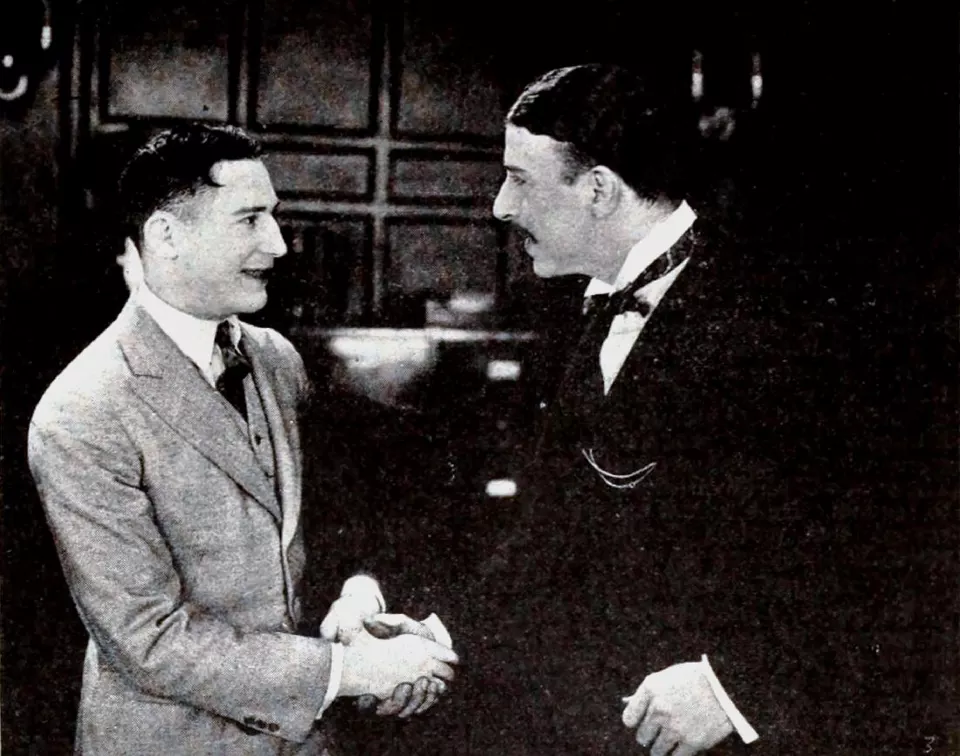
By then he was a celebrity beyond the sport. He had appeared in the 1920 film serial The Evil Eye, made a run of boxing shorts in the mid-1920s, and worked in vaudeville. He put money into real estate and other businesses. Several sources say he left the ring a millionaire.
The Crash and the Comeback
The stock market collapse of 1929 took most of that fortune. In October 1931, more than six years after his last title fight and in the depths of the Depression, Leonard returned to the ring as a welterweight. He was in his mid-thirties, heavier and slower than the champion people remembered. The opposition in the comeback was carefully chosen and mostly obscure, and he won almost every time; EBSCO counts nineteen straight wins, while Encyclopedia.com records eighteen wins in nineteen bouts.
The run ended on October 7, 1932, at Madison Square Garden against Jimmy McLarnin, a younger contender who would later win the welterweight title. According to Wikipedia, Leonard briefly buckled McLarnin with a right in the opening round, but McLarnin took over. Leonard went down in the second, absorbed steady punishment through the middle rounds, and the referee stopped the fight in the sixth. He never boxed again.
Instructor, Referee and a Death in the Ring
Leonard stayed in the sport. He taught boxing at City College of New York in the early 1930s. During the Second World War he joined the United States Maritime Service, where, Wikipedia records, he directed physical training for apprentice seamen and rose to lieutenant commander. From 1943 he worked as a referee, mostly in New York and Philadelphia.
In April 1947 he was refereeing a bout between Mario Ramon and Bobby Williams at St. Nicholas Arena in Manhattan. During the first round he collapsed onto the canvas. The ringside physician, Dr. Vincent Nardiello, could not revive him. He was fifty-one. Sources disagree on some details. Wikipedia and EBSCO describe a heart attack, but Encyclopedia.com gives a cerebral hemorrhage. Most accounts date his death to April 18, 1947, while the EBSCO entry gives April 17. He was buried at Mount Carmel Cemetery in Glendale, New York.
A Record Nobody Agrees On, and a Place Nobody Disputes
Because so many of his fights ended without official decisions, Leonard's record differs from one source to the next. Wikipedia counts 219 bouts including newspaper decisions. The International Jewish Sports Hall of Fame lists 213 bouts with 180 wins. Encyclopedia.com, counting only official results, gives 85 wins, 5 losses, 1 draw and 114 no-decisions. Every count shows a fighter who lost very rarely after his first year.
His standing among historians is much more settled. The Ring inducted him into its Hall of Fame in 1955, the International Boxing Hall of Fame followed in 1990, and The Sporting News in 1997 named him the best boxer of the previous seventy-five years. The International Boxing Research Organization ranked him the greatest lightweight in 2005. Hearst editor Arthur Brisbane, quoted by the International Jewish Sports Hall of Fame, wrote that Leonard "has done more to conquer anti-Semitism than a thousand textbooks."
Sources
- Benny Leonard, Wikipedia, accessed October 2026
- Leonard, Benny, Encyclopedia.com, accessed October 2026
- Benny Leonard, EBSCO Research Starters, accessed October 2026
- Benny Leonard, International Jewish Sports Hall of Fame, accessed October 2026


