
How Lennox Lewis Went From West Ham and Kitchener to Heavyweight Champion Who Left on Top
The life of Lennox Lewis, the London-born, Canadian-raised Olympic champion who avenged both of his defeats, beat Holyfield and Tyson, and retired in 2004 as heavyweight champion.

Born in east London, raised in a Canadian factory town and crowned in Seoul, Lennox Lewis spent fourteen years as a professional heavyweight, lost twice, reversed both defeats, beat Evander Holyfield and Mike Tyson, and then did something almost no heavyweight champion manages: he walked away while still holding the title.
From West Ham to Kitchener
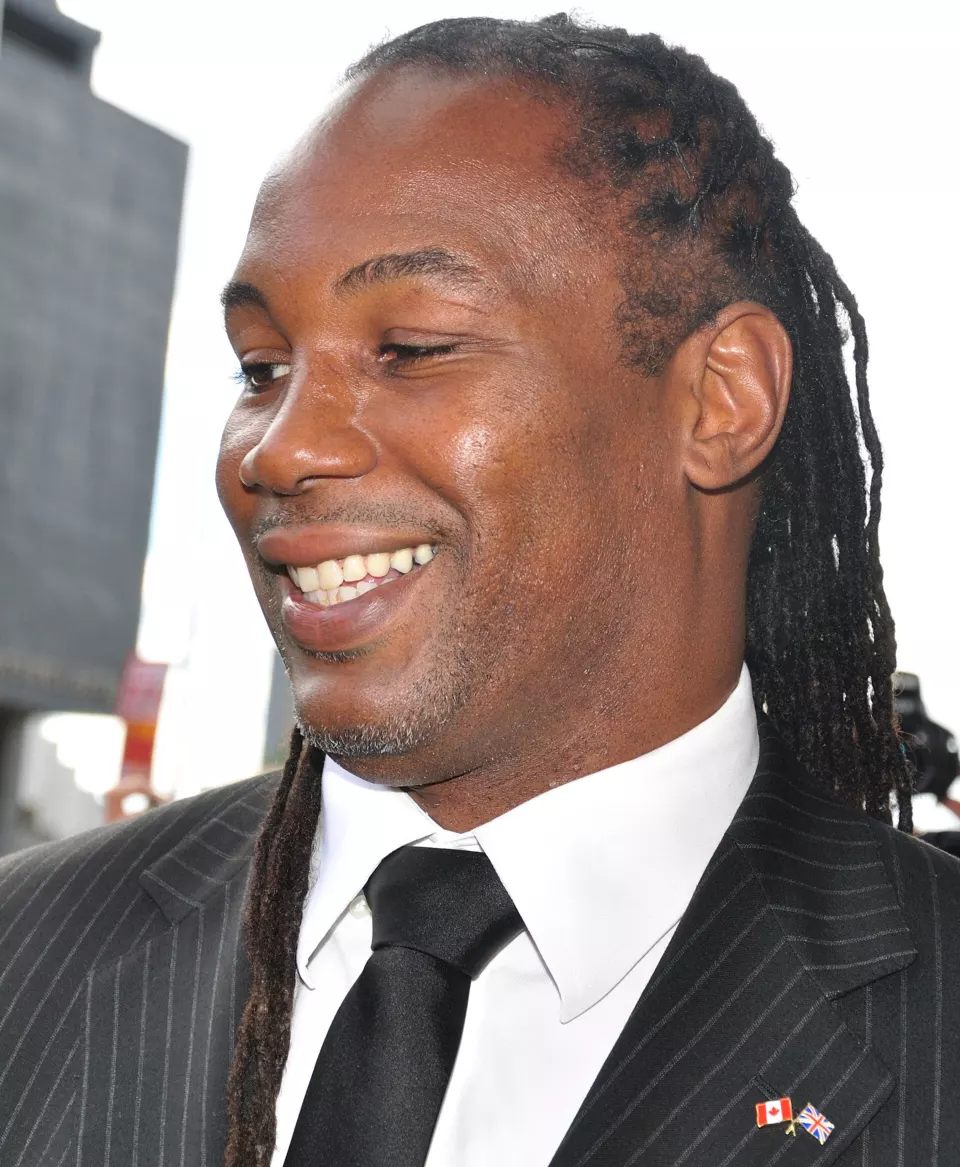
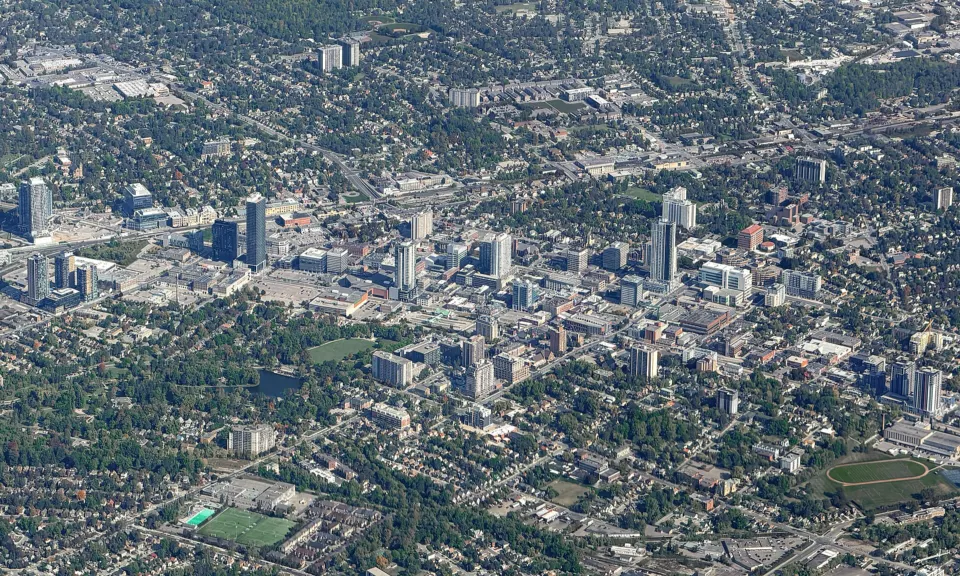
Lennox Claudius Lewis was born on September 2, 1965, in West Ham, London, the son of parents who had come to Britain from Jamaica. His childhood was split across two countries. At the age of twelve, in 1977, he moved to Kitchener, Ontario, an industrial city west of Toronto, and he went on to attend Cameron Heights Collegiate Institute there.
It was in Ontario that the tall teenager found boxing and developed as an amateur. That divided upbringing would shape how he was described for the rest of his career. He held both British and Canadian citizenship, represented Canada as an amateur, and later fought as a professional out of Britain, so that newspapers on both sides of the Atlantic could, and did, claim him.
An Amateur Built for the Olympics
Lewis announced himself internationally in 1983, winning the super-heavyweight gold medal at the Junior World Championships in Santo Domingo. A year later he went to the Los Angeles Olympics as a Canadian teenager and was eliminated in the quarterfinals by the American Tyrell Biggs.
He chose to stay amateur for another Olympic cycle rather than turn professional immediately. The patience paid off in Seoul in 1988. In the super-heavyweight final he met another American, Riddick Bowe, and the referee stopped the contest in the second round in Lewis's favour. The win made him the first Canadian boxer to take Olympic gold in 56 years, and he carried the Canadian flag at the closing ceremony. Wikipedia lists his amateur record as 85 wins and 9 defeats.
Turning Professional and Climbing the British Ladder
Lewis returned to the country of his birth to begin his paid career. He debuted on June 27, 1989, at the Royal Albert Hall, stopping Al Malcolm in the second round. Regional honours followed at a steady pace: the European heavyweight title against Jean-Maurice Chanet in October 1990, the British title against Gary Mason in March 1991, and the Commonwealth belt against Derek Williams in April 1992.
His route to a world title was unusual. Bowe, the man he had beaten in Seoul, had become the leading heavyweight in the professional ranks, but in December 1992 Bowe gave up the WBC belt rather than defend it against Lewis. On December 14, 1992, the WBC recognised Lewis as its champion. He made defences against Tony Tucker, Frank Bruno and Phil Jackson, but the manner of his coronation meant critics still wanted to see him tested.
The Shock at Wembley and the Strange Rematch
The test came on September 24, 1994, at Wembley Arena in London, and Lewis failed it. Oliver McCall caught him in the second round, and referee Jose Guadalupe Garcia stopped the fight 31 seconds into the round. Lewis had lost his title and his unbeaten record in front of a home crowd.
The rematch, for the vacant WBC title, did not come until February 7, 1997, at the Las Vegas Hilton, and it became one of the oddest championship fights of the era. McCall stopped fighting in the fourth and fifth rounds, declining to engage and appearing to cry in the ring, and Lewis was awarded the victory and the belt. It settled the score on paper, though hardly in the way anyone had imagined.
Holyfield: a Draw at the Garden, a Verdict in Las Vegas
By 1999 the heavyweight division had two main claimants: Lewis with the WBC title and Evander Holyfield with the WBA and IBF belts. They met to unify on March 13, 1999, at Madison Square Garden in New York before a sellout crowd that CBS News put at 21,284. Lewis appeared to control the fight; the punch statistics reported by CBS showed him landing 348 of 613 punches against Holyfield's 130 of 385.
The judges did not agree with the numbers. Stanley Christodoulou of South Africa scored it 116-113 for Lewis, Britain's Larry O'Connell had it level at 115-115, and Eugenia Williams of the United States scored it 115-113 for Holyfield. The result was a split draw, and the crowd booed. "It was my time to shine and they ripped me off," Lewis said afterwards, according to CBS News.
The rematch on November 13, 1999, at the Thomas & Mack Center in Las Vegas left less room for argument. Lewis won a unanimous decision, with cards of 115-113, 116-112 and 117-111, and became the undisputed heavyweight champion.
Rahman in South Africa, and a Swift Correction
Lewis's second defeat was even more sudden than the first. On April 22, 2001, at Carnival City Casino in South Africa, he defended against Hasim Rahman, a 20-to-1 underdog according to Wikipedia, and was knocked out in the fifth round at 2:32.
Lewis moved quickly to get the belts back. The rematch took place on November 17, 2001, at the Mandalay Bay in Las Vegas, and this time he ended it himself, knocking Rahman out at 1:29 of the fourth round. With that win, both of his professional losses had been reversed against the men who inflicted them.
Tyson in Memphis

The fight the public had wanted for years nearly fell apart before it was signed off. At a New York press conference on January 22, 2002, Mike Tyson charged at Lewis and a brawl broke out between the two camps; Tyson later admitted biting Lewis on the leg. The bout had been planned for Las Vegas on April 6, but Nevada declined to license Tyson, other states turned the fight down as well, and Memphis eventually secured it with a bid reported at 12 million dollars.
On June 8, 2002, at the Pyramid Arena in Memphis, Lewis defended the WBC, IBF, IBO and Ring magazine titles. He controlled Tyson with the jab and the right hand, and in the eighth round dropped him for the second time in the round. Tyson got only as far as one knee and was counted out by referee Eddie Cotton at 2:25. The event earned 106.9 million dollars from 1.95 million pay-per-view buys in the United States, a record at the time.
Vitali Klitschko and the Last Night in Los Angeles
Lewis's final fight came a year later, on June 21, 2003, at the Staples Center in Los Angeles, against the Ukrainian Vitali Klitschko. The fight was halted after the sixth round because of a severe cut above Klitschko's left eye, and Lewis kept his title by stoppage. Wikipedia reports that the wound needed sixty stitches.
The WBC ordered a rematch and set a deadline of March 1, 2004. Lewis chose not to take it.
Leaving as Champion
On February 6, 2004, at a news conference in London, the 38-year-old Lewis announced his retirement. As reported by the Mail and Guardian, he became the first reigning heavyweight champion to retire since Rocky Marciano in 1956, with Gene Tunney in 1928 the only other comparable case. "Let the next era begin," he told the gathering, in the paper's account.
Sources differ on how his record was written at the time. News reports from February 2004 gave it as 41-1-2, while Wikipedia records 41 wins, 2 losses and 1 draw, with 32 wins inside the distance, which matches the two losses to McCall and Rahman and the single draw with Holyfield described above.
The honours arrived steadily. He entered Canada's Sports Hall of Fame in 2008 and the International Boxing Hall of Fame in 2009, his first year of eligibility. Wikipedia notes that he remained the last undisputed heavyweight champion until Oleksandr Usyk unified the titles in May 2024. The man from West Ham and Kitchener finished with every defeat avenged and his last fight a win.
Sources
- Lennox Lewis, Wikipedia, accessed October 2026
- Lennox Lewis vs. Mike Tyson, Wikipedia, accessed October 2026
- Lewis-Holyfield Ends In Draw, CBS News, March 1999
- Lennox Lewis leaves the ring, Mail and Guardian, February 6, 2004
- Lennox Lewis: Golden in Seoul, Canadian Olympic Committee (olympic.ca), October 2, 2013


