
How Evander Holyfield Went From Atmore and Atlanta to Four-Time Heavyweight Champion
From a disputed Olympic bronze to the first undisputed cruiserweight crown and four heavyweight championships, the life and career of Evander Holyfield.

He left the 1984 Olympics with a bronze medal he believed should have been something better, built a cruiserweight reign that no one had managed before him, and then walked into the heavyweight division as a man many thought was too small for it. Evander Holyfield went on to become the first fighter to win the heavyweight championship four times, and the only one to hold world titles in the 1980s, 1990s and 2000s.
From Atmore to the Bowen Homes
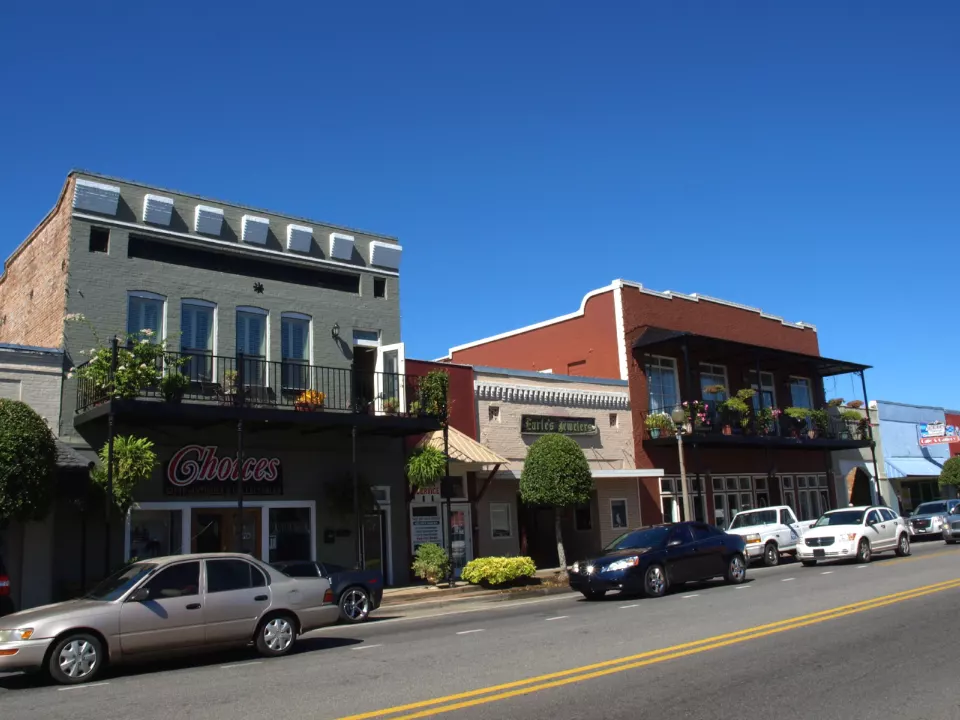
Evander Holyfield was born on October 19, 1962, in Atmore, a mill town in Escambia County, Alabama. He was the youngest of nine children of Annie Laura Holyfield, who worked as a cafeteria cook. His father, a mill worker named Ison Coley, was gone from the household early, and Annie Laura eventually moved the family to Atlanta. Holyfield grew up in the Bowen Homes housing project and has always called Atlanta home.
Football was his first love, but he was judged too small for it. Boxing came early instead, around the age of seven or eight depending on the account. When he finished high school in 1980 he stood about five feet eight and weighed roughly 147 pounds. He kept growing well into his twenties, eventually reaching about six feet two and a half.
By 1984 he had put together an amateur record of 160 wins and 14 losses. He won a silver medal at the 1983 Pan American Games in Caracas, losing the final to Cuba's Pablo Romero, and took a national Golden Gloves title the following year.
Los Angeles 1984: Bronze After a Disputed Break
Holyfield arrived at the Los Angeles Olympics as a light heavyweight and fought his way to the semifinals against Kevin Barry of New Zealand. The bout ended in the second round in one of the most argued-over moments of those Games. Referee Gligorije Novičić of Yugoslavia ruled that Holyfield had kept punching after the command to break and disqualified him. Barry had gone down from the blow.
Because Barry had been knocked down, the rules barred him from boxing in the final, so the gold went to Ante Josipović, also of Yugoslavia, without a fight. Barry took silver. Holyfield was awarded bronze. The fact that the referee shared a nationality with the eventual champion has been cited ever since by those who saw the decision as tainted.
Building a Cruiserweight Empire
Holyfield turned professional at 21, beating Lionel Byarm at Madison Square Garden on November 15, 1984. Less than two years later, on July 12, 1986, he challenged Dwight Muhammad Qawi for the WBA cruiserweight title at the Omni Coliseum in Atlanta. The fight went the full 15 rounds and ended in a split decision for Holyfield. The Ring later named it the best cruiserweight fight of the 1980s.
He added the IBF belt on May 15, 1987, stopping Ricky Parkey in the third round, and then went after the last piece. On April 9, 1988, at Caesars Palace, he stopped Carlos De León in the eighth round to claim the WBC title, becoming the first undisputed champion the cruiserweight division had ever had. Having cleared out the weight class, he announced he was moving up.
The Mirage, October 1990
Holyfield stopped James Tillis in five rounds in July 1988, forced Pinklon Thomas to retire after seven in December, and stopped Michael Dokes in the tenth in March 1989. A fight with Mike Tyson was the obvious next step until James "Buster" Douglas knocked Tyson out in Tokyo in February 1990.
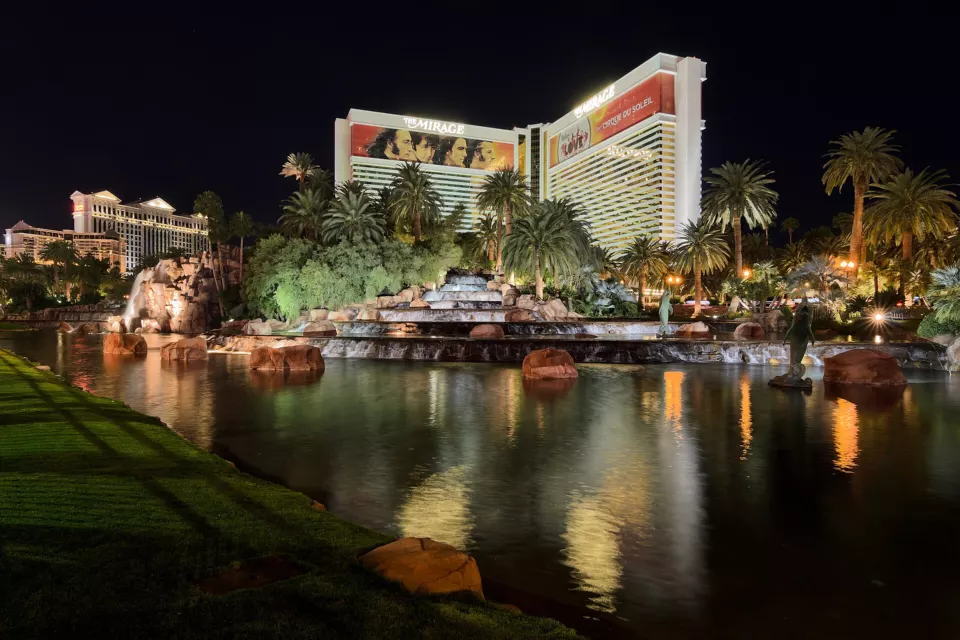
So Holyfield fought Douglas instead, on October 25, 1990, at the Mirage in Las Vegas, with the WBA, WBC and IBF titles at stake. It was over in the third round: Holyfield caught Douglas with a counter right hand and the champion was counted out. Holyfield was undisputed heavyweight champion of the world.
He defended the titles against two former kings. In 1991 he outpointed a 42-year-old George Foreman over 12 rounds, and on June 19, 1992, he took a unanimous decision from Larry Holmes. The Boxing Writers Association of America named him Fighter of the Year for 1990.
Three November Nights With Riddick Bowe
On November 13, 1992, at the Thomas & Mack Center in Las Vegas, Holyfield met Riddick Bowe, a younger and much bigger man. Bowe won a unanimous decision on cards of 117-110, 117-110 and 115-112. The tenth round, in which Bowe hurt Holyfield badly before Holyfield rallied, was The Ring's Round of the Year, and the fight itself was its Fight of the Year.
The rematch, on November 6, 1993, at Caesars Palace, is remembered as much for an intruder as for the boxing. In the seventh round a man flying a powered parachute came down out of the night sky, snagged on the arena lights and landed on the ring ropes. Members of Bowe's entourage beat him after he was pulled into the crowd, and roughly twenty minutes passed before the fight resumed. Holyfield won a majority decision and took back the WBA and IBF titles.
A third fight followed on November 4, 1995, again at Caesars Palace, with no titles on the line. Holyfield dropped Bowe with a left hook in the sixth round, but Bowe floored him in the eighth and stopped him in that round.
A Heart Scare and a Return
Between the second and third Bowe fights, Holyfield lost his titles to Michael Moorer by majority decision on April 22, 1994, at Caesars Palace, despite putting Moorer down in the second round. (The Encyclopedia of Alabama dates the Moorer loss to 1995; Wikipedia and Boxing News place it in April 1994, which fits the sequence of his fights.) A hospital examination afterward found a heart problem, and he announced his retirement.
It did not last. Holyfield credited his recovery to a crusade held by the televangelist Benny Hinn, and later said the original finding had been distorted by morphine given to him after the fight. He passed a subsequent commission examination and returned to the ring in 1995.
Tyson, Twice
By late 1996 many observers considered Holyfield past his best. Tyson, now out of prison and holding the WBA title, was a heavy favourite when they finally met on November 9, 1996, at the MGM Grand Garden Arena. Holyfield outfought him and won by stoppage in the eleventh round. The Ring named it both Fight of the Year and Upset of the Year.
The rematch on June 28, 1997, ended in the third round when Tyson was disqualified for biting Holyfield's ears, a night covered in detail in a separate RingTalk article. Holyfield then avenged the Moorer defeat on November 8, 1997, adding the IBF title. He was the Boxing Writers Association's Fighter of the Year in both 1996 and 1997.
Lewis, Ruiz and a Fourth Crown
A unification fight with Lennox Lewis at Madison Square Garden on March 13, 1999, ended in a draw that most observers believed Lewis had clearly won. Lewis took the rematch by unanimous decision on November 13, 1999, in Las Vegas.
Holyfield was not finished. On August 12, 2000, at Paris Las Vegas, he beat John Ruiz by unanimous decision for the vacant WBA title, becoming the first man to win the heavyweight championship four times. Ruiz took the belt from him in March 2001, and their third meeting that December ended in a draw.
The Long Goodbye
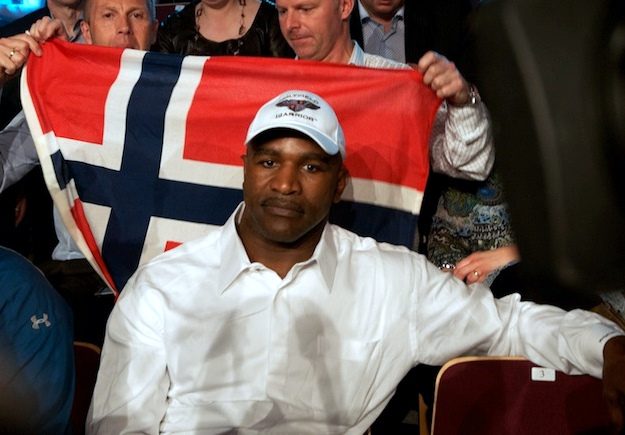
Losses to James Toney in 2003 and Larry Donald in 2004 led New York to suspend him in 2005, citing diminished skills. He kept fighting anyway, putting together a string of wins in 2006 and 2007 before losing title challenges to Sultan Ibragimov in October 2007 and Nikolai Valuev in December 2008. His final wins came against Francois Botha in 2010 and Brian Nielsen in May 2011. He announced his retirement in 2012, wavered, and closed the door for good in 2014.
He finished with 44 wins, 29 of them by knockout, 10 losses, 2 draws and a no contest. Alabama and the International Sports Hall of Fame inducted him in 2015, and the International Boxing Hall of Fame followed in 2017. In 1996, before all of that, he carried the Olympic torch on its way into Atlanta, the city the boy from Atmore had made his own.
Sources
- Evander Holyfield, Wikipedia, accessed October 2026
- Evander Holyfield, Encyclopedia of Alabama, published September 4, 2020, updated September 24, 2024
- Kevin Barry, Olympedia, accessed October 2026
- Riddick Bowe vs. Evander Holyfield, Wikipedia, accessed October 2026
- On this day: Riddick Bowe wins rubber match with Evander Holyfield, Matt Christie, Boxing News, November 4, 2017


