
How Ingemar Johansson Went From Olympic Disgrace in Helsinki to Heavyweight Champion of the World
Disqualified and denied his silver medal at the 1952 Olympics, Gothenburg's Ingemar Johansson rebuilt his name, won the European title and knocked out Floyd Patterson in 1959 to become heavyweight champion. This is his life from the Helsinki ring to his final years in Kungsbacka.

Ingemar Johansson left the 1952 Olympic ring in Helsinki in disgrace, disqualified and denied his medal. Seven years later the Gothenburg heavyweight flattened Floyd Patterson at Yankee Stadium and took boxing's biggest prize back to Sweden, a man celebrated on both sides of the Atlantic before illness clouded his final years.
A Gothenburg Heavyweight
Jens Ingemar Johansson was born in Gothenburg, on Sweden's west coast, on September 22, 1932. The port city would remain the centre of his story long after he became famous in New York. As an amateur he compiled what the Associated Press later listed as a 61-10 record with 31 knockouts, and in 1952, still only 19, he won the Swedish national championship by knocking out his opponent in the opening round of the final.
That title earned him a place on the Swedish team for the Summer Olympics across the Baltic in Helsinki. It was supposed to be a launching pad. It turned into the most embarrassing afternoon of his sporting life.
Helsinki 1952: Disqualified in the Final
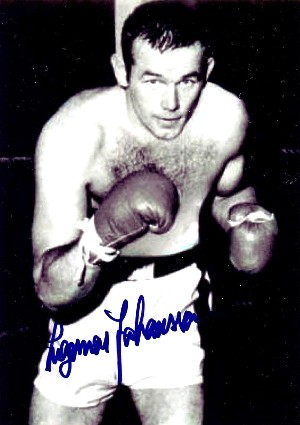
Johansson's route to the heavyweight final was uneven. According to the Olympedia results record, he advanced past Luis Sosa by walkover, then won decisions over Tomislav Krizmanić in the quarter-finals and Ilkka Koski in the semi-finals. Waiting for him was Ed Sanders of the United States, who had reached the final on the strength of three knockouts.
What followed is described consistently in the record books, even if the motive is still debated. Johansson stayed on the move, kept his distance and, when Sanders closed in, held on. Boxing News recounted that he worked the edges of the ring through the first two rounds without seriously trying to land anything. The referee warned him and, in the closing minute of the second round, disqualified him for passivity, effectively for not trying.
The penalty went further than the loss. Johansson's silver medal was withheld, and the second step of the podium was left empty. He insisted afterwards that he had not been running from Sanders but trying to tire him out; according to Wikipedia's account he also pointed to a training camp of only ten days, sparring with novices, and a coach's instruction to let Sanders lead. Boxing News, for its part, mentions a common theory that he was saving himself for a late rally that never arrived. Whatever the reason, the medal stayed out of his hands for three decades. Only in 1982 did the International Olympic Committee reverse its decision and award him the silver.
Rebuilding Under Edwin Ahlquist
Johansson turned professional under the guidance of the Swedish publisher and promoter Edwin Ahlquist, and he set about repairing his reputation one fight at a time. He won his first 21 professional bouts. Along the way he took the Scandinavian heavyweight title from the Dane Erik Jensen, though he broke his right hand in the process, and military service plus the injury kept him out of the ring until late 1954.
The breakthrough came in Milan on September 30, 1956, when he stopped Italy's Franco Cavicchi in the 13th round to become European heavyweight champion. He defended the title twice against British opposition: Henry Cooper lasted into the fifth round on May 19, 1957, and Joe Erskine was stopped in the 13th on February 21, 1958.
The Right Hand They Named After Thor
By then the weapon that defined him had a reputation of its own. Johansson's right hand was nicknamed the "Hammer of Thor" and "Ingo's Bingo," and he himself liked to call it "toonder and lightning," a phrase usually repeated in its accented form. The "Thunder of Thor" label sometimes used today is a variation on the same theme; the contemporary nicknames recorded in the sources are the hammer and the bingo. The Ring magazine later placed him 99th on its 2003 list of the 100 greatest punchers of all time.
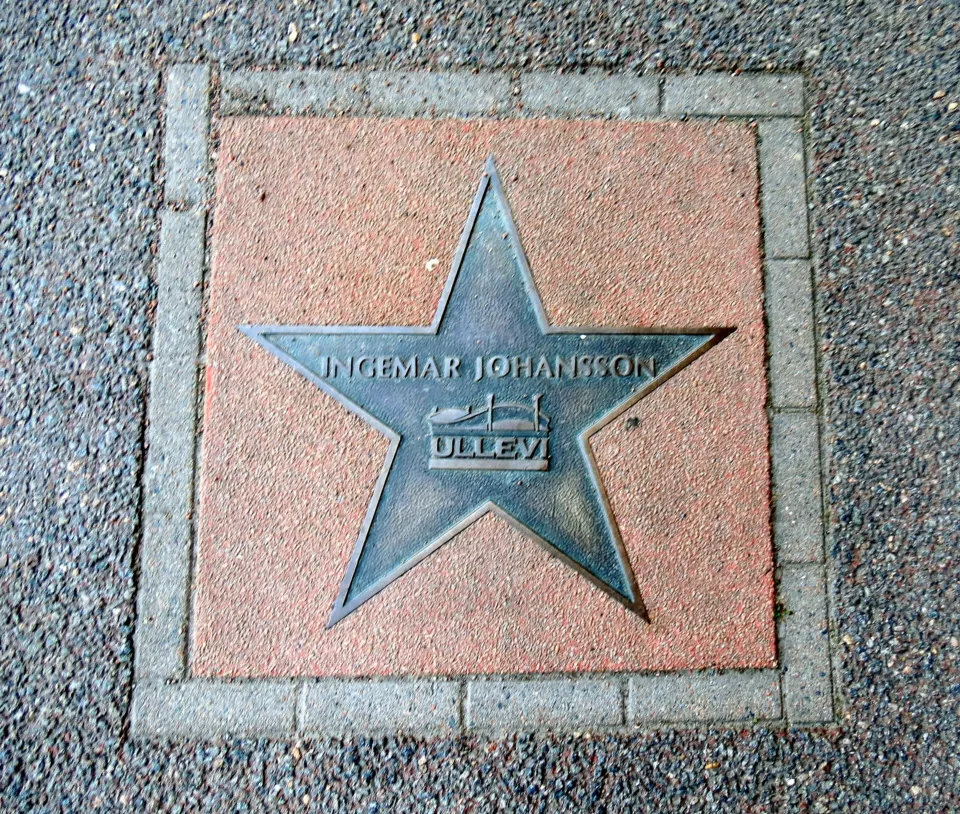
The punch did its most persuasive work at Ullevi stadium in Gothenburg on September 14, 1958. Eddie Machen, the leading American contender, came to Sweden and was dropped three times before the fight was stopped at 2:16 of the first round, in front of a crowd of 53,615. The result made Johansson the obvious challenger for the heavyweight champion, Floyd Patterson.
Yankee Stadium, June 26, 1959
Few in New York gave the Swede much chance; he went into the fight at Yankee Stadium as a 5-1 underdog. The first two rounds gave little away. Then, in the third, Johansson's right hand landed, and Patterson went down seven times before referee Ruby Goldstein stopped the fight at 2:03 of the round.
Johansson was the new heavyweight champion of the world, and, as the AP noted, only the fifth man born outside the United States to hold the title. One New York headline captured the moment in three words: "Ingo – It's Bingo." Back home he arrived by helicopter at Gothenburg's main football stadium, where about 20,000 people were waiting. At year's end he collected the Hickok Belt, the AP's Male Athlete of the Year award and Sports Illustrated's Sportsman of the Year.
Patterson's Revenge: 1960 and 1961
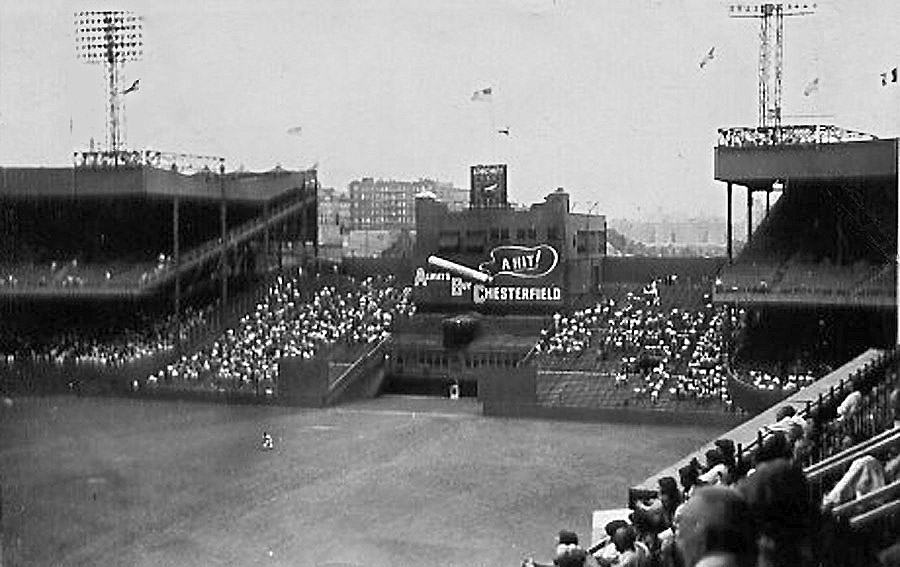
The rematch took place at the Polo Grounds in New York on June 20, 1960. This time Patterson was the one who landed the decisive blow, a leaping left hook in the fifth round that knocked Johansson out cold. Accounts say he lay on the canvas for about five minutes and was still dazed a quarter of an hour later.
The third fight, at the Miami Beach Exhibition Hall on March 13, 1961, was wilder. Johansson put Patterson down twice, but he was in poor condition (A.J. Liebling, writing in The New Yorker, described a diet heavy on desserts in the build-up), and Patterson stopped him in the sixth round. In between, Johansson had found time for Hollywood, appearing as a marine in the 1960 Korean War film All the Young Men alongside Alan Ladd and Sidney Poitier.
Back to Europe and an Early Exit
Johansson returned to the European stage and regained the continental title on June 17, 1962, knocking out Dick Richardson in the eighth round. His final fight came on April 21, 1963, against Brian London, a 12-round points win in a non-title bout. Photographs in the Stockholm press showed him unsteady on the ropes at the end, under a headline telling him to wake up because he had won. Not long afterwards he gave up his European title by letter and retired at 30, with a professional record of 26 wins, 17 by knockout, and 2 losses, both to Patterson.
Businessman, Marathoner and Friend
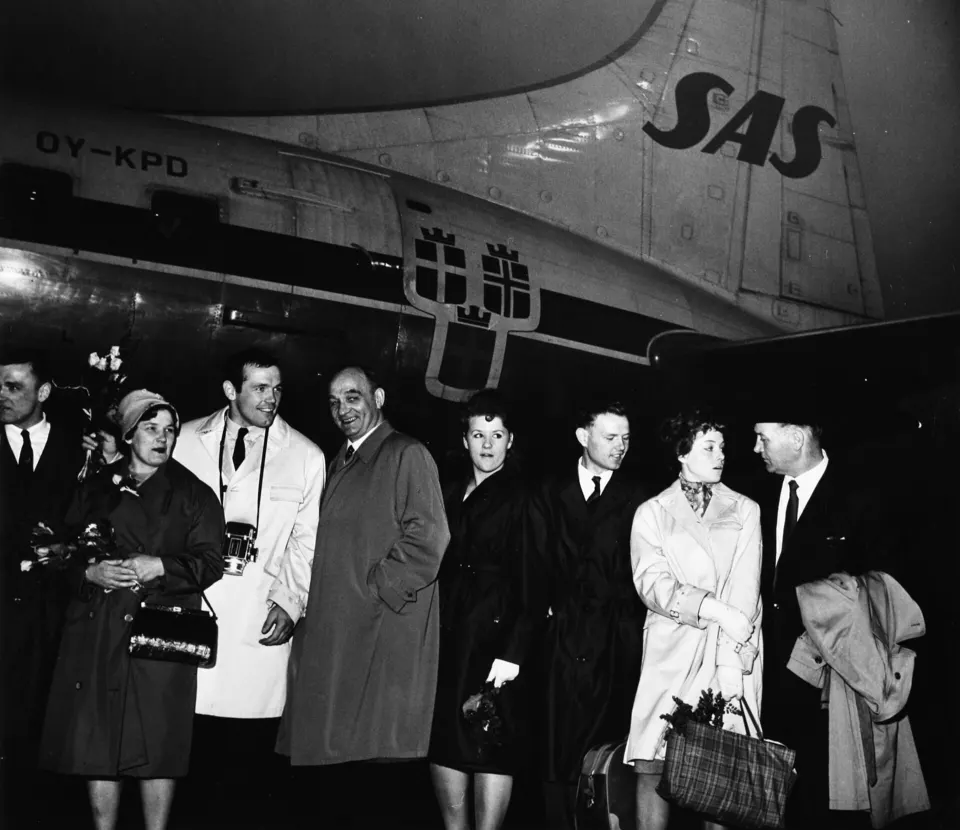
Life after boxing was busy. Johansson co-promoted fight cards with Sonny Liston in 1966 and 1967, owned fishing boats and a bar, and later ran a hotel in Pompano Beach, Florida. He took up distance running, finishing the New York City and Boston marathons and completing the Stockholm Marathon in 1985. In the 1990s he had interests in sportswear and a light lager sold under the name "Hammer."
The rivalry with Patterson turned into a lasting friendship, and the two men visited each other regularly for years. In 2000 Johansson was voted Sweden's third-greatest athlete of the 20th century, behind Björn Borg and Ingemar Stenmark, and in 2002 he was inducted into the International Boxing Hall of Fame in Canastota, New York, though he was too ill to attend the ceremony. One of his Swedish friends, Stig Caldeborn, told the AP that the title win was "the biggest feat ever in Swedish sporting history."
The Final Years in Kungsbacka
From the mid-1990s Johansson lived with Alzheimer's disease and dementia, and in his last years he was cared for in a nursing home in Kungsbacka on the Swedish west coast. He had recently returned there after a hospital stay for pneumonia when he died late on January 30, 2009, at the age of 76. At his death he was the oldest living former heavyweight champion. The Olympic reject from Helsinki had become, for one summer night in the Bronx and long after it, one of the most celebrated athletes Sweden has produced.
Sources
- Ingemar Johansson, Wikipedia, accessed October 2026
- Boxing at the 1952 Summer Olympics, Heavyweight, Olympedia, accessed October 2026
- Sweden in the Olympics, Boxing News, July 5, 2018
- Former heavyweight champion Ingemar Johansson dies at 76, Associated Press (via The Herald, Everett), January 30-31, 2009


