
De La Hoya vs Trinidad in 1999 Was the Fight of the Millennium Decided in Three Rounds
Oscar De La Hoya was ahead on two of three scorecards after nine rounds at Mandalay Bay, then backed off, and Félix Trinidad took the WBC and IBF welterweight titles by majority decision.

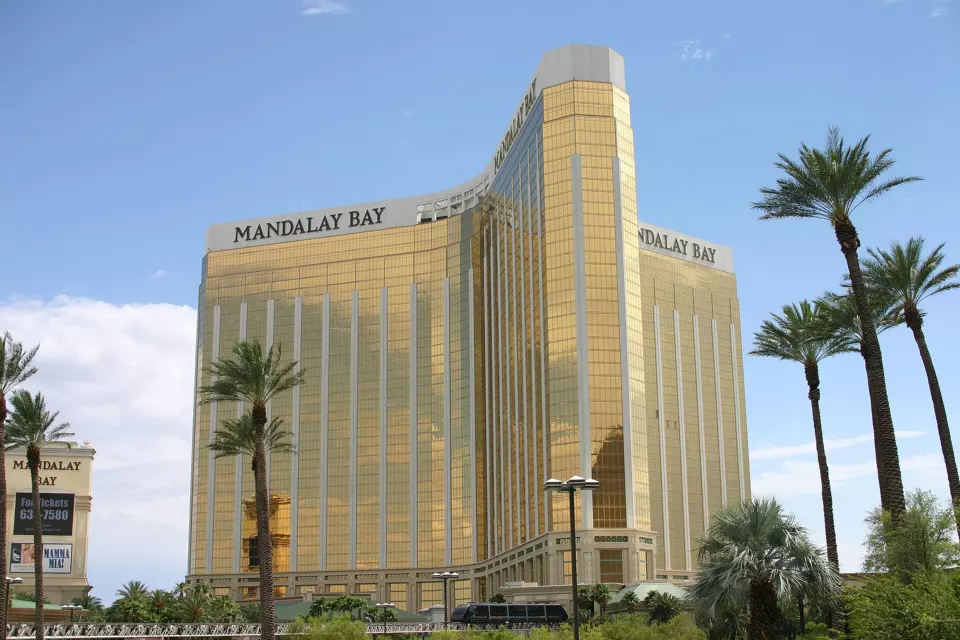
On 18 September 1999, two unbeaten welterweight champions met at the Mandalay Bay Events Center in Las Vegas in a fight sold as "The Fight of the Millennium." Oscar De La Hoya built a lead with his jab and footwork, then spent the last three rounds moving away from Félix Trinidad. Two judges gave the closing rounds to the Puerto Rican, and that was enough for a majority decision that is still argued over.
Two Unbeaten Champions at 147 Pounds
In 1999 the welterweight division was home to the best fighters in the sport. Oscar De La Hoya came in as WBC champion with a 31-0 record and 25 knockouts. In April of that year The Ring had ranked him the best fighter in the world, pound for pound. Félix "Tito" Trinidad of Cupey Alto, Puerto Rico, was the unbeaten IBF champion at 35-0 with 30 knockouts. ESPN's twentieth-anniversary retrospective notes that the matchup drew comparisons with the Sugar Ray Leonard and Thomas Hearns rivalry.
Bob Arum's Top Rank promoted De La Hoya and Don King promoted Trinidad, and the event was sold on HBO pay-per-view. Both men weighed in at exactly 147 pounds, the division limit. The figures were huge for a fight below heavyweight. ESPN put De La Hoya's pay at no less than $21 million, while the Associated Press reported a $15 million guarantee. Trinidad was paid $8.5 million. ESPN reported a sellout of 11,610 at Mandalay Bay, though one wire report also printed a figure of 12,500. Leonard and Hearns sat at ringside as commentators, and Mike Tyson and Marvelous Marvin Hagler were in the crowd.
The Jab Takes Control in the Early Rounds
The fight began late on the East Coast, a little after midnight Eastern time. Mitch Halpern was the referee. De La Hoya kept the distance long, flicking his left hand into Trinidad's face and leaving before the return shot arrived. ESPN.com's live round-by-round report gave him the first, third, fourth, fifth and sixth rounds, and counted 48 jabs landed by De La Hoya against 19 for Trinidad through the opening five. For long stretches Trinidad, the bigger puncher on paper, could not land his right hand cleanly.
Trinidad was not shut out. He took the second round on ESPN's card and kept coming forward. In the middle rounds De La Hoya's left eye began to swell, and ESPN noted the swelling from the sixth round to the eleventh. In the seventh Trinidad was cut at the edge of his left eye. Through these exchanges the sold-out crowd swung between chants of "Tito" and "Oscar," and then grew restless because nobody had gone down.
Ahead After Nine, and a Decision to Cruise
Through nine rounds the official cards show De La Hoya in front, though by less than the action seemed to suggest. The three judges had him at 87-84, 86-85 and 86-86, so one card was level. The ninth was again his on ESPN's live account. On the official scoring, then, he was a round or two up with nine minutes left against an opponent who was still unhurt.
Then he changed course. Before the eleventh his corner told him to box the next two rounds, according to Eric Raskin's 2014 ESPN revisit of the fight. De La Hoya stopped trading and circled the ring, jabbing lightly and backing out of range. The arena booed the backpedaling. Years later he admitted to Raskin that he had been tired and believed the result was settled: "I thought I had the fight in the bag after nine rounds, so I'm going to cruise the last three rounds."
Trinidad's Last Three Rounds
Trinidad went after him. ESPN's live report scored rounds ten, eleven and twelve for the Puerto Rican, who kept stepping in and throwing his right hand while De La Hoya moved away. The Associated Press called a sequence late in the tenth the best exchange of the night. In the twelfth, about 30 seconds in, De La Hoya stumbled. The punch counts for the closing stretch tell the story: ESPN's statistics team found that Trinidad landed 64 punches to De La Hoya's 33 over those last three rounds. The same analysis notes that De La Hoya still threw more punches per round after the ninth. He was busy, but most of his output was light and on the move, while Trinidad was the one landing.
Trinidad said afterwards that his corner had told him to keep attacking. "I put more pressure on. I knew it was close," he said, as quoted by the AP.
The Scorecards: Two for Trinidad, One Even
Glen Hamada of Tacoma, Washington, scored the fight 114-114. Jerry Roth of Nevada had Trinidad ahead 115-113, and the Belgian judge Bob Logist, whose surname also appears as Logiste or Logish in contemporary reports, scored it 115-114 for Trinidad. That made it a majority decision. Trinidad was 36-0 and held both belts, and De La Hoya had lost for the first time in 32 professional fights. One ESPN report from that night printed a different set of numbers (114-114, 114-113 and 115-113), but the scores above are the ones given by the AP, by ESPN's main fight report and by later retrospectives.
CompuBox's totals made the result look odd. De La Hoya landed 263 of 648 punches and Trinidad 166 of 462. Much of the gap came from the jab, where De La Hoya landed 143 to Trinidad's 42. On power punches the two were almost even, with Trinidad landing 124 and De La Hoya 120. The unofficial cards kept by the Associated Press and the Los Angeles Times both had De La Hoya winning narrowly.
"Some People Didn't Appreciate My Boxing Lesson"
De La Hoya said he had won. "I was protecting the rounds I had in the bag," he told reporters, according to ESPN.com, and went on to say that some people "didn't appreciate my boxing lesson." He also said he planned a vacation to rethink everything, and promised that "next time, I will be a brawler." Trinidad said publicly that De La Hoya deserved a rematch and that it would be discussed with Don King.
Not many people agreed with De La Hoya. Raskin wrote in 2014 that he got little sympathy after dancing away from danger for three rounds, and in Puerto Rico the decision was simply celebrated. Looking back years later, De La Hoya conceded that in those final rounds he ran rather than boxed, and that it cost him the fight.
Record Money and a Rematch That Never Came
Whatever people thought of the ending, the business numbers were enormous. The fight drew 1.4 million pay-per-view buys, about $70 million, and $12.9 million in gate receipts. That was the record for a non-heavyweight bout until De La Hoya fought Floyd Mayweather Jr. in 2007.
The rematch was never made. With Top Rank and King on opposite sides and the two fighters soon moving up in weight at different times, the controversy was never settled in the ring. Trinidad beat David Reid and Fernando Vargas in 2000 and went on to win titles at 154 and 160 pounds before Bernard Hopkins stopped him in the twelfth round of a middleweight fight. De La Hoya went on to win world titles in six weight classes. Both were inducted into the International Boxing Hall of Fame in 2014, the same class.
Sources
- Oscar De La Hoya vs. Félix Trinidad, Wikipedia, accessed October 2026
- Trinidad vs. De La Hoya round-by-round and fight reports, ESPN.com news services, 18–19 September 1999
- Boxing / De La Hoya vs. Trinidad: Puerto Rican Gets Judges' Decision, Title (AP), The Seattle Times archive, 19 September 1999
- Oscar De La Hoya vs. Felix Trinidad revisited, Eric Raskin, ESPN, 4 June 2014
- 20 years later: Felix Trinidad vs. Oscar De La Hoya, Eduardo Souss, ESPN Stats & Info, 18 September 2019


