
How Sugar Ray Leonard Went From Palmer Park to Olympic Gold and a Win Over Hagler
The life of Sugar Ray Leonard, from a Maryland recreation center and 1976 Olympic gold to wins over Benítez, Durán, Hearns and Hagler, a detached retina, repeated comebacks and life after boxing.

He came out of a recreation center in suburban Maryland, won Olympic gold in Montreal with damaged hands, and spent the next two decades beating the best fighters of his era, retiring, and returning. Sugar Ray Leonard finished with 36 wins in 40 professional fights, and his decision over Marvin Hagler is still being argued about.
From Wilmington to the Palmer Park Recreation Center
Ray Charles Leonard was born on May 17, 1956, in Wilmington, North Carolina, the fifth of seven children. His mother, Gertha, worked as a nurse; his father, Cicero, managed a supermarket on the night shift. The family moved north to Washington, D.C., when Ray was about three, and around the age of ten he settled with them in Palmer Park, a small community in Prince George's County, Maryland.
Boxing found him at the local recreation center, where his older brothers pushed him to go. He started at roughly thirteen and developed quickly. Accounts of his famous ring name differ: Team USA's Hall of Fame profile credits a trainer who called his work "as sweet as sugar," while Biography.com says Leonard took the name in homage to Sugar Ray Robinson, whose fights he studied closely. Either way, the label stuck long before he had earned it professionally.
A Decorated Amateur and the 1976 Montreal Gold
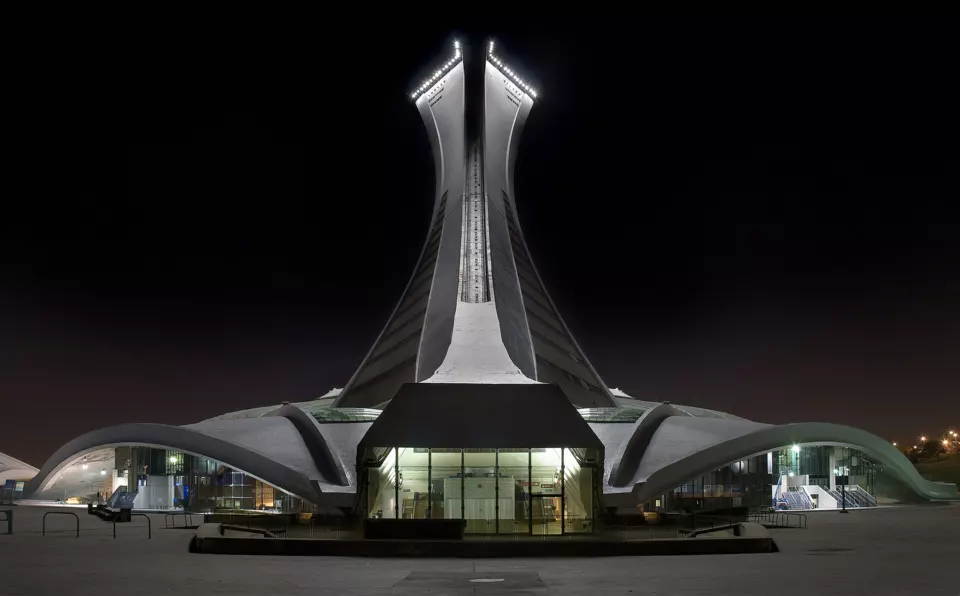
Leonard won the National Golden Gloves in 1973 and the national AAU title in 1974. By the time his amateur career closed, Wikipedia's tally put his record at 165 wins and 5 losses, with 75 stoppages. His last amateur tournament was the biggest of all: the 1976 Olympic Games in Montreal, where he boxed at light welterweight, the 139-pound class.
He went through the Olympic bracket with painful hand injuries, according to both Team USA and Biography.com, and in the final he beat Cuba's Andrés Aldama by a unanimous 5-0 vote of the judges. The gold medal made him one of the faces of a celebrated U.S. boxing team. He had a scholarship to the University of Maryland waiting, but money troubles at home, illness in the family and a shortage of endorsement offers pushed him toward professional boxing instead.
Turning Pro and the Benitez Breakthrough, 1977-1979
Leonard made his professional debut on February 5, 1977, at the Baltimore Civic Center, outpointing Luis Vega over six rounds. With Angelo Dundee, who had trained Muhammad Ali, in his corner, he built his record steadily over the next two and a half years and moved up toward the welterweight elite.
His first world title shot came on November 30, 1979, at Caesars Palace in Las Vegas, against the WBC welterweight champion Wilfred Benítez of Puerto Rico. Benítez was a gifted defensive fighter, and the contest went deep into the championship distance. Leonard finally stopped him at 2:54 of the fifteenth and final round, six seconds short of the scorecards, to become WBC welterweight champion.
Duran in Montreal and the Rematch in New Orleans
Leonard's first defense against a true great took him back to Montreal. On June 20, 1980, at the Olympic Stadium, he met Roberto Durán and chose to stand and trade with the Panamanian rather than box. He lost a unanimous decision on cards of 146-144, 145-144 and 147-147, the first defeat of his professional career.
The rematch came quickly, on November 25, 1980, at the Louisiana Superdome in New Orleans. This time Leonard used his speed and movement, taunting Durán openly by the seventh round, and in the eighth round Durán turned away and quit, ending the bout at 2:44 of the round. Leonard had his WBC title back. The full story of that night, and the words that made it famous, is told in RingTalk's separate No Más feature.
The Showdown With Thomas Hearns, 1981
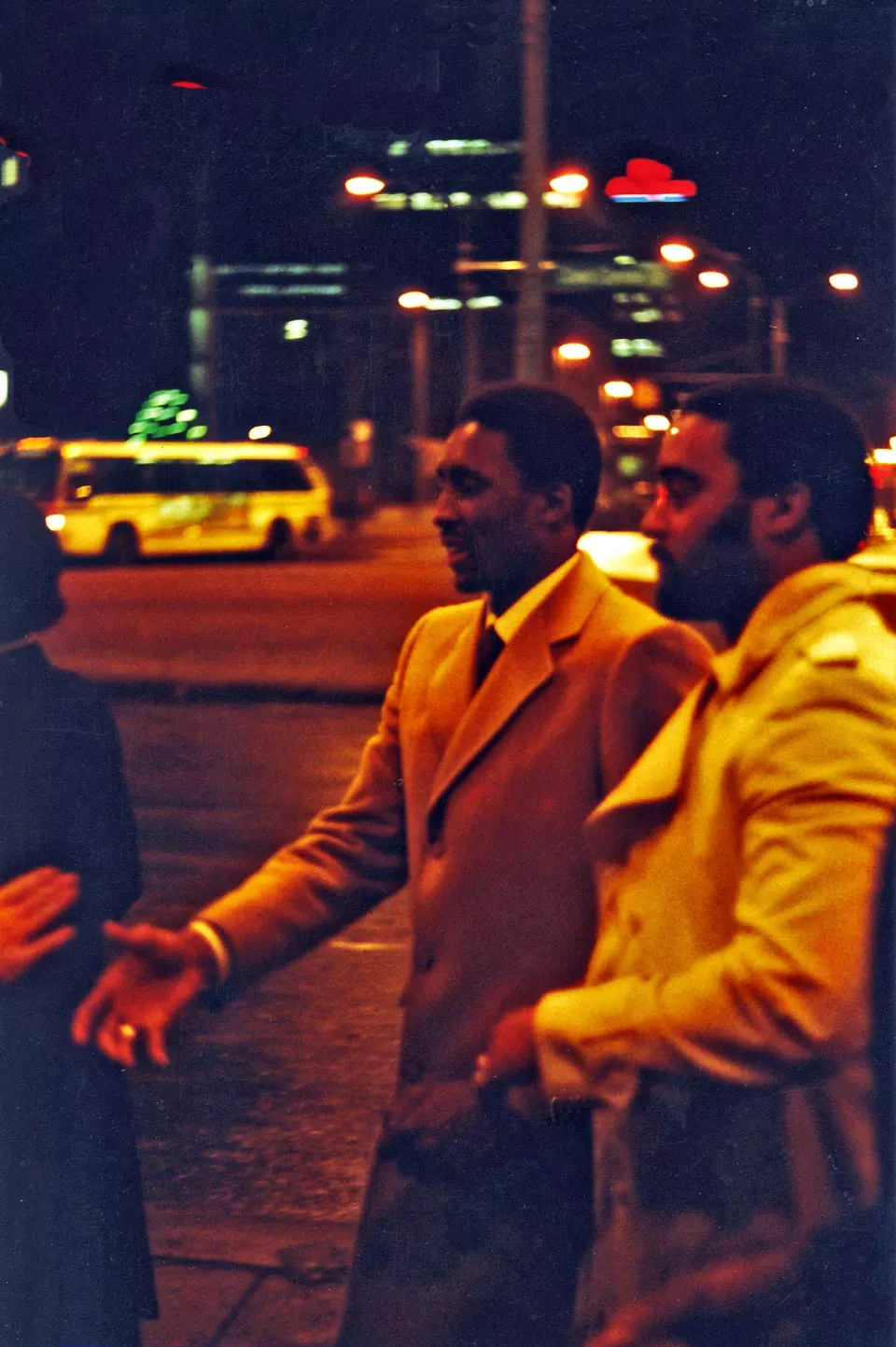
By 1981 the welterweight division held two champions with strong claims to the top spot: Leonard with the WBC belt and Detroit's Thomas Hearns with the WBA title. They met on September 16, 1981, at Caesars Palace in a bout promoted as "The Showdown."
Hearns, with the longer reach, gave Leonard real problems with his jab, and by the fifth round swelling was building under Leonard's left eye. Entering the fourteenth round Leonard was behind on all three official cards, 124-122, 125-122 and 125-121. He then trapped Hearns along the ropes, landed a sustained series of punches, and the referee stopped the fight at 1:45 of the fourteenth. The win unified the WBC and WBA welterweight titles and made Leonard the undisputed figure of the division.
A Detached Retina and the First Retirements
The damage around his eyes turned out to be more serious than swelling. On May 9, 1982, Leonard underwent surgery to repair a detached retina. Six months later, on November 9, 1982, he announced his retirement at an event in Baltimore, at the age of 26.
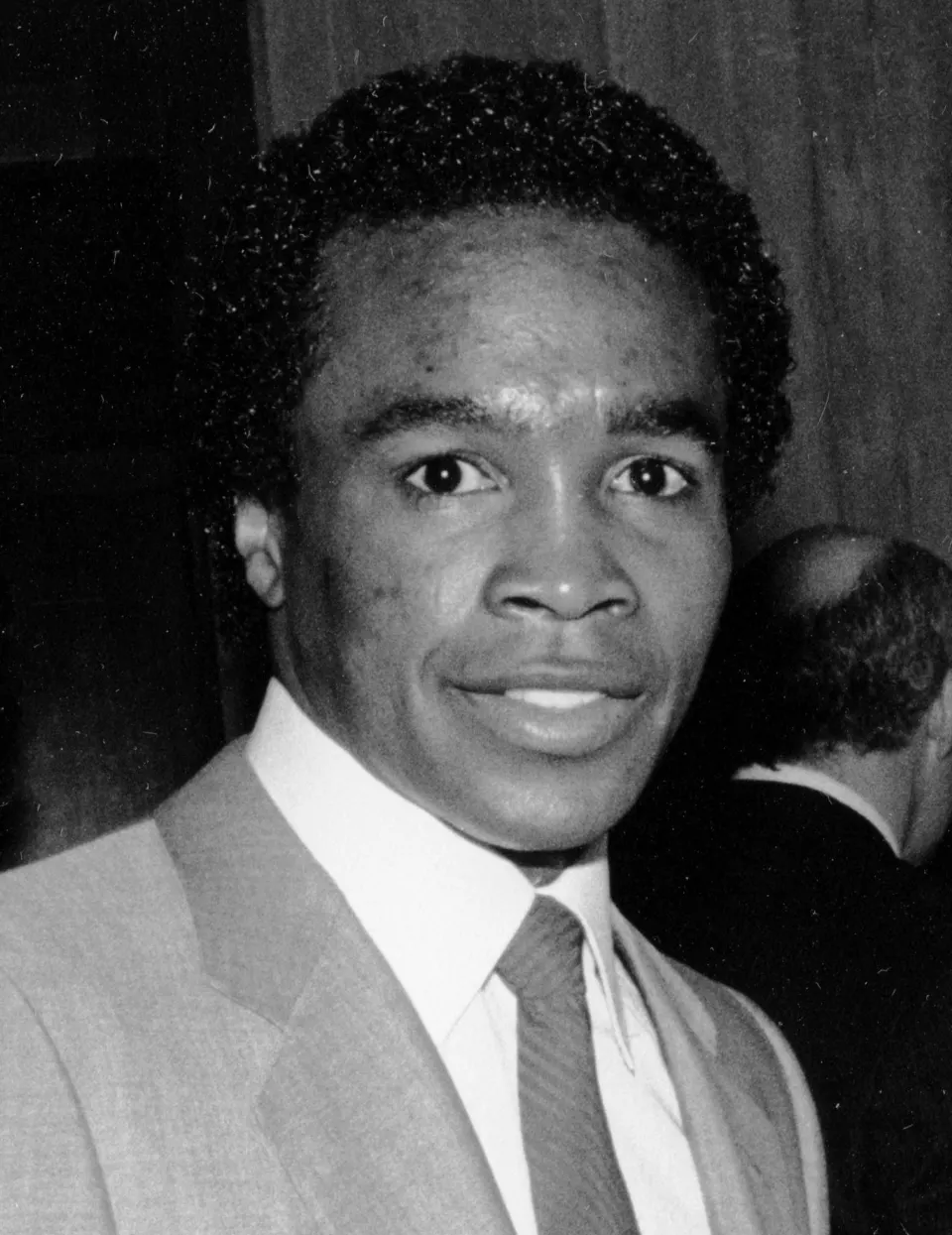
He did not stay away. On May 11, 1984, he returned against Kevin Howard in Worcester, Massachusetts. Howard dropped him in the fourth round, the first knockdown of Leonard's professional career, before Leonard won on a ninth-round stoppage that many considered premature. Afterward he retired again, saying he simply did not have it anymore. Biography.com dates his first retirement to 1984, which reflects this second exit; the original announcement came in 1982.
The Super Fight: Beating Marvin Hagler in 1987
Almost three years later Leonard challenged the middleweight champion Marvin Hagler, who had held the title since September 1980 and was making his thirteenth defense, according to the WBA. Leonard had boxed only once in five years and had to add significant weight to fight at 160 pounds. The WBA reports guaranteed purses of $13 million for Hagler and $11 million for Leonard, before pay-per-view revenue.
The fight took place on April 6, 1987, at Caesars Palace and was scheduled for twelve rounds, with the WBC and The Ring middleweight titles at stake. Leonard used movement, flurries late in rounds and constant changes of angle to steal attention from Hagler's steadier pressure. The judges split: one had Hagler ahead 115-113, one scored it 115-113 for Leonard, and the third gave Leonard a wide 118-110 margin. Leonard won the split decision. Hagler never fought again, and the verdict remains one of the most debated in boxing history.
Five More Fights and a Final Bell in 1997
Leonard kept fighting, with mixed results. On November 7, 1988, he stopped Donny Lalonde in the ninth round at Caesars Palace to win the WBC light heavyweight title and the newly created WBC super middleweight belt. In a rematch with Hearns on June 12, 1989, he was knocked down twice yet escaped with a split draw. Six months later, on December 7, 1989, at The Mirage, he outpointed Durán clearly in their third meeting.
The end came painfully. On February 9, 1991, at Madison Square Garden, the younger Terry Norris dominated him over twelve rounds and won a lopsided decision. Leonard came back once more on March 1, 1997, in Atlantic City and was stopped by Héctor Camacho in the fifth round, the only knockout loss of his career. His final record stood at 36 wins, 3 losses and 1 draw, with 25 wins inside the distance.
Life After the Ring: Admissions, Honors and Advocacy
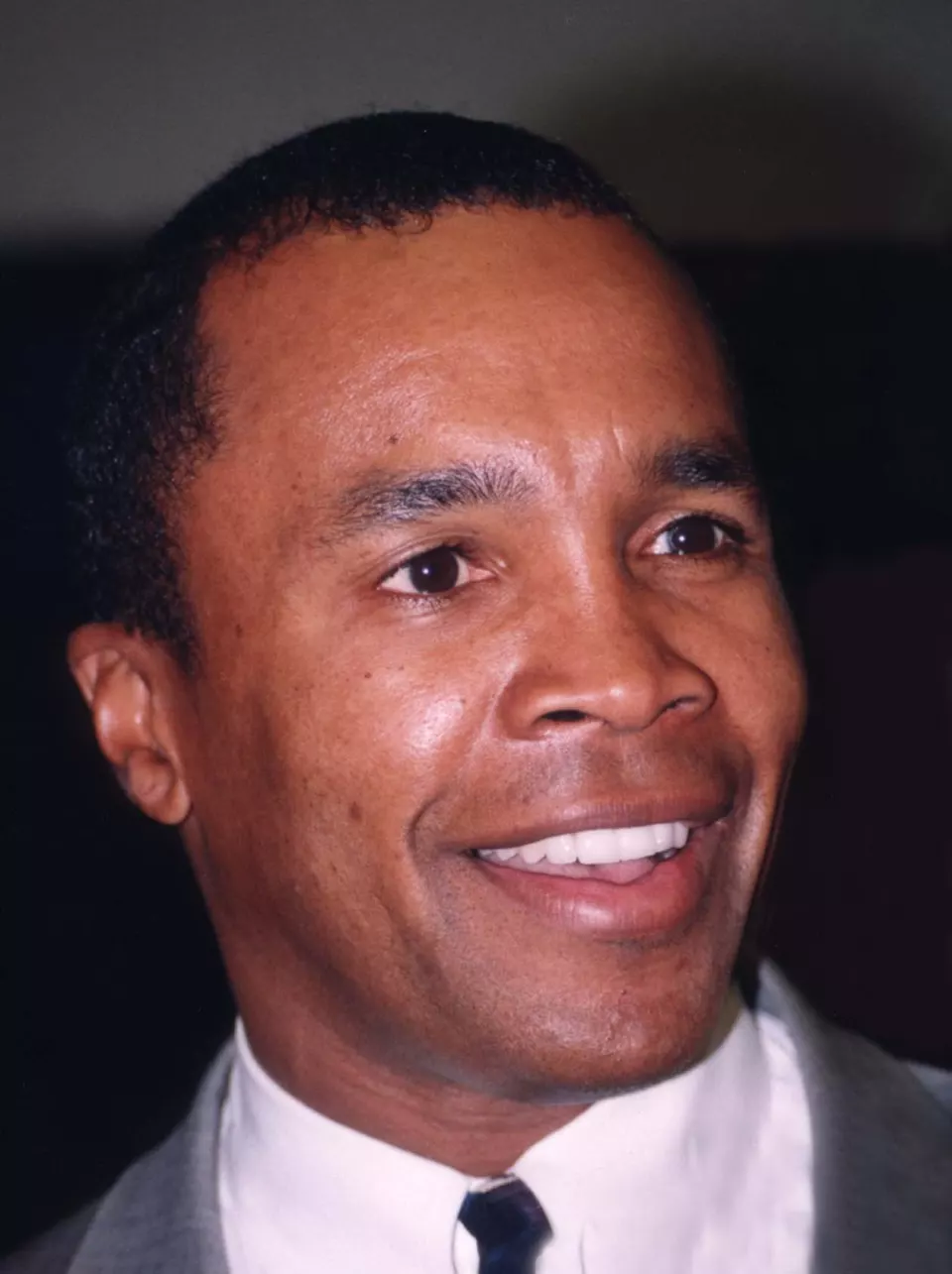
Leonard was inducted into the International Boxing Hall of Fame in 1997, and The Ring later named him the greatest living fighter in a 2016 vote. Away from the ropes he worked as a commentator for networks including ABC, CBS, NBC and HBO, hosted the boxing reality series The Contender, and competed on Dancing with the Stars in 2011.
His private life became public in stages. During divorce proceedings in 1990 he admitted to cocaine use and to physically abusing his first wife; he said he had stopped using the drug in early 1986. In his 2011 memoir, The Big Fight, he revealed that he had been sexually abused as a young amateur by an Olympic boxing coach and by another man who had acted as his benefactor, and he said in a 2011 NPR interview that he had not had a drink since July 2006. In 2009 he and his wife, Bernadette, founded the Sugar Ray Leonard Foundation, which raises money for juvenile diabetes research.
Sources
- Sugar Ray Leonard, Wikipedia, accessed October 2026
- Sugar Ray Leonard, Biography.com, accessed October 2026
- Sugar Ray Leonard, Team USA Hall of Fame, accessed October 2026
- 36 years after Leonard-Hagler, World Boxing Association (wbaboxing.com), April 6, 2023
- Marvin Hagler vs. Sugar Ray Leonard, Wikipedia, accessed October 2026


