
How Thomas Hearns the Hitman Went From Kronk Gym to World Titles in Five Divisions
Born in Tennessee and raised in Detroit, Thomas Hearns became a feared puncher under Emanuel Steward at the Kronk Gym, stopped Pipino Cuevas in 1980 and became the first boxer to win world titles in five weight divisions.

Thomas Hearns was a rangy welterweight who looked too thin to hurt anyone, and he became one of the hardest punchers boxing has seen. Out of Detroit's Kronk Gym and the hands of Emanuel Steward, "The Hitman" took a world title from Pipino Cuevas in 1980. He was also the first man to win world titles in five weight divisions, and he did not have his last fight until 2006, when he was 47.
From Grand Junction, Tennessee to Detroit's West Side
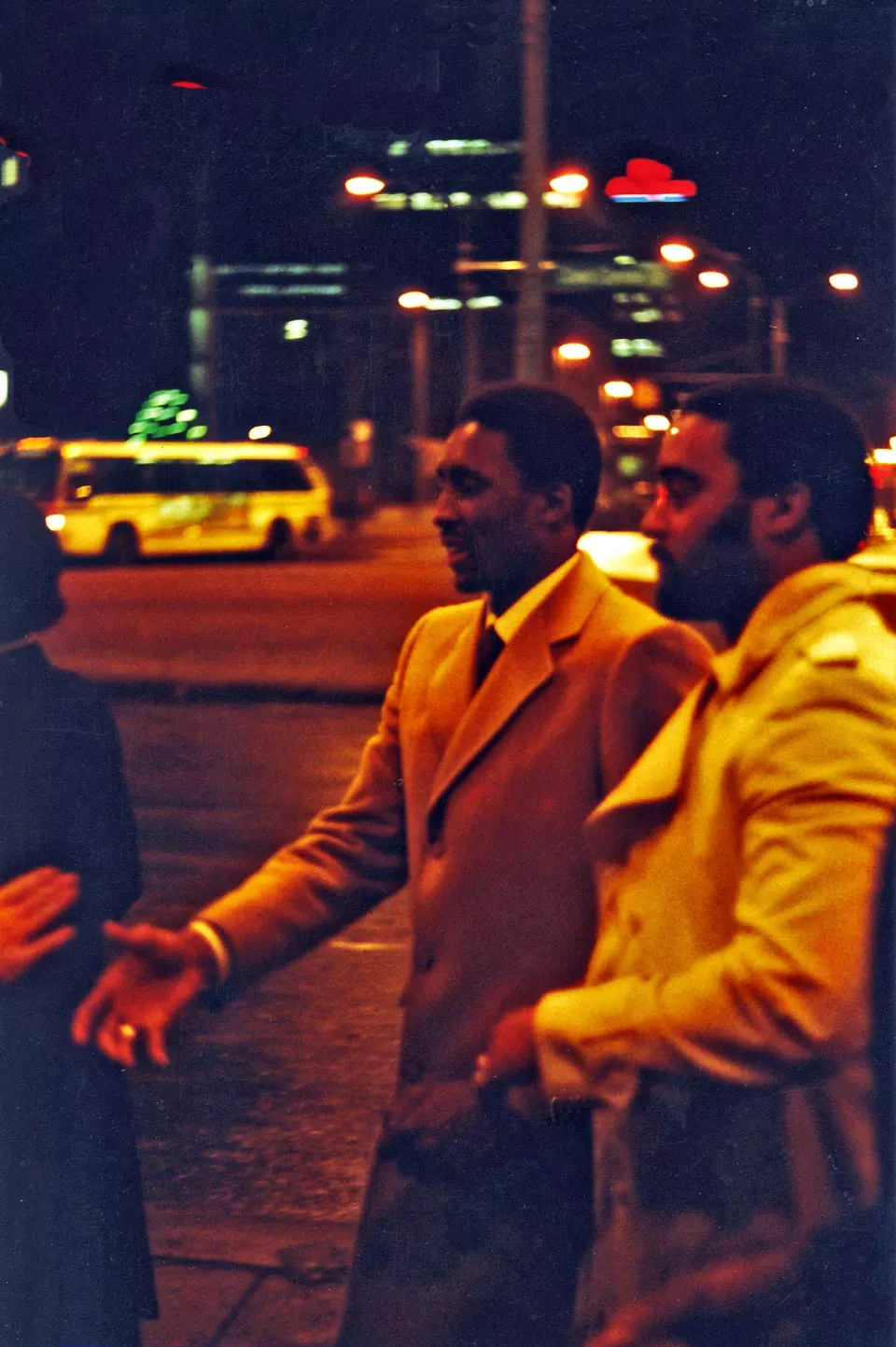
Thomas Hearns was born on October 18, 1958. Popular retellings often say Memphis, but the Detroit Historical Society, the Michigan Sports Hall of Fame and his Wikipedia biography all give Grand Junction, Tennessee. He was the youngest of three children from his mother Lois's first marriage. Her second marriage added six more children. She raised the family in Tennessee at first and then moved everyone north to Detroit when Tommy was five.
He started boxing as a boy in Detroit, and as an amateur he went 155-8. In 1977 he won the national AAU and the National Golden Gloves titles at light welterweight. That same year, at 19, he turned professional.
Emanuel Steward and the Kronk Gym
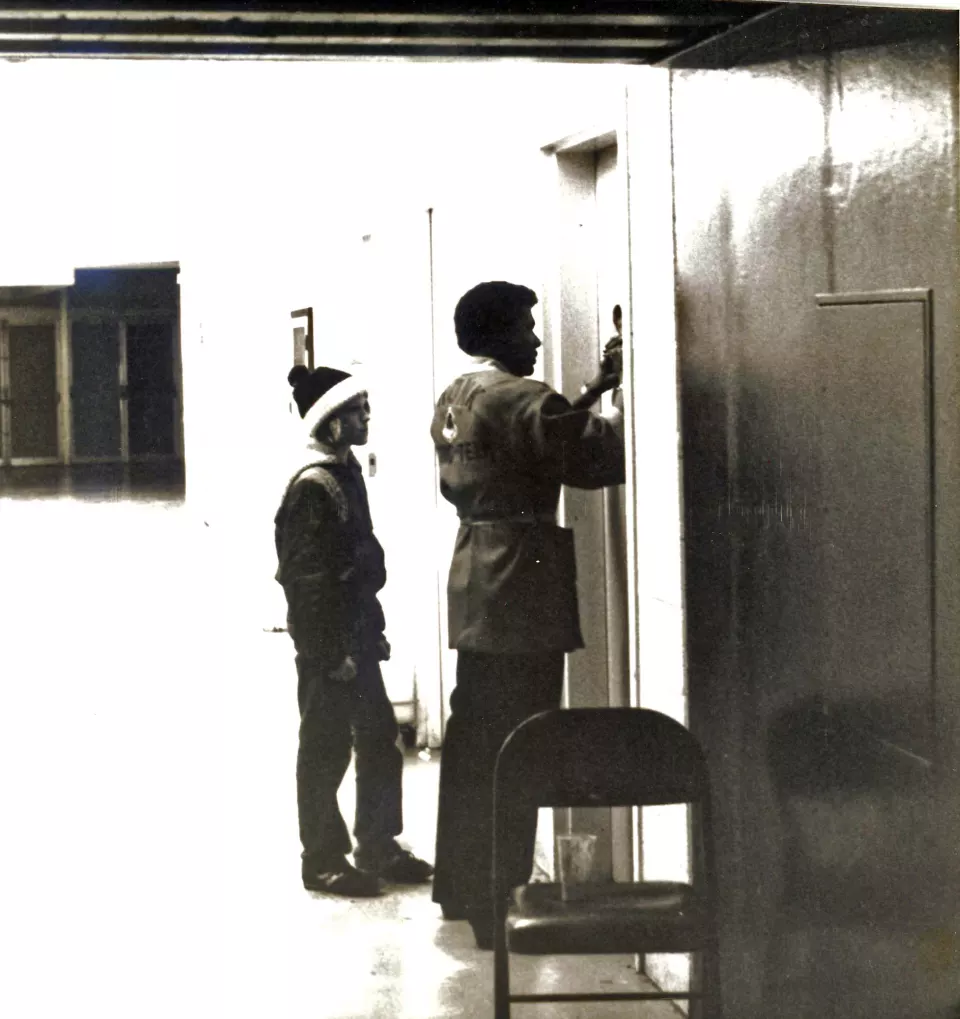
His trainer was Emanuel Steward of the Kronk Gym. Boxing News has described Kronk as an intimidating production line. Fighters learned in hard sparring there, and the sessions were known for it. Hearns was tall and slim, and nothing in his amateur results suggested a big puncher. His Wikipedia biography says Steward turned him from a light-hitting amateur into one of the most dangerous punchers in the history of the sport.
According to The Fight City, the change came from leverage. Hearns stood 6 feet 1 inch, and his 78-inch reach would have suited a heavyweight. Steward showed him how to turn that frame into force, above all with the straight right hand. When Hearns had it down, Detroit crowds began calling him "The Hitman."
His professional debut came on November 25, 1977, at the Detroit Olympia, where he knocked out Jerome Hill in the second round. He then knocked out his first 17 opponents, and by the summer of 1980 he was 28-0. Wikipedia lists 26 of those wins as knockouts.
August 2, 1980: Pipino Cuevas at Joe Louis Arena
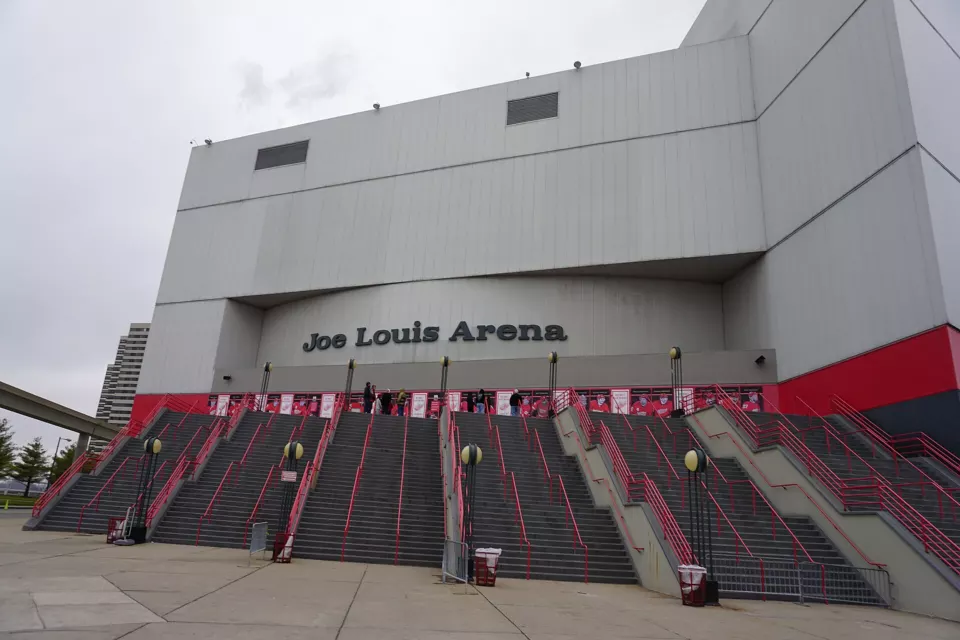
His first world title fight was at home, at Joe Louis Arena in Detroit, against the WBA welterweight champion José "Pipino" Cuevas of Mexico. The fight was billed as "World War II." Cuevas had held the title for four years and had never been knocked down. The sources disagree slightly on his record as champion: The Fight City says he made 11 defenses and won 10 by knockout, while Wikipedia's page on the fight gives 11 knockouts in 12 defenses since 1976.
In the first round Hearns kept Cuevas outside with his reach and his hand speed, so the champion could not get close. Early in the second, a right hand to the jaw buckled Cuevas's legs. Another right dropped him face first. He got up, but he was clearly hurt and unsteady. His manager, Lupe Sánchez, climbed into the ring to stop it, and referee Stanley Christodoulou waved the fight off at 2:39 of the second round. Hearns was 21 and the new WBA welterweight champion. The Ring and the Boxing Writers Association of America both named him Fighter of the Year for 1980.
Leonard, Benítez and Durán
The title set up a unification fight with WBC champion Sugar Ray Leonard on September 16, 1981, at Caesars Palace. Hearns was ahead on the scorecards but was stopped in the 14th round, the first loss of his career. RingTalk tells that fight in full in a separate article.
He moved up to light middleweight. On December 3, 1982, at the Louisiana Superdome in New Orleans, he won a 15-round majority decision over Wilfred Benítez and took the WBC title. On June 15, 1984, at Caesars Palace, he defended it against Roberto Durán and stopped him at 1:05 of the second round. Boxing News calls it a destruction. The Ring and the BWAA named him Fighter of the Year again for 1984.
The Hagler Fight and the Middleweight Question
On April 15, 1985, he moved up again to challenge undisputed middleweight champion Marvin Hagler at Caesars Palace. The fight lasted just over eight minutes, and Hagler won by third-round stoppage. It is covered in detail in RingTalk's "The War" feature. The defeat did not end Hearns's career.
Five Divisions, 1987 to 1991
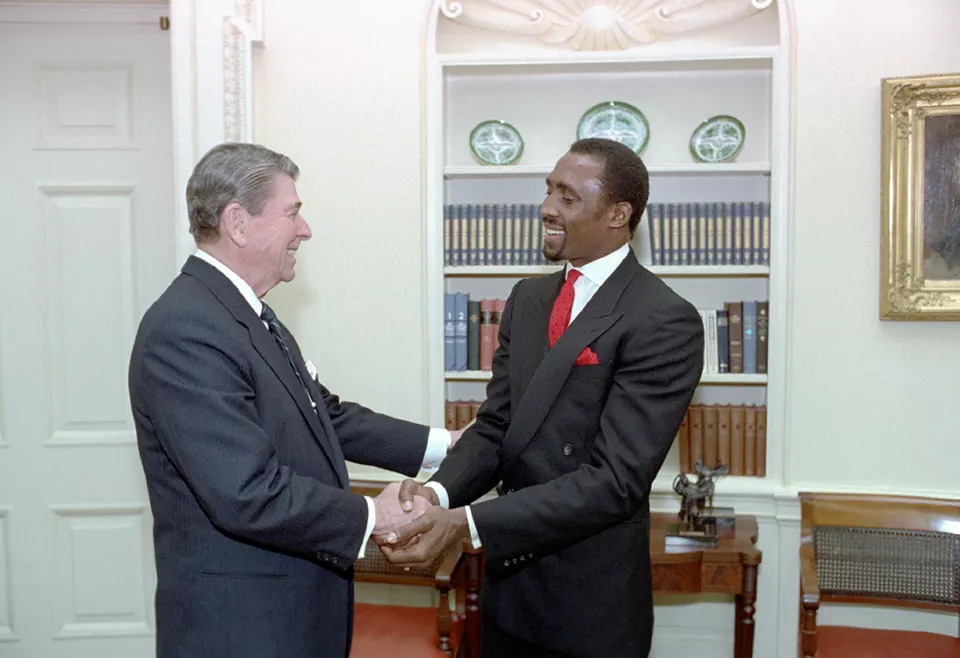
On March 7, 1987, at Cobo Hall in Detroit, Hearns stopped Dennis Andries in the 10th round and won the WBC light heavyweight title. On October 29 of the same year, at the Las Vegas Hilton, he knocked out Juan Roldán in the fourth round for the vacant WBC middleweight title.
The first loss after that came quickly. On June 6, 1988, Iran Barkley stopped him in the third round and took the WBC middleweight title. Five months later, on November 4, 1988, he won a majority decision over James Kinchen for the new WBO super middleweight title. It was his fifth division, and no boxer had won world titles in five before.
He held that belt in a rematch with Leonard on June 12, 1989, at Caesars Palace, and the 12 rounds ended in a draw. Boxing News quotes him afterward saying he had answered the questions about his chin and was proud of the draw. In April 1990 he kept the WBO belt with a unanimous decision over Michael Olajide in Atlantic City. On June 3, 1991, at 32, he outpointed Virgil Hill and won the WBA light heavyweight title. That was his second light heavyweight title and his sixth world title overall. He lost it to Barkley on a split decision on March 20, 1992.
Cruiserweight and the Long Goodbye
Hearns kept fighting well into his forties, and he did it at cruiserweight. After a first-round knockout of Jay Snyder in Detroit in November 1998, he travelled to Manchester, England. There, on April 10, 1999, he beat Nate Miller on a unanimous decision for the vacant IBO cruiserweight title. On April 8, 2000, he defended it at Joe Louis Arena against Uriah Grant and lost the title when he retired on his stool. The accounts differ on the length: Boxing News says the fight lasted two rounds, while Wikipedia's record lists a retirement at the end of the third.
Five years later he came back. On July 30, 2005, at Cobo Arena, he stopped John Long in the ninth round. On February 4, 2006, at the Palace of Auburn Hills, he stopped Shannon Landberg in the 10th and final round. Landberg was the last opponent of his career. His son Ronald Hearns, also a professional, fought on the undercards of those late cards.
The Record and the Legacy
Hearns finished with 61 wins, 5 losses and 1 draw, with 48 wins by knockout. He was inducted into the Michigan Sports Hall of Fame in 1997 and into the International Boxing Hall of Fame in 2012. The Michigan hall notes that BoxRec ranks him 18th among the greatest boxers of all time. Outside the ring, his Wikipedia biography records that he has served as a reserve officer with the Detroit Police Department. He has also stayed involved in the city's boxing scene through his family's promotional company.
Two of his best-known nights ended in defeat, against Leonard in 1981 and against Hagler in 1985. Most of the rest of his career came in the years after those losses. The thin welterweight from Kronk went on to win titles at 147, 154, 160, 168 and 175 pounds.
Sources
- Thomas Hearns, Wikipedia, accessed October 2026
- Pipino Cuevas vs. Thomas Hearns, Wikipedia, accessed October 2026
- Hearns, Thomas, Encyclopedia of Detroit, Detroit Historical Society, accessed October 2026
- Thomas (Tommy) Hearns, Michigan Sports Hall of Fame, accessed October 2026
- On this day: Thomas Hearns, the original Hit Man, was born in 1958, Boxing News, accessed October 2026
- August 2, 1980: Hearns vs Cuevas, The Fight City, accessed October 2026


