
How Marvelous Marvin Hagler Went From Newark's Riots to Middleweight King
The life of Marvin Hagler, the Brockton southpaw who waited years for a title shot, ruled the middleweights from 1980 to 1987 and left boxing after a disputed loss to Sugar Ray Leonard.

He spent more than six years as a professional before anyone let him fight for a world title, then held the middleweight championship from 1980 until a split decision in 1987 that people still argue about. Marvelous Marvin Hagler, the shaven-headed southpaw from Brockton, finished 62-3-2 with 52 knockouts, walked away for good, and rebuilt his life in Italy.
From Newark's Riots to a Brockton Gym
Marvin Nathaniel Hagler was born on May 23, 1954, in Newark, New Jersey, the first child of Ida Mae Hagler and Robert Sims. He grew up in the city's tenements, and in the summer of 1967 those streets burned. The Newark riots left 26 people dead and caused an estimated $11 million in property damage, and the building the Hagler family lived in was among the casualties. His mother decided to leave, and the family resettled in Brockton, Massachusetts, a working city south of Boston that would later embrace its nickname, the City of Champions.
Brockton was not gentle with him at first. According to WBUR's obituary, the teenager went looking for a gym after taking a beating on the street. The gym he found belonged to two local brothers, Goody and Pat Petronelli, who were born and raised in Brockton. They would train and manage him for the rest of his career. In the early days they also gave him work in their construction business, paying him three dollars an hour, and WBUR recounts that he borrowed fifty cents a day to buy lunch.
An Amateur Champion Turns Professional
Under the Petronellis, Hagler became one of the best amateurs in the country. In May 1973 he won the national AAU title at 165 pounds, beating Terry Dobbs in the final, and was named the tournament's outstanding boxer. Wikipedia puts his amateur record at 55-1. Within days he was a professional: on May 18, 1973, at the Brockton High School gymnasium, he stopped Terry Ryan in the second round.
The wins came easily. Encyclopedia.com counts his first 14 bouts as victories, nearly all inside the distance, and in August 1974 he outpointed the former Olympic champion Sugar Ray Seales over ten rounds. That success created its own problem. A left-hander who hit hard and rarely lost was the kind of opponent established middleweights preferred to avoid, and the Petronellis struggled to find fighters willing to take the risk.
Philadelphia Lessons and the Long Wait
The education Hagler needed came in Philadelphia, then a city of hard gyms and harder local favorites. On January 13, 1976, he lost a decision there to Bobby "Boogaloo" Watts. Two fights later, in March 1976, he dropped another decision in Philadelphia, this time to Willie "The Worm" Monroe. Neither defeat stood. Hagler beat Monroe twice in 1977, knocking him out in the 12th round of their rematch and in the second round of the third meeting, and he stopped Watts in two rounds in 1980.
Even so, the title shot kept slipping out of reach. By the time it arrived, Hagler had fought dozens of times; Encyclopedia.com gives his record as 46-2-1 when he finally stepped in with champion Vito Antuofermo on November 30, 1979. Hagler was favored and many observers believed he had done enough, but after 15 rounds the result was a draw. Antuofermo kept the WBA and WBC belts, and Hagler went home without them.
Wembley, 1980: Champion Amid a Riot
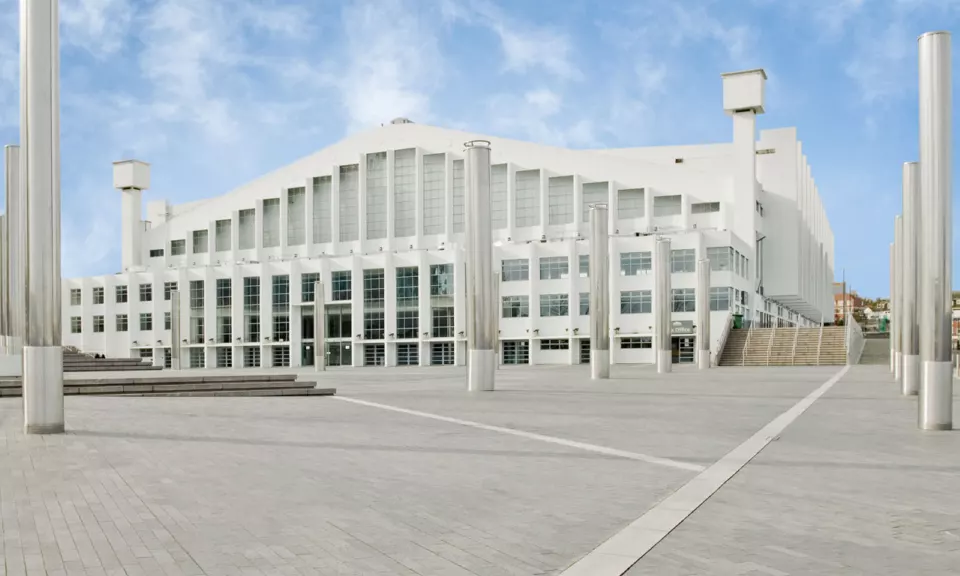
His second chance came ten months later and an ocean away. On September 27, 1980, Hagler faced the English champion Alan Minter at Wembley Arena in London. Hagler opened cuts around Minter's left eye in the first round, and by the third round the Englishman was bleeding so badly that the referee stopped the fight. Hagler was world middleweight champion. He had little chance to enjoy the moment, because the stoppage was followed by a riot among spectators in the arena.
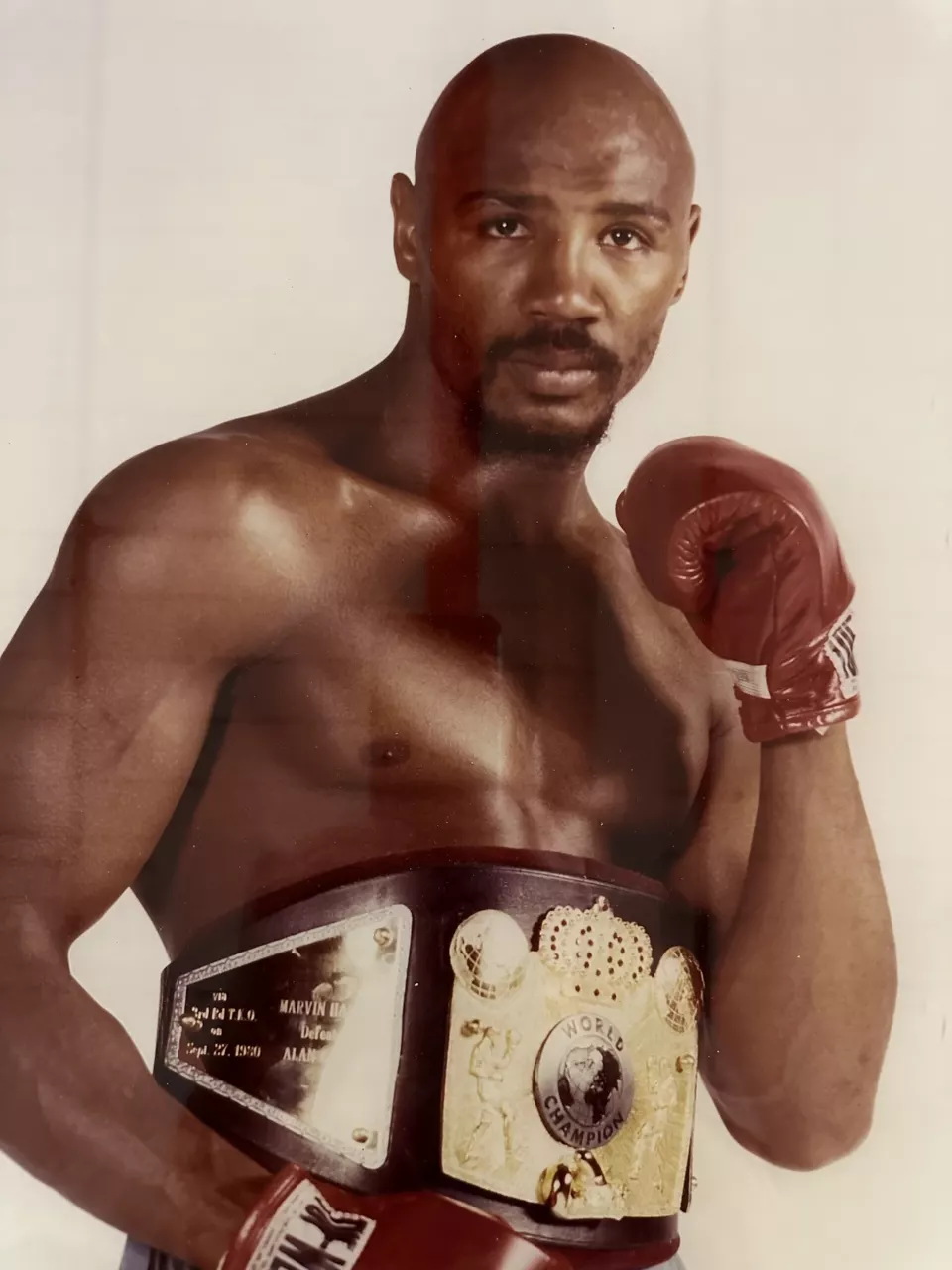
The reign that followed was one of the most dominant in the division's history. Wikipedia counts twelve successful title defenses, eleven of them by knockout, and notes that his 78 percent knockout rate is the highest of any undisputed middleweight champion. Along the way he grew tired of ring announcers who introduced him without his nickname, and in 1982 he legally changed his name to Marvelous Marvin Hagler.
Durán, Hearns and Mugabi
The defenses that defined him came against the biggest names of the era. On November 10, 1983, he met Roberto Durán, the former lightweight and welterweight king, and was taken the full 15 rounds for the first time as champion. Hagler won a unanimous decision while fighting with a swollen left eye, though the margin was closer than his admirers expected.
On April 15, 1985, at Caesars Palace, he fought Thomas Hearns in the bout that still anchors his reputation. Hagler bled heavily from a gash on his forehead, kept walking forward anyway, and stopped Hearns in the third round. The entire fight lasted about eight minutes. Ron Borges, who covered Hagler for years, told WBUR that it is regarded as the greatest eight minutes in boxing history. (Ring Talk has covered that night in detail in a separate article.) Both The Ring and the Boxing Writers Association named Hagler Fighter of the Year in 1983 and again in 1985.
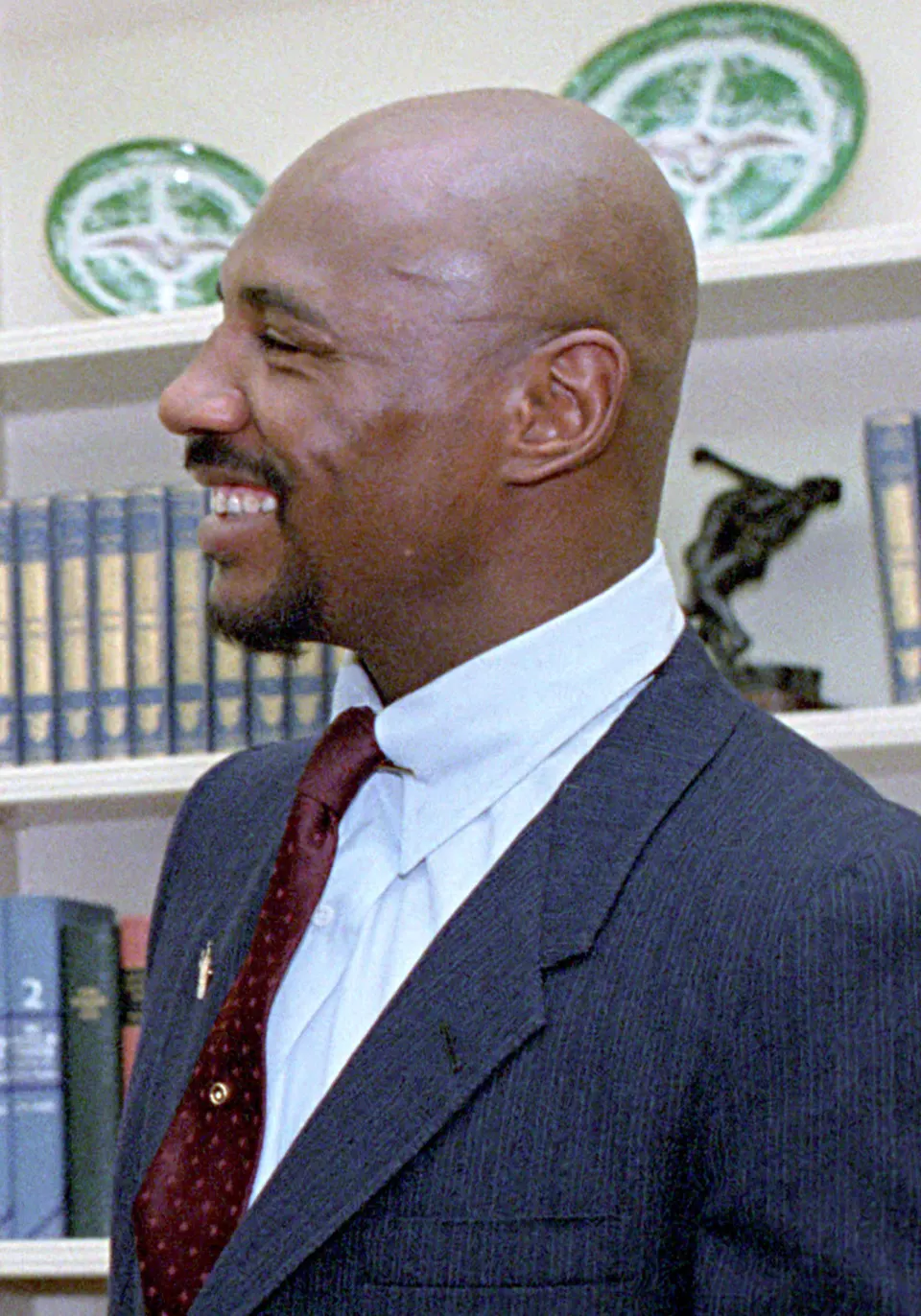
The next year, on March 10, 1986, he faced the unbeaten Ugandan puncher John Mugabi and needed eleven punishing rounds to stop him. Ten days later, according to a Reagan White House photograph dated March 20, 1986, he was received in the Oval Office.
April 6, 1987: The Decision That Never Settled
Sugar Ray Leonard was coming off a long layoff, effectively five years away from the ring, when he challenged Hagler at Caesars Palace on April 6, 1987. Leonard's side had negotiated conditions in his favor: a 22-foot ring, 10-ounce gloves and a 12-round distance rather than 15. Leonard boxed on the move and picked his moments to score, while Hagler pressed forward looking for the heavier blows. When it ended, the judges split. One scored it 118-110 for Leonard, a second 115-113 for Leonard, and the third 115-113 for Hagler.
The verdict divided ringside as much as it divided the judges. Wikipedia reports that among press scorecards, 18 had Hagler winning, 17 had Leonard and 6 called it even. Hagler later said Leonard told him after the bell that he had beaten him, a claim Leonard has denied. Borges summed up the lasting view of many when he told WBUR that a great many experts, himself included, believe Hagler did not lose. Leonard did not grant a rematch, and the fight against Leonard turned out to be Hagler's last.
Retirement and a Second Life in Italy
Hagler waited more than a year before making it official, announcing his retirement in June 1988 after watching his brother Robbie Sims lose to WBA champion Sumbu Kalambay. Sources differ slightly on the timing: Encyclopedia.com dates the retirement to 1989, while Wikipedia and most contemporary accounts place it in 1988. Either way, he never came back.
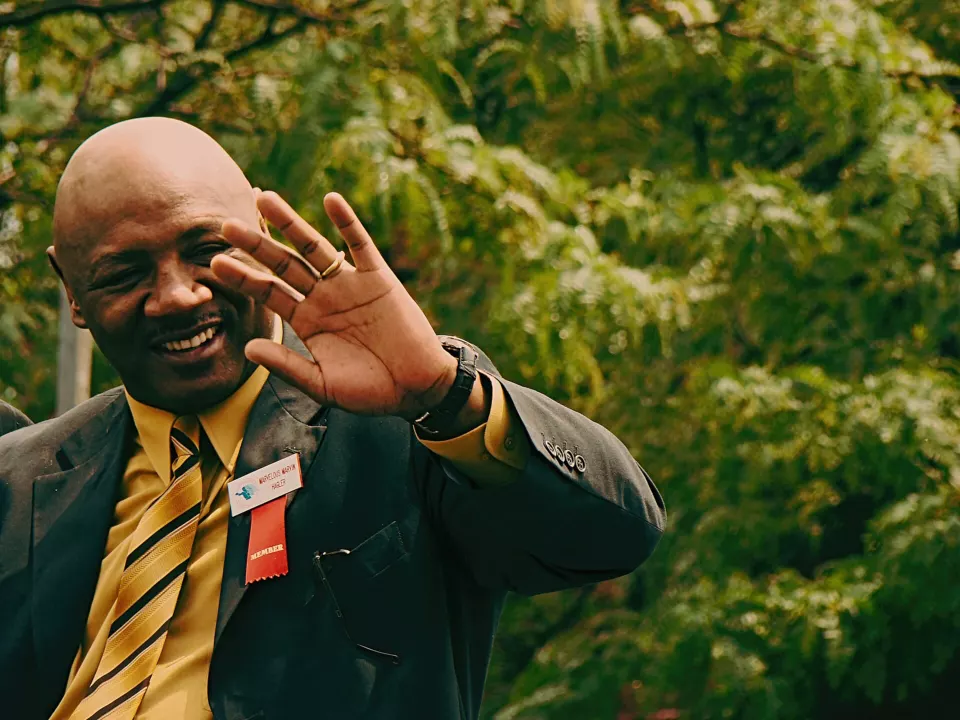
Instead he moved to Italy and started over as an actor. He starred in the action film Indio (1989) and its sequel, and later appeared in Virtual Weapon (1997) and Italian television work. Settled in Milan, he married his second wife, Kay, in 2000. Asked by Borges why he had made the move, Hagler pointed to how he was treated there, saying "There's no racism over here," according to WBUR. Distance also spared him the constant questions about a comeback.
Death and Legacy
Hagler was inducted into the International Boxing Hall of Fame in 1993. He split his later years between Italy and a home in Bartlett, New Hampshire, and it was in New Hampshire that he died on March 13, 2021, at the age of 66. Kay Hagler announced that he had passed away unexpectedly; the cause was later described as natural. Brockton held a public memorial at Rocky Marciano Stadium, Massachusetts declared May 23, 2021, Marvelous Marvin Hagler Day, and in June 2024 a bronze statue of him was dedicated in the city where the Petronelli brothers first put gloves on a teenager from Newark.
Sources
- Marvin Hagler, Wikipedia, accessed October 2026
- Marvin Hagler, middleweight boxing great, dies at 66, ESPN, March 13, 2021
- Marvelous Marvin Hagler remembered by Ron Borges, WBUR, March 14, 2021
- Hagler, Marvin, Encyclopedia.com (Notable Sports Figures), accessed October 2026


