
How Floyd Mayweather Jr. Went From Grand Rapids to 50-0
The life and career of Floyd Mayweather Jr., from a Michigan boxing family and a disputed 1996 Olympic semifinal to titles in five divisions, the Pacquiao and McGregor fights, and a postponed 2026 comeback.

Floyd Mayweather Jr. was born into a Michigan boxing family, left the 1996 Olympics with a bronze medal and a grievance, and spent the next two decades building a professional record that closed at 50-0. Along the way he won world titles in five weight classes, headlined the most lucrative fights of his era and served jail time for domestic battery, a part of the story no honest account can leave out.
A Grand Rapids Family Business
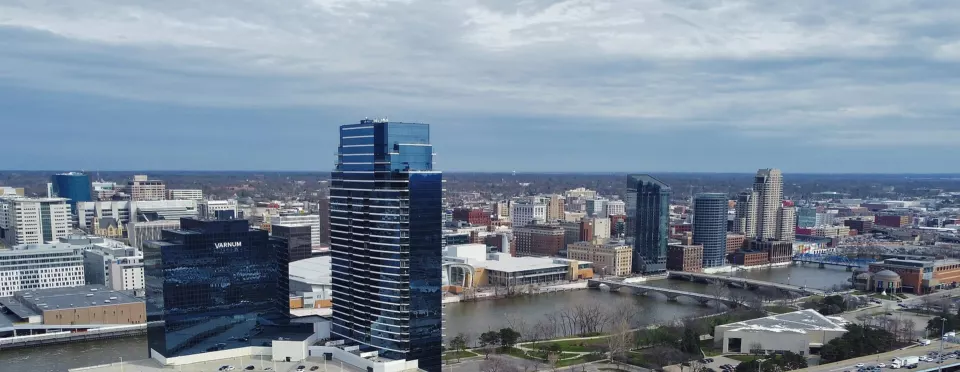
He was born Floyd Joy Sinclair on February 24, 1977, in Grand Rapids, Michigan, carrying his mother's surname until it was changed to Mayweather while he was still small. The name came with a trade attached. His father, Floyd Mayweather Sr., had been a welterweight contender who shared a ring with Sugar Ray Leonard. His uncle Roger Mayweather won world titles in two divisions, and another uncle, Jeff, also boxed professionally.
The household was far from settled. Father and son have given conflicting accounts of those years: the elder Mayweather has acknowledged dealing drugs while insisting his son never went without, while the younger has described raising himself and moving between his grandmother's and his mother's homes. When Floyd Jr. turned professional, his father was in prison on a drug trafficking conviction, so it was Roger who trained him first.
As an amateur he collected three national Golden Gloves titles, at light flyweight, flyweight and featherweight, plus a U.S. national championship at featherweight, which earned him a place on the team for the home Olympics in Atlanta.
Atlanta 1996: Bronze and a Raised Hand
In the 57-kilogram featherweight draw, Mayweather stopped Kazakhstan's Bakhtiyar Tileganov and outpointed Armenia's Artur Gevorgyan. His quarterfinal against Cuba's Lorenzo Aragon was a 12-11 war on the computer scoring, and the win made him the first American to beat a Cuban at the Games in two decades.
The semifinal against Serafim Todorov of Bulgaria, a three-time world champion, went to Todorov 10-9. In a moment that summed up the confusion, Egyptian referee Hamad Hafaz Shouman lifted Mayweather's arm as if he had won, only for the announcement to go the other way. The U.S. team protested, alleging that the Bulgarian chief of officials, Emil Jetchev, had pressured judges toward his countryman; the protest was dismissed. American official Bill Waeckerle resigned over the verdict. Accounts describe his role differently: Wikipedia calls him a judge, while CBS Sports, writing in 2015, calls him a supervisor of officials. Mayweather settled for bronze and, as CBS Sports recorded, turned professional within months, saying he believed he had been robbed.
Super Featherweight Prodigy: Hernández and Corrales
His professional debut came on October 11, 1996, a second-round knockout of Roberto Apodaca. In 1998, still within two years of that debut, he stopped Genaro Hernández after eight rounds, when Hernández's corner retired him, and took the WBC super featherweight title along with lineal recognition. He was the first member of the 1996 U.S. Olympic team to become a world champion.
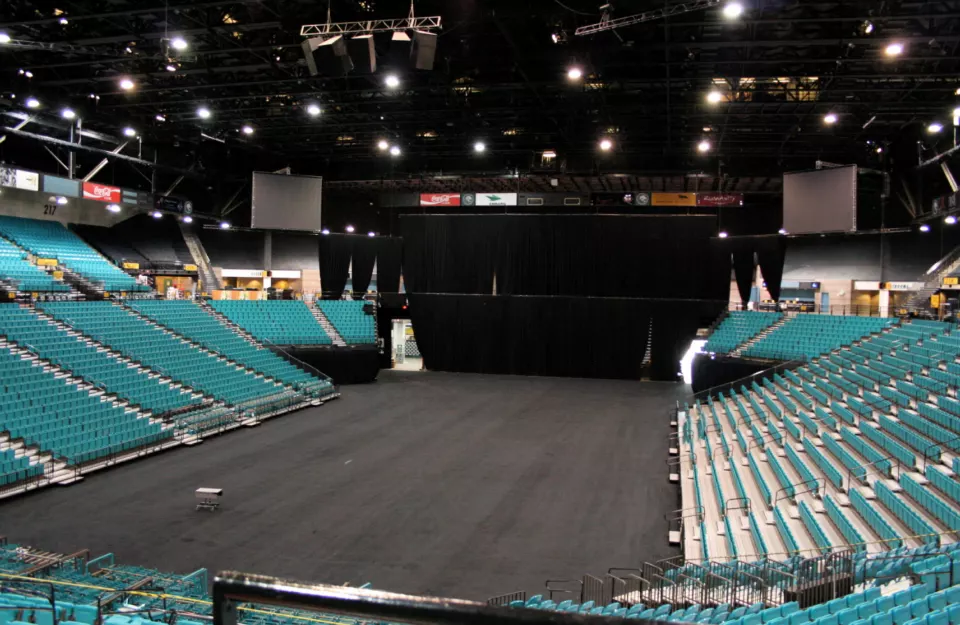
The fight that announced him to the wider sport took place on January 20, 2001, at the MGM Grand in Las Vegas. Diego Corrales arrived 33-0 and was physically the bigger man on fight night. Mayweather knocked him down three times in the seventh round and twice more in the tenth, after which Corrales's corner stopped it. He led 89-79, 90-79 and 90-78 when it ended, and CompuBox had him landing 220 punches to Corrales's 60.
Climbing the Scales: Castillo, Gatti and Judah
At lightweight he took the WBC title from José Luis Castillo in 2002 on scores of 115-111, 115-111 and 116-111, a verdict many ringside observers questioned. He accepted an immediate rematch on December 7, 2002, and won again. Moving to 140 pounds, he beat DeMarcus Corley and Henry Bruseles in eliminators, then faced Arturo Gatti in Atlantic City on June 25, 2005. Gatti's corner pulled him out after six one-sided rounds, and Mayweather had his WBC light welterweight belt, a third division.
The fourth came on April 8, 2006, when he outpointed Zab Judah for the IBF welterweight title in a fight interrupted in the tenth round by a ring-filling melee involving both camps. Later that year a wide decision over Carlos Baldomir added the WBC and Ring welterweight championships.
The Money Fights: De La Hoya and Hatton
On May 5, 2007, Mayweather went up to 154 pounds to challenge Oscar De La Hoya for the WBC light middleweight title. He won a split decision, 116-112 and 115-113 for him and 115-113 for De La Hoya, and so completed titles in five divisions. The event sold about 2.4 million pay-per-view buys, a record at the time. Seven months later, on December 8, 2007, at the MGM Grand Garden Arena, he stopped the unbeaten Ricky Hatton in the tenth round with a check left hook and a follow-up flurry. He then announced his first retirement.
Comeback Years: Márquez, Canelo and a Jail Term
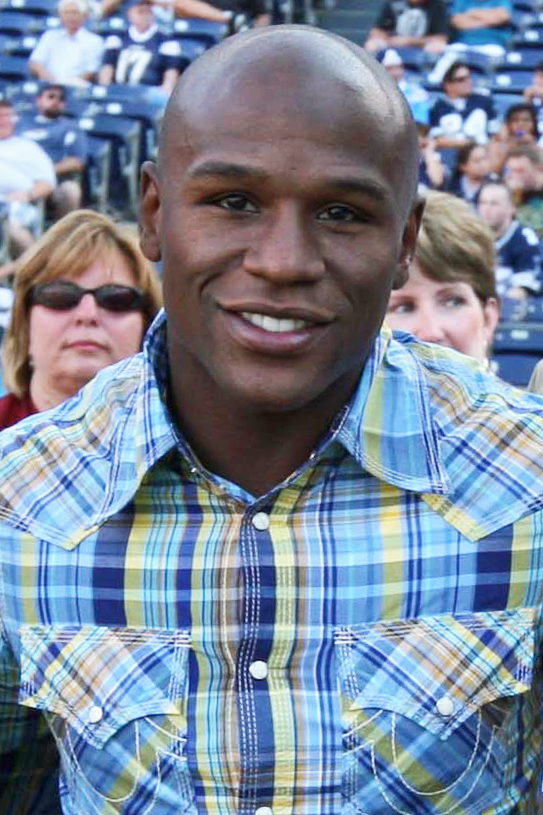
He returned after 21 months to face Juan Manuel Márquez on September 19, 2009, and won a lopsided decision after missing the agreed weight. Wins over Shane Mosley in 2010, Victor Ortiz in 2011 and Miguel Cotto in May 2012 followed. Before and after those nights ran his criminal record: misdemeanor battery convictions in the 2000s and, after a September 2010 assault on his former partner Josie Harris, a guilty plea to misdemeanor domestic battery and no-contest pleas to two harassment counts. Under the deal, felony charges were dropped. He entered Clark County Detention Center on June 1, 2012, and was released in early August after serving about two months of a 90-day sentence.
On September 14, 2013, he faced Saúl "Canelo" Álvarez at a 152-pound catchweight. Most observers thought the fight one-sided, yet the result was a majority decision because judge C.J. Ross scored it 114-114, a card that drew wide criticism. The other judges had it 116-112 and 117-111.
Pacquiao, 2015: The Fight That Finally Happened
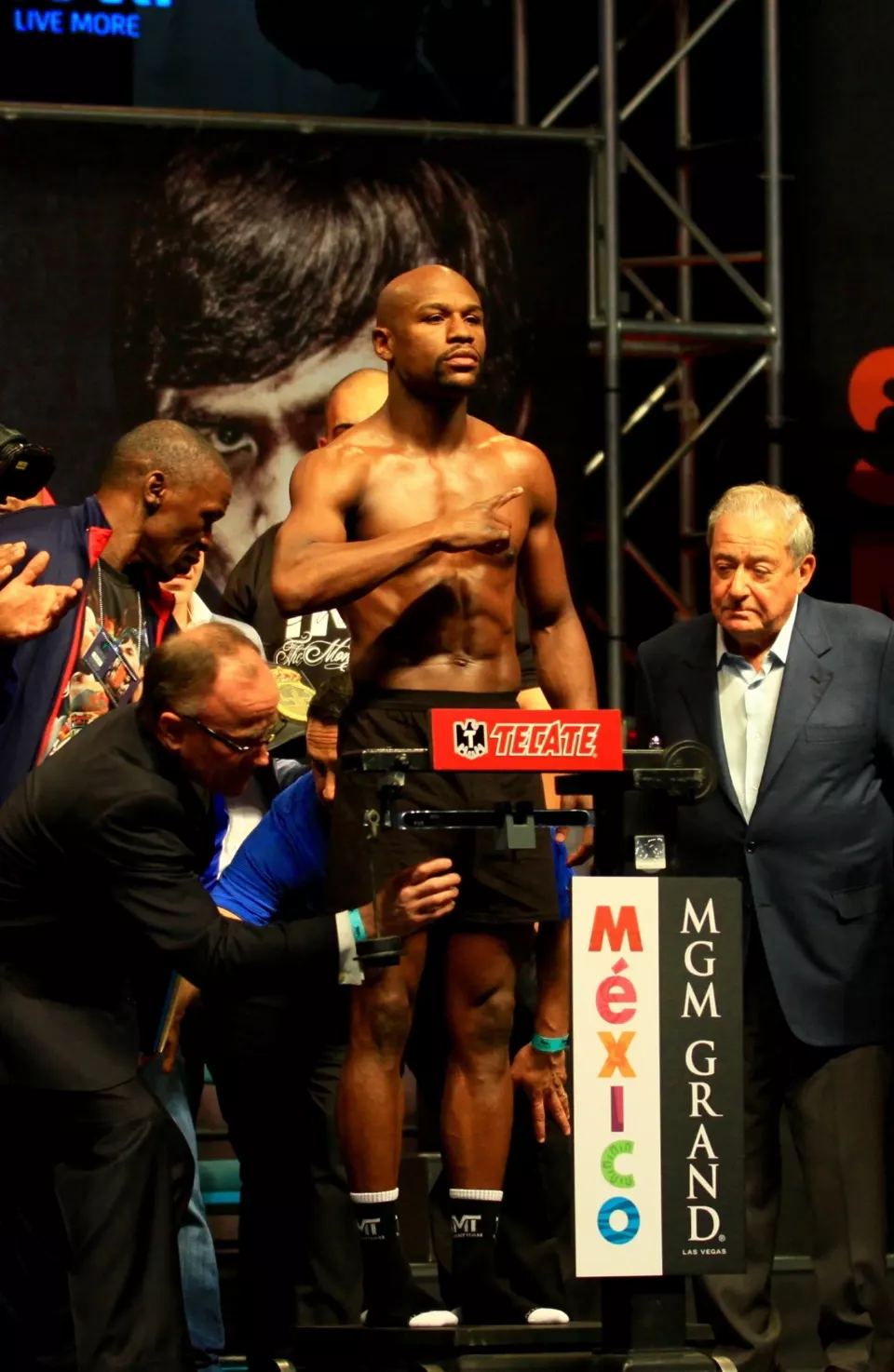
After roughly six years of stalled talks over money splits and drug testing, Mayweather met Manny Pacquiao on May 2, 2015, at the MGM Grand Garden Arena. He controlled distance with his jab and pivots and won a unanimous decision, 118-110, 116-112 and 116-112, to move to 48-0. According to the Associated Press, the event generated around $400 million. Pacquiao said afterward that he had fought with an injured right shoulder. Many viewers felt the fight never matched the years of anticipation. In September he outpointed Andre Berto to reach 49-0 and announced his retirement again.
Fifty and Out: The McGregor Spectacle
The 50th win came against UFC star Conor McGregor, who was making his professional boxing debut. On August 26, 2017, at T-Mobile Arena in Las Vegas, McGregor did well in the early rounds before tiring, and referee Robert Byrd stopped the fight at 1:05 of round ten. NPR reported Mayweather's guarantee at a minimum of $100 million. The result moved him to 50-0, one win beyond Rocky Marciano's 49-0.
Exhibitions and an Unsettled Return
Since then Mayweather has boxed only exhibitions. He stopped kickboxer Tenshin Nasukawa in one round in Tokyo on December 31, 2018, and went eight rounds with Logan Paul in Miami Gardens in June 2021. Later bouts against Don Moore, Mikuru Asakura, Deji Olatunji, Aaron Chalmers and John Gotti III followed; the first Gotti exhibition, in 2023, ended in a brawl involving both teams. The International Boxing Hall of Fame inducted him in its 2021 class. In 2026 a professional rematch with Pacquiao was announced for September 19 at the Sphere in Las Vegas. In late June, Pacquiao confirmed that it had been postponed indefinitely amid a lawsuit and contractual disputes involving Mayweather's side, and reports suggested early 2027 at the soonest.
Sources
- Floyd Mayweather Jr., Wikipedia, accessed October 2026
- Controversial Olympic loss may have set Mayweather on historic path, CBS Sports, April 18, 2015
- On this day: Floyd Mayweather dazzles against Diego Corrales, Boxing News, January 20, 2020
- Mayweather beats Pacquiao to unify welterweight titles, The Times of Israel (Associated Press), May 2015
- Mayweather released from jail, Fox News (Sports Network), August 3, 2012
- Mayweather defeats McGregor in 10th-round TKO, NPR (James Doubek), August 27, 2017
- Floyd Mayweather, Laila Ali, Wladimir Klitschko headline 2021 International Boxing Hall of Fame class, CBS Sports, 2020
- Mayweather-Pacquiao rematch postponed indefinitely as legal woes derail mega fight, Gulf News, June 26, 2026


