
Hearns vs Cuevas in 1980 Saw the Hitman Take the WBA Welterweight Title in Two Rounds at Joe Louis Arena
On 2 August 1980 in Detroit, unbeaten Thomas Hearns ended Pipino Cuevas's four-year WBA welterweight reign, dropping the Mexican champion with a right hand and winning by stoppage at 2:39 of the second round.

On 2 August 1980, in an arena that had been open for less than eight months, a 21-year-old from the Kronk Gym took the WBA welterweight title from Pipino Cuevas, a Mexican champion who had held it for four years. Thomas Hearns needed less than two rounds. A right hand put Cuevas face-first on the canvas, and the fight was waved off at 2:39 of the second.
A Champion Crowned at Eighteen
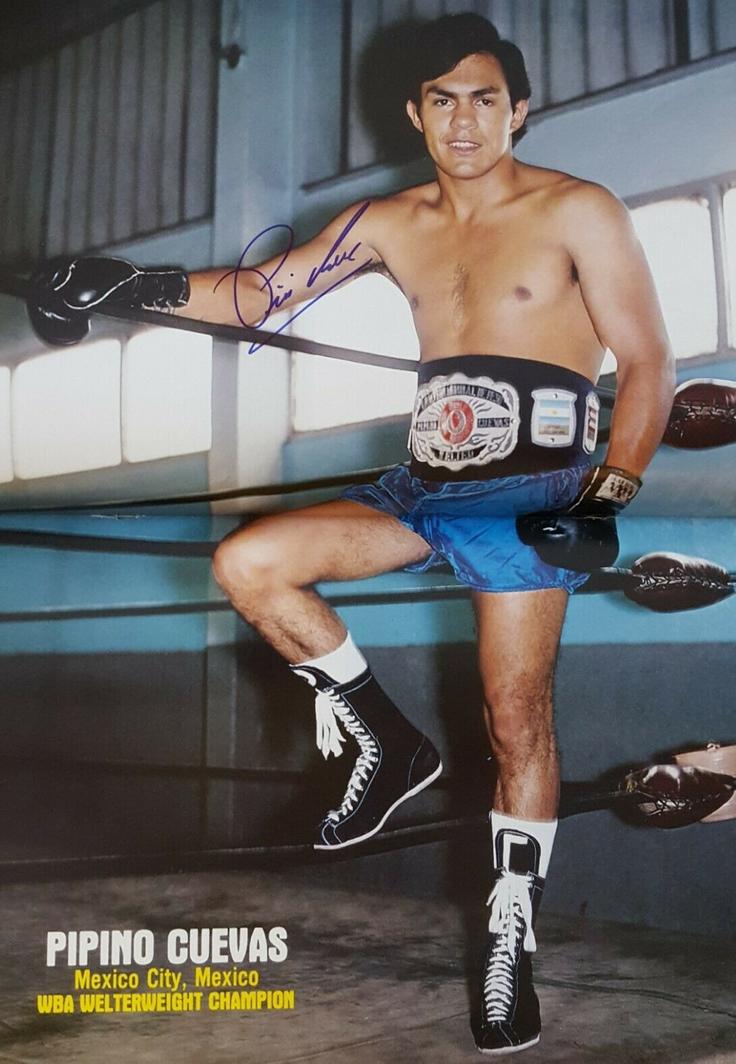
José "Pipino" Cuevas was born on 27 December 1957 in Santo Tomás, in the Mexican state of Hidalgo. On 17 July 1976 he took the WBA welterweight belt from Ángel Espada, putting Espada down three times in the second round. Cuevas was 18 at the time, and his Wikipedia biography lists him as the youngest welterweight champion in history.
He defended the title eleven times over the next four years, against ten different men. According to The Fight City, ten of those defenses ended inside the distance. The list included a rematch and a third fight with Espada, plus Shoji Tsujimoto, Clyde Gray, Billy Backus, Harold Weston and Pete Ranzany. His left hook was the weapon opponents feared most. The Fight City also notes that nobody had knocked him down before the Detroit fight. When he signed to face Hearns, his record stood at 27 wins and 6 losses, with 24 knockouts.
The Kronk Prospect Who Grew Up in Detroit
Thomas Hearns was born in Grand Junction, Tennessee, on 18 October 1958, and his family moved to Detroit when he was five. The Detroit Historical Society's encyclopedia credits him with a 155–8 amateur record. In 1977 he won national AAU and Golden Gloves titles at light welterweight. He turned professional that same year at Emanuel Steward's Kronk Gym. As an amateur he had been a boxer rather than a puncher, and Steward reshaped him into one of the hardest-hitting welterweights of the era. Hearns knocked out his first 17 professional opponents and came into the Cuevas fight unbeaten at 28–0, with 26 of those wins by knockout. Detroit fans already called him the "Motor City Cobra". The other nickname, "Hitman", would follow him for the rest of his career.
Building "World War II" at the Joe
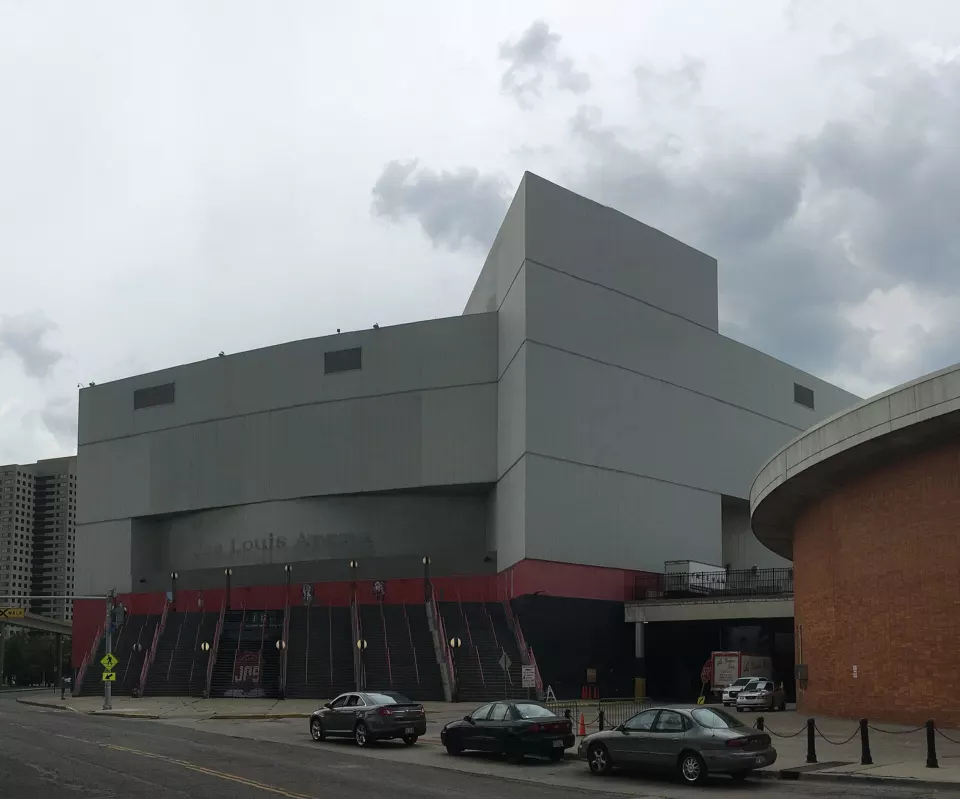
Hearns was the WBA's leading contender, and the fight was announced in June 1980 for August in his hometown. The venue was Joe Louis Arena. It had opened on 12 December 1979 with a college basketball game, and the Red Wings played their first game there later that month. Promoters billed the night as "World War II".
The purses reflected who held the belt. The Wikipedia account of the bout gives Cuevas $1.5 million and Hearns $500,000. Both men weighed in at around 146 pounds, but they were built very differently. Hearns stood about 6 feet 1 inch, and Wikipedia lists Cuevas at around 5 feet 8 inches. The Fight City puts Hearns' reach at 78 inches and his advantage in height and reach at six to eight inches. Secondary accounts vary slightly on Cuevas' exact height. Hearns was 21 years and 9 months old, Cuevas 22 years and 7 months. Before the fight, Hearns said that if he found an opening for his right hand, he expected to knock the champion out.
The undercard was strong on its own. Yasutsune Uehara knocked out Samuel Serrano in the sixth round to take the WBA super featherweight title. Hilmer Kenty stopped Young Ho Oh in the ninth to keep his WBA lightweight belt. At heavyweight, Randall "Tex" Cobb stopped Earnie Shavers in the eighth.
Round One: The Jab That Kept a Puncher Away
Cuevas's plan depended on getting close enough to land the left hook, and Hearns never let him. The challenger's long left jab kept the champion at the end of his punches, and Hearns added combinations once he had found the range. The two main narrative sources describe the round with different intensity. The Wikipedia summary has Hearns in control behind the jab while Cuevas struggled to get inside. The Fight City describes a much rougher round, with an early exchange of left hands, a Hearns hook that left Cuevas stumbling, and repeated right hands that shook him before the bell. Both sources agree that Cuevas spent the round reaching and could not land his hook.
Round Two: The Right Hand
The second round followed the same pattern, with Hearns' hand speed and height keeping the champion out of range. Then a right hand landed on the side of Cuevas' head, and The Fight City records an earlier right to the jaw that had already hurt him. He went down face-first. He had never been knocked down as a professional, but he got up by about the count of six. His legs were plainly gone.
His manager, Lupe Sanchez, made the decision. He climbed through the ropes to stop his fighter taking any more punishment, and referee Stanley Christodoulou ended the fight. The official time was 2:39 of the second round, recorded as a technical knockout. Some later summaries say it was Cuevas' trainer who stepped in. The main fight account names Sanchez, his manager.
A New Champion in His Own City
Cuevas's reign of nearly four years and eleven defenses ended in under six minutes, in front of a crowd that had come to see Hearns. Hearns was now WBA welterweight champion, unbeaten in 29 fights. Wikipedia's account says he was already talking openly about wanting Roberto Durán next. At the end of the year, both The Ring and the Boxing Writers Association of America named Hearns Fighter of the Year for 1980.
The match Detroit wanted turned out to be Leonard, not Durán. In 1981 Hearns met Leonard for the welterweight titles in the fight known as "The Showdown", and lost for the first time, stopped in the fourteenth round. He went on to become the first boxer to win world titles in five weight divisions. He retired in 2006 with a record of 61–5–1 and 48 knockouts and was inducted into the International Boxing Hall of Fame in 2012.
Cuevas After Detroit
Cuevas never held a world title again. He kept fighting into the 1980s, and Roberto Durán stopped him in the fourth round in 1983. He retired in 1989 with 35 wins (31 by knockout) and 15 losses. In 2002 the International Boxing Hall of Fame inducted him, largely for the four years before he met Hearns, when he was a teenage champion who knocked out most of the men he faced.
Sources
- Pipino Cuevas vs. Thomas Hearns, Wikipedia, accessed October 2026
- Thomas Hearns, Wikipedia, accessed October 2026
- Pipino Cuevas, Wikipedia, accessed October 2026
- Joe Louis Arena, Wikipedia, accessed October 2026
- August 2, 1980: Hearns vs Cuevas — The Motor City Cobra Is King, Robert Portis, The Fight City
- Hearns, Thomas, Encyclopedia of Detroit, Detroit Historical Society, accessed October 2026


