
Leonard vs Durán III in 1989 Was the Uno Más Rubber Match at The Mirage
Nine years after 'No Más', Sugar Ray Leonard and Roberto Durán met for the last time beside the newly opened Mirage. Leonard outboxed the 38-year-old Panamanian for a wide unanimous decision to keep the WBC super middleweight title, but needed 60 stitches to do it.

On 7 December 1989, nine years after the night in New Orleans that had followed Roberto Durán everywhere, he and Sugar Ray Leonard met one last time in a makeshift stadium beside the brand-new Mirage in Las Vegas. The promotion was called "Uno Más." The fight itself was twelve rounds of Leonard moving, countering and bleeding, and of a crowd that wanted something else, before all three judges gave him a wide unanimous decision and the WBC super middleweight title.
Nine Years Carrying Two Words
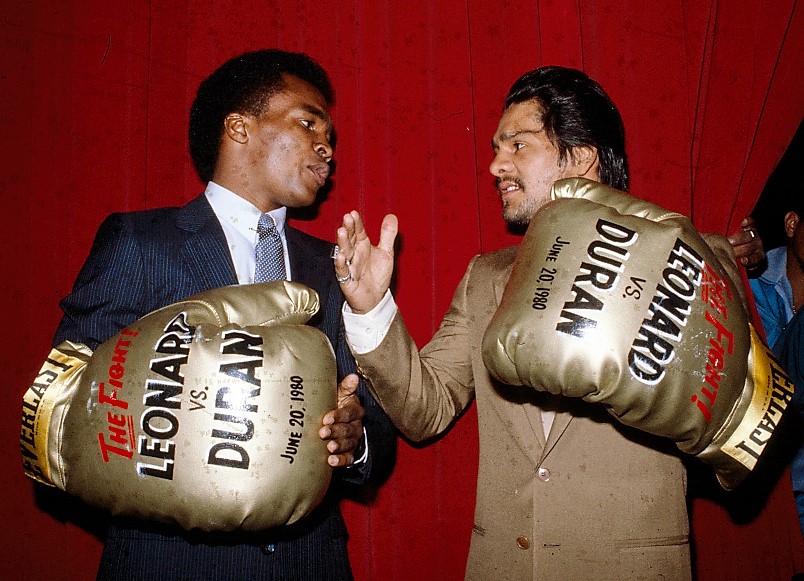
They had split the first two meetings in 1980. Durán outpointed Leonard over fifteen rounds in Montreal to take the WBC welterweight title. That November in New Orleans, Leonard took it back when Durán stopped fighting in the eighth round. The story that he told the referee "no más" stuck to him for the rest of the decade, whatever he said about it.
A UPI profile published shortly before the third fight traced how long that took. Durán spent years losing and rebuilding across several weight classes. His comeback officially started with a decision over Victor Claudio in May 1987, and a small group of new backers then put up modest money for a string of wins. In February 1989 he beat Iran Barkley over twelve rounds for the WBC middleweight title, which UPI described as his best performance since he beat Davey Moore in 1983. That win got him the Leonard fight he had wanted for years. UPI quoted him saying he had prayed every day for it to happen.
Leonard came in on a different path. In June 1989 he had kept his WBC super middleweight belt with a twelve-round draw against Thomas Hearns. According to UPI's coverage that July, he then negotiated with both Hearns and Durán. The Hearns rematch didn't come together. The Durán deal was announced at a press conference on 26 July, and a few days later The Mirage was confirmed as the venue.
A 162-Pound Contract and a Belt Left Out of It
The two champions settled on a catchweight of 162 pounds, which put them between the middleweight and super middleweight limits. UPI reported that going over it would cost a fighter a $1 million forfeit. The first plan was for both men's titles to be on the line. Wikipedia's account says Durán's mandatory challenger, Lindell Holmes, would not step aside, so only Leonard's 168-pound belt was at stake.
The weigh-in still caused an argument. Leonard came in at 160 pounds and Durán at 158, so both were inside the middleweight limit. On fight day, UPI reported that WBC president José Sulaimán was talking about voting Leonard in as middleweight champion too if he won. Durán's promoter, Tom Mara, objected that Durán's camp had signed on condition that his title would not be at stake. Leonard's attorney, Mike Trainer, played it down and told UPI that Leonard already had a middleweight belt and didn't need another.
Bleachers in a Parking Lot
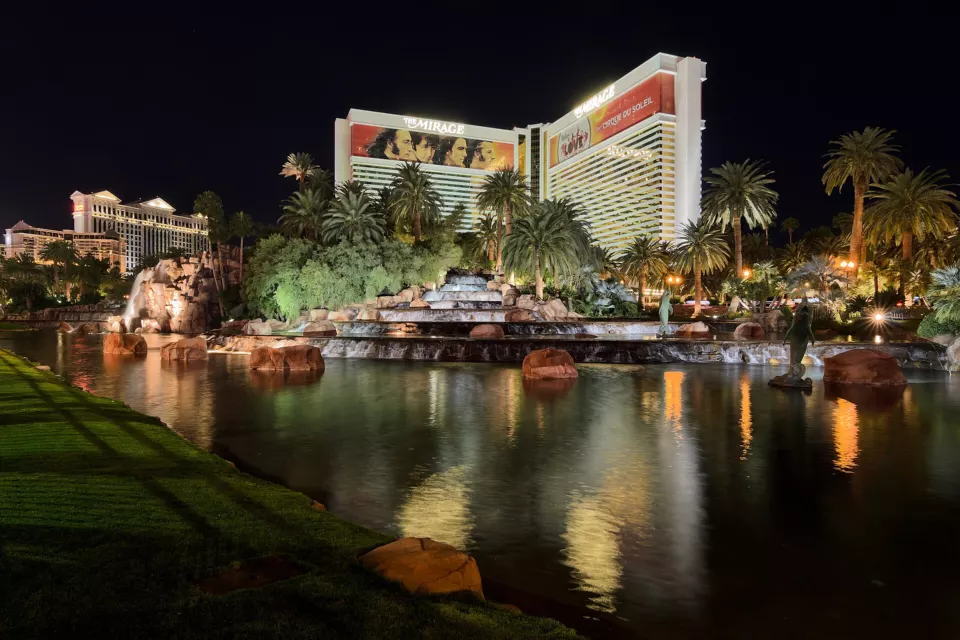
The Mirage had opened on 22 November, a few weeks before the fight. Poster House, which has a poster from the event in its collection, calls the fight the first major event at the hotel. The ring was not inside the building. UPI described a 16,000-seat outdoor stadium, and Deseret News sports editor Lee Benson wrote that fans sat on metal bleachers in a hotel parking lot, close enough to the freeway to hear trucks. Benson reported tickets priced from $100 to $800 and about $9 million spent on them in total. A Deseret News follow-up said Leonard wore a karate-style suit before the fight because it was cold outdoors.
Sources give different figures for the money. UPI listed Leonard's guarantee as $12.6 million and Durán's as $7.6 million. Wikipedia and Benson put Leonard's total at about $15 million once closed-circuit and pay-per-view income was counted, and Benson estimated Durán's at about $9 million. They also differ on the betting. UPI had Leonard a 2-1 favourite, and Wikipedia gives 9-to-5. Leonard was 33 with a 35-1-1 record. Durán was 38 and 85-7. Richard Steele refereed, with Jerry Roth, Joe Cortez and a judge from Belgium scoring.
Twelve Rounds of Leonard Boxing on the Move
The fight was nothing like Montreal or New Orleans. Leonard kept moving, threw counters, and gave Durán almost nothing to aim at from the opening bell. Durán threw more punches but landed very few of them. Wikipedia has Leonard landing 227 of 437 punches and Durán 84 of 600. Benson's count for Leonard was 227 of 438, and he had Durán throwing 588. In both versions Leonard landed about half of what he threw and Durán about one in seven.
The crowd quickly lost patience with it. Benson wrote that by the seventh round people were chanting "Refund!" and "Boring." HISTORY.com's account says fans booed both fighters as the night went on. Durán had his best moment in the eleventh round, when a right hand opened a cut on Leonard's face. Leonard said afterward that he had gone inside on purpose to give the restless crowd more action. There was no knockdown and no stoppage, and the fight went the full twelve rounds.
Sixty Stitches for the Winner
By the end, Leonard's face was in worse shape than Durán's. The Deseret News reported he needed 60 stitches in all: 30 above the right eye, 20 in the left eyelid and 10 in the lower lip. Two years later, UPI was still calling the injury over his right eye a 60-stitch gash. Leonard blamed the inside exchanges he had chosen to have. "I got these cuts when I went inside to accommodate the public's demand (for action)," he told the Deseret News. Trainer gave credit to cutman Eddie Aliano for keeping the bleeding under control.
Three Cards, One Direction
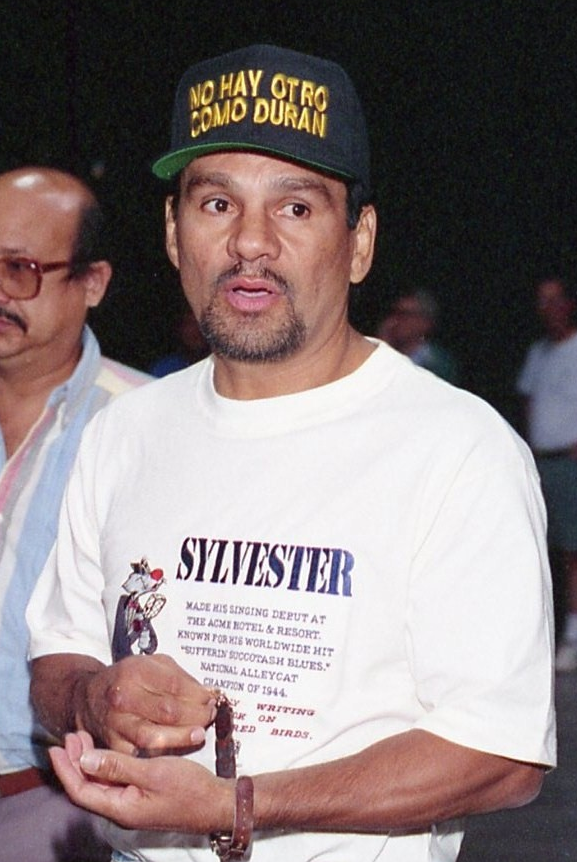
The judges' scores were 120-110, 119-109 and 116-111, all for Leonard, who kept the WBC super middleweight title. Leonard defended how he had fought. "I'm not Hearns. I'm not Hagler," he said, as quoted by Benson, and he added that he was proud of his performance. Durán, speaking through an interpreter, said Leonard had come to run rather than fight. Promoter Bob Arum summed it up in fewer words. "Obviously, their styles don't mesh," he said.
HISTORY.com called it a tactically superior but unexciting win over a lethargic Durán. In Durán's favour, he was still on his feet and still throwing at the final bell, which the Deseret News pointed out was a clear difference from New Orleans.
After the Last Bell
The rivalry ended there. They never fought again, and the series finished 2-1 to Leonard. The title dispute kept going for a while. On 9 January 1990, UPI reported that the WBC was moving to withdraw recognition of Durán as middleweight champion because he had not defended the belt in the roughly ten months since the Barkley fight and had missed a deadline to state his plans. In August 1990 Leonard gave up the super middleweight title, saying he could no longer comfortably fight at that weight. By February 1991, when he was preparing to face Terry Norris, UPI was again describing his last fight as the night he beat Durán and left with a 60-stitch wound.
Sources
- Sugar Ray Leonard vs. Roberto Durán III, Wikipedia, accessed 2026
- Leonard-Duran III had everything except a punch, Deseret News (Lee Benson), 8 December 1989
- Sugar Ray blames his cuts on crowd, Deseret News, 9 December 1989
- Leonard, Duran await 'Uno Mas', UPI, 6 December 1989
- Analysis of Duran-Leonard III, UPI, 6 December 1989
- Early night lead: Weigh-in dispute for Leonard-Duran III, UPI, 7 December 1989
- Boxing: Duran Lands 'Uno Mas' Against His Obsession, UPI, 25 November 1989
- WBC tries to strip Duran of his title, UPI, 9 January 1990
- Boxing: Leonard Fights Norris To Chart Future Course, UPI, 2 February 1991
- Sugar Ray Leonard fights Roberto Durán for the third and final time, HISTORY.com, accessed 2026
- Leonard/Duran III (poster), Poster House collection, accessed 2026


