
Iran Barkley's Journey From the Bronx Projects to Three World Titles and Back
Steered into boxing by his pioneering sister Yvonne, Iran Barkley beat Thomas Hearns twice, lost a classic to Roberto Durán and won titles in three divisions, then had to rebuild his life after becoming homeless in 2010.

Iran "The Blade" Barkley came out of the Patterson Houses in the South Bronx, followed his older sister into the gym, and went on to beat Thomas Hearns twice and hold world titles at middleweight, super middleweight and light heavyweight. He reportedly earned around $5 million in the ring. In 2010 he was homeless, and the boxing community had to help him find a place to live.
The Youngest of Eight in the Patterson Houses
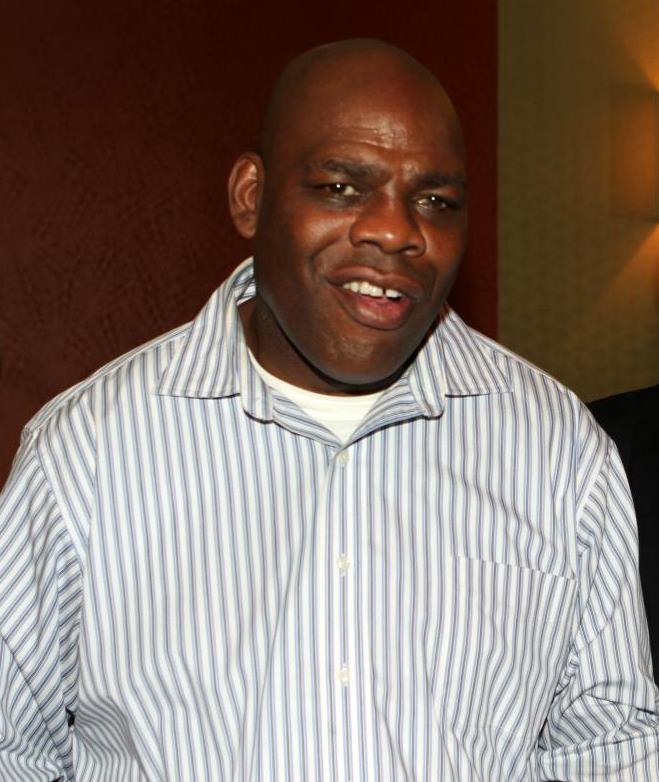
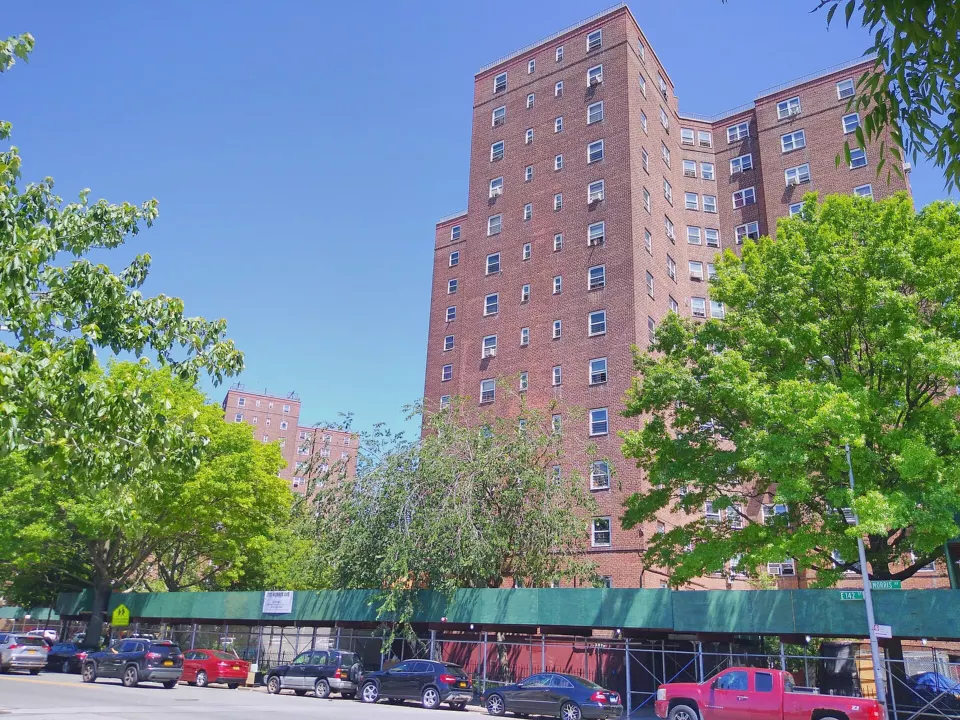
Barkley was born in New York City on May 6, 1960, to Frank Barkley Sr. and Georgia Barkley. He was the youngest of their eight children and grew up in the Patterson Houses, a public housing project in the South Bronx. As a teenager he joined the Black Spades. He later said boxing was what got him out.
The person who brought him to boxing was his sister Yvonne. Some retellings of the story describe her as a wrestler, but the sources consulted for this article all say she was a boxer. She was one of the first women to box professionally in the United States and fought at junior welterweight and lightweight in the late 1970s and early 1980s. The Women Boxing Archive Network says she was rated number one in the world at lightweight in 1979 and 1980. Yvonne protected her little brother from bullies and taught him to fight. When his involvement with the gang grew more serious, she pushed him toward the gym instead. In 2025 she was inducted into the International Women's Boxing Hall of Fame, and the two are recognized as the first brother and sister to both box professionally.
Golden Gloves, Munich and a Professional Start
Barkley was trained by Bobby Miles and Connie Bryant, and he grew into a tall, rangy middleweight: about 6 feet 1 inch, with a 74-inch reach. In 1981 he took silver at the New York Golden Gloves and gold at the Empire State Games, both at 165 pounds. In 1982 he won bronze at the World Championships in Munich.
He turned professional in 1982 and fought for the next 17 years. His first world title shot came on October 23, 1987, in Livorno, Italy, against Sumbu Kalambay for the vacant WBA middleweight title. Kalambay won a unanimous decision over 15 rounds.
June 1988: The Right Hand That Stopped the Hitman
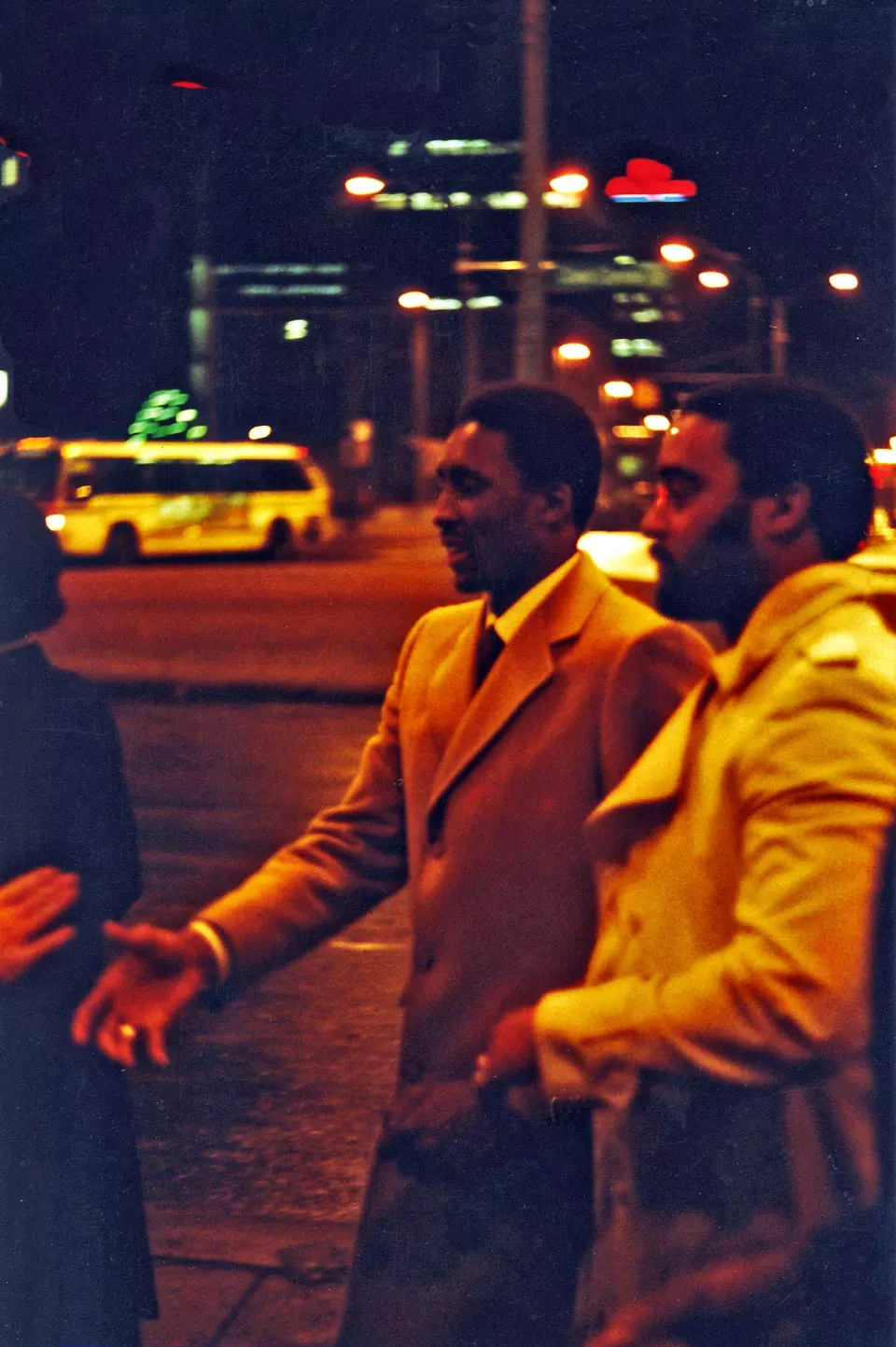
On June 6, 1988, Barkley challenged Thomas Hearns for the WBC middleweight title at the Las Vegas Hilton. Hearns came in at 45-2 with 38 knockouts, and Barkley at 24-4 with 15. The bookmakers had Barkley as a 4-to-1 underdog, and the purses reflected that: Hearns was paid $1.5 million and Barkley $250,000.
Hearns won the first two rounds clearly. Going into the third, Barkley was bleeding from cuts over both eyes and from his lower lip, and Hearns kept hitting him to the body. Then, late in the round, Hearns briefly dropped his hands while moving, and Barkley landed a hard right hand. Another right put the champion on the canvas. Hearns got up, but Barkley's follow-up attack drove him through the ropes. Referee Richard Steele stopped the fight at 2:39 of the third round. The Ring named it the Upset of the Year for 1988, and KO Magazine named it the Knockout of the Year.
Durán in Atlantic City, 1989
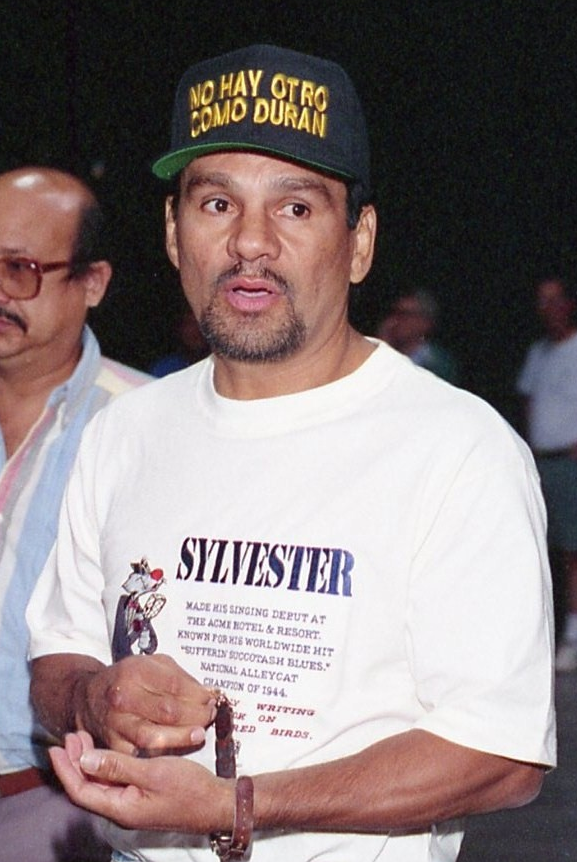
Barkley's first defense came on February 24, 1989, at Convention Hall in Atlantic City, against Roberto Durán. Barkley was 28. Durán was 37 and supposedly near the end of his career. In the 11th, Durán landed three straight right hands and knocked Barkley down, the only knockdown of the fight. The judges gave Durán a split decision, 116-112, 118-112 and 113-116. It was Durán's fourth world title in a fourth weight class. The Ring and KO Magazine both made it their Fight of the Year. Afterward Barkley gave Durán credit for his resilience, saying, according to Wikipedia's account of the fight, "It was his heart. It just wouldn't go."
His next two title shots also ended in defeat. On August 14, 1989, in Reno, he lost a majority decision to Michael Nunn, who held the IBF middleweight title. On August 18, 1990, in Las Vegas, he fought Nigel Benn for the WBO middleweight title. Both men were hurt in a wild first round, and the fight was stopped under the three-knockdown rule at 2:57 of that round.
A Comeback Across Two Divisions
Barkley moved up in weight. On January 10, 1992, at the Paramount Theatre in New York, he stopped Darrin Van Horn in the second round to win the IBF super middleweight title. About ten weeks later, on March 20, 1992, he fought Hearns again at Caesars Palace. This time Hearns was the WBA light heavyweight champion, having taken that belt from the previously unbeaten Virgil Hill the year before. In the middle rounds Barkley countered a Hearns right with a left hook and scored the only knockdown of the night. The judges' cards read 115-113 and 114-113 for Barkley and 114-113 for Hearns. By the end both of Barkley's eyes were almost swollen shut. That gave Barkley titles in three weight classes, and The Ring gave him its Comeback of the Year award for 1992.
He held the light heavyweight title only briefly. He gave it up without making a defense so he could concentrate on the 168-pound title. On February 13, 1993, he defended against James Toney at Caesars Palace. He had struggled to make 168 pounds again, and Toney, who was 24, outboxed him round after round. Barkley's nose was bleeding early, and his left eye kept swelling. After the ninth round his trainer, Eddie Mustafa Muhammad, stopped the fight.
The Long Road Down
His last world title fight was on October 8, 1994, in Halle, Germany, against the unbeaten IBF light heavyweight champion Henry Maske, and it was stopped after the ninth round. On June 8, 1997, at the Hollywood Palladium, he stopped the former WBA heavyweight champion Gerrie Coetzee in the tenth round for the minor WBB heavyweight belt. In April 1999 he lost a split decision to Tony Halme in Helsinki. His last professional fight was on July 31, 1999, in Lula, Mississippi, where Keith McKnight stopped him in the sixth round. Some later accounts treat the Halme fight as his last, but Wikipedia's record of his career lists McKnight as his final opponent. His career record is generally given as 43-19-1 with 27 knockouts.
Away from the ring, things went badly. In a 2010 interview with The Sweet Science, he said his money had gone on apartment ventures, a car wash, tax problems and two divorces. The same profile said his left eye was barely visible behind built-up scar tissue. Barkley put it down to inexperience, telling the outlet, "Years ago, I just didn't know what to do with money when I had it." After retiring he worked for a while as a car salesman and as a shop assistant.
Homeless in the Bronx, and Ring 10
In November 2010 Barkley was evicted from his apartment in the Bronx. The New York Post reported that he was sleeping in the subway, with a bag of clothes and the WBC belt he had won from Hearns. Ring 10, a New York charity for retired boxers, and the Bronx nonprofit BronxWorks helped him find housing. By late December 2010 he had a home and was looking for work. A Manhattan collector had come to own one of his WBC championship belts after it was stolen. After reading about Barkley's situation, the collector gave the belt back to him.
In a 2016 NPR report Barkley was a board member of Ring 10 and went to its monthly dinners with other former fighters. He told NPR that what he valued most from boxing was getting to see the world, saying, "The only thing that took me there was my two hands." He has taught boxing to young amateurs, and he is a regular at ringside in New York. He is a member of the New Jersey Boxing Hall of Fame. Saquon Barkley, the NFL running back, is a relative, though sources disagree on how: Wikipedia calls Iran his great-uncle, while The Ring calls him his uncle.
In March 2025, at age 64, Barkley was taken to NewYork-Presbyterian Hospital after a stroke. WBC president Mauricio Sulaiman told the boxing community that Barkley was in good spirits.
Sources
- Iran Barkley, Wikipedia, accessed October 2026
- Thomas Hearns vs. Iran Barkley, Wikipedia, accessed October 2026
- Iran Barkley vs. Roberto Durán, Wikipedia, accessed October 2026
- Thomas Hearns vs. Iran Barkley II, Wikipedia, accessed October 2026
- Iran Barkley vs. James Toney, Wikipedia, accessed October 2026
- Iran Barkley and Junior Jones: After the Final Bell, The Real Fight Began, Ronan Keenan, The Sweet Science, August 17, 2010
- Boxer now on his feet, Boxing Insider, December 26, 2010
- In New York City, Former Boxers Find Ways to Support Each Other, Hansi Lo Wang, NPR, May 5, 2016
- 1970s – 1980s Trailblazer Pioneer Boxer – Yvonne Barkley Inducted into the 2025 International Women's Boxing Hall of Fame, Sue TL Fox, WBAN, April 19, 2025
- Iran Barkley hospitalized due to stroke, Manouk Akopyan, The Ring, March 15, 2025


