
Schmeling Stunned Louis in the 1936 Upset at Yankee Stadium
A 10-to-1 underdog who had studied Joe Louis's dropped left hand, Max Schmeling knocked out the unbeaten Brown Bomber in the 12th round on 19 June 1936, handing the Nazi regime a propaganda triumph and setting up the 1938 rematch.

On the night of 19 June 1936, a 30-year-old former champion who had been written off as a stepping stone walked into Yankee Stadium as a 10-to-1 underdog and walked out having knocked out Joe Louis in the twelfth round. The upset rearranged the heavyweight division, handed the Nazi regime a propaganda gift, and planted the grudge that would be settled two years later.
A Rising Bomber and a Fading Former Champion
By the summer of 1936, Joe Louis looked less like a contender than an inevitability. The young Detroit heavyweight was unbeaten, knocking men out at a pace that made the division nervous. HistoryNet's account of his run notes that he disposed of Paulino Uzcudun, Primo Carnera, King Levinsky, Max Baer and Charley Retzlaff in a combined sixteen rounds. Sources differ on his exact record going in: the Wikipedia entry on the rivalry lists him at 24-0 with 21 knockouts, while the Wikipedia biography of Louis puts the figure at 27-0. Either way, nobody had beaten him.
Max Schmeling, by contrast, seemed to belong to an earlier chapter. The German had held the world heavyweight title at the start of the decade, but by 1936 he was 30 years old, carried seven losses on his record, and was widely regarded as past his best. For Louis's camp the fight was meant to be the last tune-up before a shot at the championship held by James J. Braddock. The bookmakers agreed with that reading and made Schmeling a 10-to-1 outsider.
The Flaw Schmeling Saw in the Uzcudun Fight
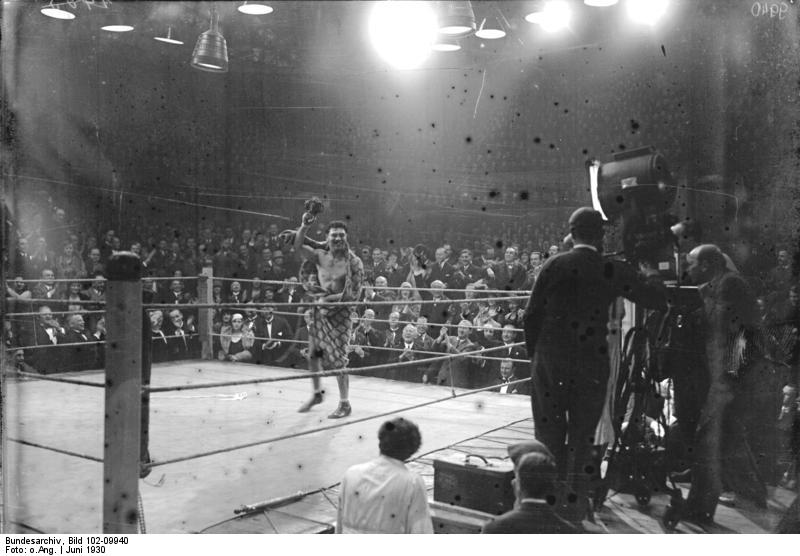
Schmeling did not share the consensus. He had been at ringside in December 1935 when Louis stopped Uzcudun, and, according to the SABR history of boxing at Yankee Stadium, he came away convinced he had spotted a technical weakness. Every account of the fight describes the same habit: after throwing his left jab, Louis tended to let the hand drift low instead of bringing it straight back to guard his chin. That fraction of a second left an opening for a right hand thrown over the top.
Schmeling took films of Louis back to Berlin and, by HistoryNet's telling, studied them obsessively. His preparation was built around one idea, timing the right cross to land in the gap the lowered left opened.
Golf at Lakewood
Louis's preparation ran in the opposite direction. He set up camp at Lakewood, New Jersey, and the Wikipedia biography of the fighter records that he picked up a passion for golf there, spending a good deal of his camp on the course rather than in the gym. HistoryNet goes further, saying he had also spent time enjoying himself in Hollywood and skipped training sessions to play.
Politics hovered over the matchup even before the bell. HistoryNet reports that Schmeling had lunch with Adolf Hitler before leaving for the fight, and that the dictator was uneasy about the prospect of a German losing to a Black opponent.
The Fourth-Round Right Hand
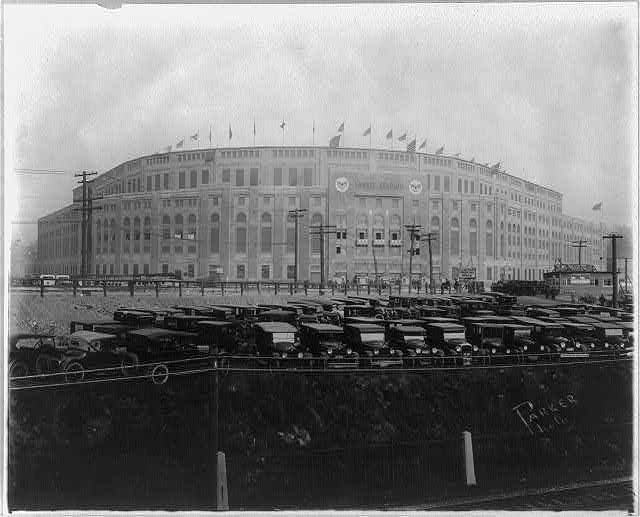
The fight was staged at Yankee Stadium in the Bronx and scheduled for fifteen rounds. Accounts differ on the size of the crowd: the SABR history and the Wikipedia entry on the rivalry describe a sellout, while HistoryNet gives a figure of 45,000. Millions more followed it on radio.
The early rounds are also told in two ways. Bert Randolph Sugar's retrospective for ESPN has Louis starting brightly, working his jab and closing Schmeling's left eye while banking the opening rounds. The Wikipedia account emphasises that Schmeling was already finding a home for his right hand behind his own jab and troubling Louis from the outset. What every source agrees on is the fourth round.
Sugar describes Louis switching from the jab to the hook in that round, and Schmeling answering by driving a straight right inside it. The punch caught Louis on the chin and put him on the canvas for the first time in his professional career. He got up quickly, but he was not the same fighter afterwards. Sugar's account says Louis was so dazed he did not hear the bell to end the round.
Eight More Rounds and the Knockout
From the fifth round on, the contest became a long examination of a hurt young fighter by a patient veteran. Louis kept coming forward but never solved the problem in front of him; the Wikipedia account notes he was also nursing an injury around his eye as the rounds went by. Schmeling kept waiting for the lowered left and kept punishing it.
The end came in the twelfth. Schmeling landed a right to the body and followed with more right hands to the head. Louis went down near his own corner and was counted out by referee Arthur Donovan. ESPN gives the official time as 2:29 of the round. It was the first defeat of Louis's professional career.
Grief in Harlem
For Black America, which had invested enormous hope in Louis, the result landed as a collective blow. The poet Langston Hughes wrote of walking down Seventh Avenue that night and seeing grown men weeping like children. HistoryNet records that Louis himself withdrew from view for three days after the loss. The New York World-Telegram, by Sugar's account, now dismissed the man who had seemed unstoppable as "just an ordinary boxer."
A German Victory: Hindenburg, Hitler and the Film
In Germany, the regime moved quickly to claim the win. According to the Wikipedia account, Hitler sent flowers and congratulations to Schmeling's wife, the actress Anny Ondra. HistoryNet quotes his telegram to the fighter: "Most cordial felicitations on your splendid victory." Joseph Goebbels, the propaganda minister, told Schmeling that his win belonged to the nation, in HistoryNet's rendering: "Your victory is a German victory."
Schmeling played his part. Speaking to the German press after the fight, he said, as quoted in the Wikipedia article on the rivalry, that he had to report to the Führer in particular that the thoughts of all his countrymen had been with him in the ring.
His journey home was itself staged. Airships.net, which documents the history of the Hindenburg, reports that officials switched Schmeling from a planned sea voyage to the airship's 23 June 1936 flight to Frankfurt, presenting the champion of the ring alongside the showpiece of German engineering. HistoryNet adds that crowds greeted him in Frankfurt and Berlin, that he dined with Goebbels, and that he watched film of the fight with Hitler.
That footage became a propaganda product of its own. The German Historical Museum's LeMO biography of Schmeling records that the fight film was released under the title "Max Schmelings Sieg – ein deutscher Sieg" (Max Schmeling's Victory – a German Victory), and that the regime presented the knockout of a Black boxer as evidence of Aryan superiority.
A Title Shot That Went to the Loser
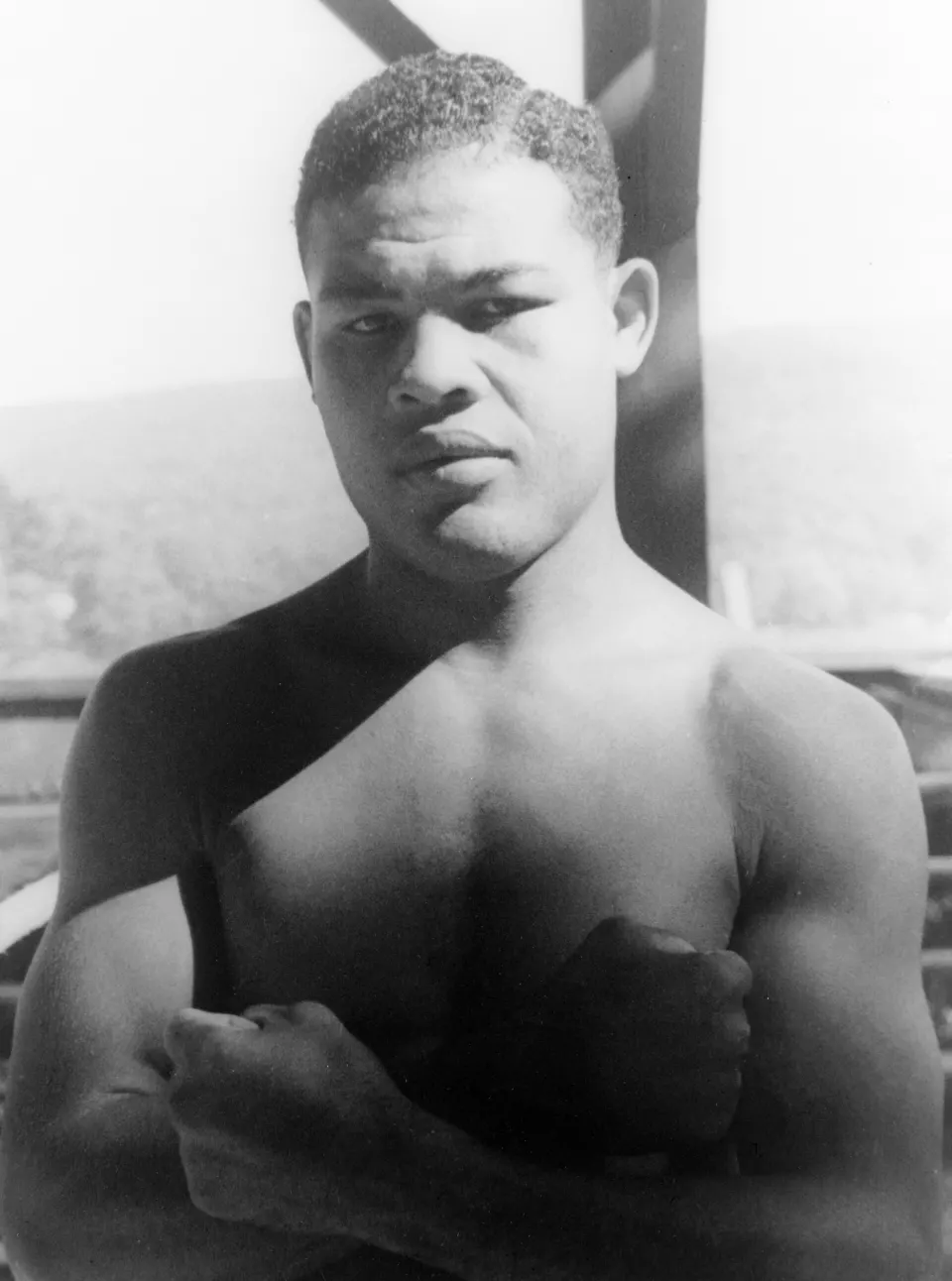
Logic said the win should have earned Schmeling a rematch with Braddock for the championship. It did not. According to the Wikipedia biography of Schmeling, Braddock's management opened talks with Louis instead, and although New York authorities had ordered a Braddock-Schmeling bout, the champion signed to fight Louis. Schmeling protested without success. On 22 June 1937, at Comiskey Park in Chicago, Louis knocked Braddock out and became heavyweight champion.
The title did not erase the memory of Yankee Stadium. Shortly after winning it, Louis said, as quoted in his Wikipedia biography, "I don't want to be called champ until I whip Max Schmeling." That sentence set the course for the second meeting between the two men, back in the Bronx in June 1938, a fight with a very different outcome and a very different atmosphere, and a story of its own.
Sources
- Joe Louis vs. Max Schmeling, Wikipedia, accessed October 2026
- Max Schmeling, Wikipedia, accessed October 2026
- Joe Louis, Wikipedia, accessed October 2026
- Hitler's Favorite Boxer Fought Joe Louis Twice—and Became His Lifelong Friend, Alex Kershaw, HistoryNet, 21 June 2022
- Joe Louis' Greatest Fights: Louis-Schmeling, Bert Randolph Sugar, ESPN Classic, 13 May 2006
- Boxing at the Big Ballpark in the Bronx, John J. Burbridge Jr., Society for American Baseball Research (SABR)
- Max Schmeling and the Hindenburg, Airships.net
- Max Schmeling 1905-2005, Arnulf Scriba, LeMO, Deutsches Historisches Museum


