
Johnson vs Ketchel in 1909 Was the Middleweight Who Floored the Heavyweight Champion
In Colma in October 1909, middleweight king Stanley Ketchel knocked down heavyweight champion Jack Johnson in the 12th round and was knocked out within seconds. The fight film, the alleged arrangement and the teeth-in-the-glove story are still disputed.

On 16 October 1909, in a wooden arena just south of San Francisco, the middleweight champion of the world climbed into the ring against the heavyweight champion. For eleven rounds Stanley Ketchel gave away size and weight to Jack Johnson. In the twelfth he put the bigger man on the floor, and within seconds he was lying unconscious himself. The cameras were rolling, and what they caught has been argued over ever since.
Two Champions, One Belt
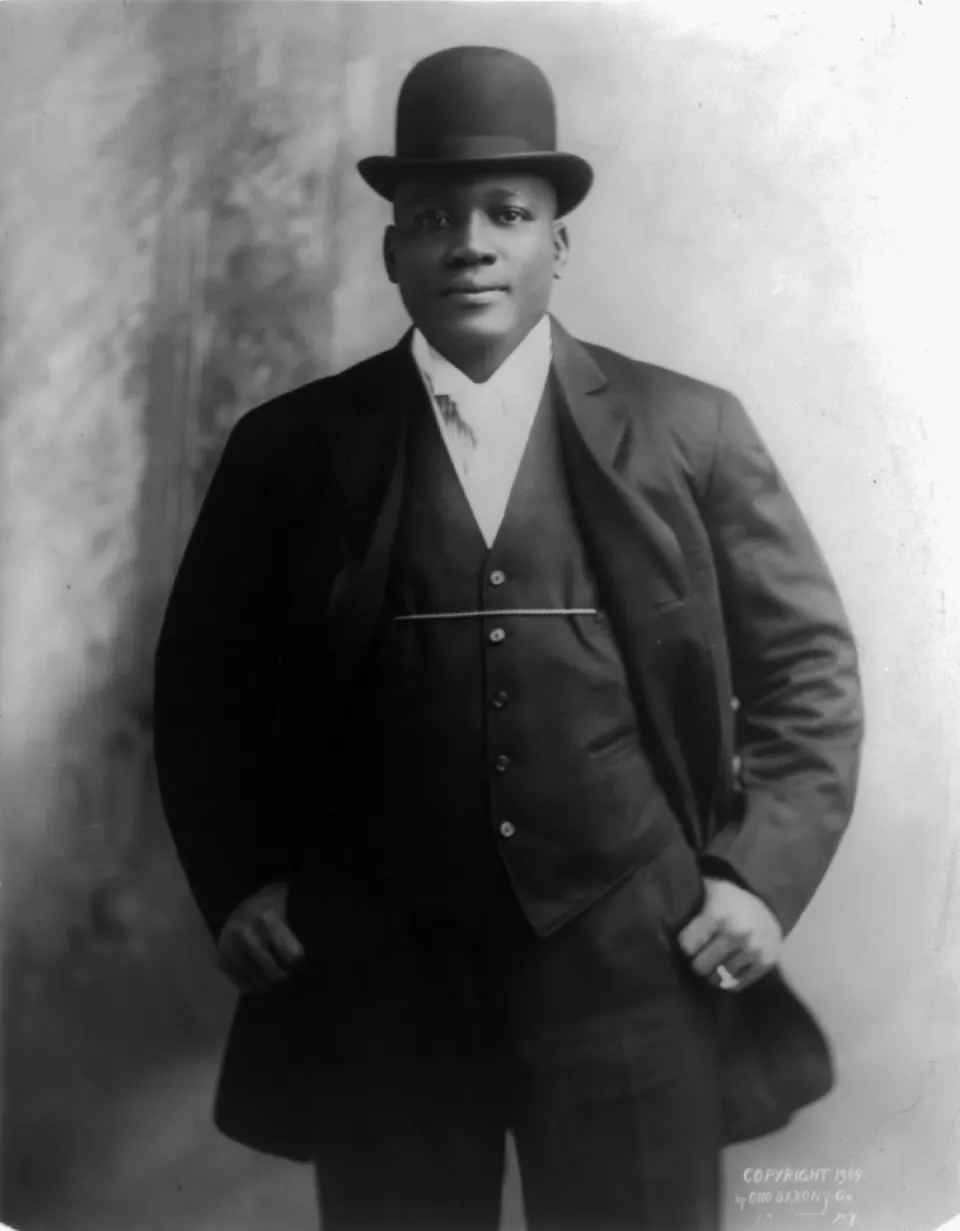
Jack Johnson, born in Galveston, Texas, in 1878, had taken the world heavyweight title from Tommy Burns at Sydney Stadium on 26 December 1908. He was the first Black man to hold it, and a large part of the American public spent the following year looking for someone, anyone, to take it back from him. Boxing News counts the Ketchel bout as the fourth defence of his reign.
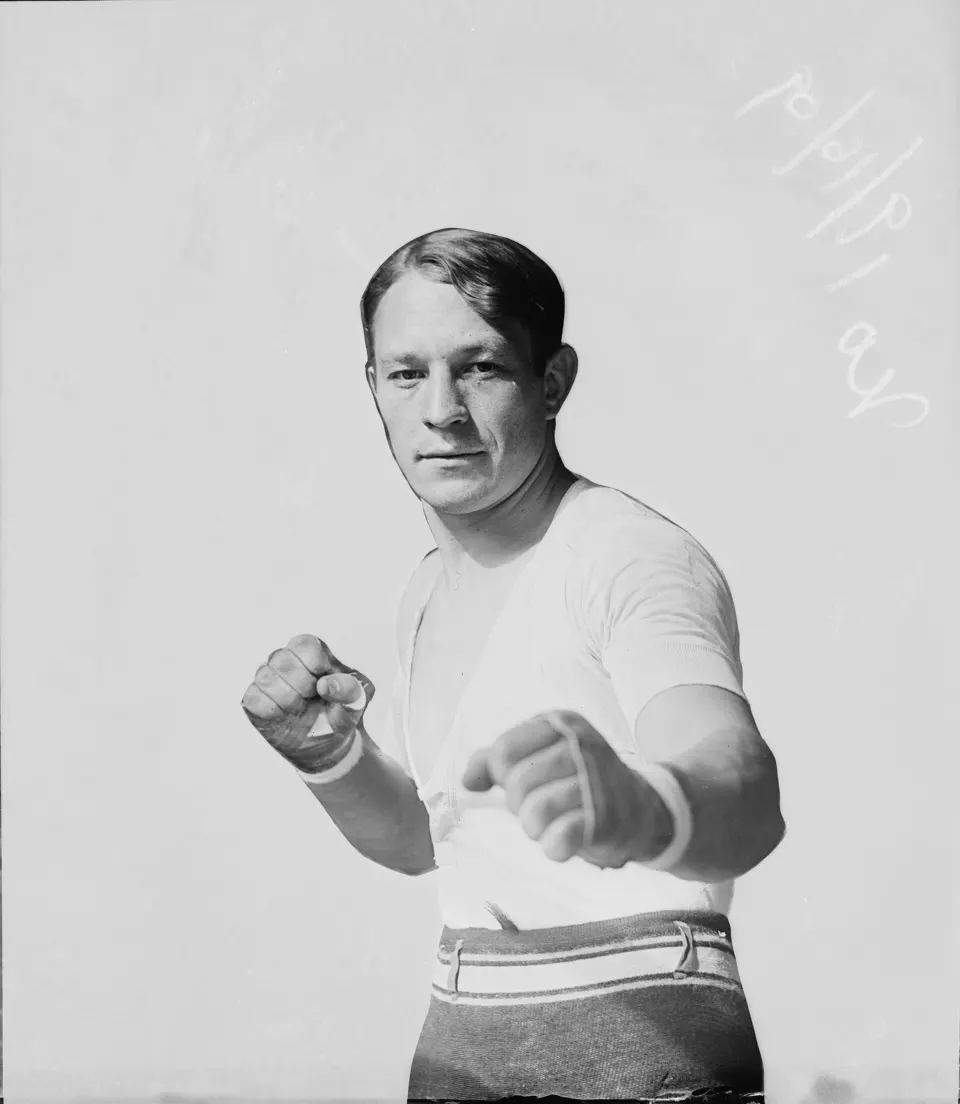
Stanley Ketchel was a very different kind of champion. Born Stanislaus Kiecal in Michigan in 1886, he had become world middleweight champion at 21 by beating Jack "Twin" Sullivan over 20 rounds in 1908. He lost the title to Billy Papke that September and won it back two months later, which made him, according to the EBSCO Research Starters profile, the first middleweight to regain the championship. He was known as "The Michigan Assassin" and was famous for the violence of his punching rather than for any defensive subtlety.
Putting a middleweight in with the heavyweight king was a commercial idea as much as a sporting one. The fight was staged by promoter James W. Coffroth at his Mission Street Arena in Colma, a small town on the San Francisco Peninsula, and it was scheduled for 20 rounds.
A Mismatch on the Scales
Nobody disputes that Johnson was far heavier, but the sources do not agree on the exact numbers. Wikipedia's account of Johnson's career gives him at 205½ pounds and Ketchel at 170¼. Boxing News and the EBSCO profile instead record Johnson at 209 pounds and Ketchel at 160, the latter describing the middleweight as having bulked up to reach that figure. Whichever set is right, the champion was carrying something like 35 to 50 pounds more than his challenger, and he was the taller man as well.
About 10,000 people came out to Colma to watch, according to the American Film Institute catalog entry for the fight film, which describes the event as an exhibition.
The Arrangement That May or May Not Have Existed
That word, exhibition, sits at the centre of the story. A long-standing account holds that Johnson and Ketchel, who were friendly outside the ring, agreed in advance that the bout would go the full 20 rounds. The motive offered is money: a fight that lasted the distance would make a longer and more saleable film, and fight films were then a serious source of income. Wikipedia's Ketchel article presents this as a plan the two men drew up together.
Boxing News, writing on the fight's 110th anniversary in 2019, treats the same story more cautiously, calling it a legend rather than an established fact. In that telling Johnson spent the early rounds carrying the smaller man, dropping him in the second and third rounds without trying to finish him. Since no written agreement has ever surfaced, the question of what was settled beforehand rests largely on reputation and later recollection.
Round Twelve: Johnson Goes Down
Whatever had been planned ended in the twelfth round. Ketchel threw a right hand that caught Johnson by surprise and sent him to the canvas. Writers have long called it a sneak punch, the implication being that Ketchel broke the understanding and went for the knockout.
How badly Johnson was hurt is another point of disagreement. The traditional version has him almost bouncing straight back up. The historian B.R. Bearden, whose study of the footage is summarised by Boxing News, argues otherwise: in his reading Johnson was seriously shaken, slipped back down as he tried to rise, and had to push himself up with both hands before he was on his feet at the count of eight.
Round Twelve: Ketchel Goes Out
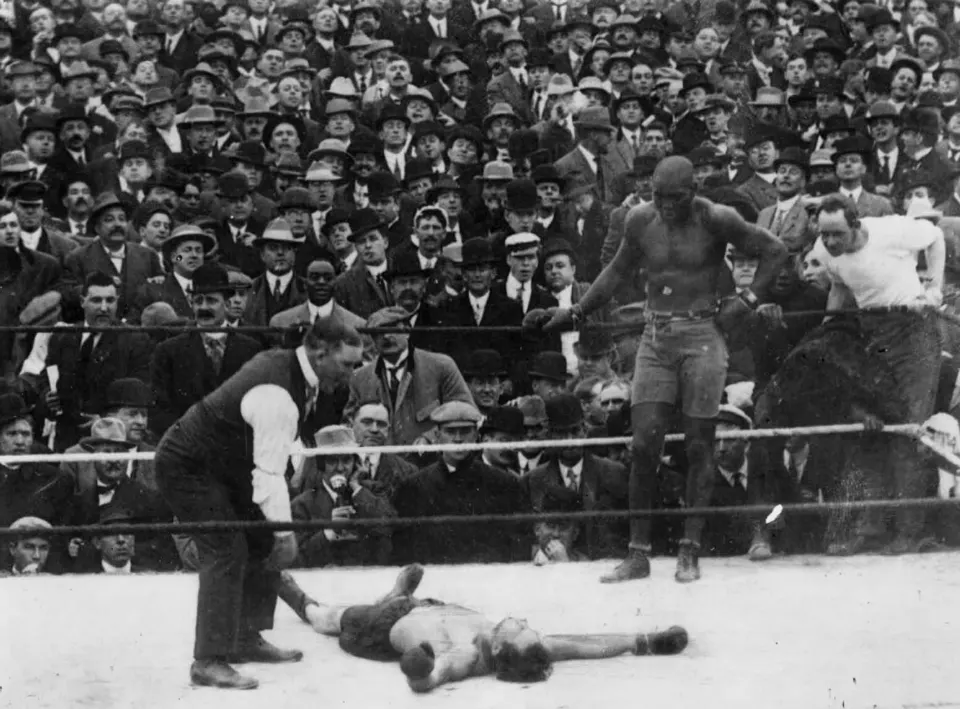
What happened next took only a moment. Johnson came forward and hit Ketchel as hard as he could. Sources differ on the details. Wikipedia's Johnson article describes a single right to the jaw. Boxing News, following Bearden, describes two heavy rights. Whether it was one punch or two, Ketchel fell and did not get up. He was counted out in the twelfth round and stayed unconscious for several minutes.
Johnson later gave his own version, quoted by the State Historical Society of Missouri, in which Ketchel turned a complete somersault and "landed on the back of his neck, out cold." The same profile adds that Ketchel could eat nothing but soup for three weeks afterwards. These are the champion's words, told later, and are best read as his memory of the moment rather than a precise record.
The Teeth in the Glove
The most famous detail of the night concerns Ketchel's teeth. The story goes that the punch tore several of them out and left them stuck in Johnson's glove, and that the champion calmly brushed them off while his opponent lay on the canvas.
The sources tell this story in different ways. Wikipedia's Johnson article says five teeth were ripped out at the roots and that the film shows Johnson picking them from his glove. Wikipedia's Ketchel article is more careful, saying some teeth were knocked out and a few stayed embedded in the glove. Bearden, as reported by Boxing News, accepts that the footage seems to support the legend but points out a problem: Johnson is seen wiping his left glove, while the knockout punch was a right. Nobody disputes that Ketchel lost teeth. Whether any of them ended up stuck in Johnson's glove is less certain.
The Film
The fight was made to be filmed, and filmed it was. The AFI catalog and the Silent Era database both list the footage as a production of J.W. Coffroth and the Kalem Company. AFI names E.C. Miles as cameraman. According to Silent Era, the negative was rushed to New York by special messenger, and finished prints were ready within 24 hours of reaching Kalem's offices. The film was released later in October 1909, and Silent Era gives 24 October as its copyright date.
The records do not fully agree on the film itself. Silent Era lists versions of 3,600 and 3,300 feet distributed by the Kleine Optical Company through the Motion Picture Patents Company. The AFI entry gives a length of 2,500 feet and lists Kalem as distributor. It was one of several films made of Johnson's fights during his reign. Footage of the bout still circulates, and it is the main evidence in the arguments about the knockdown and the glove.
A Year Later
Johnson kept his title and went on to the fight the whole period had been building towards, stopping James J. Jeffries in the 15th round in Reno on 4 July 1910. The State Historical Society of Missouri notes that he and Ketchel remained personal friends despite what had happened in Colma.
Ketchel did not have long. On 15 October 1910, one day short of a year after the Johnson fight, he was shot in the back with a rifle at a ranch near Conway, Missouri, by a farmhand named Walter Dipley. He died in hospital in Springfield at the age of 24. Dipley was convicted of first-degree murder. As Boxing News observes, Ketchel's early death meant that Johnson's version of what was agreed before that October afternoon became the only one available. Ketchel was inducted into the International Boxing Hall of Fame in 1990.
Sources
- On this day: Jack Johnson fought Stanley Ketchel, James Slater, Boxing News, 16 October 2019
- Stanley Ketchel, Wikipedia, accessed October 2026
- Jack Johnson (boxer), Wikipedia, accessed October 2026
- [Johnson-Ketchel Fight Films] (1909), AFI Catalog of Feature Films, American Film Institute, accessed October 2026
- World Championship, Jack Johnson vs. Stanley Ketchel (1909), Progressive Silent Film List, Silent Era, accessed October 2026
- Stanley Ketchel, Historic Missourians, State Historical Society of Missouri, accessed October 2026
- Stanley Ketchel, Research Starters, EBSCO, accessed October 2026


