
James J. Jeffries the Boilermaker Retired Unbeaten
From Carroll, Ohio and the boiler shops of Los Angeles to the heavyweight title, James J. Jeffries beat Fitzsimmons, survived 25 rounds with Sharkey under the arc lights and retired undefeated in 1905 before settling on his Burbank ranch.

James J. Jeffries came out of Ohio, grew up in Los Angeles hammering rivets as a boilermaker, and took the heavyweight championship from Bob Fitzsimmons in 1899. He defended it seven times, walked away unbeaten in 1905, and spent most of the rest of his life on a ranch in Burbank, where he trained and promoted fighters in his own barn.
From Carroll, Ohio to the Los Angeles Boiler Shops
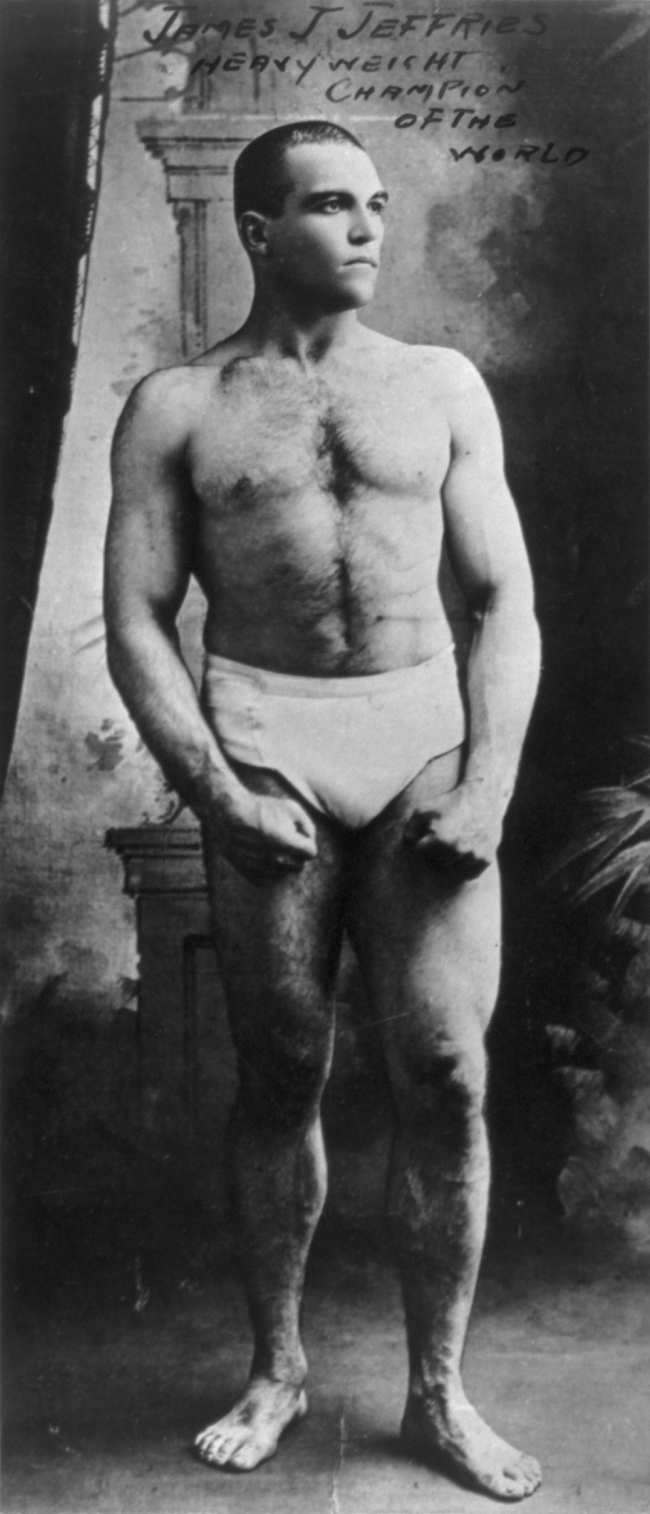
Jeffries was born on April 15, 1875, in Carroll, Ohio. His family later moved west to Los Angeles. The sources do not agree on when. Wikipedia puts the move at about age seven, while the Stark Center archive at the University of Texas, which follows the International Boxing Hall of Fame biography, gives the year as 1891, when he would have been around sixteen.
The trade that gave him his nickname came in California. Jeffries worked as a boilermaker in his teens, and Wikipedia says that by seventeen he was in the copper mines near Temecula. There, by that account, he refused the miners' hazing and beat the biggest man in camp in a rule-free fight that lasted nearly an hour.
He was built for that kind of work. Wikipedia lists him at about 6 feet 1½ inches and roughly 225 pounds in his prime, with a 76½-inch reach. Other references make him taller, and the New World Encyclopedia gives 6 feet 3 inches. Several accounts say he was quick for his size: he could cover 100 yards in around eleven seconds and high-jump close to six feet. He boxed as an amateur until he was about twenty.
Learning the Trade in Corbett's Camp
Part of his education came in someone else's camp. Before James J. Corbett defended the title against Bob Fitzsimmons in 1897, he used the big Californian as a sparring partner.
His professional record started filling up in 1896. Wikipedia lists a fourteenth-round knockout of Hank Griffin as his third fight. In 1897 he went twenty rounds to a draw with Gus Ruhlin in July, then drew again over twenty rounds with Joe Choynski in November. The 1898 results showed how quickly he was improving. On March 22 he stopped the veteran Peter Jackson in three rounds. On May 6 he won a twenty-round decision over the tough sailor Tom Sharkey, even though Sharkey knocked him down in the eleventh.
His style became a trademark. Jeffries fought from a deep, bent-over crouch. Wikipedia says his trainer, Tommy Ryan, taught him the stance, but Jeffries himself claimed he found it on instinct after taking a hard left hook to the liver in an early fight. Behind that guard he carried a heavy left hand, which made sense for a natural left-hander.
The Night at Coney Island: Fitzsimmons, 1899
On June 9, 1899, Jeffries challenged Fitzsimmons for the world heavyweight title at the Coney Island Athletic Club in Brooklyn. On paper the challenger had every advantage. He was much younger and far heavier than the lean, long-armed champion, yet Fitzsimmons' Wikipedia biography notes that most observers still gave Jeffries little chance.
Jeffries kept to his crouch, absorbed what the champion threw and wore him down. In the eleventh round he knocked Fitzsimmons out. A few years after turning professional, the former boilermaker was heavyweight champion of the world.
Twenty-Five Rounds Under the Arc Lights: Sharkey, 1899
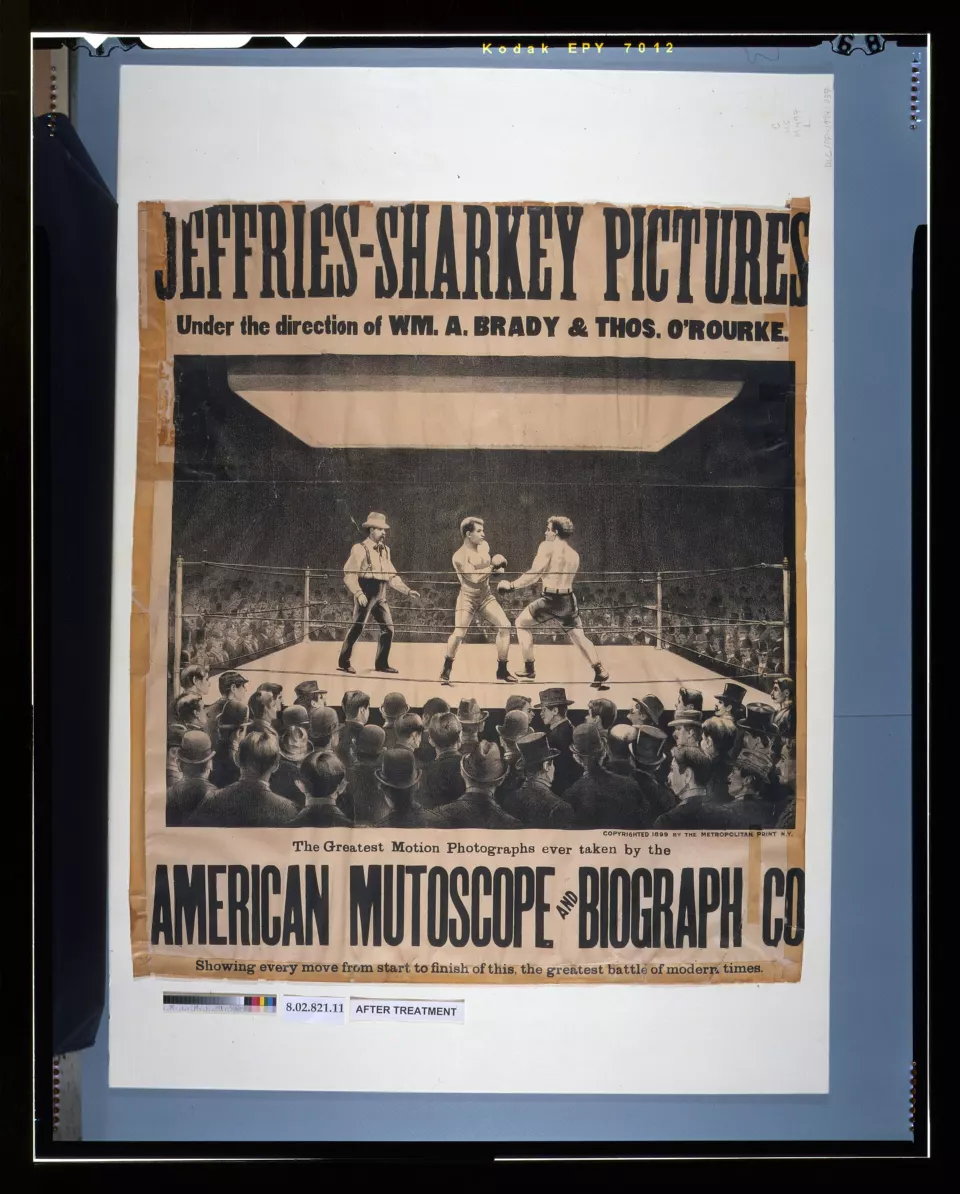
His first defense, on November 3, 1899, also took place at the Coney Island Athletic Club, in a rematch with Sharkey. It is remembered as much for what happened around the ring as in it. The American Mutoscope and Biograph Company held the film rights and wanted to record the whole fight indoors. To do it, the company put up hundreds of arc lamps above the ring. The Bioscope, a silent-film history blog, gives the number as 400 run by eleven electricians, while a U.S. Copyright Office history newsletter puts it at 500. The fight has been described as the first motion picture shot under artificial light.
The lights made the ring extremely hot. The Copyright Office account says the temperature rose to around 115 degrees, and The Bioscope reports that both fighters had their scalps singed and lost weight as the rounds went on. They fought the full twenty-five rounds. Sharkey came out of it with broken ribs, and Jeffries got the decision. Four cameras running in rotation shot more than seven miles of film. A blown fuse near the end of the last round meant the cameras missed the closing moments, when one of Jeffries' gloves came off. The Biograph company later dealt with the gap by editing or by restaging, and nobody has ever made clear which.
Seven Defenses and an Unbeaten Exit
The other defenses came quickly. On April 6, 1900, Jeffries knocked out Jack Finnegan in 55 seconds, which Wikipedia calls the fastest knockout in a heavyweight title fight in the record books of that era. On May 11, 1900, he met Corbett, his old employer, at Coney Island. Corbett outboxed him for long stretches but was knocked out in the twenty-third round of a scheduled twenty-five. In November 1901, Ruhlin's corner retired him between the fifth and sixth rounds.
The Fitzsimmons rematch in San Francisco on July 25, 1902, was the hardest night of his reign. Fitzsimmons broke Jeffries' nose and opened cuts on his cheeks so deep that, by one account, they went to the bone. Jeffries kept coming forward anyway and knocked the older man out in the eighth. In August 1903 he stopped Corbett again, this time in ten rounds. On August 26, 1904, at Mechanics' Pavilion in San Francisco, he finished Jack Munroe in two. Wikipedia notes that Corbett, Ruhlin and Sharkey all came out of their title fights with him with broken ribs.
By then there were few opponents left, and in May 1905 Jeffries retired as undefeated champion. He then refereed the fight in which Marvin Hart beat Jack Root for the vacant title. Totals for his record differ by source: Wikipedia lists 19 wins, 1 loss, 2 draws and 2 no-contests, the New World Encyclopedia 18 wins with 15 knockouts.
Reno, 1910: The Comeback
He did not stay retired. On July 4, 1910, at age 35 and after roughly six years out of the ring, he faced Johnson in Reno, Nevada, in a fight scheduled for 45 rounds. Accounts of his weight vary; Wikipedia says he had to shed around a hundred pounds. Johnson controlled the fight, and Jeffries' corner stopped it in the fifteenth round after he had been knocked down twice. It was the only loss of his career. That day has its own story in our separate article on Johnson vs. Jeffries.
The Burbank Ranch and the Jeffries Barn
The quieter part of his life took place in the San Fernando Valley. According to the Burbank Historical Society, Jeffries bought land in Burbank in 1904 while he was still champion. The property eventually reached 107 acres, near what is now the corner of Victory Boulevard and Buena Vista Street. Wikipedia describes it as an alfalfa ranch, and the historical society says he raised prize-winning cattle there. He became a familiar figure at Burbank civic events.
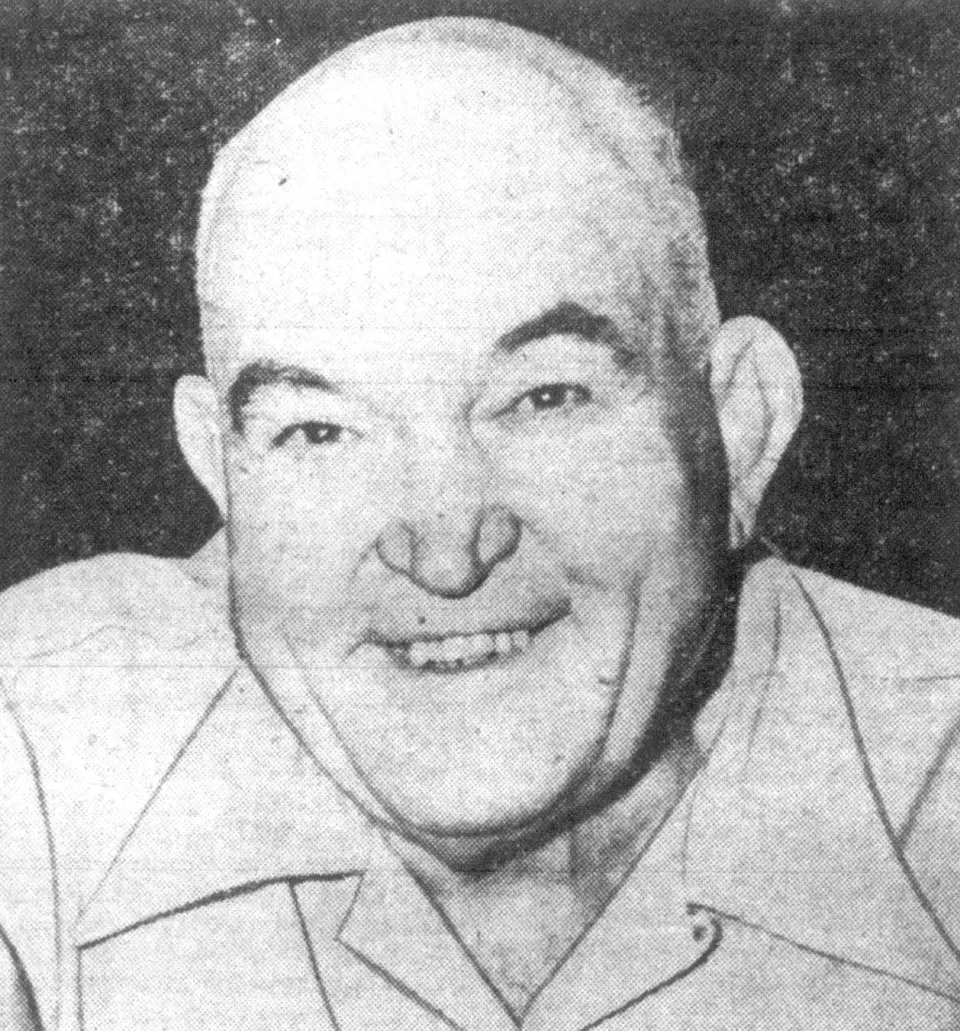
His big barn was the center of the property. Jeffries used it as a gym and fight venue, training boxers and promoting cards that became known as the Jeffries Barn or Jeffries Center. The Burbank in Focus archive says the Thursday-night shows there drew crowds through the 1930s and 1940s, including film stars such as Cary Grant, Mae West and Al Jolson. He kept holding fights there until the end of his life.
Jeffries had a stroke in his later years. He died at home in Burbank on March 3, 1953, of a heart attack, and was buried at Inglewood Park Cemetery. The barn outlived him. It was taken apart and moved to Knott's Berry Farm in Buena Park. Yesterland gives the year as 1954 and Burbank in Focus as 1955. At Knott's it first housed a boxing museum and later the Mott's Miniatures collection, and it is still in use as an event hall. The International Boxing Hall of Fame inducted Jeffries in 1990.
Sources
- James J. Jeffries, Wikipedia, accessed October 2026
- Bob Fitzsimmons, Wikipedia, accessed October 2026
- James Jeffries (Albert Davis Collection boxing exhibit), H.J. Lutcher Stark Center for Physical Culture and Sports, accessed October 2026
- James J. Jeffries, New World Encyclopedia, accessed October 2026
- The Jeffries-Sharkey Fight, The Bioscope, January 7, 2009
- Copyright Lore, U.S. Copyright Office, October 2009
- The Heavyweight of History: How James J. Jeffries Put Burbank on the Map, Burbank Historical Society, accessed October 2026
- 1930s - Jeffries Barn, Burbank in Focus, accessed October 2026
- Knott's Berry Farm: Changes, Yesterland, accessed October 2026


