
Stanley Ketchel the Michigan Assassin Lived a Short, Violent Life From Butte to Colma
A Grand Rapids runaway who learned to fight in Montana, Stanley Ketchel won, lost and regained the middleweight title against Billy Papke and floored Jack Johnson before he was shot dead in Missouri at 24.

Stanley Ketchel crammed an entire legend into seven years of fighting. A runaway from Grand Rapids who learned his trade in the saloons and mining camps of Montana, he won the middleweight championship, lost it to Billy Papke, took it back, put heavyweight king Jack Johnson on the canvas, and was shot dead on a Missouri ranch a day short of the first anniversary of that fight. He was 24.
A Runaway From Grand Rapids
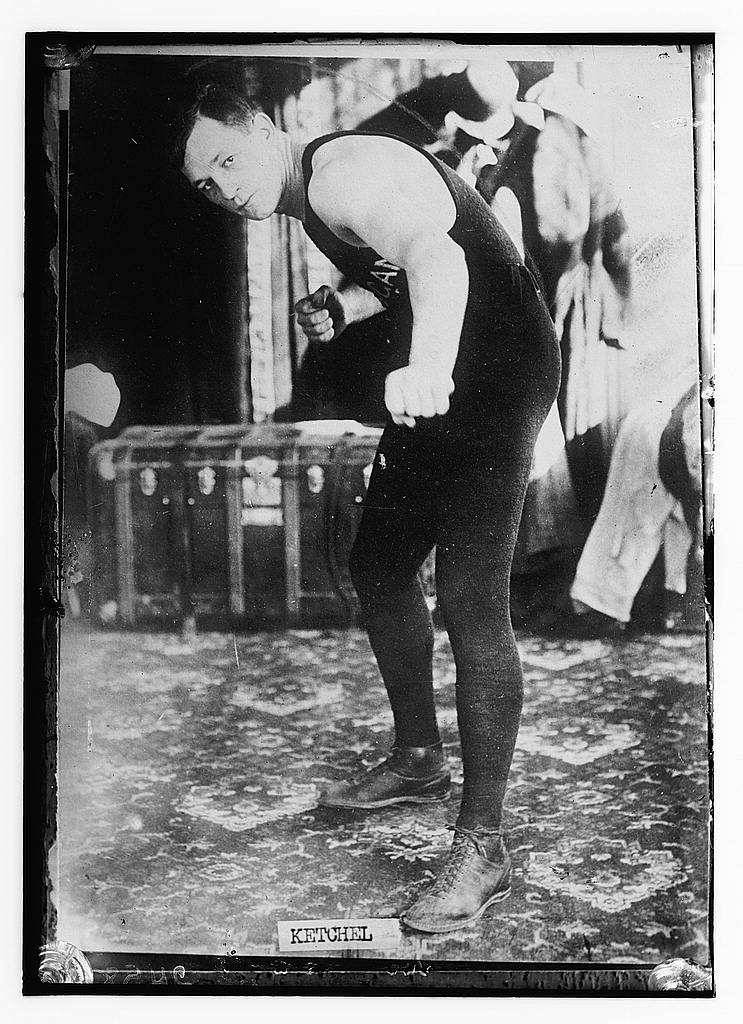
He was born Stanisław Kiecal on September 14, 1886, in Grand Rapids, Michigan, the son of Tomasz and Julia Kiecal, Polish immigrants whose family roots, according to Wikipedia, lay in the village of Sulmierzyce. School held little interest for him. He drifted toward street gangs, and at about twelve he left home altogether, riding the rails west as a hobo.
Some accounts of his childhood are darker than the record can support. A biographical piece published by the World Boxing Association repeats a story that his parents were murdered, but flags it as unconfirmed, and the claim does not appear in the other sources consulted here. What the sources do agree on is the direction of travel: west, toward the mining country, and alone.
Bellhop, Bouncer and Prizefighter in Montana
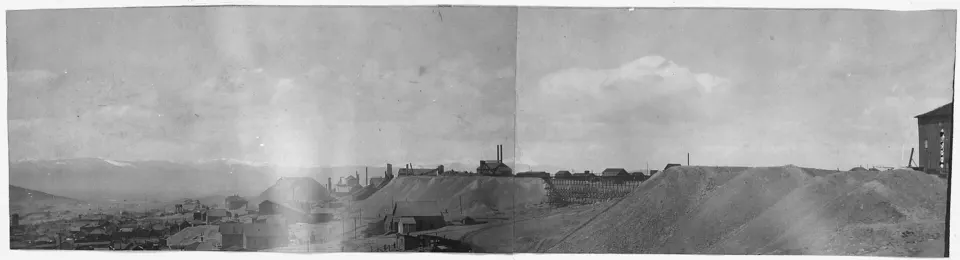
The boy settled in Butte, the copper-mining town. He worked first as a hotel bellhop and then as a bouncer, and EBSCO's biographical entry adds that he took on all comers as a house fighter, piling up a large number of unrecorded bouts without formal coaching. His style matched his surroundings: he charged from his corner at the opening bell, throwing hard punches with both hands until something gave way.
His recorded professional career began in Butte on May 2, 1903, with a first-round knockout of Kid Tracy. The WBA piece notes that some records place that debut in 1904. Nine days later he lost a six-round decision to Maurice Thompson. Over the next few years he fought across the state, in Butte, Lewistown, Miles City, Helena and Great Falls. The Michigan Sports Hall of Fame counts 41 bouts in Montana with only two defeats; Wikipedia breaks the same stretch down as 36 wins, two losses and three draws. That ferocity earned him the name "The Michigan Assassin."
California and the Middleweight Crown
By 1907 Ketchel had outgrown the mining circuit and moved to California, where the big promotions were. Three meetings with Joe Thomas made his name. They drew on July 4, 1907, at Marysville. On September 2 at Colma, just south of San Francisco, Ketchel knocked Thomas out in the 32nd round, and on December 12 in San Francisco he beat him again over 20 rounds.
On February 22, 1908, at Colma, he stopped Mike "Twin" Sullivan in the first round. Exactly when Ketchel became champion has long been argued. Wikipedia notes that historians disagree over whether the Thomas win or the Sullivan knockout should count as the moment he took the title. Either way, by his early twenties he was widely accepted as middleweight champion of the world.
Four Fights With Billy Papke
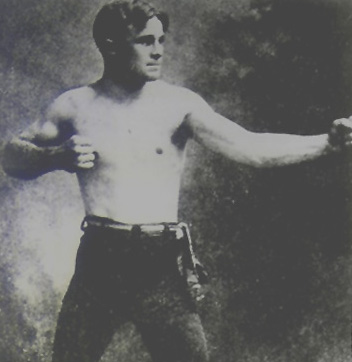
His great rival was Billy Papke, a former miner from Spring Valley, Illinois, known as "The Illinois Thunderbolt" and born only days after Ketchel in September 1886. They met first on June 4, 1908, in Milwaukee, and Ketchel won a ten-round decision.
The rematch on September 7, 1908, at Vernon, California, became the most retold fight of Ketchel's life. Papke opened with a ferocious assault, battered the champion for eleven rounds, and stopped him in the twelfth to take the title. ESPN's SportsCentury feature describes the opening this way: Ketchel offered his glove for the customary touch and Papke answered with a left hook to the jaw and a right behind it. In that version, the episode is why referees began telling boxers to shake hands before the bell. Wikipedia's article on Papke disputes the whole story, saying historians could find no account of the incident from either fighter or from the reporters at ringside, and suggesting the legend grew out of Papke's fast start. The sources do agree on the result: Ketchel was badly beaten and lost his crown.
He did not wait long. On November 26, 1908, at Colma, Ketchel overwhelmed Papke and finished him in the eleventh round, becoming, in Wikipedia's account, the first middleweight champion to win back the title after losing it. EBSCO's entry dates these fights differently; the dates here follow the records in both Wikipedia articles. A fourth meeting, on July 5, 1909, again at Colma, went the full 20 rounds, and Ketchel won the decision.
Colma, 1909: Flooring Jack Johnson
On October 16, 1909, at Colma, Ketchel stepped up to challenge Jack Johnson for the heavyweight championship. The weight gap was enormous. EBSCO puts Ketchel at about 160 pounds and Johnson at 209; the WBA piece gives Ketchel 180 and Johnson around 210. Wikipedia reports that the two men had worked out a plan to carry the fight the full 20 rounds, because a long fight would sell more tickets for the film shown in theaters afterward, and that Ketchel wore long coats to hide platform shoes that made him look bigger.
In the twelfth round Ketchel broke from any such arrangement. He landed a right hand and Johnson went down. The champion got up and immediately knocked Ketchel out. Wikipedia describes the finishing punch as a right uppercut. The blow knocked out several of Ketchel's teeth, and some reportedly ended up embedded in Johnson's glove. EBSCO adds that Ketchel lay unconscious for about ten minutes.
The Last Year
Ketchel kept fighting in 1910, though not always successfully. Wikipedia lists six-round newspaper-decision losses to Frank Klaus in Pittsburgh in March and to Sam Langford in Philadelphia in April. His last bout came on June 10, 1910, in New York, where he knocked out Jim Smith in the fifth round.
Hoping to rebuild his strength for a rematch with Johnson, he went to stay on the ranch of his friend R. P. Dickerson near Conway, Missouri. The WBA piece says he was also trying to recover from heavy drinking and possibly opium use. Dickerson had recently hired a cook, Goldie Smith, and a ranch hand who called himself Walter Kurtz; his real name was Walter Dipley.
Murder at the Dickerson Ranch
On the morning of October 15, 1910, Ketchel was shot at the breakfast table. Wikipedia's account says that Ketchel had scolded Dipley for beating a horse, that Smith seated the fighter with his back to the door, and that Dipley fired a .22-caliber rifle into his back. The bullet passed through his shoulder and into a lung, and Dipley then robbed him. The WBA piece instead describes a shotgun wound to the right lung, an example of how the details of the killing vary between tellings. Dickerson arranged a special train to rush Ketchel to a hospital in Springfield, but he died that evening, at 24.
Dipley and Smith were tried in January 1911 and convicted. Smith's murder conviction was later overturned and she served 17 months for robbery. Dipley received a life sentence. Wikipedia and EBSCO both say he served 23 years before being paroled, and Wikipedia records that he died in 1956.
Burial and a Legend That Outlasted Him
Ketchel was brought home and buried at Holy Cross Cemetery in Grand Rapids. Wikipedia reports that the funeral was the best attended in Michigan until a funeral in the Ford family surpassed it, and the city has since put up a plaque and a statue in his honor. His record is counted differently from source to source. Wikipedia gives 49 wins, 5 losses and 3 draws in official results, with 46 wins by knockout, while the Michigan Sports Hall of Fame lists 51 wins, 48 by knockout.
He is enshrined in the International Boxing Hall of Fame, and the Michigan Sports Hall of Fame inducted him in 1959. Ring ranked him the eighth-greatest middleweight in 2004 and placed him sixth on its list of the 100 best punchers. The Ring historian Nat Fleischer rated him the greatest middleweight of all.
Sources
- Stanley Ketchel, Wikipedia, accessed October 2026
- Billy Papke, Wikipedia, accessed October 2026
- Stanley Ketchel, EBSCO Research Starters, accessed October 2026
- "The Michigan Killer", World Boxing Association (wbaboxing.com), accessed October 2026
- Stanley Ketchel inductee page, Michigan Sports Hall of Fame, accessed October 2026
- September Classic Moments (Papke vs Ketchel, 1908), ESPN SportsCentury, accessed October 2026


