
How Sam Langford, the Boston Tar Baby, Went From Weymouth Falls to a Blind Man's Room in Harlem
Sam Langford beat champions from lightweight to heavyweight, but the colour line, and Jack Johnson, kept him from ever fighting for the world heavyweight title. In 1944 a sportswriter found him blind and broke in Harlem.

Sam Langford left a small Black settlement in Nova Scotia as a runaway teenager. He went on to beat world champions from lightweight to heavyweight, and the heavyweight title stayed closed to him for his whole career. When a New York sportswriter went looking for him in 1944, he found him blind and nearly penniless in Harlem. Many readers had assumed he was dead.
Weymouth Falls and the Road to Boston
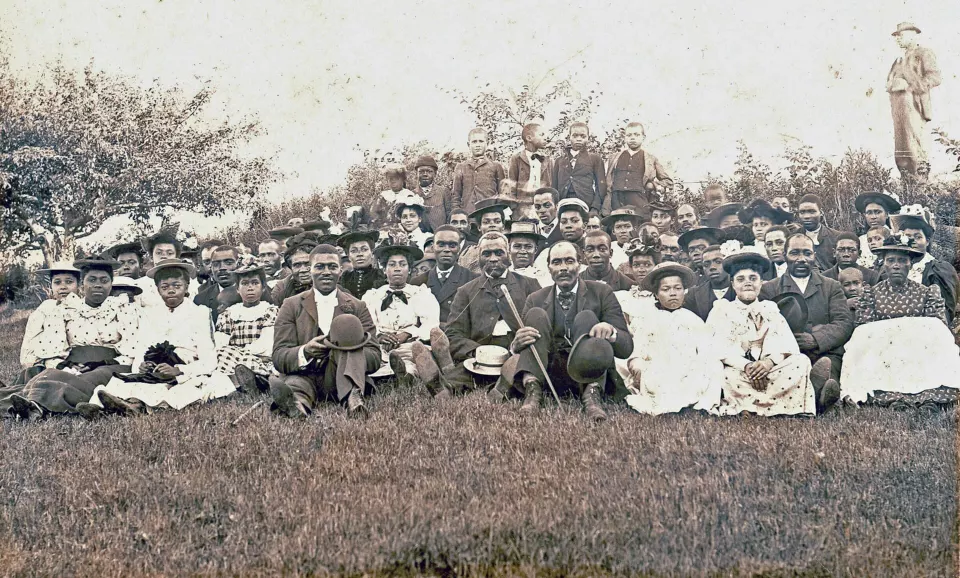
Most references give Samuel Edgar Langford's birth date as March 4, 1886, in Weymouth Falls, Nova Scotia. It is printed in the Canadian Encyclopedia and on Wikipedia. Even so, the date is uncertain. Wikipedia notes that Langford later called it a date he had simply made up. The Nova Scotia Sport Hall of Fame lists his birth as somewhere between 1883 and 1886, and one Nova Scotia history site gives 1883 in a headline and 1886 in the article below it. Weymouth Falls was a rural Black community, and Wikipedia records that his grandfather, who had escaped slavery in the United States, helped found it.
According to Wikipedia, his brother Charles, later a minister, gave Sam his first boxing lessons. A violent home life drove the boy away early. He did fishing work on Grand Manan, then made his way to Boston partly by boat and partly on foot. In Boston he found a janitor's job at the gymnasium of the Lenox Athletic Club. Sparring with the club's boxers earned him a trainer. At about fifteen he won Boston's amateur featherweight championship, and on April 11, 1902, he turned professional with a fifth-round knockout of Jack McVicker.
Beating Joe Gans and Drawing With Joe Walcott
Within two years the teenager was in with the best men near his weight. On December 8, 1903, in Boston, Langford outpointed reigning lightweight champion Joe Gans over 15 rounds. Accounts gathered on Wikipedia say he took control after the middle rounds. Because the fight was over the weight limit, Langford did not win the title. Boxing News puts his age at 17 that night.
On September 5, 1904, at Lake Massabesic near Manchester, New Hampshire, Langford met world welterweight champion Joe Walcott over 15 rounds. Both men weighed 142 pounds. The official verdict was a draw. Wikipedia cites a Boston Globe report that thought Langford had clearly won and described him dropping Walcott to one knee in the third round.
Chelsea, 1906: The Jack Johnson Fight
On April 26, 1906, in Chelsea, Massachusetts, Langford fought the heavyweight Jack Johnson. Johnson was not yet world champion. Wikipedia lists Langford at 146 pounds and Johnson at 196, a gap of about 50 pounds. The Canadian Encyclopedia says only that Johnson was at least 20 pounds heavier, and it calls Johnson the champion at the time, which conflicts with Wikipedia's account. Wikipedia's version has Langford putting Johnson down in the first round. After that the bigger man took over, dropped Langford twice in the sixth and won the 15-round decision.
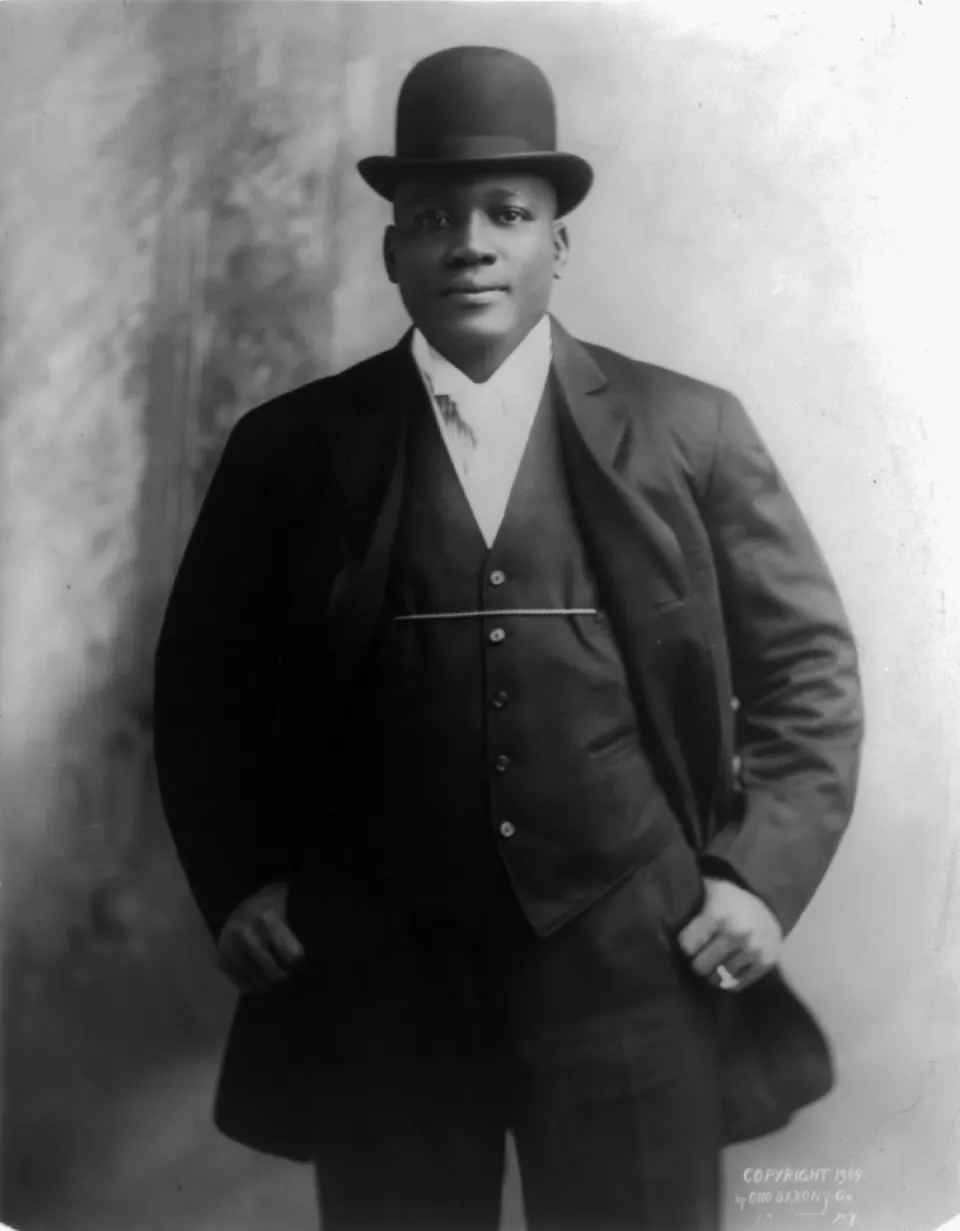
It was the only time they fought. Johnson won the world title from Tommy Burns in 1908 and then would not give Langford a rematch. Wikipedia describes a 1909 attempt by London's National Sporting Club to arrange the fight, with purses already set, which fell apart when Johnson pulled out. Both Wikipedia and the Canadian Encyclopedia quote Johnson's dismissive line, "I don't want to fight that little smoke." The colour line kept Black challengers away from most white champions, and the first Black heavyweight champion did not want Langford either. Langford never got a shot at a world title in the United States.
Ketchel, the Colored Title and Fighting Abroad
Langford kept growing and moving up in weight. On April 27, 1910, he boxed middleweight champion Stanley Ketchel over six rounds. Wikipedia records the bout as a no-decision. Boxing News says Langford beat him. Either way there was no rematch, because Ketchel was shot dead that October.
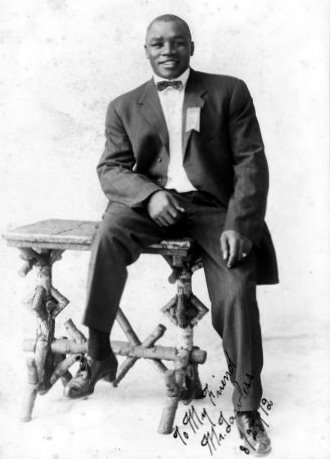
With the main titles out of reach, Langford fought for the titles open to him. Wikipedia says he won a world colored middleweight title from Young Peter Jackson in November 1907. In May 1907 he took the English heavyweight championship with a fourth-round knockout of Tiger Smith. In September 1910 he beat Joe Jeannette in Boston for the colored heavyweight championship. He fought Sam McVey to a 20-round draw in Paris in 1911 and knocked him out in Sydney in December 1912. In 1913 he beat Jeannette again over 20 rounds in Paris. In August 1911 he stopped former light heavyweight champion Philadelphia Jack O'Brien in five rounds.
The same handful of Black heavyweights kept meeting each other, because few others would fight them. Langford and Harry Wills fought each other 17 times between 1914 and 1922, and Wills won most of them. Wikipedia counts two Langford wins, both knockouts, including a knockout in New Orleans in February 1916. Records from the period are incomplete, and sources give very different career totals. Wikipedia's official tally is 178 wins, 30 losses and 38 draws. Counting newspaper decisions raises it to roughly 210 wins, 44 losses and 52 draws. The Canadian Encyclopedia gives 214-46-44, and several sources say his real number of fights may have been far higher than any surviving record.
Losing His Sight
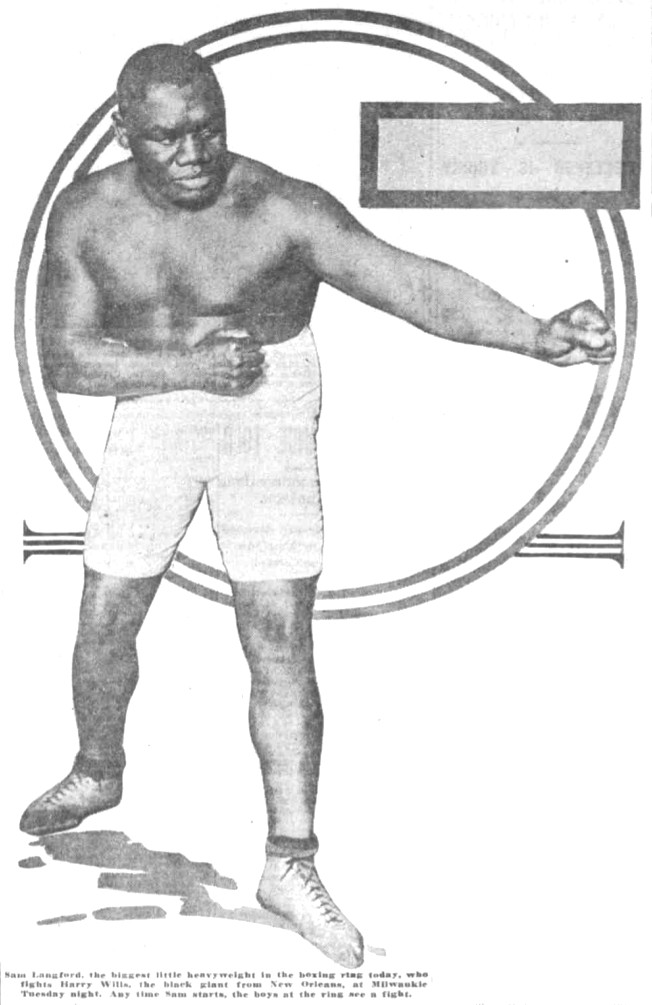
The Canadian Encyclopedia dates the damage to his left eye to a fight with Fred Fulton on June 19, 1917. Langford kept boxing as his vision got worse. One Nova Scotia account says his right eye was badly hurt by the time he met future middleweight champion Tiger Flowers on June 5, 1922. Langford still knocked Flowers out in the second round. Wikipedia says that in 1923 he won the Mexican heavyweight title in what is described as the last fight to a finish.
His retirement date also varies by source. The Nova Scotia Sport Hall of Fame lists his career as 1902 to 1923, Boxing News gives 1925, and Wikipedia and the Canadian Encyclopedia say he stopped in 1926. The Canadian Encyclopedia says his last bout that year was halted in the first round because he could not see his opponent. The Nova Scotia hall says his license was revoked.
Harlem, 1944: Al Laney Finds Him
Langford dropped out of public view after he retired, and some people assumed he had died. In 1944 Al Laney of the New York Herald Tribune went looking for him. Wikipedia says Laney found him in a cramped rented room in Harlem, blind, living on money from a charity for the blind, with twenty cents to his name. Laney's article was titled "A Dark Man Laughs." In it Langford looked back on his career without bitterness. Wikipedia quotes him: "I had plenty good times."
The article prompted a fund-raising drive. Wikipedia says it raised almost $10,000 for a trust fund, along with gifts that included a guitar. A Nova Scotia account says the money paid for medical costs.
Recognition Came Late
In 1955 Langford was elected to The Ring's Hall of Fame and to Canada's Sports Hall of Fame. The Canadian Encyclopedia says he was the first non-champion in The Ring's hall. He died on January 12, 1956, in Cambridge, Massachusetts. Wikipedia says he was living with his daughter at the time, and a Nova Scotia account says he died penniless in a private nursing home. Other honors came after his death. He entered the Nova Scotia Sport Hall of Fame in its first class in 1964 and the International Boxing Hall of Fame in 1990. In 1999 he was voted Nova Scotia's top male athlete of the 20th century. In August 2020 the WBC named him an honorary world champion. In its 2003 list of the 100 greatest punchers, The Ring ranked him second, behind only Joe Louis. ESPN once called him the greatest fighter almost nobody knows.
Sources
- Sam Langford, Wikipedia, accessed October 2026
- Sam Langford, The Canadian Encyclopedia, accessed October 2026
- Sam Langford, Nova Scotia Sport Hall of Fame inductee profile, accessed October 2026
- Sam Langford: the greatest fighter nobody knows, Boxing News, accessed October 2026
- Sam Langford: a Canadian Boxing Footnote, Secret East, July 2018


