
Barkley vs Hearns in 1988 Saw The Blade Knock Out the Hitman in Las Vegas While Cut, Bleeding and Behind
Thomas Hearns won the first two rounds and left Iran Barkley cut over both eyes, but two right hands in the third round at the Las Vegas Hilton took the WBC middleweight title. Four years later Barkley beat him again at light heavyweight.

For two rounds at the Las Vegas Hilton on June 6, 1988, Thomas Hearns did almost everything right. He won both rounds on all three scorecards, opened cuts over both of Iran Barkley's eyes and split his lip. Then, in the last minute of the third, the 4-to-1 underdog threw two right hands and the WBC middleweight title changed hands.
A Four-Division Champion and a Bronx Contender
Thomas "The Hitman" Hearns, born in Tennessee and raised as a fighter in Detroit under Emanuel Steward, came into the summer of 1988 as one of the most decorated boxers of his generation. On October 29, 1987, he had knocked out Juan Roldán to win the vacant WBC middleweight title, making him the first man to win world titles in four weight divisions. The one blot most people remembered was his 1985 loss to Marvin Hagler, a third-round stoppage in a fight often described as three of the greatest rounds ever boxed.
Iran "The Blade" Barkley, born in New York City on May 6, 1960, had taken a slower road out of the South Bronx. He won a bronze medal at the 1982 World Amateur Championships in Munich, turned professional that December in Atlantic City, and got his first world title chance on October 23, 1987, in Livorno, Italy, where Sumbu Kalambay outpointed him over 15 rounds for the vacant WBA belt. Barkley rebuilt quickly. On March 6, 1988, he stopped Michael Olajide, and two weeks later the Hearns fight was announced.
Knockout Nite: Odds, Purses and Rankings
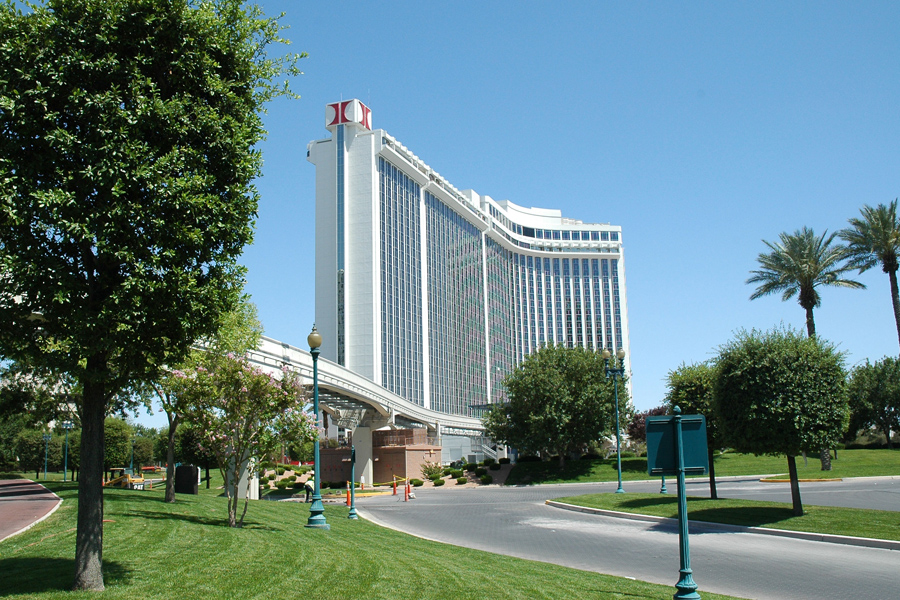
The promotion was billed as "Knockout Nite," and on paper only one man looked likely to provide it. Hearns arrived with a record of 45-2 and 38 knockouts, rated number one at middleweight by The Ring. Barkley was 24-4 with 15 knockouts and sat sixth in the magazine's ratings. Both men were listed at 6 feet 1 and both weighed 160 pounds, but the market saw little else in common. Bookmakers made Barkley a 4-to-1 underdog, and the money followed the same logic: Hearns was paid $1.5 million, Barkley $250,000.
Two Rounds of Hearns, Blood on the Challenger
The opening six minutes went the way the betting suggested. Hearns found Barkley with his long punches almost whenever he wanted, and midway through the first round he opened a cut above the challenger's left eye. By the end of the second, Barkley was also cut above the right eye and bleeding from his lower lip. All three judges gave both rounds to the champion.
Barkley came out for the third with some urgency and had a brief strong spell, but Hearns took the round back by turning to the body and hammering him downstairs. With blood running from both eyes and his mouth, Barkley looked closer to being stopped than to stopping anyone.
The Right Hands at 2:39 of Round Three
In the final minute, Hearns threw a left jab, let his hands drop and moved to his left. Barkley swung a wide right hand that landed flush on the jaw. As Hearns was falling backward, a second right caught him before he hit the canvas, and he landed flat on his back.
Hearns got up, only just, as the count reached its end. He was unsteady, and Barkley went after him at once, driving him to the ropes with a flurry of punches. Referee Richard Steele stepped in and stopped the fight at 2:39 of the third round. The record books differ slightly in how they describe the ending: Wikipedia lists the result as a knockout, while The Sweet Science called it a technical knockout, which reflects the fact that Hearns beat the count before Steele waved it off.
Gil Clancy, the veteran trainer working as an analyst on the Showtime broadcast, was struck by how little the punches before the finish had carried. "Then, all of a sudden, there it was," he said, as later quoted by Bernard Fernandez in The Sweet Science.
Upset of the Year, and a Story About the Loser
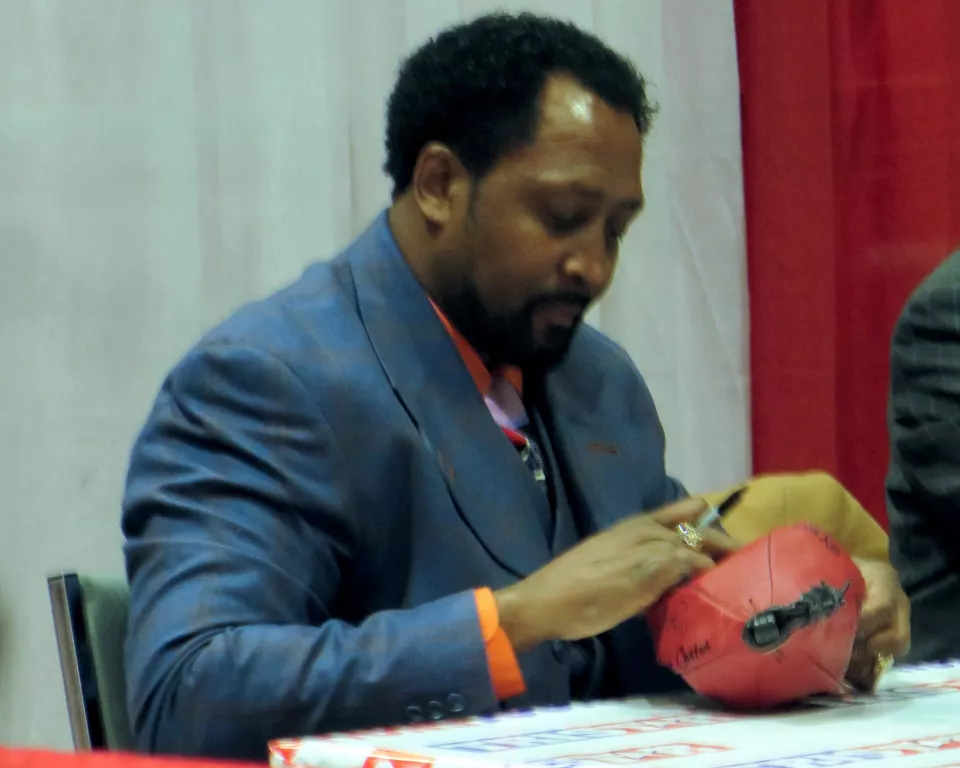
The Ring named the result its Upset of the Year for 1988, and KO Magazine gave it both Upset of the Year and Knockout of the Year. Even so, Barkley later felt the coverage was more about Hearns losing than about him winning. Writing for The Sweet Science in 2016, Fernandez observed that the dominant media angle at the time was the star's defeat rather than the challenger's victory. Barkley also blamed promoter Bob Arum, who promoted both fighters, for failing to build him into a star after the upset. Arum's answer was that Barkley was never a pay-per-view attraction.
Barkley's reign did not last long. In his first defense, on February 24, 1989, in Atlantic City, Roberto Durán won a split decision in a fight The Ring named its Fight of the Year. Hearns moved on as well. In November 1988 he beat James Kinchen for the WBO super middleweight title, and in 1991 he took the WBA light heavyweight belt from Virgil Hill.
Caesars Palace, 1992: The Rematch at Light Heavyweight
By early 1992 both men had climbed in weight. On January 10 of that year, Barkley stopped Darrin Van Horn in two rounds to win the IBF super middleweight title. Ten weeks later, on March 20, 1992, he faced Hearns again at Caesars Palace, this time for Hearns's WBA light heavyweight championship, on a card shown in the United States by HBO.
The circumstances had changed. Hearns, now 33, was 50-3-1 with 40 knockouts and weighed 174½ pounds. Barkley, 31, was 28-7 with 17 knockouts and weighed 174. The purse gap had narrowed too: $1.2 million for Hearns, $500,000 for Barkley.
This time there was no single decisive punch. The fight was close and went the full 12 rounds. The only knockdown came when Barkley met a Hearns right hand with a counter left hook, and by the end both men's faces were heavily marked. The judges split: one scored it 114-113 for Hearns, the other two 115-113 and 114-113 for Barkley. Barkley left with the WBA light heavyweight title, which gave him belts in three weight classes.
He gave the light heavyweight belt up without defending it so he could defend his super middleweight title against James Toney. That fight took place on February 13, 1993, and Barkley's corner retired him after nine rounds because of severe swelling around his eyes.
Two Wins Over the Hitman
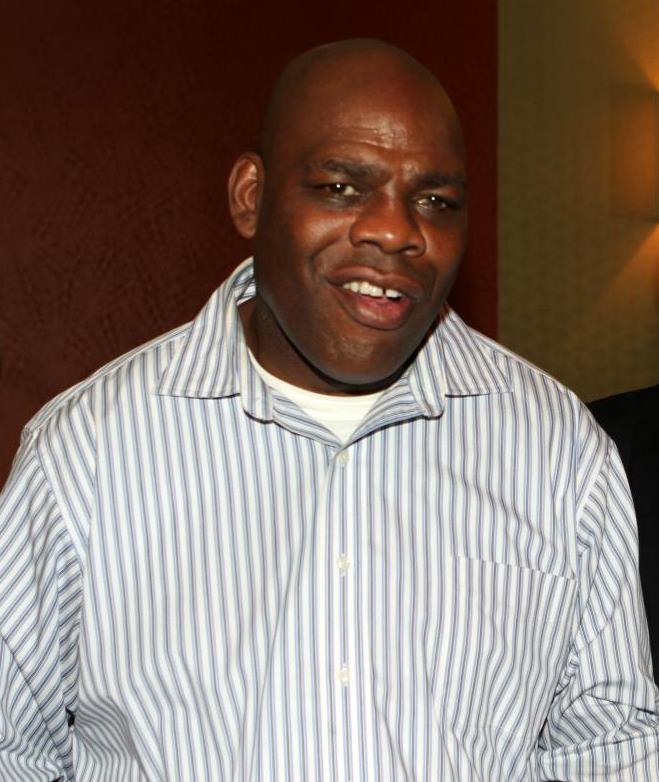
Hearns went on to become the first boxer to win world titles in five weight divisions, finished his career at 61-5-1 and was inducted into the International Boxing Hall of Fame in 2012. According to The Sweet Science, Barkley is the only fighter who beat him twice.
Barkley never accepted that the first win was a fluke. Looking back on it in 2016, he dismissed the "lucky punch" label in blunt terms: "Let me tell you something, there ain't no luck in boxing," he told The Sweet Science. On the scorecards he had been clearly behind, and he was cut and bleeding. He still landed the punches that ended the fight.
Sources
- Thomas Hearns vs. Iran Barkley, Wikipedia, accessed October 2026
- Thomas Hearns vs. Iran Barkley II, Wikipedia, accessed October 2026
- Iran Barkley, Wikipedia, accessed October 2026
- Thomas Hearns, Wikipedia, accessed October 2026
- 28 Years After His Greatest Moment of Glory, Iran Barkley Still Gets Props, Bernard Fernandez, The Sweet Science, June 5, 2016


