
How Donald Curry Melted the Ice Man With a Two-Round Knockout of Milton McCrory, 1985
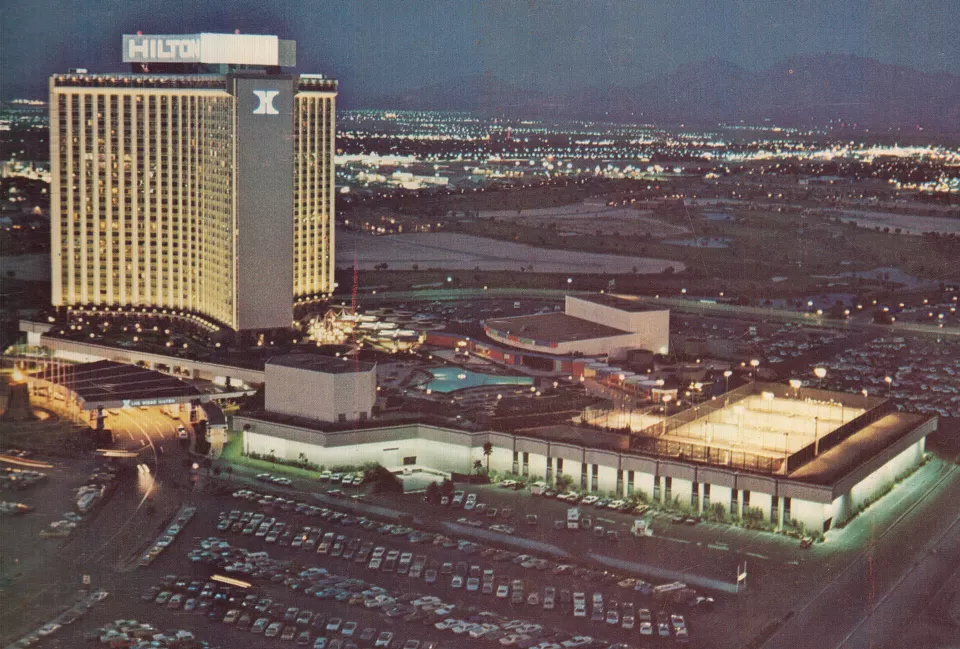
On 6 December 1985 at the Las Vegas Hilton, unbeaten Donald Curry knocked out unbeaten WBC champion Milton McCrory in the second round, becoming the first undisputed welterweight champion since Sugar Ray Leonard.

On the night of 6 December 1985, two unbeaten welterweight champions met at the Las Vegas Hilton with every major belt in the division on the table. Donald Curry needed less than five minutes of fighting to settle it, knocking out Milton McCrory in the second round and becoming the first undisputed welterweight champion since Sugar Ray Leonard walked away in 1982.
Two Unbeaten Champions, One Division
By late 1985 the welterweight crown had been split for three years. Leonard's retirement in 1982 left the titles to scatter among the sanctioning bodies, and two young Americans had collected them. Donald Curry of Fort Worth, Texas, the man known as the Lone Star Cobra, held the WBA and IBF belts and sat at the top of The Ring's ratings. Milton McCrory of Detroit, nicknamed the Ice Man, owned the WBC version and was rated second.
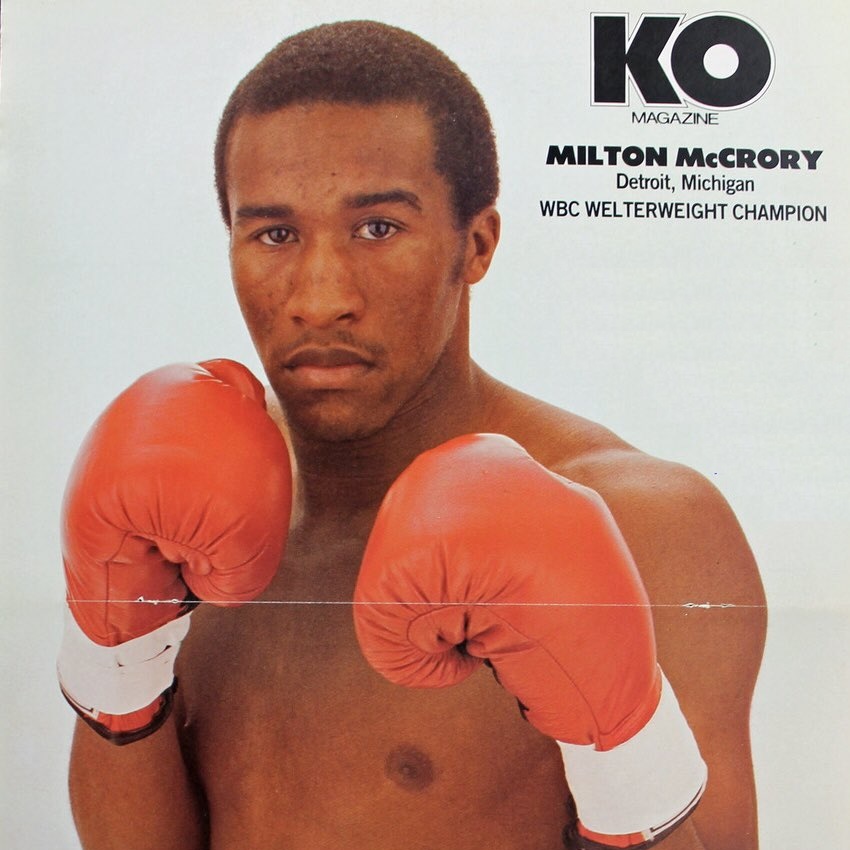
McCrory was a product of the Kronk Gym and its head trainer, Emanuel Steward. He turned professional in 1980 and won his first 20 fights before meeting Welshman Colin Jones for the vacant WBC title in March 1983. That bout ended in a draw. In the rematch on 13 August 1983, McCrory took the belt, becoming the first Detroit-born world champion to come out of Kronk. He arrived in Las Vegas with a record of 27-0-1 and 22 knockouts.
Curry's own record going in is listed as 23-0 with 17 knockouts on the Wikipedia page devoted to the fight, while his main biography on the same site gives 24-0 with 20 knockouts. Either way, he had never lost as a professional.
A Detour Toward Light Middleweight
The unification almost did not happen. In 1985 Curry spent part of the year above his natural weight, beating James Green in March and Pablo Baez in June at light middleweight. His promoter, Bob Arum, weighed a permanent move up to challenge IBF light middleweight champion Carlos Santos, and Curry himself spoke of wanting a shot at middleweight king Marvin Hagler.
McCrory forced the issue from the other side. After defending his WBC title against Carlos Trujillo on 14 July 1985, he made it plain that Curry was the target. "Curry's good, but I'm better," McCrory said, according to the fight's Wikipedia entry, adding that he wanted to be a unified champion. Curry changed course and chose to stay at 147 pounds. The contract was finalised in mid-October, and the date was moved forward to 6 December instead of the following February.
Measuring Up in Las Vegas
On paper the matchup looked close. McCrory was the taller man at six feet, against Curry's five feet ten and a half inches. Curry was 24 years old, McCrory a few months younger at 23. Both weighed in at the welterweight limit of 147 pounds, and each was paid a purse of $750,000. The bookmakers, though, did not see it as even: Boxing News recalled that Curry went off as a 4-to-1 favourite.
The fight was broadcast in the United States by HBO, with Mills Lane as the referee. Lower down the card, a young heavyweight named Oliver McCall lost a four-round decision to Joey Christjohn, while Robbie Sims stopped Mario Tineo in four rounds at middleweight.
Round One: Confusion in the Ice Man's Eyes
Accounts of the opening round agree on its direction even if they differ on its first seconds. Boxing News wrote that McCrory landed the first meaningful punches before Curry took over. Wikipedia's summary describes Curry pressing from the opening bell. What both sources describe is a champion who was quickly put on the back foot.
About two minutes into the round, Curry hurt McCrory with a left hook and then drove him into a corner behind a straight left. McCrory held on to get through the danger and steadied himself before the bell. All three judges scored the round for Curry. Curry said he had read his opponent almost immediately: "I could see after just 20 seconds the confusion in his eyes," as quoted by Boxing News.
In the corner, Steward tried to give his fighter a reason for patience. According to Boxing News, he told McCrory that Curry was fighting tighter than usual and would tire as the fight went on.
Round Two: The Hook and the Count
McCrory came out for the second round trying to box, using his jab and his feet to keep distance. Curry followed him without hurrying. A little before the halfway point of the round, McCrory threw a left jab; Curry slipped it and answered with a short left hook to the chin that put McCrory flat on his back.
Writing for The Sweet Science in 2005, Matthew Aguilar singled out how compact the punch was, noting that it travelled only a short distance and still found its way around McCrory's raised right glove. McCrory got up at the count of eight, but Curry was on him at once with a right hand that dropped him a second time. This time McCrory lay sprawled on the canvas, lifting his head but making no real attempt to rise as Lane counted to ten. The official time was 1:53 of the second round of a fight scheduled for 15.
The First Undisputed Welterweight Since Leonard
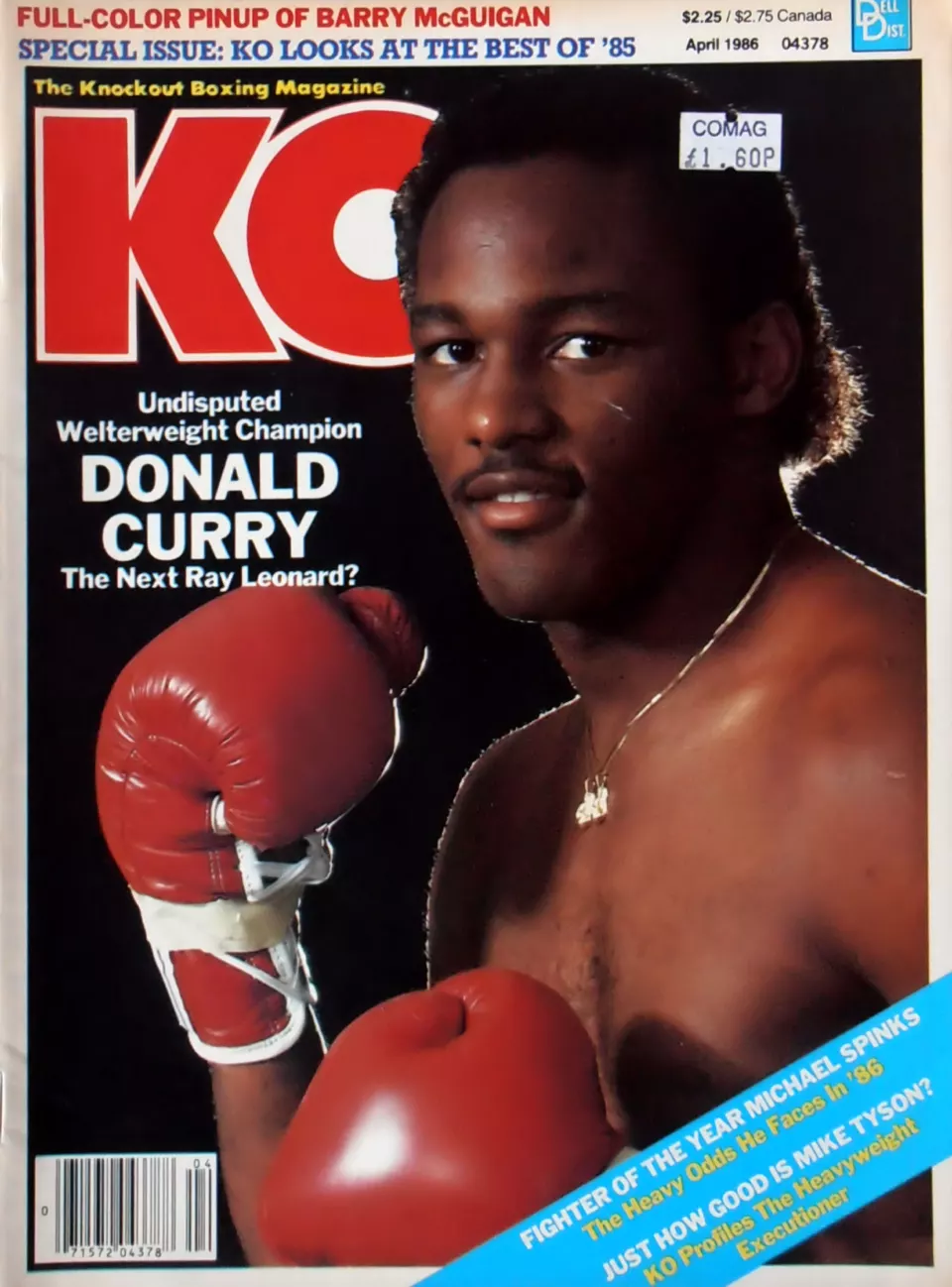
The win gave Curry the WBA, WBC, IBF and The Ring welterweight titles at once, making him the division's first undisputed champion since Leonard. His Wikipedia biography notes that many boxing observers now considered him the best fighter in the world, pound for pound. KO Magazine named the finish its Knockout of the Year for 1985, and Aguilar later wrote that the performance pushed talk of a Curry fight with Hagler back into the conversation.
The reign did not last long. Curry lost the undisputed title to Lloyd Honeyghan in 1986, a story told separately on Ring Talk alongside a full biography of Curry.
McCrory After the Knockout
For McCrory, the defeat was the end of his time as a welterweight champion. He moved up to light middleweight and in 1987 challenged Mike McCallum for the WBA title at 154 pounds, losing by stoppage in the 10th round. He retired in 1991 with a record of 35 wins, 4 losses and 1 draw.
Years later he offered a surprisingly flat assessment of his whole career. In a 2017 interview with Boxing News he said he had simply been good at boxing and suggested he should have gone into baseball instead. On a December night in 1985, being good had not been enough against a fighter at the very top of his form.
Sources
- Donald Curry vs. Milton McCrory, Wikipedia, accessed October 2026
- Donald Curry, Wikipedia, accessed October 2026
- Milton McCrory, Wikipedia, accessed October 2026
- On this day: Donald Curry hints at greatness as he obliterates Milton McCrory, Matt Christie, Boxing News, 6 December 2020
- Donald Curry and the Perfect Punch, Matthew Aguilar, The Sweet Science, 11 January 2005


