
How Donald Curry, the Lone Star Cobra, Rose to Undisputed Champion and Fell After Honeyghan
Fort Worth's Donald Curry knocked out Milton McCrory in 1985 to become undisputed welterweight champion, then lost it all to Lloyd Honeyghan in one of boxing's great upsets. A second world title, courtroom battles, money troubles and a Hall of Fame induction followed.

For roughly nine months in 1985 and 1986, Donald Curry of Fort Worth, Texas, held every major welterweight belt and was spoken of as perhaps the finest fighter in the world, pound for pound. Then a British challenger few had given a chance broke him down in Atlantic City, and the rest of the "Lone Star Cobra's" story became a long struggle to recover what that night took away.
A Fort Worth Boyhood and Some 400 Amateur Fights
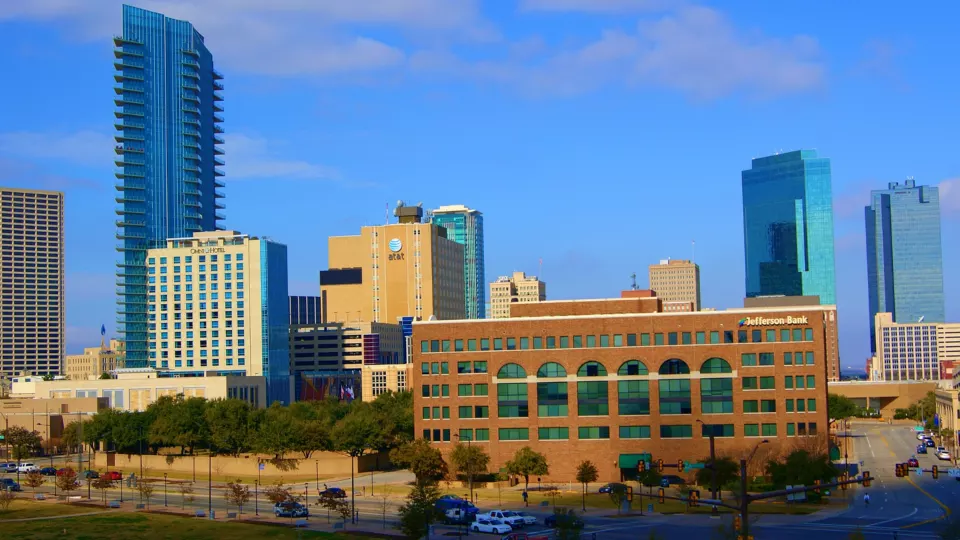
Curry was born in Fort Worth on September 7, 1961, and grew up in a boxing household. His older brother Bruce reached the 1976 Olympic Trials final, where he lost to Sugar Ray Leonard, and later became a world champion himself; another brother, Graylin, also boxed. According to a PressBox DFW profile, Donald started at age seven under trainer Paul Reyes, who stayed with him into the professional ranks, while Wikipedia credits Fort Worth coach Wesley Gale Parker with his earliest training.
The amateur numbers were staggering. His record is usually given as about 400 wins and four losses, though versions of 396-4 and 400-6 also circulate. He collected national titles at junior and senior level, including the 1980 National Golden Gloves at 147 pounds, then beat Davey Moore in the final of the 1980 Olympic Trials in Atlanta. He never fought in Moscow: the United States boycotted those Games.
Climbing Through the Welterweights, 1980 to 1983
Curry turned professional on December 26, 1980, with a first-round stoppage of Mario Tineo in Las Vegas. By May 1982 he was 11-0 and took the NABF welterweight title from Bruce Finch in three rounds. That October in Atlantic City he edged Marlon Starling on a split decision over 12 rounds to add the USBA belt.
The vacancy left by Leonard's retirement opened the way. On February 13, 1983, at the Tarrant County Convention Center in his hometown, Curry outpointed South Korea's Jun-Suk Hwang over 15 rounds for the vacant WBA title, surviving a seventh-round flash knockdown. Three months later Bruce won the WBC light welterweight belt, and the Currys were described as the first brothers to hold world titles at the same time.
Building the Undisputed Claim
The defences followed quickly. Roger Stafford lasted one round in September 1983. In February 1984 Curry met Starling again and won a unanimous 15-round decision, picking up the newly created IBF title. Elio Diaz retired after seven rounds, Italy's Nino LaRocca was knocked out in six, and Welshman Colin Jones was stopped in four in January 1985. Accounts of how many times he defended the welterweight title vary: ESPN's Dan Rafael counted seven defences before he lost the belts, while the PressBox DFW profile puts the figure at nine.
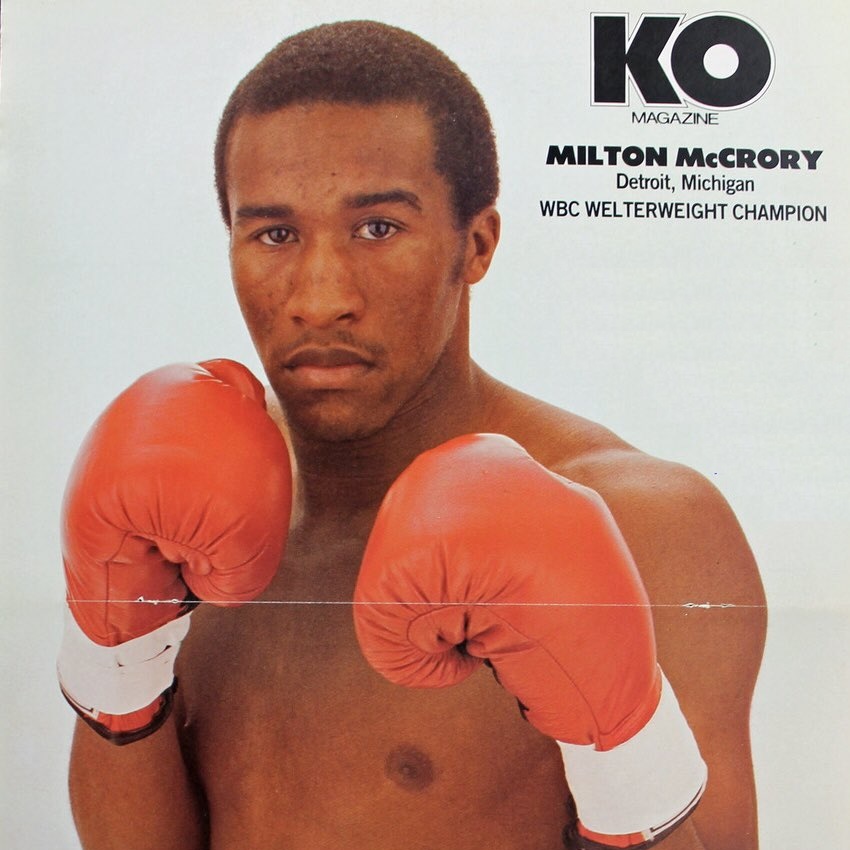
The missing piece was the WBC belt held by Detroit's unbeaten Milton McCrory. They met on December 6, 1985, at the Las Vegas Hilton. It barely lasted into the second round. Curry slipped a McCrory jab and countered with a left hook that put the champion down; McCrory got up unsteadily and a right hand dropped him again. Referee Mills Lane counted him out at 1:53 of round two. Curry was the first undisputed welterweight champion since Leonard, and The Ring named him Fighter of the Year for 1985, sharing the award with Marvelous Marvin Hagler.
A two-round knockout of Eduardo Rodriguez in Fort Worth in March 1986 left him 25-0 with 20 knockouts.
Upheaval Before Atlantic City
Behind the record, things were coming apart. Curry's contract with longtime manager David Gorman was due to expire on September 30, 1986, and Akbar Muhammad of Top Rank was lined up to replace him. Gorman would not accept a co-manager's role and shut Curry out of his gym.
The bigger problem was weight. Muhammad later said Curry had weighed 168 pounds about six and a half weeks before the fight and had spoken of pulling out because he doubted he could make 147. Reports had him nine pounds over the limit less than a week out, with 11 pounds to lose in the final three days.
Lloyd Honeyghan, a Jamaican-born Londoner ranked first by the WBC, arrived 27-0. Bookmakers treated the bout as a mismatch; some would not quote a line at all. The figures that survive differ: Honeyghan was reported to have bet $5,000 on himself at 5-1, while the PressBox DFW profile describes him as an 8-to-1 underdog.
The Night Honeyghan Took Everything
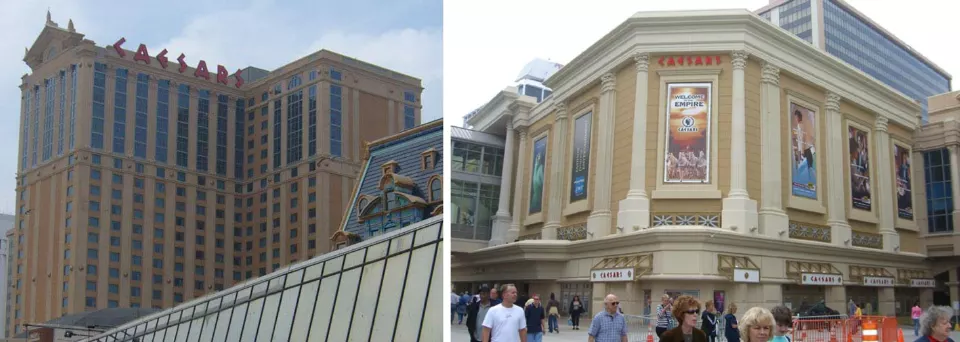
They fought on September 27, 1986, at Caesars Hotel and Casino in Atlantic City, with the WBA, WBC, IBF and Ring titles at stake. Honeyghan won the first two rounds and hurt Curry with a right hand to the jaw in the second. Curry had his best moments in the third and fourth but faded, and Honeyghan took control again in the fifth.
In the sixth, an accidental clash of heads opened a deep cut over Curry's left eye. After the bell, ringside physicians Frank Doggett and Paul Williams examined it and advised referee Octavio Meyran to end the fight. Curry was reported to have told his corner he was through. Boxing News later reported that he needed 20 stitches over the eye and one in his lip, and that his nose was broken. Curry blamed the weight cut and vowed never to box at welterweight again. The Ring named it the Upset of the Year.
Light Middleweight: A Second Title and Hard Defeats
At 154 pounds he won the USBA title in February 1987 when Tony Montgomery was disqualified for butting, and Carlos Santos was disqualified for the same offence two months later. Days later he sued Leonard and attorney Mike Trainer, alleging they had steered him away from Mike McCallum and Hagler to clear Leonard's own path.
He met McCallum for the WBA belt on July 18, 1987, at Caesars Palace as a 2-1 favourite and led on all three cards after four rounds. In the fifth, a McCallum left hook to the chin finished him. A year later, on July 8, 1988, in Sanremo, Italy, Curry floored Gianfranco Rosi five times, and Rosi stayed on his stool after the ninth round, making Curry WBC light middleweight champion. He lost the title in his first defence, a unanimous decision to France's René Jacquot in Grenoble in February 1989,. The Ring named that one the Upset of the Year as well.
Two more title shots ended in knockouts. In Paris in October 1990, IBF middleweight champion Michael Nunn stopped him in the tenth round. In Palm Springs in June 1991, WBC light middleweight champion Terry Norris knocked him out in the eighth, and Curry stepped away from the ring.
Courtrooms, Debts and a Last Comeback
In April 1994 a federal grand jury in Detroit indicted Curry alongside Darrell Chambers and William "Stanley" Longstreet on drug conspiracy and money laundering charges. Curry denied any involvement and was acquitted on all counts in January 1995, but he said the cost of his defence had ruined him financially. In 1996 he spent six weeks in jail for failing to pay child support.
He returned in 1997 and said openly that he was doing it for the money. He knocked out Gary Jones in Winnipeg in February, then on April 9 at the Aladdin in Las Vegas met Emmett Linton, a former fighter of his with whom he had feuded. Linton dropped him in the first round, and referee Richard Steele stopped it in the seventh. Doctors afterwards found Curry had fought with acute pancreatitis. He never boxed again, finishing at 34-6 with 25 knockouts.
Canastota and the Years Since
In December 2018 Curry was elected to the International Boxing Hall of Fame, and he was inducted in Canastota, New York, in June 2019. Speaking to ESPN, he called the news "the greatest day of my life."
His later life has been difficult. His sons raised concerns about memory loss and mental health in 2021. In January 2025 The Ring reported that Curry, then 63, had been diagnosed with traumatic encephalopathy syndrome at the Lou Ruvo Center for Brain Health, was staying in a Fort Worth hotel, and that his son Donovan was looking for a long-term care facility that could take him at no cost.
Sources
- Donald Curry, Wikipedia, accessed October 2026
- Donald Curry, James "Buddy" McGirt, Julian "The Hawk" Jackson elected to International Boxing Hall of Fame, ESPN (Dan Rafael), December 5, 2018
- Donald Curry takes his rightful place in boxing Hall, PressBox DFW, 2019
- On this day: Lloyd Honeyghan stuns the boxing world by breaking the heart of Donald Curry in Atlantic City, Boxing News (Matt Christie), September 27, 2020
- Donald Curry battling brain disease, son calls for help, The Ring (Manouk Akopyan), January 8, 2025


