
How Lloyd Honeyghan Shocked Donald Curry and Threw a World Title in the Bin
From Saint Elizabeth, Jamaica and Bermondsey, London to the undisputed welterweight crown in 1986, Lloyd Honeyghan's reign took in a famous upset, a WBA belt dumped in protest at apartheid-era South Africa, and a ninth-round defeat to Marlon Starling.

Lloyd Honeyghan arrived in Atlantic City in September 1986 as an unbeaten Londoner few Americans had heard of. He left as undisputed welterweight champion of the world, and within months he had thrown one of his belts into a London rubbish bin rather than fight a South African. His reign was short, loud and never dull, and it ended against the cool, patient Marlon Starling in Las Vegas.
From Saint Elizabeth to Bermondsey
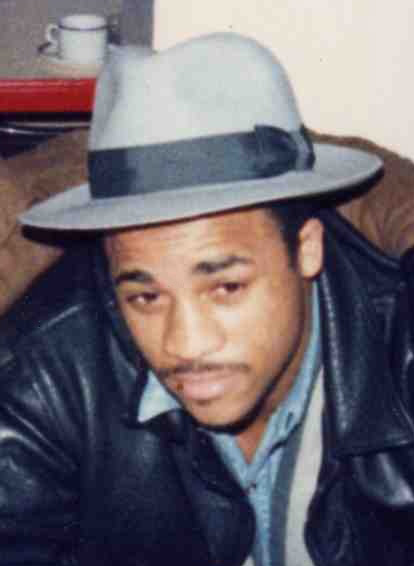
Honeyghan was born on 22 April 1960 in the parish of Saint Elizabeth, in south-western Jamaica. At nine he crossed the Atlantic to join his parents, who had settled in Bermondsey, the working riverside district of south-east London. He found boxing two years later, at 11, through the Fisher Amateur Boxing club.
His amateur career was solid without being decorated. He boxed for England but never won a national ABA title: Joey Frost beat him in the English semi-finals in 1979, and Gunther Roomes stopped his run at the 1980 championships. Those near misses did not slow him. In 1980 he turned professional under the trainer Terry Lawless, opening with a six-round points win over another novice, Mike Sullivan.
Domestic Titles and the European Crown
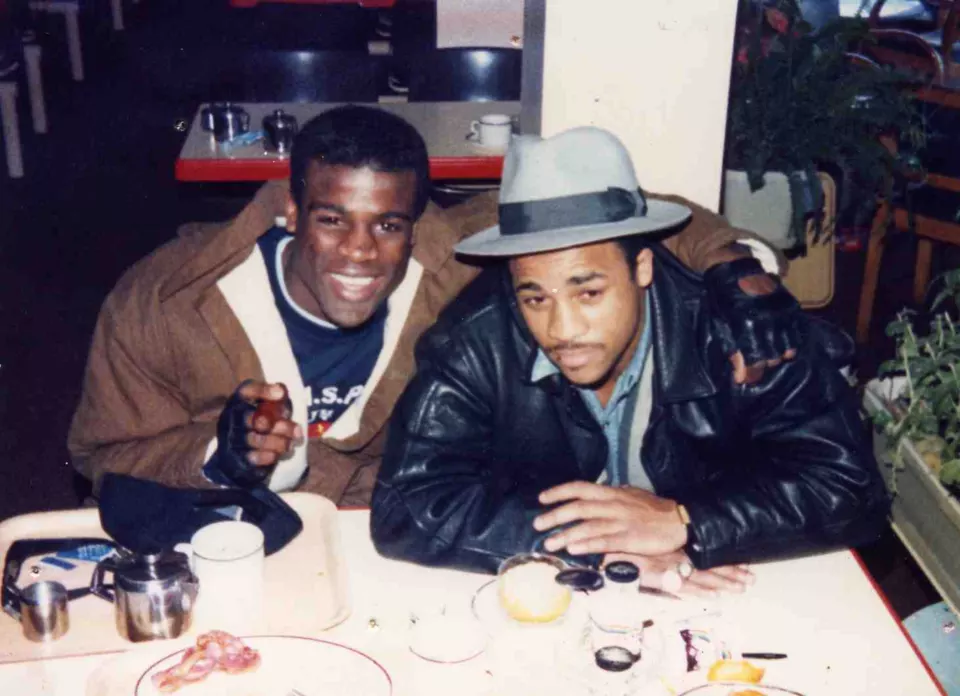
Honeyghan won his first 13 professional fights before he was given a shot at the British welterweight title. On 5 April 1983 he took it on points from Cliff Gilpin. Less than two years later, on 5 January 1985, he added the European championship with a third-round knockout of the Italian Gianfranco Rosi, a man who would go on to win world honours twice at light-middleweight.
The Commonwealth title followed on 27 November 1985, leaving Honeyghan holding the British, Commonwealth and European belts at the same time. His manager, Mickey Duff, praised his discipline in the gym; the WBC's anniversary feature on the Curry fight quotes Duff calling Honeyghan a fighter who trained so hard he was "a hermit". By the autumn of 1986 Honeyghan was 27-0, but outside Britain the record meant little.
'Who Is This Ragamuffin?'
The champion he was matched with, Donald Curry, was 25-0 and held the WBA, WBC and IBF welterweight titles, along with The Ring's recognition as the division's best. Many observers ranked him among the finest fighters in the sport. At the pre-fight press conference, Honeyghan turned up in casual clothes, and Curry waved him away by asking who the "ragamuffin" was. The insult was meant to diminish him. Honeyghan adopted it instead, and boxed for the rest of his career as the "Ragamuffin Man".
The bookmakers sided with Curry. Wikipedia's account puts the odds at 7.5 to 1 against the challenger, while the WBC's retrospective gives the line as 6 to 1; the same WBC piece reports that Honeyghan put $5,000 of his own money on himself.
The Brawl on the Boardwalk, 27 September 1986
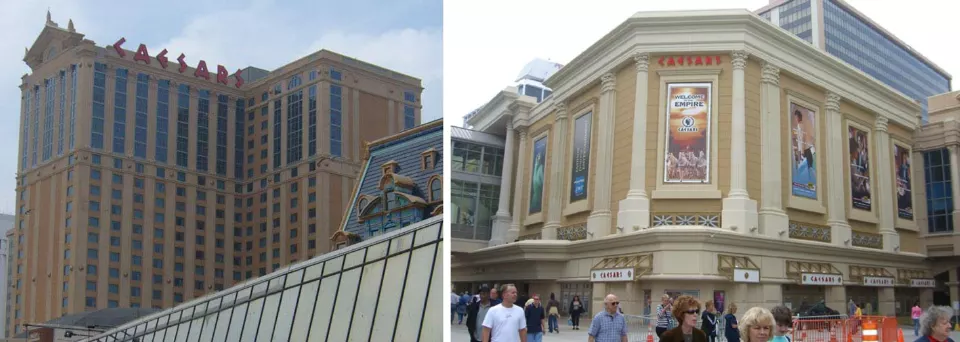
The fight took place at Caesars in Atlantic City, and from the opening bell Honeyghan refused to behave like an underdog. He went straight at the champion. In the second round a right hand shook Curry badly, a moment Boxing News later framed as the point when the impossible began to look possible. Honeyghan had to dig in through the third and fourth, then took command again in the fifth.
Curry looked drained; promoter Bob Arum was quoted by the WBC as saying the Texan "looked emaciated" and had "no zip". An accidental clash of heads opened a deep gash over Curry's eye, and after the sixth round the ringside doctor advised that he should not continue. Curry retired on his stool. He needed 20 stitches around the eye and one in his lip, and his nose was broken.
Honeyghan was the new undisputed welterweight champion. The Ring and KO magazine each named the result their upset of the year for 1986, and it is still counted among the great nights for a British fighter abroad.
A Belt in the Bin
The undisputed reign lasted only a few months. The WBA ordered Honeyghan to make a mandatory defence against Harold Volbrecht, a white South African, at a time when South Africa was under international sanctions over apartheid and the WBA was still sanctioning bouts involving its citizens. Honeyghan refused. In a gesture that made headlines, he dropped the WBA belt into a rubbish bin on a London street and gave up the title rather than take the fight.
It was the WBA championship, not the WBC belt, that he discarded; the WBC title stayed with him. Sources differ slightly on timing, with some dating the vacancy to December 1986 and Wikipedia's article on the Curry fight placing it in January 1987. Honeyghan later said he regretted the bin gesture itself. The consequence was historic: the welterweight division would not have another undisputed champion until 2003. Mark Breland took the vacant WBA title by stopping Volbrecht in the seventh round at the Trump Plaza in Atlantic City on 6 February 1987.
Bumphus, Hatcher and Vaca
Honeyghan's title defences were as erratic as they were exciting. Against Johnny Bumphus on 22 February 1987 he charged across the ring between rounds, a controversial moment that, according to Wikipedia, helped prompt a rule requiring referees to stand in the centre of the ring before each round begins. On 30 August 1987 he needed only 45 seconds to destroy Gene Hatcher, one of the quickest finishes ever recorded in a world title fight.
Then came a setback. On 28 October 1987 he met Jorge Vaca of Mexico, and the fight was stopped after an accidental head clash; Vaca was awarded a technical decision, and Wikipedia notes that without a point deduction it would have been a draw. Honeyghan had lost the WBC belt. He took it back on 29 March 1988, knocking Vaca out in the third round with an uppercut to the solar plexus.
Marlon Starling in Las Vegas
His next major assignment was Marlon Starling, a former WBA champion who had lost that belt to Tomás Molinares in August 1988 in disputed circumstances, after being knocked out by a punch that landed after the bell. The pair met once, on 4 February 1989, at Caesars Palace in Las Vegas, with Mills Lane as referee. There was plenty of bad feeling; Honeyghan was quoted as calling it "a hate match, not a grudge match."
The fight went the way Starling wanted. Honeyghan threw far more punches but boxed wildly against one of the best defensive operators of the era, and Starling's sharper, more economical work told. Figures cited on Wikipedia have Starling landing 202 of 533 punches against Honeyghan's 107 of 697. By the ninth round Honeyghan's right eye and cheek were badly swollen; the ringside doctor had even checked his jaw for a fracture. Starling pinned him on the ropes, a flurry and a right hand put him down, and Lane stopped it at 1:19 of the ninth. Honeyghan had earned $650,000 to Starling's $250,000. Afterwards Nevada officials fined him $1,500 after he tested positive for lidocaine, an unauthorised painkiller injected into his hands. Starling made one defence and then lost the title to Maurice Blocker in August 1990.
Breland, the Late Years and Retirement
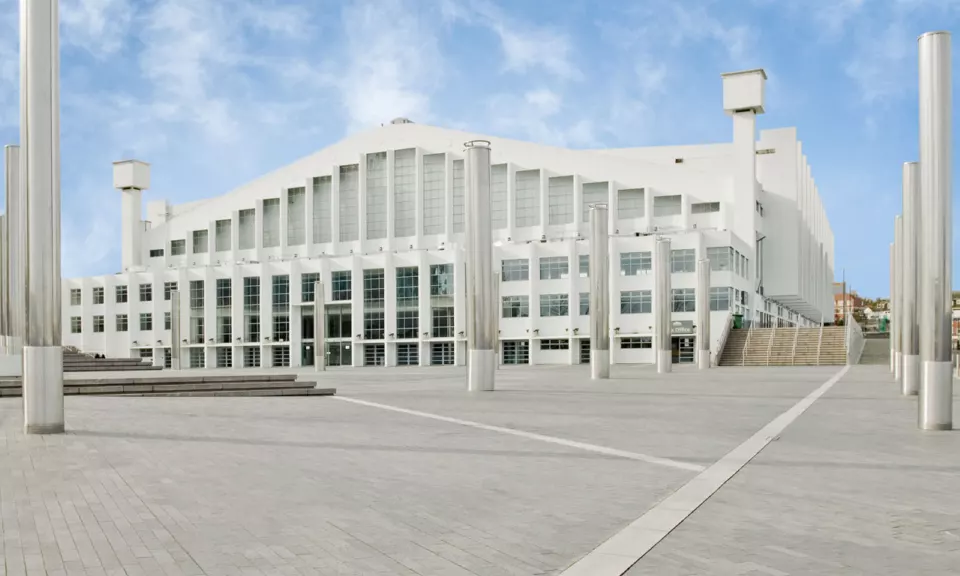
Honeyghan had one more shot at a welterweight title. On 3 March 1990 he challenged Mark Breland, the man who had picked up the WBA belt he threw away, at Wembley Arena in London. It was a painful night: Breland dropped him six times and stopped him in three rounds.
He moved up to light-middleweight in 1991 and, on 30 January 1993, won the Commonwealth title at the weight by beating Mickey Hughes. That June he lost to Vinny Pazienza, and his last fight was a defeat to Adrian Dodson on 25 February 1995. He retired with 43 wins, 30 of them inside the distance, and 5 losses from 48 fights.
The numbers tell only part of it. For a few months in 1986 a boy from Saint Elizabeth who grew up in Bermondsey held every major welterweight title in the world, then gave one away on principle.
Sources
- Lloyd Honeyghan, Wikipedia, accessed October 2026
- Donald Curry vs. Lloyd Honeyghan, Wikipedia, accessed October 2026
- Lloyd Honeyghan vs. Marlon Starling, Wikipedia, accessed October 2026
- Marlon Starling, Wikipedia, accessed October 2026
- Mark Breland, Wikipedia, accessed October 2026
- Thirty-fifth anniversary of Cobra Curry in a pickle, WBC (wbcboxing.com), 27 September 2021
- On this day: Lloyd Honeyghan stuns the boxing world by breaking the heart of Donald Curry in Atlantic City, Matt Christie, Boxing News, 27 September 2020


