
How James J. Braddock Went From Relief Rolls to Beating Max Baer in the Cinderella Man Fight of 1935
Two years after living on state relief, ten-to-one underdog James J. Braddock outpointed Max Baer over 15 rounds at the Madison Square Garden Bowl on June 13, 1935, to become heavyweight champion of the world.

On the night of June 13, 1935, a 30-year-old former dockhand from Hudson County, New Jersey, who had been living on public relief only two years earlier, walked into the Madison Square Garden Bowl in Long Island City as roughly a ten-to-one outsider against heavyweight champion Max Baer. Fifteen rounds later James J. Braddock was champion of the world, and Damon Runyon gave him the name that has stayed with him ever since: the Cinderella Man.
A Title Shot at 24, Then a Long Fall
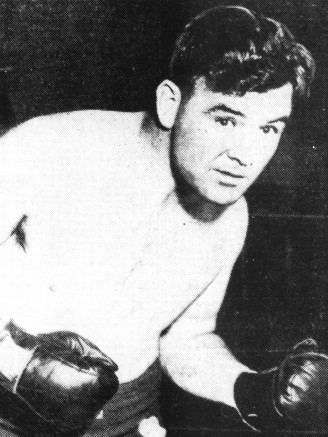
Braddock was born on June 7, 1905, on West 48th Street in Manhattan's Hell's Kitchen, one of seven children of Irish immigrants Joseph Braddock and Elizabeth O'Tool, and he grew up across the Hudson in New Jersey. He turned professional in April 1926 and rose quickly. After three years his record stood at 44 wins, two losses and two draws, and in 1928 he upset the well-regarded Tuffy Griffiths.
That run earned him a shot at the light heavyweight championship. On July 18, 1929, at Yankee Stadium, he lost a close 15-round decision to Tommy Loughran, and he broke his right hand in several places during the fight. Within months the stock market collapsed. What followed was close to ruin: across his next 33 bouts Braddock won 11, lost 20 and drew two. Losses came against men such as Maxie Rosenbloom, Leo Lomski, Yale Okun and Lou Scozza, and his damaged hands eventually got him barred from boxing in several jurisdictions, according to a 2004 retrospective in The Sweet Science.
The Docks and the Relief Rolls
With boxing paying little or nothing, Braddock took whatever work the waterfront offered. He married Mae Fox in 1930 and the couple had three young children to feed. Catholic Stand reports that he walked 10 to 12 miles a day between the New Jersey docks looking for shifts as a longshoreman, and that the family received relief of 24 dollars a month from the state. Wikipedia's account notes that he felt humiliated at having to accept it.
The dock work had an unexpected side effect. Because his right hand was so badly hurt, Braddock leaned on his left while hauling cargo, and over time the left grew stronger than the right. When he came back to the ring, that left hand would be one of his most useful weapons.
Three Fights That Rebuilt a Career
The way back began as a favour. On June 14, 1934, Braddock was booked against John "Corn" Griffin on the undercard of Baer's title-winning fight with Primo Carnera at the Madison Square Garden Bowl. Griffin was the prospect and Braddock the expected stepping stone; Braddock stopped him in the third round.
Five months later, on November 16, 1934, he outpointed John Henry Lewis, a future light heavyweight champion, over ten rounds. On March 22, 1935, he beat the heavyweight contender Art Lasky over 15 rounds and broke Lasky's nose in the process. With few heavyweights available for the champion, those three wins were enough to make Braddock the challenger.
Several sources say he settled his debt to the state as his fortunes turned. Catholic Stand and EBSCO both put the figure at 367 dollars, covering about 13 months of relief; Catholic Stand ties the repayment to an advance he received to train for Baer, while EBSCO places it after the title win. The sources agree on the act, if not on its exact timing.
A Champion Who Did Not Take Him Seriously
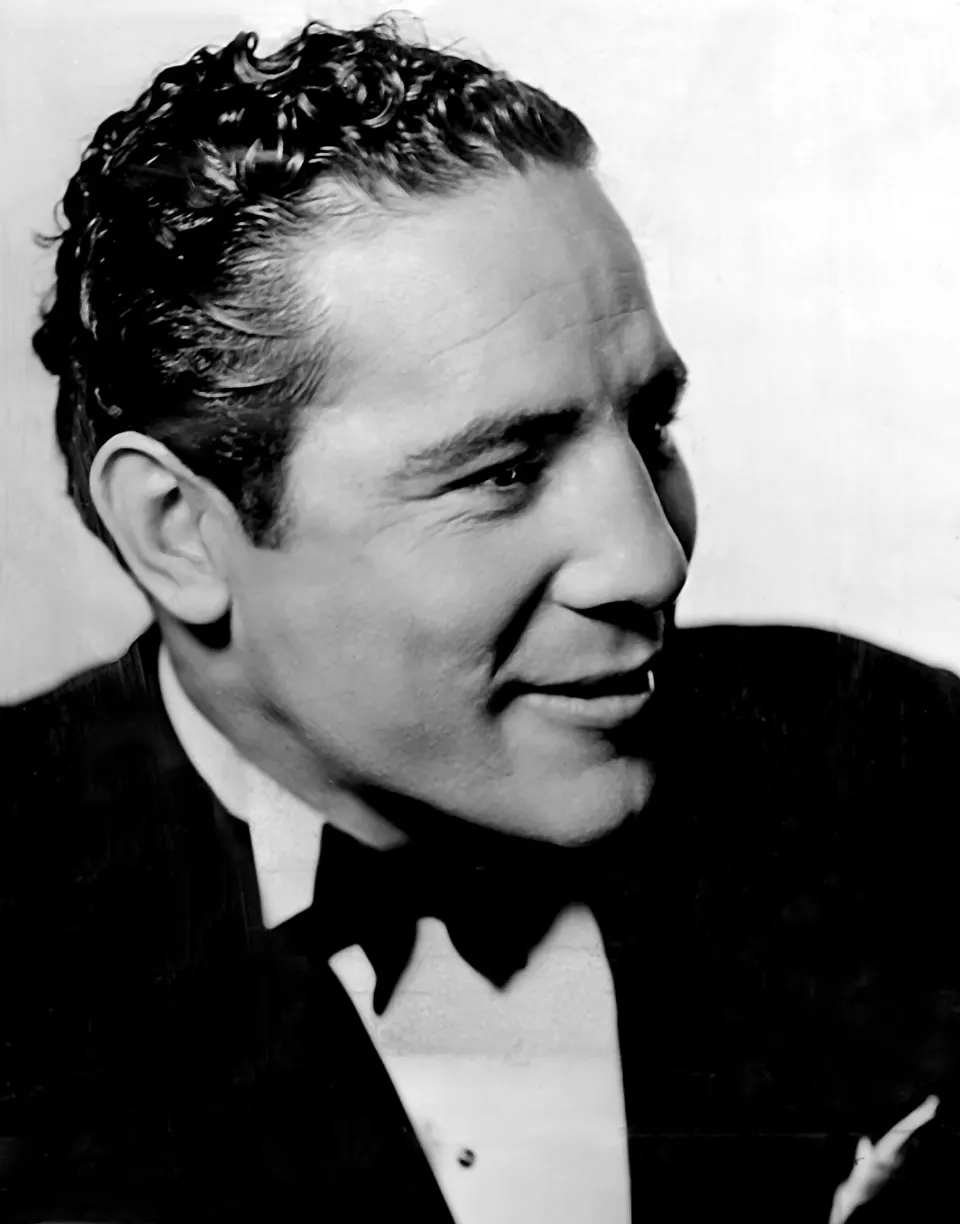
Max Baer, four years younger at 26, had taken the title from Carnera a year earlier, knocking the giant Italian down 11 times. He was a big puncher and an even bigger showman. Accounts agree that Baer's camp regarded Braddock as a safe payday and that the champion hardly trained, while the challenger prepared hard. Braddock put his attitude plainly in remarks preserved by the New Jersey Boxing Hall of Fame: "I'm training for a fight, not a boxing contest or a clownin' contest or a dance."
The betting reflected Baer's view. The ten-to-one price is the figure most often cited, by Wikipedia, EBSCO and The Sweet Science among others. Contemporary reporting was less uniform: an Associated Press story cited by Wikipedia ran on fight day under a headline making Baer a five-to-one favourite, and the account preserved by the New Jersey Boxing Hall of Fame describes most of the crowd as having bet eight-to-one against Braddock.
Fifteen Rounds at the Jinx Bowl
The venue was an outdoor arena at 48th Street and Northern Boulevard in Long Island City, Queens, built on Tex Rickard's idea and seating about 72,000 on wooden bleachers. It already had a reputation: no champion had ever defended a title there successfully, and it was known as the Jinx Bowl or the Graveyard of Champions.
About 30,000 spectators turned out, according to the New Jersey Boxing Hall of Fame's account, and Braddock was the sentimental favourite. Baer played to the crowd from the start, drawing laughter with his antics and clowning at the challenger. Braddock stayed serious. He absorbed some heavy shots from the champion but kept walking forward, boxing steadily and wearing on a man who seemed puzzled that his punches were not stopping him.
Not everyone remembers it as a classic. Writing for Boxing Over Broadway after watching footage of all 15 rounds, Bobby Franklin called it one of the dullest heavyweight title fights he had seen and said Baer threw almost nothing of consequence except in the seventh round, when booing from the crowd stirred him. Franklin goes further and argues Baer deliberately lost; that is his personal reading of the film, not a finding supported by contemporary evidence in the sources consulted here. The Ring nonetheless named the bout its Fight of the Year for 1935.
The Decision and the Disputed Margin
All three officials voted for Braddock, making it a unanimous decision, and the title changed hands. Accounts of the margin differ. Wikipedia, citing an Associated Press report, says Braddock outpointed Baer by eight rounds to six. Franklin's article describes one judge's card and the referee's as one-sided for Braddock, with the other judge level at seven rounds each and one even, giving the fight to Braddock on points under New York's rules. The upset was widely described at the time as the biggest since Jim Corbett beat John L. Sullivan in the 1890s.
Baer paid a further price. According to Wikipedia, the right hand he hurt against Braddock never healed properly, and he was still carrying the break when Joe Louis stopped him in four rounds in September 1935.
How Braddock Became the Cinderella Man
The nickname came from Damon Runyon, the New York columnist and storyteller, who likened the jump from the relief line to the heavyweight championship to the fairy tale. Wikipedia and EBSCO both credit Runyon, and it is the name under which Braddock's story has been told ever since, including in Ron Howard's 2005 film, with Russell Crowe as Braddock and Craig Bierko as Baer.

Braddock's reign lasted two years. He boxed only exhibitions before meeting Joe Louis at Comiskey Park in Chicago on June 22, 1937, and was knocked out in the eighth round, the only time he was stopped in his career. His contract for that fight gave him a share of Louis's earnings over the following decade, which proved valuable. Braddock later bought a house in North Bergen, New Jersey, where he died on November 29, 1974, aged 69. He was inducted into the International Boxing Hall of Fame in 2001, and North Hudson County Park in North Bergen now carries his name.
Sources
- James J. Braddock, Wikipedia, accessed October 2026
- Max Baer (boxer), Wikipedia, accessed October 2026
- Madison Square Garden Bowl, Wikipedia, accessed October 2026
- James J. Braddock: Inducted on June 15, 1969, New Jersey Boxing Hall of Fame, undated
- Braddock-Baer: Boxing's Great Fistic Upset, The Sweet Science, September 2004
- Bobby Franklin, Braddock-Baer fight articles, Boxing Over Broadway, June 2022 (first published in the Boston Post Gazette, 2019)
- Daniel Demers, The Cinderella Man's Left Hook: Jim Braddock's Catholic Story, Catholic Stand, September 27, 2019
- James J. Braddock, EBSCO Research Starters, undated


