
Turpin vs Robinson in 1951 Gave Randolph Turpin a 64-Day Reign That Shook the Middleweight World
In July 1951 Randolph Turpin outpointed Sugar Ray Robinson at Earls Court to become world middleweight champion, only for Robinson to stop him in the tenth round of their Polo Grounds rematch 64 days later.

On 10 July 1951 a 23-year-old from Leamington Spa took the world middleweight title from Sugar Ray Robinson, a man who had lost once in more than 130 professional fights. Randolph Turpin's points win at Earls Court made him Britain's first world middleweight champion in six decades. Sixty-four days later, in front of more than 60,000 people at the Polo Grounds in New York, Robinson took the title back in the tenth round.
A Champion on Tour: Robinson's European Summer of 1951
Robinson had won the middleweight championship in February 1951, when he stopped Jake LaMotta. A few months later he headed for Europe and treated the trip as part title defence, part travelling show. Wikipedia's account of his career says he brought a flamingo-pink Cadillac, which drew crowds in Paris, and an entourage of 13 people. The Fight City lists some of them: a hairdresser, a dance instructor, a golf professional and a singing coach.
The boxing was fitted in around the travelling. His record from that summer shows bouts in Antwerp and Liège in Belgium, a contest in Berlin against Gerhard Hecht that is recorded as a no-contest in the second round, and a fight in Turin against Cyrille Delannoit. Boxing News counts six ten-round non-title bouts in about six weeks before London, the most recent only nine days before he met Turpin. By that account he came to London from Paris by boat train on 4 July, six days before the fight. He did not set up a proper training camp. He was relying on the sharpness those bouts had given him and on the gap in class that almost everyone assumed.
The Challenger from Leamington Spa
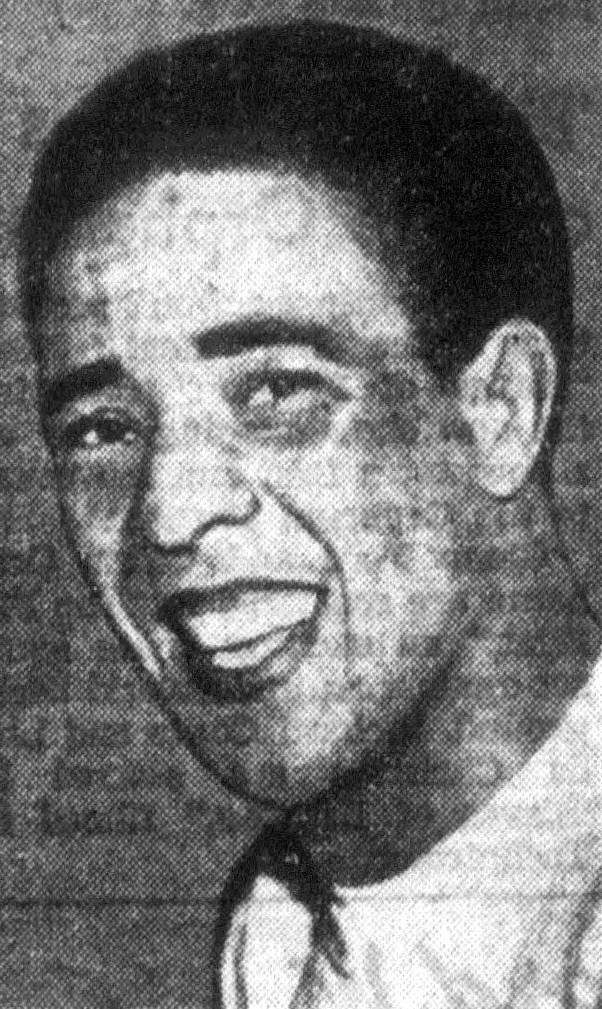
Turpin was born in Leamington Spa, Warwickshire, on 7 June 1928. His father, Lionel, had come from British Guiana and died less than a year after Randolph was born, from lung damage he had suffered in the First World War. His mother, Beatrice, raised five children. Among his brothers were Dick and Jackie.
In 1945, aged 17, he won the junior and senior ABA titles in the same season, which no one else has done. As a professional he won the British middleweight title against Albert Finch in October 1950 and the vacant European title against Luc van Dam in February 1951. Boxing News notes that his two professional defeats were to Finch and to the Frenchman Jean Stock, and that he later beat both. That made him the leading contender. Most observers still saw the fight as a mismatch, and some worried the young Englishman would be badly hurt.
Fifteen Rounds at Earls Court, 10 July 1951
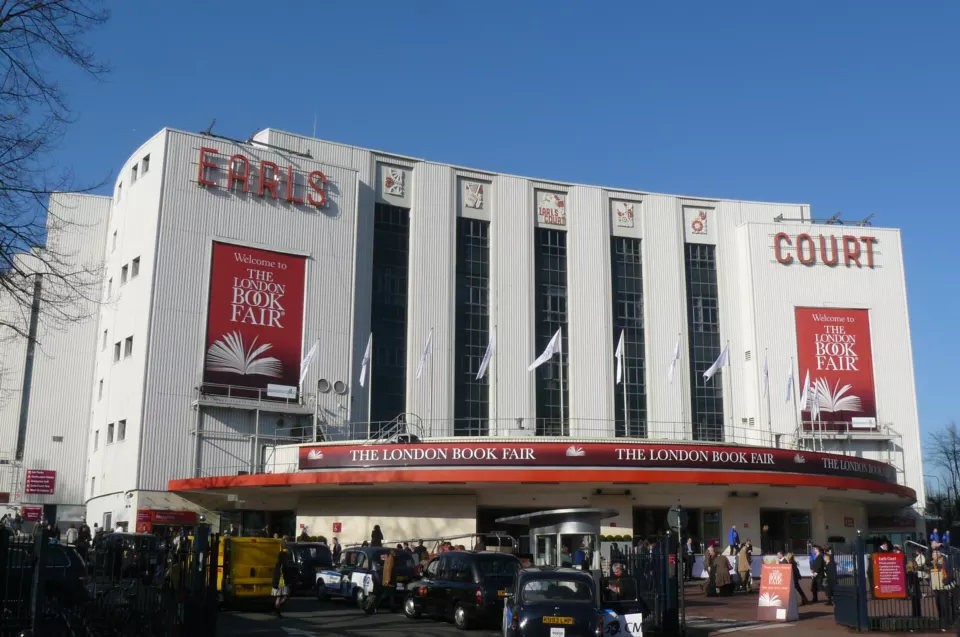
About 18,000 people filled Earls Court Arena in west London. The referee, Eugene Henderson, was also the only scorer. Robinson was 30 and had one defeat in 132 professional fights, a 1943 decision loss to LaMotta that he had more than avenged since.
The fight did not go the way the odds said it would. Turpin was awkward and physically strong. He did not chase Robinson around the ring. He made the champion work in short, broken exchanges, and in the clinches his strength wore Robinson down. Robinson never found the smooth combinations that had beaten so many opponents. Neither man was knocked down. Going into the fifteenth round Turpin was ahead and needed only to finish on his feet. When the bell rang, Henderson raised the challenger's hand.
Robinson did not argue with the result. The Fight City quotes him as saying, "I have no alibis. I was beaten by a better man."
Britain's First World Middleweight Champion Since Fitzsimmons
Turpin became the first British fighter to hold the world middleweight title since Bob Fitzsimmons in the 1890s. Sources date Fitzsimmons' reign differently: Wikipedia gives 1891, while the "This Week in Boxing History" summary gives 1895. Two days after the fight, Leamington held a civic reception for Turpin, and about 10,000 people turned out.
The celebrations were short. Turpin had signed a contract with a 90-day return clause, so a rematch was guaranteed and it was going to be in New York.
The Rematch at the Polo Grounds, 12 September 1951
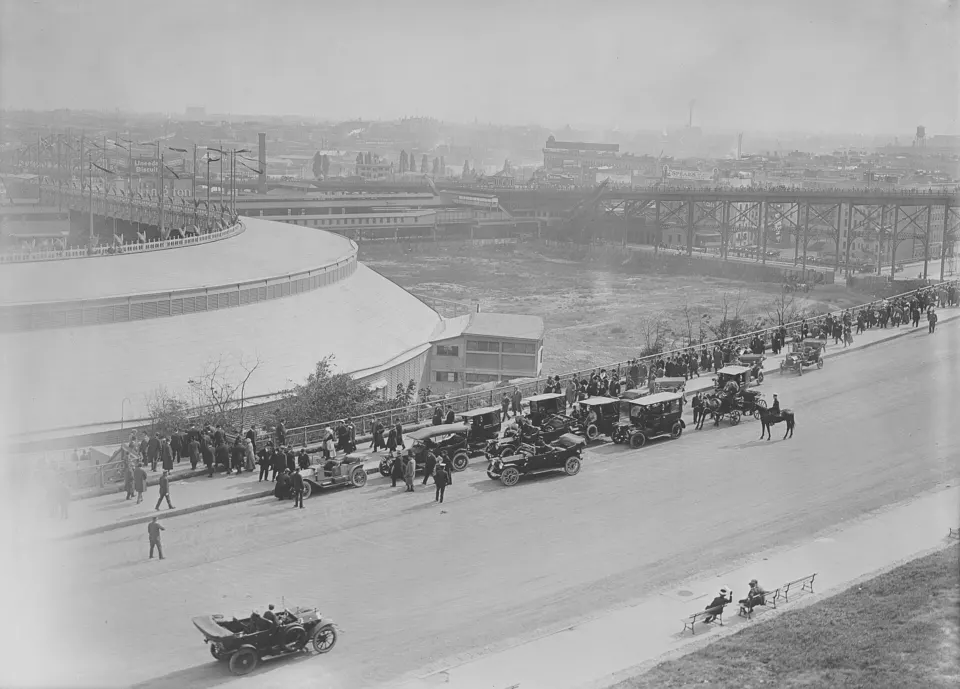
This time Robinson trained properly. The return fight was held outdoors at the Polo Grounds in New York, and the crowd was enormous. Wikipedia's Turpin article and History.com both give 61,370. Robinson's Wikipedia entry rounds it to 60,000, and The Fight City says "over 60,000". The Fight City also calls the gate a record for a fight outside the heavyweight division, and History.com describes the crowd as a record for a middleweight bout.
Through nine rounds the fight was close. Then Robinson was cut over his left eye. History.com says Turpin opened the cut with a string of right hands in the ninth. The Fight City says the cut was reopened in the tenth and may have come from a clash of heads. Robinson knew a bad cut could get the fight stopped against him, and he went for the finish. Boxing News later quoted him calling it "do or die".
The finish came in the tenth round, although sources describe the knockdown punch differently. History.com and Wikipedia credit a right hand to the jaw. Boxing News refers to a left hook. Turpin got up at seven and was driven back to the ropes under a flurry of punches. The referee, Ruby Goldstein, stepped in and stopped it. Robinson's Wikipedia entry and History.com put the stoppage at 2:52 of the round, which matches The Fight City's report that only eight seconds were left. According to Boxing News, Turpin protested that he was fit to continue and that the round was nearly over.
Sixty-Four Days and What Followed
Turpin's reign lasted 64 days. The two never met a third time. Robinson went on to become one of the most celebrated champions in boxing history. For Turpin, the win at Earls Court remained the peak of his career. Wikipedia records that he was declared bankrupt in 1962. Boxing News notes that his last fight was in Malta in August 1964, a second-round win over Charles Seguna, and that the British Boxing Board of Control would no longer license him because of concerns about his health. He died in Leamington Spa on 17 May 1966, aged 37. An inquest ruled his death a suicide, a finding his family disputed.
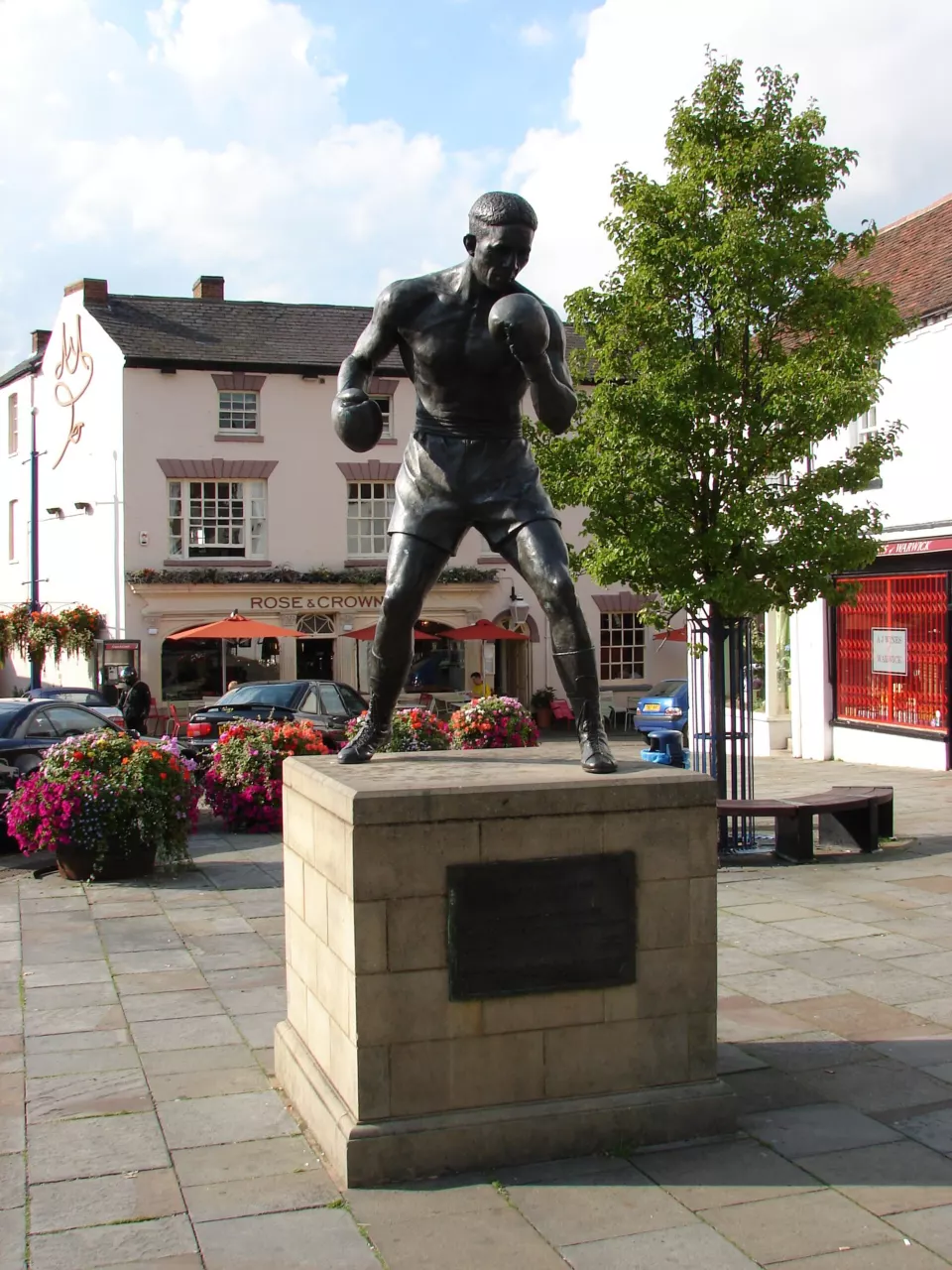
Today Turpin is remembered with a statue in Warwick. In Britain, his win over Robinson is still often called the country's greatest night in the ring. Boxing News has argued it was the greatest victory a British boxer ever achieved.
Sources
- Randolph Turpin, Wikipedia, accessed October 2026
- Sugar Ray Robinson, Wikipedia, accessed October 2026
- Yesterday's Heroes: Why Turpin conquering Robinson was the greatest victory of them all, Boxing News, undated feature
- Randolph Turpin: The man who dethroned a legend, Boxing News, undated feature
- On this day: Sugar Ray Robinson regains his world middleweight title with dramatic victory over Randolph Turpin, Boxing News, undated
- Sugar Ray Robinson wins back belt, History.com (This Day in History, 12 September)
- Sept. 12, 1951: Robinson vs Turpin, The Fight City


