
Jake LaMotta the Bronx Bull Beat Robinson, Threw a Fight and Inspired Raging Bull
From a New York reformatory to the world middleweight title, Jake LaMotta's career included the first loss of Sugar Ray Robinson's career, a fixed 1947 defeat he admitted to a Senate panel, and a life retold in Raging Bull.

Jake LaMotta came out of the tenements of New York with a temper that a reformatory could not cure and a chin that almost nothing could crack. He handed Sugar Ray Robinson his first defeat, took the world middleweight title from Marcel Cerdan, and later told a United States Senate panel that he had deliberately lost a fight to get there. His story ended up on bookshelves and movie screens as Raging Bull.
From the Lower East Side to a Reformatory Upstate
Giacobbe "Jake" LaMotta was born on July 10, 1922, on Manhattan's Lower East Side, the son of an Italian immigrant father from Messina in Sicily and his wife Elizabeth. Most accounts give 1922 as the year, although at least one obituary carried 1921. The family spent a short spell in Philadelphia before settling in the Bronx, the borough whose name would follow him for the rest of his life.
Childhood was rough and money was scarce. According to his Wikipedia biography, his father pushed the boy into fights with other neighborhood children so that adults watching would throw coins, which went toward the rent. The anger stayed with him. As a teenager LaMotta was sent to a reformatory in upstate New York after an attempted robbery, and it was there, behind institutional walls, that he first learned to box in an organized way.
The Bronx Bull Turns Professional
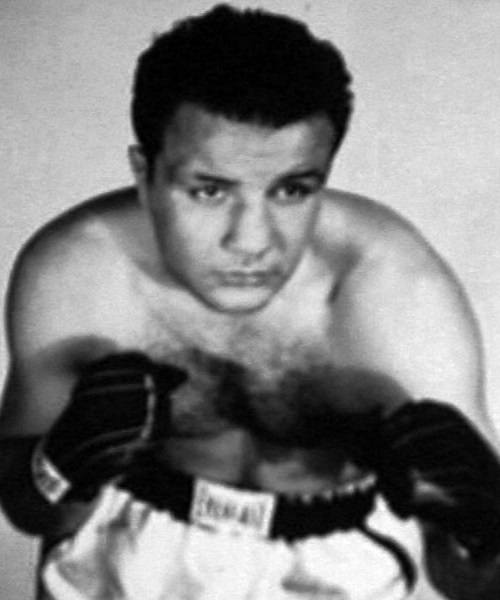
LaMotta made his professional debut in 1941, at 19. Listed at five feet eight with a 67-inch reach, he fought as a middleweight and later a light heavyweight, and he became known as "the Bronx Bull," a name that suited his relentless, forward-moving style.
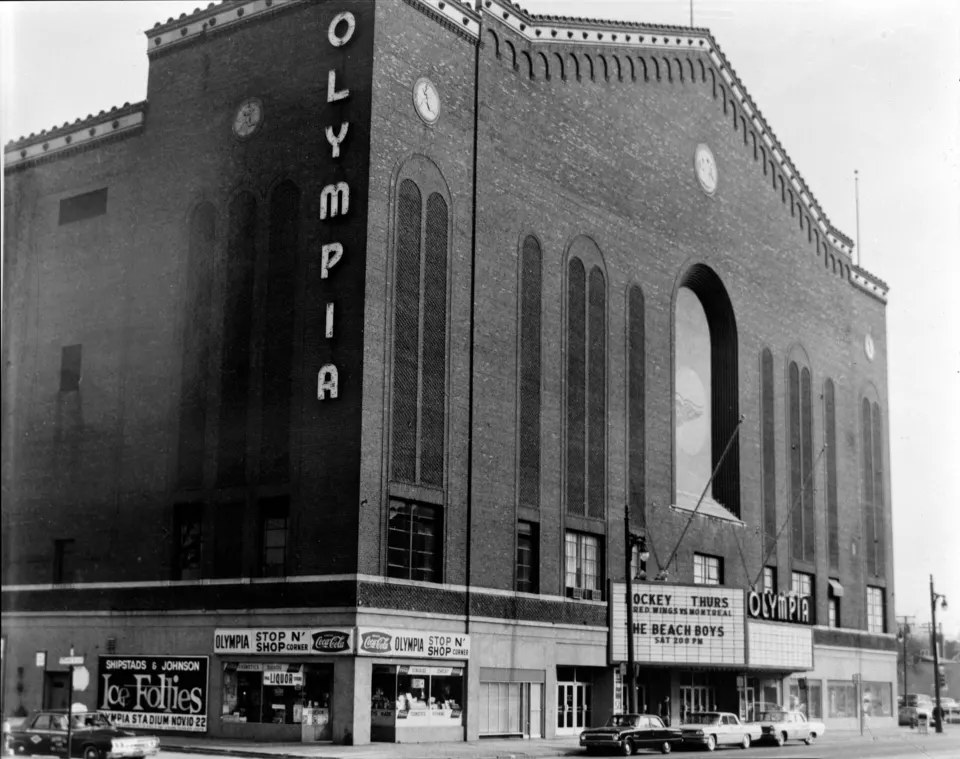
His defining opponent arrived almost at once. LaMotta first met Sugar Ray Robinson at Madison Square Garden on October 2, 1942, and lost a decision. Four months later, on February 5, 1943, at Detroit's Olympia Stadium, he outpointed Robinson over ten rounds. It was the first loss of Robinson's professional career, coming in his 41st bout. Robinson won the rematch in the same building three weeks later, then beat LaMotta twice more in 1945, in New York and at Comiskey Park in Chicago, the last of those on a split decision. LaMotta later joked that he had fought Robinson so often he was surprised he never got diabetes.
Madison Square Garden, November 1947: The Night He Lay Down
Despite his wins, LaMotta could not get a title shot. The men who controlled access to championship fights in that era were tied to organized crime, and an independent contender did not move up without their blessing. On November 14, 1947, at Madison Square Garden, he faced Billy Fox, a light heavyweight, and was stopped in the fourth round.
The result looked wrong to people who had watched LaMotta take punishment for years. The New York State Athletic Commission held back the purses and suspended him. LaMotta did not admit what had happened for more than a decade, but he eventually said it plainly: the loss was a fix, arranged so that he would be given a chance at the championship. Both his Wikipedia biography and a 2019 account on Boxing Writer state that he also paid $20,000 as part of the arrangement. In a 1970 interview later quoted by the Associated Press, LaMotta said: "I purposely lost a fight to Billy Fox because they promised me that I would get a shot to fight for the title if I did."
Detroit, June 1949: Taking the Crown from Cerdan
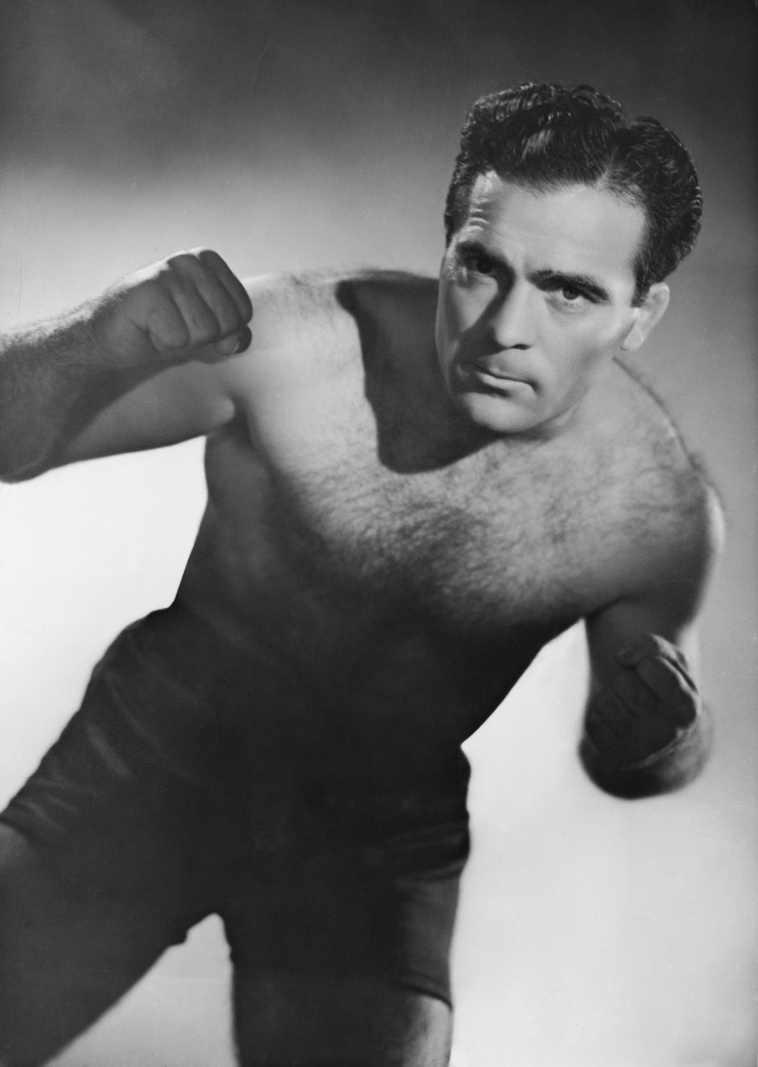
The promised opportunity came on June 16, 1949, in Detroit, against the French champion Marcel Cerdan. LaMotta put Cerdan on the canvas in the first round. Cerdan hurt his shoulder early in the bout, and LaMotta injured his own left hand in the fifth, but the American kept pressing. Cerdan did not come out for the tenth round. Sources word the ending slightly differently: Wikipedia says Cerdan gave up before the tenth began, while the AP obituary says he could not continue after the tenth. Either way, LaMotta was middleweight champion of the world.
A return bout was never staged. Cerdan died in a plane crash in the Azores later in 1949.
Two Defenses and a Valentine's Day Massacre
LaMotta defended the belt twice in 1950. In July he outpointed the Italian Tiberio Mitri; Wikipedia dates that fight July 7, while the AP obituary gives July 12. On September 13 he faced the Frenchman Laurent Dauthuille, who was ahead on all three scorecards going into the 15th and final round. LaMotta unloaded a late barrage and Dauthuille was counted out with only 13 seconds remaining, one of the most dramatic finishes of the era.
Then came Robinson again. On February 14, 1951, at Chicago Stadium, the two met for the sixth and last time, with LaMotta's title at stake. Robinson won by technical knockout in the 13th round. The date and the brutality of the ending gave the fight its lasting nickname: the Saint Valentine's Day Massacre. Across six meetings, LaMotta had won only once.
Light Heavyweight, Retirement and a Fall in Miami
LaMotta's struggles to make the middleweight limit pushed him up to light heavyweight, where his results were uneven. In December 1952 Danny Nardico knocked him down, the only time he was floored in a legitimate fight across his career. He retired after a split-decision loss to Billy Kilgore in April 1954, with a final record of 83 wins (30 by knockout), 19 losses and 4 draws in 106 bouts.
Life outside the ring was turbulent. LaMotta owned a nightclub in Miami, and in 1958 he was arrested and charged with introducing men to an underage girl at the club. He was convicted and served six months on a chain gang.
Washington, 1960: Testimony Before the Kefauver Subcommittee
On June 14, 1960, LaMotta appeared in Washington before the Senate Subcommittee on Antitrust and Monopoly, chaired by Senator Estes Kefauver, which was examining underworld control of professional boxing. Under questioning he confirmed under oath that he had faked the knockout against Fox thirteen years earlier. Boxing Writer's account names Frankie Carbo and Frank "Blinky" Palermo among the figures the hearings set out to expose.
Raging Bull: The Book and the Film
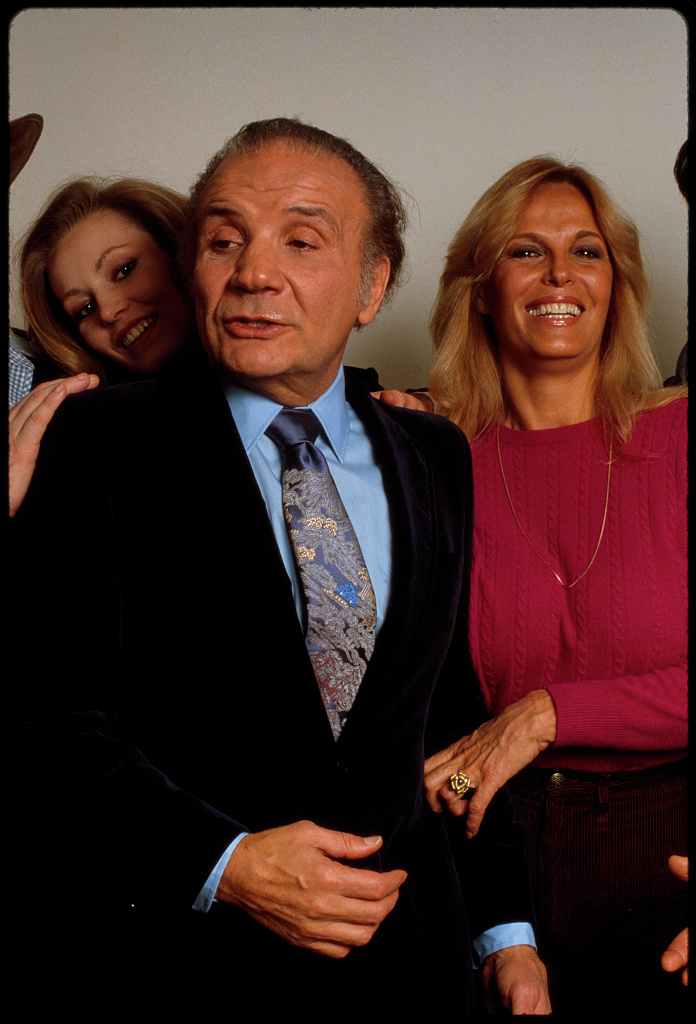
LaMotta looked back on all of it in a memoir, Raging Bull: My Story, published in 1970 and written with Joseph Carter and Peter Savage. Director Martin Scorsese adapted it for the screen in 1980, with Robert De Niro in the lead. The film received eight Academy Award nominations, and De Niro won Best Actor; to play the older LaMotta he put on a large amount of weight, reported as 50 pounds by the AP and 60 by Wikipedia.
The film brought LaMotta a new generation of fame. He also worked as an actor, appearing in The Hustler in 1961 and in the television comedy Car 54, Where Are You?, and he did commercials, personal appearances and nightclub work in New York during the 1970s.
Last Rounds
LaMotta married seven times and had four daughters. In 1998 he lost both of his sons: Jake Jr. died of cancer in February, and Joseph was killed in September in the crash of Swissair Flight 111 off Nova Scotia. In 1990 he was part of the inaugural class of the International Boxing Hall of Fame.
Jake LaMotta died on September 19, 2017, at a hospital in the Miami area, from complications of pneumonia. He was 95. His fiancée, Denise Baker, described him to reporters as "a great, sweet, sensitive, strong, compelling man."
Sources
- Jake LaMotta, Wikipedia, accessed October 2026
- Boxer Jake LaMotta, immortalized in 'Raging Bull,' dies at 95, Associated Press via Voice of America, September 20, 2017
- Jake LaMotta dead at 95, CBS New York, September 2017
- 'It's not your night'. Why did Jake LaMotta have to lose to Billy Fox in '47?, Boxing Writer, December 27, 2019


