
Benn vs McClellan in 1995 Saw Benn Out of the Ring in Round One, a Tenth-Round Count and a Life Changed Forever
On 25 February 1995 Nigel Benn survived being knocked out of the ring to stop Gerald McClellan in the tenth round at the London Arena. McClellan then collapsed with a brain injury that left him blind and needing lifelong care, and the fight reopened Britain's debate over boxing safety.

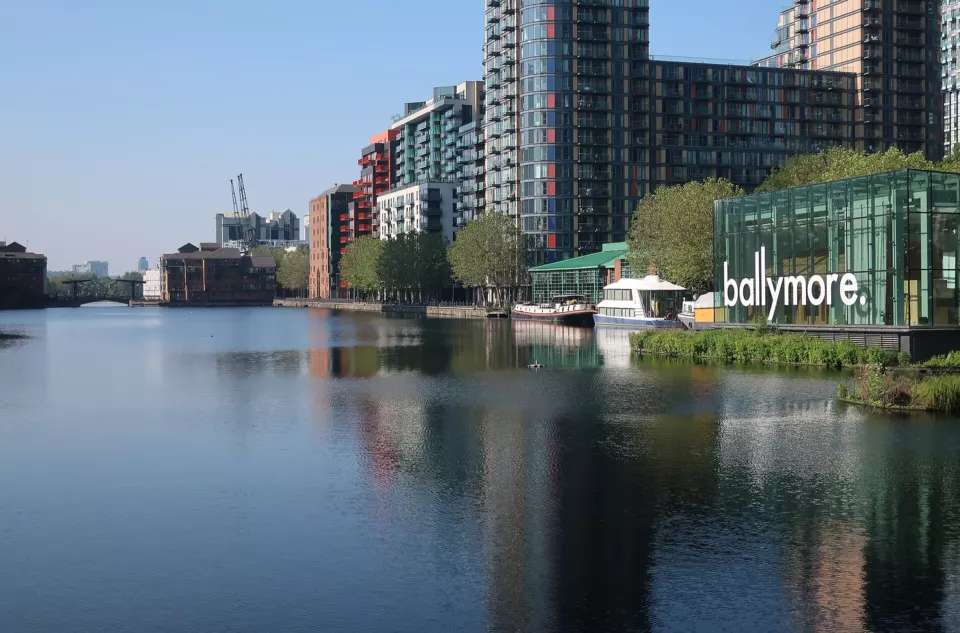
On 25 February 1995, at the London Arena on the Isle of Dogs, Nigel Benn and Gerald McClellan fought ten rounds for the WBC super-middleweight title. Benn was sent out of the ring in the first minute and still won by knockout in the tenth. Minutes later McClellan collapsed in his corner. He survived emergency brain surgery but never recovered fully, and the night set off a fresh argument in Britain over whether boxing should be allowed at all.
Sudden Impact: A Puncher Moves Up to 168
The bout was promoted as "Sudden Impact", and on paper the title fit the challenger better than the champion. Gerald McClellan, from Freeport, Illinois, arrived with a 31-2 record. He had held the WBO middleweight belt from 1991 to 1993 and then the WBC middleweight title, which he won by stopping Julian Jackson in five rounds in May 1993. In the rematch a year later he knocked Jackson out in the first. When he came to London he had won 21 fights in a row, the last 14 of them inside the distance, and the bookmakers made him a clear favourite at around 1-3.
Benn, the Ilford-born former soldier known as the Dark Destroyer, was defending the WBC super-middleweight title with a record of 39-2-1. Benn weighed 168 lb and McClellan 165. Don King and Frank Warren co-promoted the show. Wikipedia's account of the fight gives the crowd as about 10,300 and the British television audience as an estimated 17 million.
Round One: The Champion Outside the Ring
About 35 seconds in, McClellan's attack drove Benn through the ropes and out of the ring. The rules allowed a fighter 20 seconds to climb back in, and Benn made it in time. The referee was Alfred Asaro of France, whose name the Associated Press spelled "Azaro" in its 1995 reports. The fight went on.
Benn got through the round. He took over from the fourth to the sixth, and over those rounds McClellan looked uncomfortable. McClellan came back in the seventh and eighth and dropped Benn again in the eighth, but by then he was too tired to finish the job.
Rounds Nine and Ten: The Head Clash and the Count
There was a clash of heads in the ninth. Afterwards Frank Warren told the AP that the head-butt was accidental. He also suggested that a language barrier between the French referee and the American challenger may have kept McClellan from telling Asaro what was wrong.
Early in the tenth a Benn right hand put McClellan down on one knee. He got up at seven. Another right sent him back to his knee, and this time he stayed there while Asaro counted to ten. He had gone down without being knocked unconscious, and nothing in that moment showed how badly he was hurt.
The Collapse in the Corner
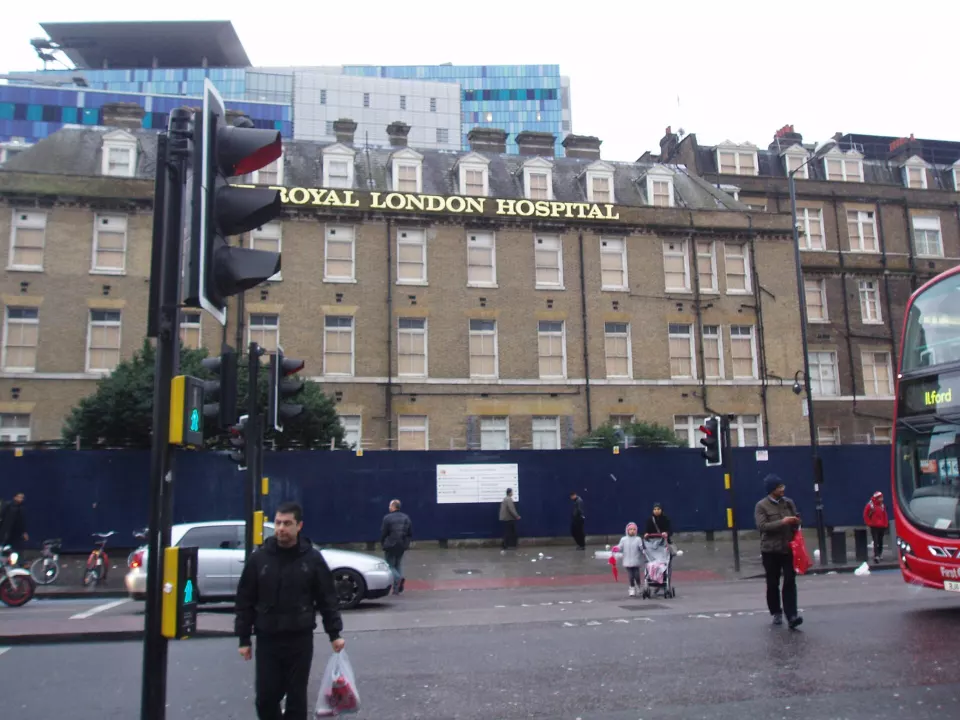
Seconds after the count, McClellan slumped in his corner. Ringside medical staff treated him and took him to the Royal London Hospital in Whitechapel. Early on Sunday, neurosurgeon John Sutcliffe operated to remove a large blood clot from his brain. The AP reported that McClellan was in critical but stable condition and on life support, and that Sutcliffe had said his boxing career was over. "We think he will now survive," the surgeon told reporters, according to the AP.
Warren defended the medical arrangements. He told the AP that an anaesthetist, four doctors, two teams of paramedics and two ambulances had been at the arena, and the quick treatment was widely credited with saving McClellan's life. The British Boxing Board of Control had already tightened its rules after Michael Watson's brain injury in 1991 and the death of Bradley Stone in 1994. Those changes are why paramedics were able to reach McClellan immediately.
The sources disagree on how long McClellan was in a coma. Wikipedia's article on the fight says two weeks, while its biography of McClellan says eleven days.
In the days that followed he told the AP he would think about retiring if McClellan did not pull through. He released a statement calling it "a fierce and fair fight" and sending his sympathy to McClellan's family.
Boxing on Trial in Britain
The injury came less than four years after Watson's and less than a year after Stone's death, and the reaction was immediate. The British Medical Association and the British Safety Council renewed their calls for a ban on professional boxing. The Board of Control held a news conference to defend its safety procedures. Its general secretary, John Morris, said: "You'll never silence the critics." He rejected a ban and called for a world body to oversee safety standards.
Other disputes ran for years. McClellan's trainer, Stan Johnson, denied that his fighter had asked to stop after the sixth round, while McClellan's sister Lisa said he had. She has also told her brother that he was hurt by a head-butt. These accounts conflict, and none has been settled officially.
Benn defended the title twice more, lost it to Thulani Malinga on a split decision in 1996, and retired after two defeats by Steve Collins.
Life After London: Blindness, Care and Money
The injuries were permanent. McClellan was left blind, with serious short-term memory loss, and needed a wheelchair. Early reports said he was about 80 percent deaf, but a 2011 ITV documentary found that his real problem was understanding speech rather than total hearing loss. In January 1996 Alan Goldstein of the Baltimore Sun reported that his three sisters, Lisa, Sandra and Stacey, were caring for him in eight-hour shifts. Therapy cost $500 a session, three times a week. A $265,000 trust fund had been used up, a $100,000 WBC insurance policy was in dispute, and McClellan had netted about $54,000 from his purse after deductions.
According to Lisa McClellan, quoted by Boxing News in 2015, Benn went to see McClellan in hospital in 1995 but was told by Don King's people to leave before the family arrived. The two men met properly in 2007, when Benn organised and hosted a benefit dinner in London for McClellan. McClellan attended with his sister and his children, and the evening raised about £200,000.
Help also came from inside the sport. Roy Jones Jr. set up a foundation to support McClellan, and the WBC appealed for donations to his trust fund in 2012. The nonprofit Ring 10 began providing monthly food assistance. By 2017, after colon surgery, his colostomy supplies alone cost about $500 a month.
Thirty Years On
In August 2025 Boxing News reported that McClellan, then 57, was still being looked after around the clock by Lisa. Their sister Sandra, who had shared the care, had recently died. Lisa set up a foundation called The Ring of Brotherhood, which raised money for a wheelchair-accessible vehicle, and she said that newer treatments had helped him recover some memories of the fight. She postponed a planned 30th-anniversary fundraiser to care for Sandra. "I feel like I've been in a 12-round fight for 30 years," she told the magazine.
The fight is still remembered for both reasons. Benn's comeback from the first round counts among the great British title wins, and its cost is the clearest example of the harm boxing can do. McClellan's injuries also showed how much a fighter's life afterwards depends on family and on charity.
Sources
- Nigel Benn vs. Gerald McClellan, Wikipedia, accessed October 2026
- Gerald McClellan, Wikipedia, accessed October 2026
- Nigel Benn, Wikipedia, accessed October 2026
- Boxer clings to life after brutal fight, Associated Press (Deseret News), 27 February 1995
- Boxer on life support as Britons call for ban, Associated Press (Arizona Daily Wildcat), 28 February 1995
- Associated Press report on McClellan's surgery and ringside medical cover, University Daily Kansan (KU Digital Library), February 1995
- Boxing tragedy: Sparring continues over McClellan's paralyzing injury, Alan Goldstein, Baltimore Sun (Seattle Times archive), 14 January 1996
- Twenty years on from tragic night, Gerald McClellan still asks what happened when he fought Nigel Benn, Boxing News, 26 January 2015
- Three decades after Benn fight, Gerald McClellan's family remain strong, James Slater, Boxing News, 5 August 2025


