
How Gerald McClellan Went From Freeport and the Kronk to Two Middleweight Titles, London 1995 and a Life in His Sisters' Care
The life of Gerald McClellan, the Freeport puncher who won WBO and WBC middleweight titles with a string of early knockouts before the 1995 Nigel Benn fight left him blind and in need of lifelong care from his sisters.

Gerald McClellan came out of Freeport, Illinois, punched his way through the Kronk Gym under Emanuel Steward and held two versions of the world middleweight title before his 28th birthday, mostly without needing more than a round. One night in London in February 1995 ended his career and changed his life, and for three decades since, his sisters have been the people standing beside him.
A Freeport Kid With Heavy Hands
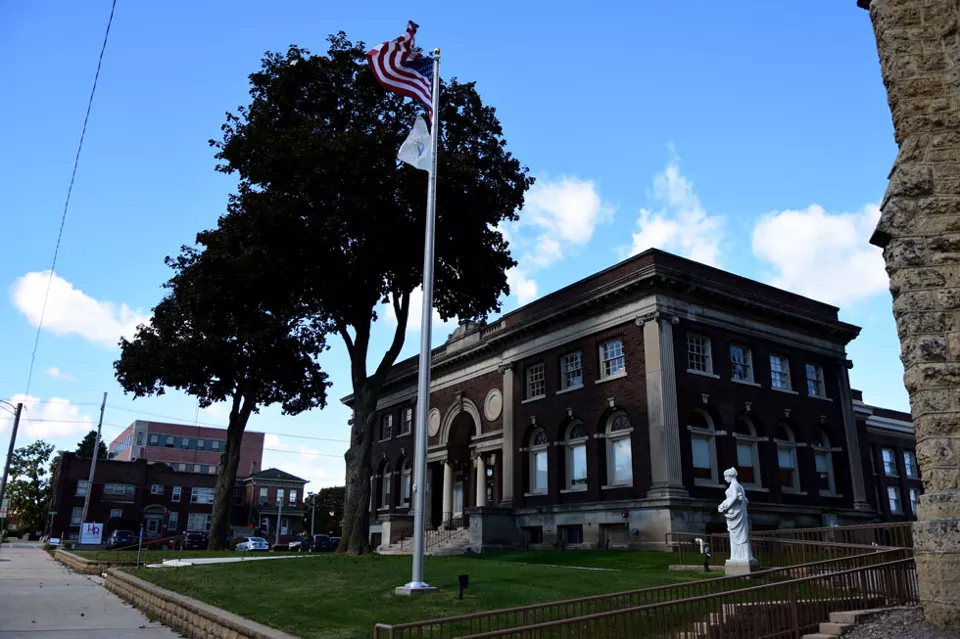
McClellan was born on October 23, 1967, in Freeport, a small city in northern Illinois near the Wisconsin line. His father was Emmit McClellan, and he grew up with three sisters, Lisa, Sandra and Stacey, according to a 1996 Baltimore Sun report. He was tall for a middleweight, listed at 6 feet 1 inch with a 77-inch reach, and fought from an orthodox stance.
His amateur record pulled him north and east. Wikipedia's account of his career credits him with four Wisconsin Golden Gloves titles between 1984 and 1987, mostly at junior middleweight. On the national stage the results were mixed: a disqualification loss to Roy Richie at the 1985 National Golden Gloves, a split-decision defeat by Thomas Tate at the 1986 U.S. Olympic Festival, and then the 1987 U.S. national title at 156 pounds. At the 1988 National Golden Gloves he beat a young Roy Jones Jr. on a 3-2 split decision before losing the final to Ray McElroy.
Into the Kronk Under Emanuel Steward
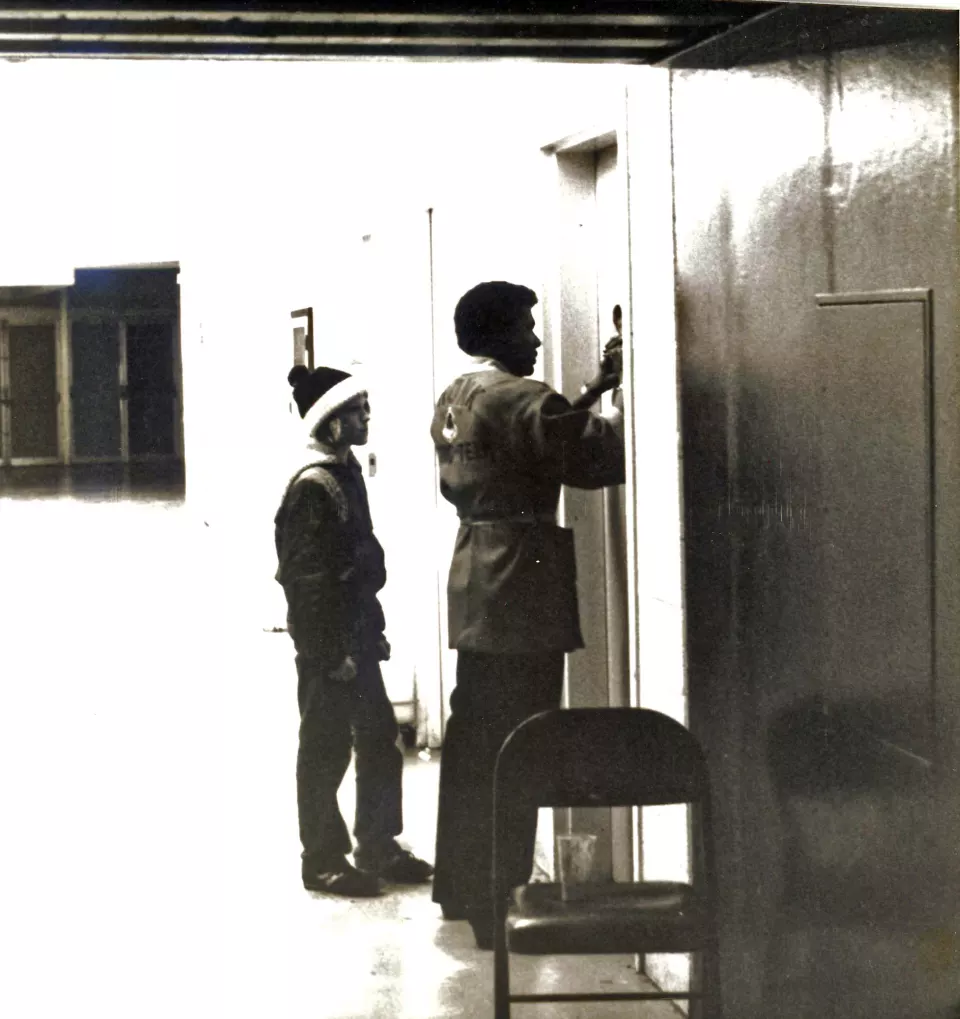
The gym that shaped him was the Kronk in Detroit, where he trained under Emanuel Steward through the amateur years and into the championship ones.
McClellan turned professional on August 12, 1988, knocking out Roy Hundley in the first round. The pattern held: of his first 29 professional fights, only two went past the third round. Those two were the exceptions that taught him something. In June 1989 he lost a six-round decision to Dennis Milton in Atlantic City, and that September he dropped an eight-round unanimous decision to Ralph Ward, also in Atlantic City.
The WBO Belt at the Royal Albert Hall
His first world title came far from home. On November 20, 1991, at the Royal Albert Hall in London, McClellan met John Mugabi for the vacant WBO middleweight title. Boxing News records that McClellan put Mugabi down three times in the opening round; the stoppage came at 2:51 of round one.
In 1992 he stayed busy with first-round stoppages of Lester Yarbrough in Auburn Hills, Michigan, and Carl Sullivan in Atlantic City, then vacated the WBO belt on April 2, 1993.
Surviving Julian Jackson in Las Vegas

Next came Julian Jackson. They met on May 8, 1993, at the Thomas & Mack Center in Las Vegas. It was not a one-sided night. McClellan absorbed several hard shots from Jackson in the second and third rounds, but he stayed upright and kept pressing. In the fifth he broke through, and the referee stopped the fight at 2:09 of the round. At 25, McClellan was the WBC middleweight champion.
Three Defenses, Three First Rounds
On August 6, 1993, in Bayamón, Puerto Rico, he knocked out Jay Bell in the first round. On March 4, 1994, back in Las Vegas, Gilbert Baptist lasted less than a round. Then, on May 7, 1994, Jackson got his rematch, and this time McClellan needed only 1:23 to knock him out.
The Ring later placed McClellan 27th on its list of the 100 greatest punchers of all time. Promoter Don King, according to Boxing News, liked to describe him as a miniature Mike Tyson. By the autumn of 1994, though, there had been a significant change in his corner: McClellan had split from Steward, and Willie Brown took over his training for the next fight.
London, February 25, 1995
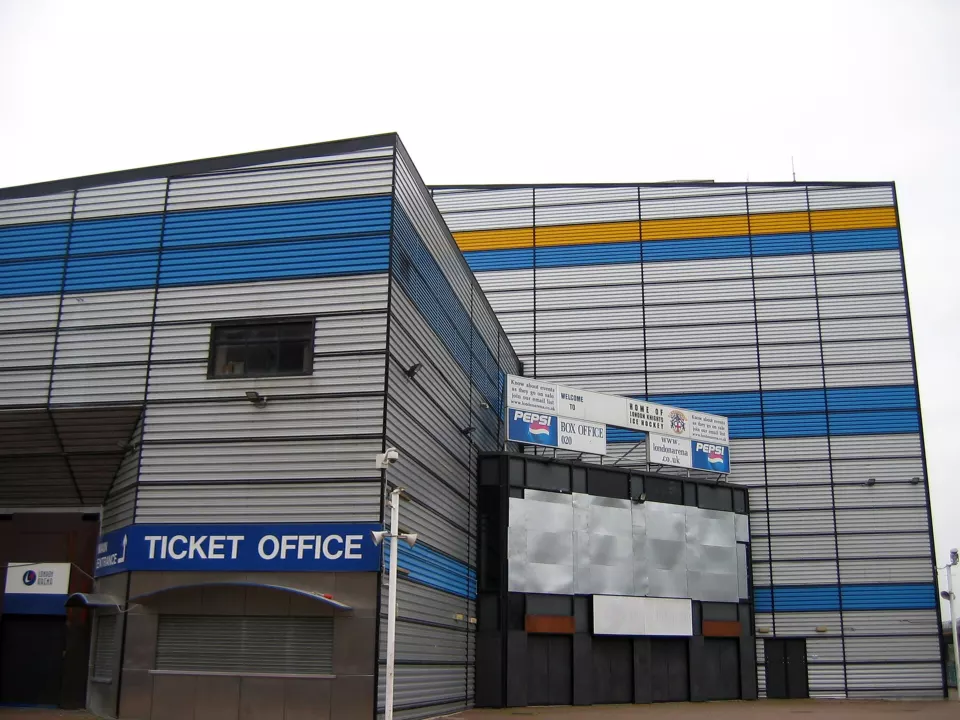
That fight was a jump up in weight to face Nigel Benn, the WBC super middleweight champion, at the London Arena in Millwall. Around 10,300 fans were inside and an estimated 17 million watched on British television. McClellan gave up the WBC middleweight title on January 5, 1995, ahead of the bout.
The opening round was ferocious. McClellan knocked Benn through the ropes and almost finished him; referee Alfred Asaro was later criticized for getting in the way of McClellan's follow-up. Benn recovered, the fight swung back and forth, and McClellan dropped him again in the eighth. In the tenth, McClellan went to one knee after an exchange, took a count, and then went down a second time and was counted out at 1:46.
The accounts do not fully agree on what hurt him. Lisa McClellan has described an accidental head butt as the cause, according to a 2015 Boxing News interview; other reports focus on the accumulation of punches across ten rounds. He walked back to his corner after the count, then lost consciousness while being treated in the ring.
Surgery, Coma and What Remained
He was taken to the Royal London Hospital, where surgeons operated for three and a half hours to remove a blood clot from his brain, the Baltimore Sun reported. Sources differ on how long he stayed unconscious: Wikipedia gives eleven days in a coma, while the Sun's 1996 report described a coma of two months. Rehabilitation followed in Michigan and Milwaukee.
The damage was permanent. McClellan lost his sight and the ability to walk without help, and his short-term memory was badly impaired. Early reports said he had lost most of his hearing; his sister Lisa later said in a 2011 ITV documentary that the real problem was comprehension rather than deafness, and Boxing News described his hearing as good in 2015.
Money, Blame and a Trust Fund That Ran Dry
Within a year the family was fighting a second battle over money. According to the Baltimore Sun, McClellan had been guaranteed $200,000 plus expenses for the Benn fight but netted around $54,000 after deductions, and the family had already burned through a $265,000 trust fund. "We've used up the $265,000 he had in a trust fund, and we've been selling off his cars," Lisa told the paper. The AP put the purse at $250,000 in 2003 and reported that McClellan's share came to just under $63,000; the two accounts use different figures, and neither suggests he left the sport with any security.
Life in Freeport With His Sisters
McClellan went home to Freeport, and his sisters took over his care. In 1996 the family was covering him in eight-hour shifts. By 2003, the AP found him at 35 using a walker, with a young daughter living a few blocks away and two sons in Detroit. By 2015, Boxing News reported that Lisa and Sandra were sharing his round-the-clock care equally, and that Lisa had given up her job after being diagnosed with a heart condition. She also told the magazine that he could still recall every fight he had, its result and the round it ended in, even while he kept asking her what had happened that night in London.
Help has come from inside the sport. Roy Jones Jr., the man McClellan beat as an amateur, set up a foundation for him. Benn, his opponent that night, helped raise money, including a 2007 London fundraiser that Wikipedia says brought in about £200,000. The WBC made a public appeal for donations in 2012, and Freeport residents contributed home repairs and donations, according to Boxing News. In July 2017 he had colon surgery and has since needed a colostomy bag.
His record stands at 31 wins, 29 by knockout, and three losses. He was inducted into the World Boxing Hall of Fame in California in 2007, a body separate from the International Boxing Hall of Fame.
Sources
- Gerald McClellan, Wikipedia, accessed October 2026
- Boxing tragedy: Sparring continues over McClellan's paralyzing injury, Alan Goldstein, Baltimore Sun (via The Seattle Times archive), January 14, 1996
- McClellan can't fight back, Associated Press (via Deseret News), September 28, 2003
- Twenty years on from tragic night, Gerald McClellan still asks what happened when he fought Nigel Benn, Boxing News, January 26, 2015
- On this day: thunderous puncher Gerald McClellan was born in 1967, Boxing News, October 22, 2018


