
Julian Jackson the Hawk From St. Thomas Had the Graham Knockout and a Life After the Ring
From a gym in St. Thomas to world titles at 154 and 160 pounds, Julian Jackson fought through detached-retina surgery, knocked out Herol Graham with one right hand in 1990 and later turned to ministry and youth work.

Julian "The Hawk" Jackson came out of St. Thomas in the U.S. Virgin Islands with a right hand that still sits near the top of every argument about boxing's heaviest one-punch hitters. He won a world title at 154 pounds, fought on after surgery for detached retinas, rescued a lost cause against Herol Graham with a single blow in 1990 and twice held the WBC middleweight belt before turning his life toward church, youth work and a gym of his own.
A Gym in St. Thomas and a Coach Who Changed the Course
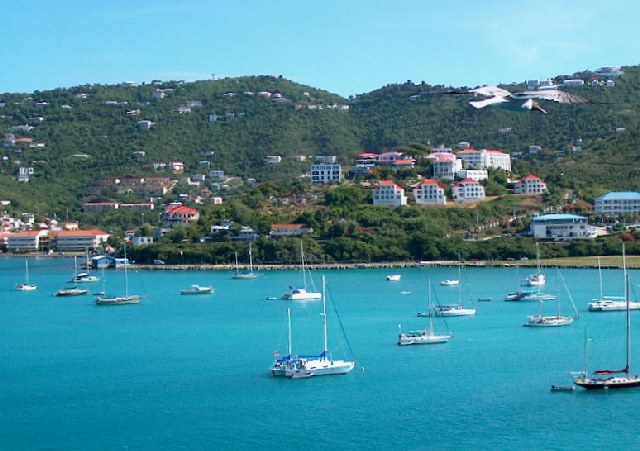
Jackson was born on September 12, 1960, in Saint Thomas, and was raised by a single mother. According to the St. Thomas Source, he wandered into boxing at about twelve, tagging along with a friend to a local gym, where he met coach Willie Wilhelm George. Jackson later spoke of that period without softening it. He told the island paper that he had low self-esteem as a boy and that, without the sport, he might have finished in jail or in the grave.
His amateur run was short but carried him onto an international stage. Wikipedia lists a 15-2 amateur record and a place at the 1979 Pan American Games, where he went out in his opening bout against Jose Baret of the Dominican Republic. He turned professional in February 1981, and many of his early fights took place in Puerto Rico. Boxing News notes that he won his first 29 contests, most of them inside the distance.
Miami Beach 1986: The First Title Shot Goes Wrong
The unbeaten run ended the first time Jackson stepped up to world level. On August 23, 1986, at the Convention Hall in Miami Beach, he challenged WBA super welterweight champion Mike McCallum. The Jamaican stopped him in the second round, a reminder that raw power alone would not carry him past seasoned champions.
Jackson rebuilt quickly. On November 21, 1987, at the Las Vegas Hilton, he met Baek In-chul of South Korea for the vacant WBA title and won it in the third round. Three defenses followed: Buster Drayton in three rounds in July 1988, Francisco DeJesus in eight in February 1989, and a young Terry Norris on July 30, 1989, at the Atlantic City Convention Center. Against Norris, a heavy right put the challenger down in the second; he rose, but referee Joe Cortez judged him unable to continue. Norris would go on to a long reign of his own at the weight, which only made the result look more striking in hindsight. One small discrepancy is worth flagging: a St. Thomas Source profile describes the WBA belt as a welterweight title, while Wikipedia and the Norris records place it at super welterweight, the 154-pound class.
Detached Retinas and a Fight Moved to Spain
Then came the injury that threatened everything. Jackson needed surgery to repair detached retinas; The Fight City's account of his next big fight says both eyes were operated on the year before it. The damage mattered beyond his own health. When a WBC middleweight title fight with Britain's Herol Graham was arranged, the British Boxing Board of Control would not license Jackson to box in the United Kingdom, according to Wikipedia and Boxing News. The promotion moved instead to the Torrequebrada Hotel and Casino in Benalmádena, on Spain's Andalusian coast, for November 24, 1990. Jackson gave up his WBA belt to step up to 160 pounds.
Benalmádena 1990: Losing Every Minute, Then One Right Hand
Graham, a slippery southpaw from Sheffield, came in chasing his first world title after defeats to Sumbu Kalambay and Mike McCallum. For three rounds he made Jackson look ordinary. The Fight City describes Graham beating him to the punch with footwork and timing while Jackson missed wildly, and a sharp left lead in the second round left Jackson's left eye swelling. Before the fourth, according to the same account, the ringside physician warned Jackson's corner that the fight would be stopped if the eye got worse.
Midway through the fourth, Graham pressed forward and backed Jackson toward the ropes. Jackson let go a single right hand. Graham was unconscious before he landed, and Wikipedia records that it took about five worrying minutes to bring him round. The referee's count was a formality. Jackson, well behind moments earlier, was the new WBC middleweight champion. Years later he told Boxing News that Graham "was dominating the fight and was probably a bit overconfident." The punch is still widely replayed as one of the cleanest one-shot finishes ever filmed.
Champion at 160: Short Nights and a Points Win
Jackson's first middleweight reign lasted until May 1993. Wikipedia lists four successful defenses: first-round knockouts of Dennis Milton and Ismael Negron, a fifth-round stoppage of Ron Collins, and a unanimous twelve-round decision over Thomas Tate on August 1, 1992. The Tate fight was a rare night when his opponent heard the final bell. Across his career, Jackson's knockout rate ran to roughly 89 percent of his wins, and The Ring placed him 25th in its 2003 list of the 100 greatest punchers.
Gerald McClellan, Twice

The man who took the title was another feared hitter. On May 8, 1993, at the Thomas & Mack Center in Las Vegas, Gerald McClellan dropped Jackson twice in the fifth round and the referee stopped it after the second knockdown. Jackson admitted to Boxing News that he had been sure he would knock McClellan out, but conceded his rival was a tremendous puncher as well. A rematch on May 7, 1994, at the MGM Grand Garden Arena, was over in the first round, with McClellan knocking him out.
McClellan soon moved on, and less than a year after their second fight his career ended in London with the brain injury he suffered against Nigel Benn, a story told separately on this site.
A Second Reign, Quincy Taylor and the Last Fights
With the middleweight belt vacant, Jackson won it again on March 17, 1995, stopping Italy's Agostino Cardamone in two rounds at the Worcester Memorial Auditorium in Massachusetts. His first defense, on August 19, 1995, back at the MGM Grand, went to Quincy Taylor, who stopped him in the sixth. Wikipedia reports that Jackson tore his rotator cuff in that fight.
He kept going for a while with four lower-profile wins, but the end came in 1998. Verno Phillips knocked him out in nine rounds in Tunica, Mississippi, in January, and Anthony Jones stopped him in the ninth at The Palace of Auburn Hills, Michigan, in May. Jackson finished at 55-6 with 49 knockouts.
Seminary, Youth Work and the Jackson Sons
Back home in St. Thomas, Jackson went to college and to the seminary, as he told Boxing Insider in 2008, and joined the ministry. He ran a nonprofit that visited schools, served as vice president of the Virgin Islands amateur boxing association and coached the national team. The St. Thomas Source describes him as a Rotarian devoted to his church and youth ministry, with his own gym where he has trained, among others, his stepson Clayton Laurent Jr.
Boxing ran on in the family. Wikipedia names three sons who boxed professionally: Julius, Julian Jr. and John. Julius, born in 1987 and nicknamed "The Chef," represented the Virgin Islands as a light heavyweight at the 2008 Beijing Olympics, losing in the round of 32 to Ireland's Kenneth Egan, while his brother John also qualified for those Games. As a professional Julius held the WBC USNBC and WBA Fedebol belts. In 2008 their father told Boxing Insider that his dream was to walk to the ring for a championship fight in his sons' corner.
Canastota and the Hawk's Legacy

The International Boxing Hall of Fame elected Jackson in December 2018, alongside Donald Curry, James "Buddy" McGirt and Tony DeMarco, and he was inducted in Canastota, New York, on June 9, 2019. Boxing News reported that he thanked his wife, four sons and two daughters in his speech. The Atlantic City Boxing Hall of Fame followed in 2025. On his election, he told the St. Thomas Source he hoped people would remember "the Hawk, someone who came from humble beginnings."
Sources
- Julian Jackson (boxer), Wikipedia, accessed October 2026
- Julius Jackson, Wikipedia, accessed October 2026
- Terry Norris (boxer), Wikipedia, accessed October 2026
- Nov. 24, 1990: Jackson vs Graham, Neil Crane, The Fight City
- Julian Jackson: Nothing in life is worth anything if you don't take a chance, Jack Hirsch, Boxing News, August 6, 2019
- Keeping Up With Julian Jackson, Shawn M. Murphy, Boxing Insider, October 8, 2008
- Julian Jackson Elected to Boxing Hall of Fame, St. Thomas Source, December 12, 2018


