
Louis vs Walcott in 1947 Brought Two Knockdowns, a Booed Split Decision and the Eleventh-Round Answer at Yankee Stadium
Jersey Joe Walcott dropped Joe Louis twice at Madison Square Garden in December 1947 but lost a split decision most ringside writers disputed. Six months later Louis knocked him out in the 11th round at Yankee Stadium and announced his retirement.

On the night of December 5, 1947, Jersey Joe Walcott put Joe Louis on the canvas twice at Madison Square Garden and, in the view of most ringside writers, outboxed him for fifteen rounds. Two officials still voted for the champion, the crowd booed, and Louis tried to leave the ring before the verdict was read. Six months later, at Yankee Stadium, he settled the matter in the eleventh round.
A Bout That Was Not Supposed to Matter
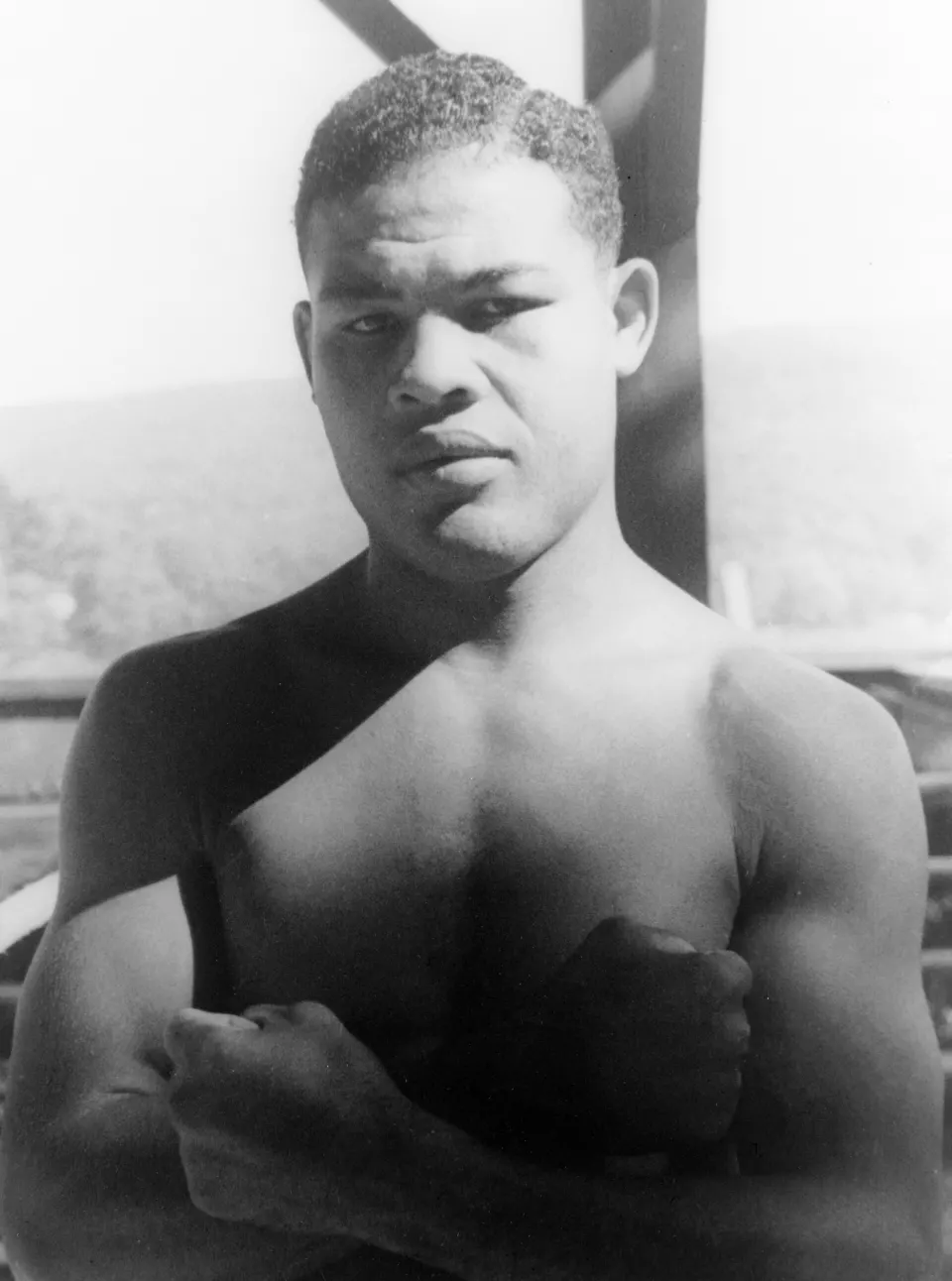
By late 1947 Joe Louis had held the heavyweight championship for ten years and had turned back more than twenty challengers. He was 33, still the most famous fighter in the world, and the man chosen to face him was not regarded as a serious threat. Promoter Mike Jacobs first announced a ten-round contest for November 14 in which the title would change hands only by knockout, a format that signalled how little was expected of the challenger.
That changed on September 16, when Louis agreed to make it a full fifteen-round championship fight. The date moved back to December 5 to allow more preparation. Walcott, a veteran from Camden, New Jersey, had been boxing for about eighteen years and was roughly four months older than the champion. Accounts of his record going in differ: the Wikipedia article on the fight lists him at 42 wins, 13 losses and a draw, while the article on Louis gives 44-11-2. The betting reflected the general view. Louis was quoted at around 1 to 10, Walcott a 10-to-1 outsider.
At the weigh-in Louis came in at about 211 pounds and Walcott at 194 and a half, a gap of some seventeen pounds in the champion's favour.
Two Knockdowns at Madison Square Garden
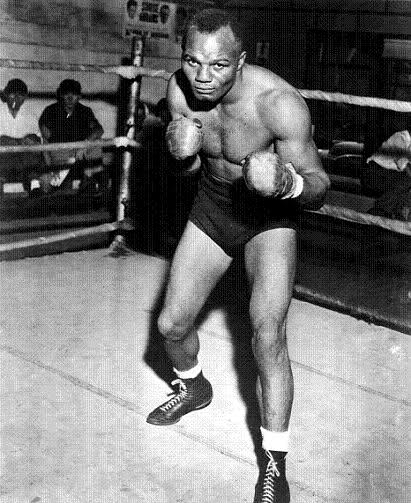
The Garden was sold out, with 18,194 paying customers producing a gate of $216,477, a figure Boxing News describes as a record for the building. Louis was to receive 37.5 percent of the receipts and Walcott 22.5 percent.
The challenger made an immediate statement. In the first round he caught Louis with a right hand and dropped him; Louis was up quickly, at a count of two. In the fourth Walcott landed another right to the jaw and Louis went down again, this time taking a count of seven before rising.
Louis never went down again, and the fight went the full fifteen rounds. When it ended, the scoring began to matter in a way few people had anticipated in September.
The Scorecards and the Split Decision
Under New York rules the referee also scored the fight. Ruby Goldstein, the third man in the ring, voted for Walcott, seven rounds to six with two even. The two ringside judges, Frank Forbes and Marty Monroe, both voted for Louis, and he kept his title on a split decision.
The exact figures on the judges' cards are reported differently. Wikipedia gives the two Louis cards as 8-6-1 and 9-6. Boxing News, in a 2020 retrospective by John Jarrett, records Forbes at seven rounds for Louis, six for Walcott and two even, with Monroe giving Louis nine rounds. Both sources agree on the essential point: one official for Walcott, two for Louis.
According to Wikipedia, Walcott's side later argued that Forbes had given their man more points overall even while awarding Louis more rounds. Whatever the arithmetic, the press saw the fight very differently from the judges. Of 32 boxing writers polled at ringside, 21 had Walcott winning, 10 had Louis, and one scored it a draw.
Boos, an Early Exit and an Apology
The announcement was greeted with booing across the Garden. Michael Carbert of The Fight City describes the crowd erupting in astonishment at the verdict. Louis himself had already made his feelings plain. Boxing News reports that he was disgusted with himself; he started to climb out of the ring before the decision was read and had to be held back by his handlers.
There was no celebration from the winner. He did not raise his arms. Instead he went over to Walcott, and according to Walcott's own account, cited by Wikipedia and The Fight City, Louis told him: "I'm sorry, Joe."
Goldstein, the lone official on Walcott's side, came out of the night with his reputation enhanced among writers who believed the decision was wrong. Walcott and his manager, Joe Webster, appealed to the New York State Athletic Commission, but the commission declined to overturn the result.
Yankee Stadium, June 1948
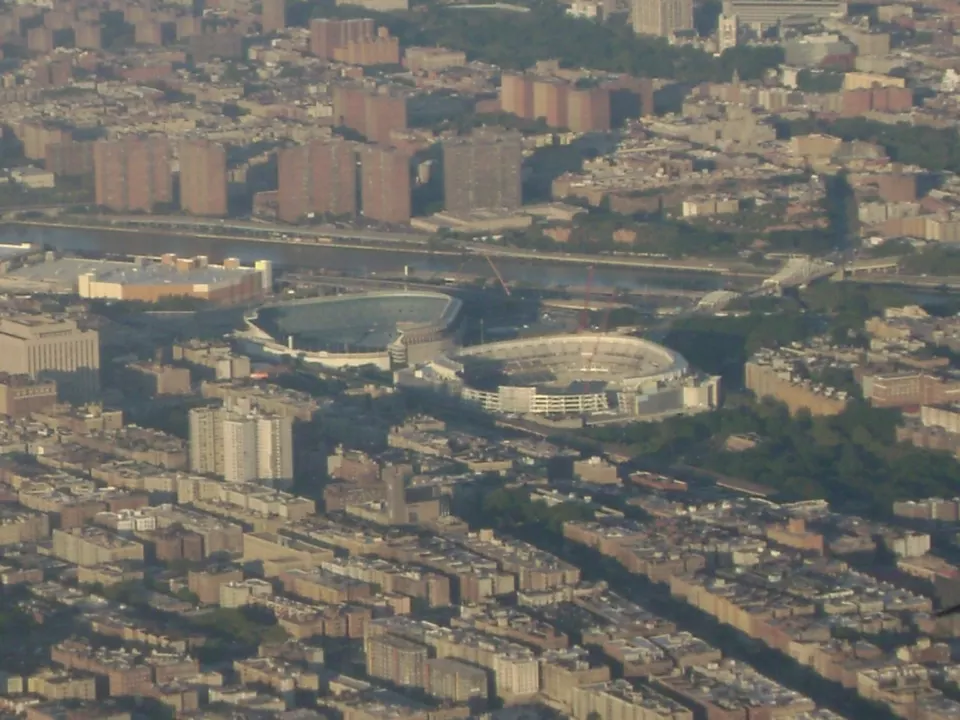
A rematch was inevitable. It was set for Yankee Stadium, originally for June 23, 1948, and was postponed twice before it finally went ahead on Friday, June 25. The sources consulted here do not state the reason for the delays.
Louis weighed in at 213 and a half pounds, the heaviest of his career according to Wikipedia, and about 42,000 people filled the ballpark. Many more saw it at home. NBC's New York station WNBT carried the fight live with Gillette as sponsor, and a television history site drawing on New York Times coverage reports a Hooper rating of 86.6 in the city, which it estimates at roughly 147,000 sets tuned in. Wikipedia's Walcott article also identifies the bout as the first sports event shown on closed-circuit television.
The early rounds followed a familiar pattern. In the third Walcott landed a left to the head and a right to the chin and Louis went down once more; his left eye began to swell. After ten rounds Walcott was ahead on two of the three cards. Wikipedia reports that one judge had him in front 6-3-1 and another 5-4-1, while the third favoured Louis 5-2-3. The Associated Press had it level at five rounds each.
The Eleventh Round
In the eleventh Louis landed a right cross that hurt him, trapped him against the ropes and followed with a sustained burst of punches. Walcott fell to the canvas and onto his back, and he could not beat the count. Louis had retained the title by knockout.
It was a decisive ending to a rivalry that had embarrassed the champion six months earlier, but it was also an ending of a different kind. Immediately afterwards Louis announced he was finished, telling listeners, as Wikipedia records it: "For my mother, tonight was my last fight." The formal retirement came on March 1, 1949.
What the Two Fights Left Behind
Retirement did not last. Faced with a federal tax bill of more than $500,000 and growing interest, Louis returned to fight Ezzard Charles at Yankee Stadium on September 27, 1950, and lost a clear decision. Walcott's moment came later still. On July 18, 1951, he knocked out Charles to become heavyweight champion at 37, which Wikipedia describes as making him the oldest man ever to win the heavyweight crown.
The December 1947 fight remains the one most often revisited. Walcott knocked down the most dominant heavyweight of the era twice, won the vote of the referee and most of the press, and still left without the belt. Louis kept the championship that night, and his own reaction made it clear he did not think he had earned it.
Sources
- Joe Louis vs. Jersey Joe Walcott, Wikipedia, accessed October 2026
- Joe Louis vs. Jersey Joe Walcott II, Wikipedia, accessed October 2026
- Joe Louis, Wikipedia, accessed October 2026
- Jersey Joe Walcott, Wikipedia, accessed October 2026
- The story of Joe Louis vs Jersey Joe Walcott, John Jarrett, Boxing News, April 5, 2020
- Dec. 5, 1947: Louis vs Walcott I, Michael Carbert, The Fight City, December 5, 2025
- Louis-Walcott fight broadcast, 1948, Robert Jay, TV Obscurities, July 19, 2009


